Showing posts with label Mask and Bauble. Show all posts

Tuesday, November 28, 2017

From the Archives: 'A Measure of Human Frailty'

The cascade of allegations, accusations, apologies, and resignations that has followed news reports about Harvey Weinstein, Kevin Spacey, Al Franken, Charlie Rose, Roy Moore, and many other powerful and celebrated men may suggest to a visitor from Mars that sexual harassment is a concept with its origins in the 21st century. Far from it, as this 20th century review of a 16th century play will show. Whether William Shakespear's Measure for Measure is the first dramatic piece about sexual harassment to be performed may be up for dispute, but it surely is the one with the greatest longevity.

This review of Mask & Bauble's production of Measure for Measure was originally published in The Metro Herald in October 1995.


- - - - - - - - - - - - - - - - -

A Measure of Human Frailty
(Review of Shakespeare's Measure for Measure at Georgetown University)
Rick Sincere
Metro Herald Entertainment Editor

In the 1960s, before the professional theatre scene in Washington blossomed to the extent we now know it, the Mask & Bauble Dramatic Society at Georgetown University (M&B) was the Capital's premier venue for classical and modern drama. Mask & Bauble members were invited to perform at the White House by First Lady Jacqueline Kennedy. Mask & Bauble alumni of that era include Tony-award winning director Jack Hofsiss (The Elephant Man) and Tony-winning playwright John Guare (The House of the Blue Leaves).

William Shakespeare Measure for MeasureWith the opening of the Kennedy Center, Georgetown University Theatre lost some of its lustre relative to the new works available on the banks of the Potomac, and with the Kennedy Center as their furrow, newer and more ambitious theatres sprouted around town. Yet the student actors, directors, and technicians at M&B -- the oldest continuously operating, student-run theatre society in America -- still plow forward.

To open its 143rd season, Mask & Bauble offers William Shakespeare's comedy, Measure for Measure. "Comedy" is used here in a broad technical sense, because despite a few bawdy and funny moments, this is a serious play in which the the threat of death and dishonor hangs over the characters throughout. It is a comedy in that all the protaganists remain alive at the closing curtain and there is, in a sense, a "happy ending." The path to reach that ending is no primrose lane, however. Rather, it forces the audience to consider eternal questions of right and wrong, of tyranny and justice, of mercy and legal precision.

Producer Philip Hammack told the Metro Herald that he and director Jack Shay were drawn to Measure for Measure because of its theme of "human frailty" and its requirement of "self-reflection in the light of self-deception." To convey this theme graphically, the play takes place on an austerely decorated set, which consists largely of blocks of wood, dappled with drab grey and embedded with shards of mirrors. A full-length, two-way mirror predominates upstage, so that surreal actions can take place behind it and explain off-stage elements of the story wordlessly.

The plot, in a nutshell, is this: The Duke of Vienna takes leave of his subjects and places responsibility for government, in his absence, in the hands of Lord Angelo. Angelo begins to enforce some of the stricter moral codes that the lenient Duke has ignored during the previous 14 years of his reign. Caught in this new legalism is Claudio, imprisoned and sentenced to death for fornication. Claudio's sister, Isabella, about to become a nun, pleads with Angelo for clemency for her brother. Angelo refuses to commute Claudio's sentence -- unless Isabella has sex with him. With no witnesses to this callous request, Isabella knows that no one will believe her if she tells them that the upright Angelo has behaved like this. She goes to Claudio in prison and tells him she cannot sin to save his life. At the same time, the Duke, who has disguised himself as an ordinary priest, finds out what has happened. He arranges for Angelo's jilted former fiancée to substitute herself for Isabella. Then he returns without his disguise and tricks Angelo into admitting his calumny. He commutes Claudio's death sentence -- but orders him to marry the woman Claudio had impregnated -- allows Angelo to marry the woman he mistakenly seduced, and asks Isabella to be his wife.

William Shakespeare Measure for Measure 1957The overriding theme is one of whether and how mercy can temper justice. In this, it is carried over from some of Shakespeare's other works, notably The Merchant of Venice. Superimposed on this is, for modern audiences, a potent political message. It asks: What happens when a liberal government -- one that does not enforce severe and strict laws addressing personal morality -- is replaced by a more puritanical one? Indeed, what role does government have in using its coercive power, even the threat of death, to make its people virtuous?

Virtue, of course, cannot be coerced. Otherwise it is not virtue, because virtue must be freely chosen. Shakespeare surely recognizes this. The evidence is the contrasting characters of the Duke and his deputy, Angelo.

Angelo is a prig who becomes a hypocrite. The Duke is a liberal-minded ruler with a "live and let live" philosophy. He is righteous without being self-righteous. From the very first scene, we know the Duke is modest and lacks ambition for himself. He genuinely cares for his subjects. Angelo, in contrast, cares more for the letter of the law than for its spirit. He cares less for his people than for justice most narrowly defined. He cannot, in the Duke's words, "condemn the fault" without also condemning "the actor of it."

The student actors convey these themes with strength and understanding. Claudio, played by Andrew Owiti, breathes pure desperation as he begs Isabella (Leila Howland) to forsake her own -- and her family's -- honor to save his head from the hangman. Angelo (Patrick McFadden) reeks self-righteousness, but falls short in making us believe he has fallen in love with Isabella; his stolid emotions do not vary from before and after their first meeting; he is indeed a stoical puritan. Jason Heffron as Elbow provides strong comic relief, and Henry S. deGuchi as Claudio's friend, Lucio, presents a convincing "man-about-town" who finds himself participating in a life-and-death dilemma.

The theme of sexual harassment is not something recently discovered by the likes of Michael Crichton (last year's hit movie, Disclosure) or David Mamet (his play, Oleanna). Shakespeare was writing about it 400 years ago. In the bard's own words, there is "nothing new under the sun." And so we continue to wrestle with our own frailties, our own inclination to deceive ourselves and our fellows.

Measure for Measure continues through October 21 at Stage III, Poulton Hall, 37th and P Streets, N.W. Tickets are $5 for students and $8 for general admission. For reservations, call 202-687-6783.


Tuesday, December 03, 2013

Georgetown's Mask & Bauble Launches Fundraising Drive to Light Stage III

Just in time for #GivingTuesday (which follows #BlackFriday, #SmallBusinessSaturday, and #CyberMonday), the Mask & Bauble Dramatic Society at Georgetown University has announced a fundraising drive to purchase new lighting equipment.

Now in its 162nd season, Mask & Bauble claims to be the oldest continuously-operating student theatre troupe at any U.S. college or university -- and, even if it's not the oldest, it certainly is in the top three or five.

Mask & Bauble's storied history includes putting on shows at the White House during the Kennedy administration, helping to create the legend of Camelot that was revisited so extensively last month. It launched the careers of Tony-winning playwright John Guare, Tony-winning director Jack Hofsiss, and Oscar-nominated actor Bradley Cooper, among many other theater professionals too numerous to name.

According to an email sent to M&B alumni and a post on the group's web site:
Our current lighting system in Stage III is on its last leg, and needs to be replaced. As many alumni can attest, the current dimming system in Stage III has been a problem for the past several years, with many productions suffering from flickering lights and spontaneous blackouts. In order to keep the electrics in Stage III in show-ready condition, we are officially launching our "Keep the Lights On!" campaign to raise the funds necessary to purchase and install a new lighting system for Stage III!
I know the current lighting system at Stage III in Poulton Hall is far more modern than the one in use during my years as a lighting technician and designer there. I remember how we used to have to jump into a pit below the tech booth and grab live electrical cables to switch them from one circuit to another. It's statistically incredible that nobody was turned into a human lightning rod.

The M&B email continues:
Replacing this system, which is about fifteen years old, will cost an estimated $33,000. Mask & Bauble has already committed $5,000 to the project, and we are hoping to secure an additional $5,000 through Georgetown funding outlets.

That leaves us with $23,000 to raise, and together, we can make that happen!

Please consider making a tax-deductible donation to Mask & Bauble today by clicking the button below. For larger gifts, feel free to make arrangements with the Department of Performing Arts' Administrative Director, Ron Lignelli. All donors will be acknowledged via Mask & Bauble's standard tiered gift recognition structure, with two additional tiers*.

Sponsor: $50+ (your name appears in our program, newsletters and notices)
Benefactor: $150+ (a season subscription for 2)
Name Your Dimmer!: $700 will purchase a whole dimmer for M&B!
Angels: $1,000+ (complimentary invitation to our annual Banquet and Awards Ceremony)
Name Your Dimmer Rack!: $8000 will purchase an entire dimmer rack for M&B!

All donations large and small are very greatly appreciated, and every little bit will help us reach our goal. All donors over $700 will be acknowledged on a plaque that will be hung in Stage III.
To contribute something to this campaign to bring light to the stage, visit this secure donations web site:

https://www.vendini.com/donation-software.html?d=34861356102ed9f0a76fab4ab0c92dbf&t=donation

If that URL is too long, try this one: http://bit.ly/18WFBBw


Thursday, December 30, 2010

Celebrating Donn B. Murphy's Career in Video

Last October, Georgetown theatre alumni from across the decades gathered on the Hilltop to celebrate the more-than-half-century-long career of Dr. Donn B. Murphy, who celebrated his 80th birthday earlier this year and is now retiring after some 35 years as president of the National Theatre in Washington.

Dr. Murphy not only taught theatre at Georgetown beginning in 1955, he was theatre at Georgetown.

When I arrived at Georgetown as a freshman in 1977, Dr. Murphy was no longer artistic director and faculty advisor to Mask & Bauble, but his influence was felt strongly in Poulton Hall and wherever Georgetown students decided to mount a performance.  Having heard all the terrific stories told about him as a teacher, I now regret not taking a theatre class as an undergraduate.

What sparked this blog post today was an article about Dr. Murphy in Wednesday's Washington Post by Jane Horwitz, which begins:
Donn B. Murphy is a man of the theater in every sense. As the National Theatre's president and executive director since the early 1980s, he has hobnobbed with such stars as Helen Hayes and Cherry Jones. Katharine Hepburn offered to paint the National's ceiling, he says.

Murphy also taught theater to five decades of Georgetown University students before retiring in 1999. Two alumni, director Jack Hofsiss and playwright John Guare, went on to win Tony Awards. At the end of the month, Murphy, who turned 80 in July, will step down from his posts at the National, though he'll remain on the theater's board.
Horwitz goes on to note:
Former students celebrated his birthday with a weekend of tributes at Georgetown in October, including panel discussions looking back his teaching career.

The tributes, viewable on YouTube, show a common thread: Murphy encouraged students to try the impossible. "Astonish me," he would say when they worried that they'd taken on too big a challenge. How to create a battering ram for a play at the last minute? Just hold three students up horizontally, and make them the battering ram.
Her mention of the videos on YouTube made me realize that, although I was behind the camera that day and posted the videos on a dedicated YouTube channel ("DBMat80video") a few weeks later, I hadn't written anything about the weekend here, nor had I posted a link to the videos or embedded them in an easy-to-find place.

Now I will.

There were three panel discussions during the afternoon of October 23. Those are currently on YouTube in several segments. That evening saw an entertaining series of tributes to Dr. Murphy, which included musical selections from various "Calliopes" -- the original, student-written musicals -- from over the years (including Senior Prom, discussed in Horwitz's article in the Post). The videos from the evening remain to be edited (my fault entirely) and will be posted on YouTube soon.

The panel discussions, which are about three hours long altogether, are very much an oral history of theatre at Georgetown since 1955.  

The first panel features several Georgetown alumni who have made a career in the performing arts: Louis Scheeder of New York University's Tisch School for the Arts moderated the panel, which included director Joe Banno; New York-based actress Victoria Bundonis; scenic designer Tony Cisek, Chicago-based director/producer Chris D'Amico; Tony Award-winning director Jack Hofsiss; Gus Kaikkonen, artistic director of the Peterborough Players; and Robert McNamara, cofounder of the Scena Theatre in Washington. This panel has four segments.

Panel I, Part 1
:


Panel I, Part 2:


Panel I, Part 3
:


Panel I, Part 4:

The second panel, also divided into four segments, features several Georgetown alumni who have become playwrights and writers, or who have participated in the Donn B. Murphy One-Acts Festival. It is moderated by Karen Berman and Susan Lynskey.

Participants are: Gus Kaikkonen, artistic director of the Peterborough Players; journalist and non-fiction author Robert Sabbag; children's and young adult novelist Rachel Vail; playwright Paul Notice; Georgetown senior and playwright Miranda Rose Hall; and playwright Jerry Mayer.

Panel II, Part 1:


Panel II, Part 2:


Panel II, Part 3:


Panel II, Part 4
:

The third panel ran a little longer than the others and consequently is divided into six segments.

It focuses on Calliope, for the better part of two decades Georgetown's tradition of creating and producing original musical theatre. Introduced by Lynne McKay, it is moderated by Donn B. Murphy and Donna Scheeder.

Participants are alumni Bill Bremer, Tim Fischer, John Gore, Jack Hofsiss, and Bryan Williams, and current student Meghan McCormick, as well as members of the audience who shared their own reminiscences, anecdotes, and recollections.

Panel III, Part 1:


Panel III, Part 2:


Panel III, Part 3:


Panel III, Part 4:


Panel III, Part 5
:


Panel III, Part 6 (Conclusion):

Watch for more videos from the DBM@80 celebration to be posted here -- soon, I hope!


Be sure to visit my CafePress store for gifts and novelty items!
Read my blog on Kindle!
Follow my tweets on Twitter! 

Wednesday, March 28, 2007

Report from New York

As must be clear by now, I spent last weekend in New York, both to attend some business meetings and to appear on The Joey Reynolds Show -- as well as to imbibe the theatre district in my off hours on Saturday.

I was also there precisely a month earlier, to join a group of Georgetown theatre alumni eager to celebrate the off-Broadway directorial debut of one of our number, Rick Lombardo, who is the artistic director of the New Repertory Theatre in Watertown, Massachusetts. Rick is the director of Bill W. and Dr. Bob, the story of the founders of AA, which is now playing at New World Stages on West 50th Street.

The mini-reunion was great fun, with classmates coming from all over the country to see the show and raise a toast after the curtain fell. It took such an event for me to see Mask & Bauble alumna Carolyn Patterson and her husband, Bob Goss, the proprietors of the Inn at Monticello just outside of Charlottesville. (Really, I promise to visit someday soon!) Others came from as far away as Minnesota, Missouri, and New Jersey.

The cocktail reception afterwards also gave me a chance to chat with Elizabethan scholar Scott Pilarz about Clare Asquith's book, Shadowplay, which I was just finishing at the time. Asquith's book (subtitled "The Hidden Beliefs and Coded Politics of William Shakespeare") posits that Shakespeare's plays are "coded" documents designed to support Catholic dissidents in an age of political and religious turmoil. Whatever the merits of Asquith's arguments -- and there is a sense that she overreaches -- I don't think I will ever take a Shakespeare play at face value ever again. Now that I have been introduced to the code, I will alway see multiple layers at work. (I have also realized that, for fun, the code can be applied to almost any piece of drama. Read Asquith's glossary and try it out yourself the next time you're at the theatre.)

Altogether, there were about 35 five of us. Thanks to the organizational skills of Trish Sullivan Vanni, we got a block of tickets to the show, and a vague suggestion of "let's all get together in New York when Rick's show opens" turned into reality.

My review of Bill W. and Dr. Bob is included in the essay below, which I submitted to The Metro Herald late last night.

And to all those M&Bers across the country -- let's do it again soon!

Report from New York 1:
The Big Voice – Company – Altar Boyz – Bill W. and Dr. Bob
Rick Sincere
Metro Herald Entertainment Editor

(NEW YORK) --- Flying blind sometimes leads to interesting and delightful, if previously unimagined, destinations.

Such can be the case when buying a show ticket at New York’s TKTS both based on odd criteria, like the theatre’s location or the play’s running time, rather than on what critics have written or how long the show has been selling out its seats.

In this situation, I discovered The Big Voice: God or Merman? at the (off-Broadway) Actors Temple Theatre on West 47th Street. A bijou of a musical, this two-man show is made up not with precious gems but instead with semi-precious stones that make for a divertingly entertaining and touching evening.

Written by Jim Brochu (book) and Steve Schalchlin (music and lyrics), who originally played themselves (“Jim” and “Steve”), the cast now consists of Dale Radunz as Jim and Carl Danielsen as Steve.

The capsule summary of the show says a lot about New York, if nothing else. A Baptist boy from Arkansas and a Catholic boy from Brooklyn grow up, meet, and find spiritual fulfillment through musical theatre – and this on a stage in a theatre owned and operated by a synagogue. (Now that’s New York!)

Brochu’s book is strongest in the play’s first half, when it tells the separate stories of the protagonists’ youth and early adulthood, before they met and fell in love. As one might expect from a plot that cleaves closely to real life, the last third tapers off somewhat, as it pursues the middle of the “boy meets boy, boy loses boy, boy gets boy back” formula.

Schalchlin’s music and lyrics are workmanlike but not especially memorable. The melodies bear echoes of the music of Steve’s Baptist upbringing. (Like a disproportionate number of gay men of his age cohort, Steve is the son of a preacher-father and a piano-teacher-mother.) Still, the songs do what they must to flesh out the characters and advance the plot.

Some of the play’s most amusing moments revolve around Jim’s lifelong devotion to Ethel Merman, whom he met at age 12 on the stage of the Broadway Theatre after a performance of Gypsy. His story of epiphany and transformation could be lifted from the adolescent diary pages of countless musical theatre queens.

What is perhaps most striking about Jim and Steve’s shared story is that it is not one about youthful romance, but rather about mature love and marriage, and about the perseverance of older gay men through rocky times that include sickness, separation, loneliness, and anger.

The low-budget, off-Broadway intimacy of The Big Voice offers a fitting counterpoint to the big-budget, Broadway revival of Stephen Sondheim and George Furth’s Company at the Ethel Barrymore Theatre, just a block away on 47th Street.

Company, a breakthrough “concept musical” in 1970, has been tweaked and transfigured several times in the years since. This latest incarnation, directed by Tony-winner John Doyle, combines orchestra and cast so that each actor plays one or more instruments to accompany themselves on stage.

This conceit, also employed in Doyle’s 2005 production of Sweeney Todd, is somewhat distracting, at least at first, and one can come away with the impression that it is used throughout merely to achieve a particularly visceral and emotional payoff in the last five minutes of the show.

That said, this new production of Company is filled with excellent performances, especially from RaĂşl Esparza as Robert and Barbara Walsh as Joanne. (Esparza is being widely touted as the most likely winner of the Tony Award for leading actor in a musical – even by other contenders for the prize.)

Esparza, who made a splash in Merrily We Roll Along and in the title role of Sunday in the Park with George at the Kennedy Center’s Sondheim Celebration five years ago, shines here as well. His Robert is detached and cold, manifestly in pain. Through most of the play he delivers his lines with the flatness of David Sedaris reading one of his essays, as if compelled to hide from everyone – friends, lovers, himself – any human feelings he might have.

As the cynical Joanne, Walsh also is detached. (That the only instruments she plays are the triangle and orchestra bells – using a single hammer for each – speaks volumes.) While the other characters play whole phrases on melodic instruments – sax, clarinet, trumpet – Joanne just punctuates. She delivers her 11 o’clock number, “The Ladies Who Lunch,” with viciousness unequalled in previous Broadway productions, easily in the same class as the ur-Joanne, Elaine Stritch.

One quibble I have with this and other recent productions of Company (including the one the Four County Players recently mounted in Barboursville, Virginia) is the new scene in which Peter asks Robert about “homosexual experiences” in a clear attempt to make a pass at him. The scene seems hopelessly tacked on and adds little to either character’s back story. It almost seems like Furth’s answer to the persistent question of Sondheimophiles, “Is Bobby gay?” The answer is, as it ever was, no.

Company and The Big Voice complement each other in their reflections on relationships and marriage, although there is little question that Company is and will remain a classic piece of musical theatre while The Big Voice will merely be a pleasant addition to the community-theatre repertoire (except, perhaps, in small towns like Mammoth, Arkansas, where it could, alas, do the most good.)

* * * * * *

New World Stages on West 50th Street is an off-Broadway venue that has the architectural feel of a suburban cineplex. In fact, it once was the home of a multiple-screen movie theatre, which – now converted to showcase live performances – serves legitimate-theatre audiences well. Each auditorium, ranging in size from 199 to 499 seats – has stadium seating, meaning there is not a bad seat in the house – no obstructions, not even the beehive hairdos of the ladies who lunch sitting at the matinee in front of you.

Two shows currently at New World Stages – the musical comedy, Altar Boyz, and the drama Bill W. and Dr. Bob – make good use of the environment the theatre complex provides.

Altar Boyz, written by Kevin Del Aguila (book) and Gary Adler & Michael Patrick Walker (music and lyrics), pretends to be the final stop of a concert tour for a Christian boy band made up of Matthew, Mark, Luke, Juan, and Abraham. (Abraham is the one Jewish member among the four Catholic boys.)

Through a series of flashbacks and musical numbers, Altar Boyz reveals how the boys met, formed the band, and advanced through their careers.

Simultaneously a satirical look at the boy-band phenomenon – think N’Sync or Backstreet Boys – and Christian pop-rock, Altar Boyz scores on both counts. (It slips a bit in consistency when it makes some cracks about Catholic belief that are actually better targeted at Evangelical Protestants.)

The music and lyrics have wit and panache. The music offers pastiches of rock, pop, country and western, and Broadway show tunes. The lyrics have unexpected turns that unfailingly evoke laughter (sometimes giggles, sometimes guffaws).

The current cast members of Altar Boyz are all replacements for those who can be heard on the original cast CD. That does not reflect on their quality, for all five “boyz” turn in fine performances. Particularly noteworthy is Zach Hanna as Mark, the band’s closeted gay member. (Every boy band has at least one, right?) Hanna creates his character through subtle glances and gestures without a word to define what he makes apparent to the audience. (Apropos of The Big Voice, Mark’s object of affection, Kyle Dean Massey – who plays Matthew -- comes from a small town in Arkansas, where he once sang in the same church choir as Metro Herald contributor Tim Hulsey.)

Landon Beard (Luke) and Eric Schneider (Abraham) also offer well-tuned performances, as did Carlos L. Encinias, the understudy who played Juan on the night I saw Altar Boyz. Remarkably – and for this equal credit goes to the playwright as well as the actors – the characters are not homogenized. Instead, each of the five has a distinct personality and purpose, so that the whole is greater than the sum of its parts.

While Altar Boyz is playing in Stage 4 at New World Stages, Stage 2 hosts Bill W. and Dr. Bob (written by Stephen Bergman and Janet Surrey), a show as close to critic-proof as one might find. That is to say, even if the reviews are tepid or negative, audiences flock to see Bill W. and Dr. Bob, which tells the story of the founders of Alcoholics Anonymous. Given that New York critics, as a class, tend to disparage the uplifting and inspiring and to prefer the cynical and inhumane – not that there’s anything wrong with that! -- negative reviews of Bill W. and Dr. Bob have been expected. (Note, however, that this reviewer has read none of the notices for this show and is, therefore, open to correction.)

Director Rick Lombardo (full disclosure: he is a college classmate and onetime theatre colleague of mine) explains how word of mouth led to an extended run for Bill W. and Dr. Bob when it premiered at the New Repertory Theatre near Boston, prior to its being optioned for New York.

The cast and crew knew they had an unexpected success on their hands when, a few performances into the run, audience members spontaneously called out “Hi Bill” when Robert Krakovski (as Bill Wilson) stepped to the front of the stage and announced, “My name is Bill, and I’m an alcoholic.”

The formulaic AA call-and-response repeated itself night after night.

“After a while,” related Lombardo to The Metro Herald (over drinks at Victor’s CafĂ©, a Cuban restaurant near the theatre), “we could predict what the overall audience reaction to the show would be by how many voices we heard say ‘Hi, Bill!’ We learned that alcoholics react very differently from non-alcoholics to certain scenes in the play.” As an example, he said, alcoholics would laugh uproariously at painful scenes in which the characters are dead drunk – a laughter of recognition absent from audiences with fewer AA members in them. The higher the ratio of alcoholics to non-alcoholics, the livelier and more vocal the audience could be expected to be.

The extended run at New Rep was supported by AA members coming back to see the show multiple times, bringing their friends with them, who in turn would bring their friends along when they came back a second or third time. It is no wonder that Bill W. and Dr. Bob has had the highest advance ticket sale of any show in the history of New World Stages.

One knows one is entering a different universe immediately upon seeing the set designed by Anita Fuchs. She has created a disorienting atmosphere by placing a sharply raked stage in juxtaposition to oddly-angled, movable panels that do not meet our usual expectations regarding spatial perspective. The set tends to make one queasy.

Bill W. and Dr. Bob is a six-actor, multi-character play. Four actors – Krakovski as Bill, Patrick Husted as Dr. Bob Smith, Rachel Harker as Lois Wilson, and Kathleen Doyle as Anne Smith – play single roles throughout, while Marc Carver as Man and Deanna Dunmyer as Woman play multiple roles, as the story is told through flashbacks and encounters.

While it may appear easy to play drunk, it requires a high degree of discipline, as well as nuance, to make it feel authentic. Krakovski and Husted can’t get away with simply imitating Foster Brooks. We have to see them sweat – and we do.

Harder than playing drunk, perhaps, is playing the drunk’s wife. The reactions of Harker and Doyle, who play (respectively) Bill and Bob’s wives, are measured and subtle. Either woman could choose to pick up and move away. Instead, they meet their marital challenges with fortitude and, in the process, create the forerunner to Al-Anon.

Word has it that director Lombardo had to cut 25 minutes from the play, which seemed bloated during its Boston run. It still has some problems in that, as the play draws to a close, audience members tend to check their watches. It drags a bit and could use some additional tightening. This, however, is a mere quibble in comparison to the satisfaction so many audience members obtain from the show.

The actors now performing in Bill W. and Dr. Bob are signed to six-month contracts, but we can expect the show to go on long after that August deadline comes around.

Bill W. and Dr. Bob continues at New World Stages, 340 West 50th Street, New York, between 8th and 9th Avenues. For tickets, call Telecharge at (212) 239-6200 or purchase online at www.telecharge.com. For group sales, call (212) 933-0263. For further information, visit http://www.billwanddrbob.com.

Altar Boyz continues at New World Stages, 340 West 50th Street, New York, between 8th and 9th Avenues. For tickets, call Telecharge at (212) 239-6200 or order online at www.telecharge.com. For further information, visit http://www.altarboyz.com.

Company continues at the Ethel Barrymore Theatre, 243 West 47th Street, New York, between Broadway and 8th Avenue. For tickets, call Telecharge.com at 212-239-6200 or 800-432-7250 or purchase online at www.telecharge.com. For group sales, call (212) 302-7000. For further information, visit http://www.companyonbroadway.com/index.htm.

The Big Voice: God or Merman? continues at the Actors Temple Theatre, 339 West 47th Street, New York, between 8th and 9th Avenues. For tickets, call 212-947-8844 or visit BroadwayOffers.com and mention code BVBBX72. For further information, visit http://www.thebigvoice.com.

(Photo and logo from The Big Voice courtesy of Keith Sherman & Associates.)
(Photo of Company and the Barrymore by Rick Sincere.)
(Photo of Robert Krakovski and Patrick Husted from Bill W. and Dr. Bob by Carol Rosegg; courtesy of Sam Rudy Media Relations.)

Monday, July 03, 2006

Mask & Bauble at the Georgetown Reunion


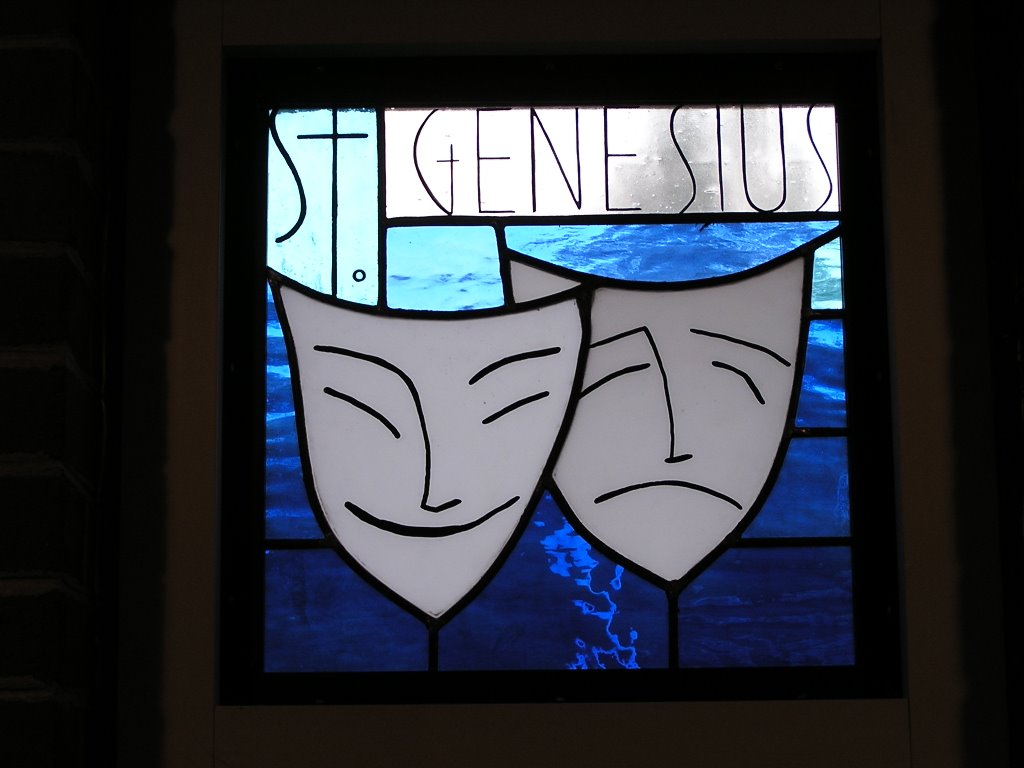
The image to your left is a stained-glass window in St. Thomas Aquinas Church in Charlottesville, Virginia, which serves the students of the University of Virginia as well as the wider community. (The parish is so large that it has to hold its Easter Sunday service at University Hall, the former basketball arena.)

Why, you may ask, does a window dedicated to St. Genesius begin a post entitled "Mask & Bauble at the Georgetown Reunion"? It's really rather simple. I took that picture some time ago because, as a Mask & Bauble alumnus, I remembered that our annual Jenny Awards -- the M&B equivalent of the Tonys or Oliviers -- were named for St. Genesius, the patron saint of actors. I knew that eventually I'd be able to put that photograph to use.

According to legend, as found in the Catholic Encylopedia, St Genesius was:

A comedian at Rome, martyred under Diocletian in 286 or 303. Feast, 25 August. He is invoked against epilepsy, and is honoured as patron of theatrical performers and of musicians. The legend (Acta SS., Aug., V, 119) relates: Genesius, the leader of a theatrical troupe in Rome, performing one day before the Emperor Diocletian, and wishing to expose Christian rites to the ridicule of his audience, pretended to receive the Sacrament of Baptism. When the water had been poured upon him he proclaimed himself a Christian. Diocletian at first enjoyed the realistic play, but, finding Genesius to be in earnest, ordered him to be tortured and then beheaded. He was buried on the Via Tiburtina. His relics are said to be partly in San Giovanni della Pigna, partly in S. Susanna di Termini and in the chapel of St. Lawrence. The legend was dramatized in the fifteenth century; embodied in later years in the oratorio "Polus Atella" of Löwe (d. 1869), and still more recently in a work by Weingartner (Berlinn 1892). The historic value of the Acts, dating from the seventh century, is very doubtful, though defended by Tillemont (Mémoires, IV s. v. Genesius). The very existence of Genesius is called into question, and he is held to be a Roman counterpart of St. Gelasius (or Gelasinus) of Hierapolis (d. 297). He was venerated, however, at Rome in the fourth century: a church was built in his honour very early, and was repaired and beautified by Gregory III in 741.
This post is long overdue. Persistent computer problems early in the month delayed it unmercifully. At one point, I had completed the entire composition, only to lose it due to faulty equipment (or a bad internet connection) at FedEx Kinko's. (The manager kindly returned the money I had paid for the hour-long session.) So, I am trying one more time, in the hopes that I can get these photos on-line precisely one month after the event. So here goes.

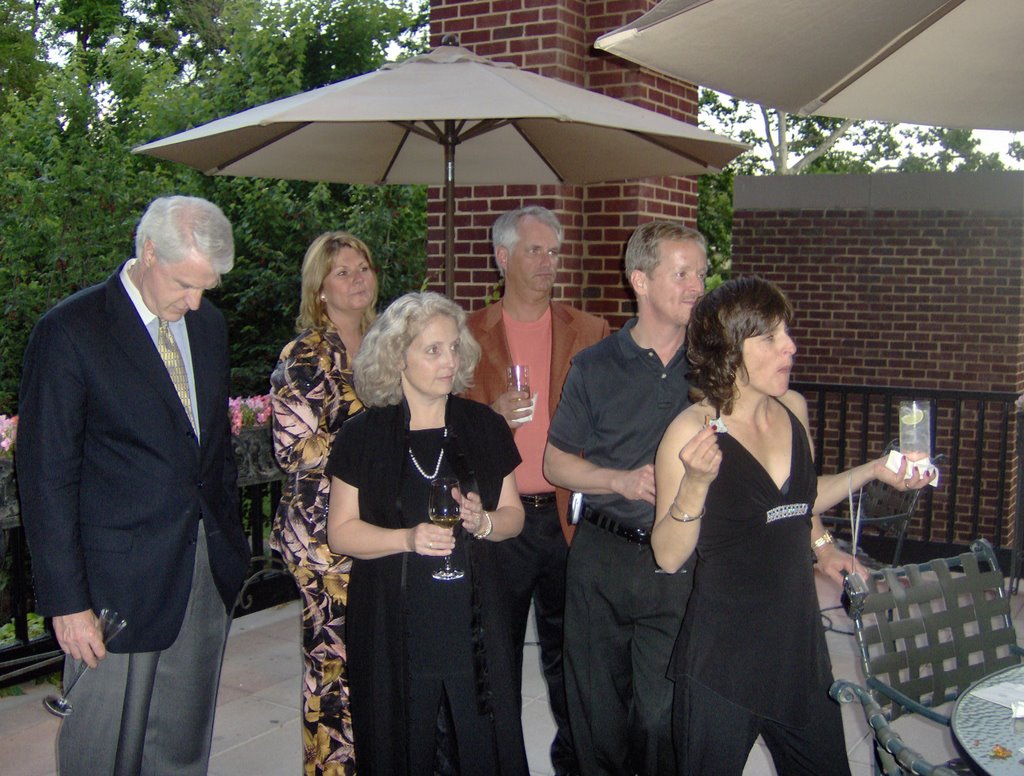
During the Georgetown Reunion weekend of June 1-4, some 30 M&B alumni from the Class of 1981 (and chronologically close classes) met on the fringe of the official reunion activities. Early Saturday evening, Dave Lewis and his wife, Cheryl, hosted a cocktail party for us at the Four Seasons hotel in Georgetown before we went back up to the Hilltop for the official class party in O'Donovan Hall.

I snapped a few photos at the M&B party -- fewer than I should have, but we were all too busy having a good time and engaging in conversation (and drinking and reminiscing) to take pictures.

"Mingling with that old-time crowd..."


Joe Banno, Elizabeth Robelen, and Scott Pilarz


Marguerite Conrad, Pete Doragh, Todd Bernhardt


Our host, Dave Lewis, in the center, with Jim Hemelt partially obscured and Karin Hammer in the background; Carolyn Patterson's profile is in the foreground


Rick Lombardo makes a point


Not technically M&B: Later in the evening, I ran into some old friends from the Arts Hall Project -- Dawn Mancuso, Virginia McGrane (who had been at the M&B cocktail party, too), Vincent Santiago, and Victoria Robinson


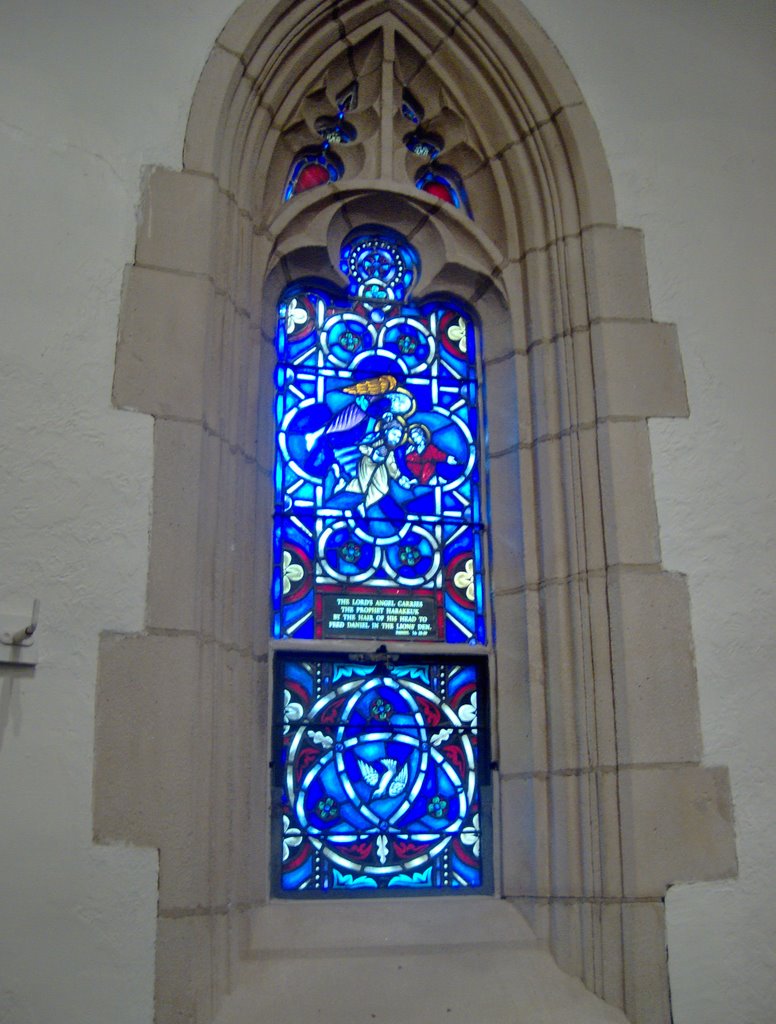
Since I started with a stained-glass window from Charlottesville, I thought I'd end this piece with a couple of examples of stained glass from Georgetown.

On Saturday afternoon, the Class of 1981 gathered in St. William's Chapel in Copley Hall (once the home of the famed "Freeze's Breeze") for Mass. On the day we graduated in 1981, the homilist at our Baccalaureate Mass that day was the Reverend Otto Hentz, S.J. He concelebrated the Mass on June 3 this year with the Reverend Scott Pilarz, S.J. (see above, out of uniform). Music was provided by a group that Scott called "the Mask & Bauble Choir" consisting of Wendy Campagna, Marguerite Conrad, Trish Sullivan, and myself. After Mass, I snapped a few shots of some of the gothic-style decorations in the chapel, including this crucifix:


... and these stained-glass windows behind the altar:


Tuesday, November 22, 2005

It's Been So Long Since Last We Met ...

Last weekend it was my immense pleasure to attend a weekend of activities at my alma mater sponsored by the Georgetown Theatre Alumni. Events included a performance of Timberlake Wertenbaker's Our Country's Good at the new Gonda Theatre in the new Royden B. Davis, S.J., Performing Arts Center. Our Country's Good, set in early colonial Australia and about the mounting of a play by an unlikely cast of actors, became the premiere production in the long-awaited center, built as an addition to the old Ryan Administration Building (once Georgetown University's gymnasium, later the site of the student bank, run for many years as a branch of the recently demised Riggs National Bank).

Rather than wax nostalgic about the weekend visit to the Hilltop -- my first since the last time I attended a GTA alumni event, in 2002 -- through words, I have decided to photoblog the weekend. Please enjoy.

Any visit to Georgetown University should begin with paying respects to Archbishop John Carroll, founder of the school and first Catholic bishop of the United States, whose statue stands (sits?) in the middle of Healy Circle.


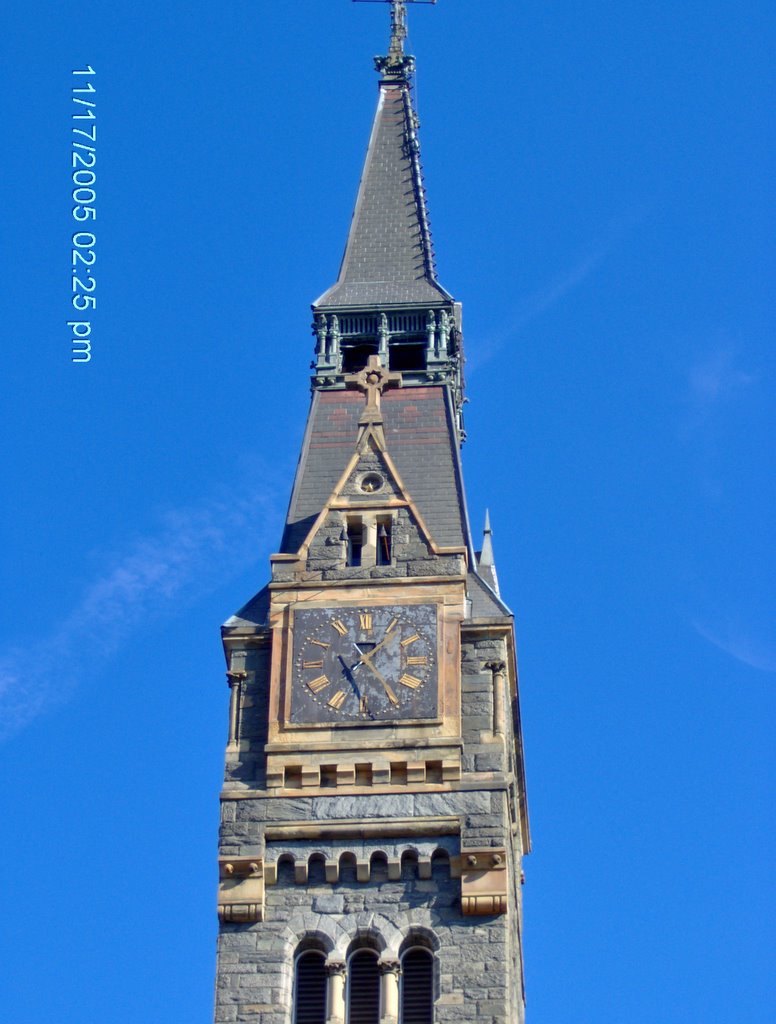
A familiar landmark on the D.C. skyline (such as it is), Healy Tower contains a clock whose hands are a frequent object of larceny (or at least borrowing) by mischievous Georgetown students.

For over 100 years, Dahlgren Chapel has been the spiritual center of Georgetown's campus. Beneath the chapel is the crypt where the Dahlgren family is buried, and a room where I used to practice, under the direction of Elaine Rendler, with the Georgetown University Chapel Choir (which, contrary to the campus ministry web site, was founded and active long before the year 2002).

Drew Courtney, a GTA board member, led a tour of campus sites where Georgetown student theatre groups have performed. Here he points to Maguire Hall, which is featured in the earliest recorded report of a theatre performance on campus that also mentions a specific location.


Gaston Hall, with its highly decorated walls, was another early venue for Georgetown theatre performances.


GTA board member Jason Yarn videotapes part of the historical theatre tour in Gaston Hall. Other alumni sit in the row before him.

Poulton Hall has been the home of Mask & Bauble for more than 40 years, so it was natural for the magical history tour to take us there. M&B has been based in Stage III since 1976, and before that in Stage I (affectionately known as "the Cave") and, briefly, in the ill-fated Stage II, which never saw a performance other than its birth by stealth.

Ron Lignelli, managing director of Georgetown's Program in Performing Arts, makes a point about the technical difficulties of producing shows in Poulton Hall.


The highlight of the tour was, of course, the new performing arts center, named for the former dean of Georgetown College, Father Royden B. Davis, S.J. So please indulge me as I include more than one photo of this fascinating stop on the tour.

The main entrance to the new performing arts center, formerly the Ryan Administration Building.

Ted Parker (right), an adjunct professor at Georgetown and technical advisor to the Program in Performing Arts, conducted the exclusive alumni tour of the new Davis Center, beginning in the spacious lobby.

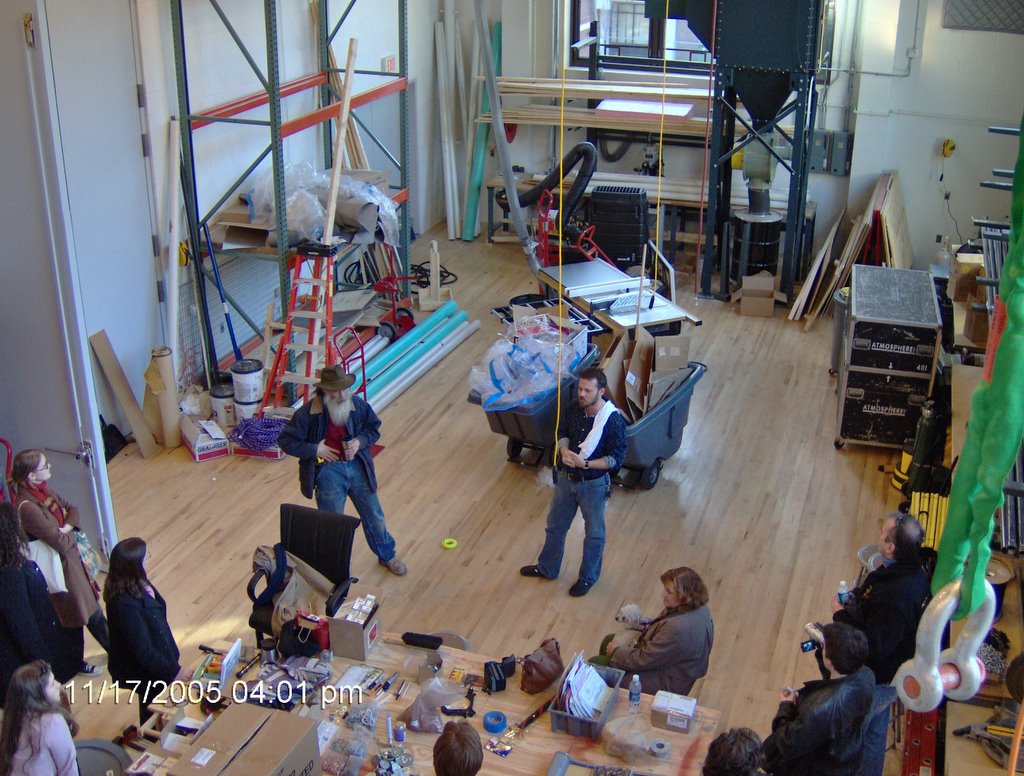
The new scenic design and construction shop at the performing arts center is truly gargantuan, particularly when compared to what was available to Georgetown theatre groups in the past. This overhead shot shows only a portion of the brightly lit, airy room with state-of-the-art equipment.

A costume shop! With sewing machines and ironing boards and dressmakers dummies.


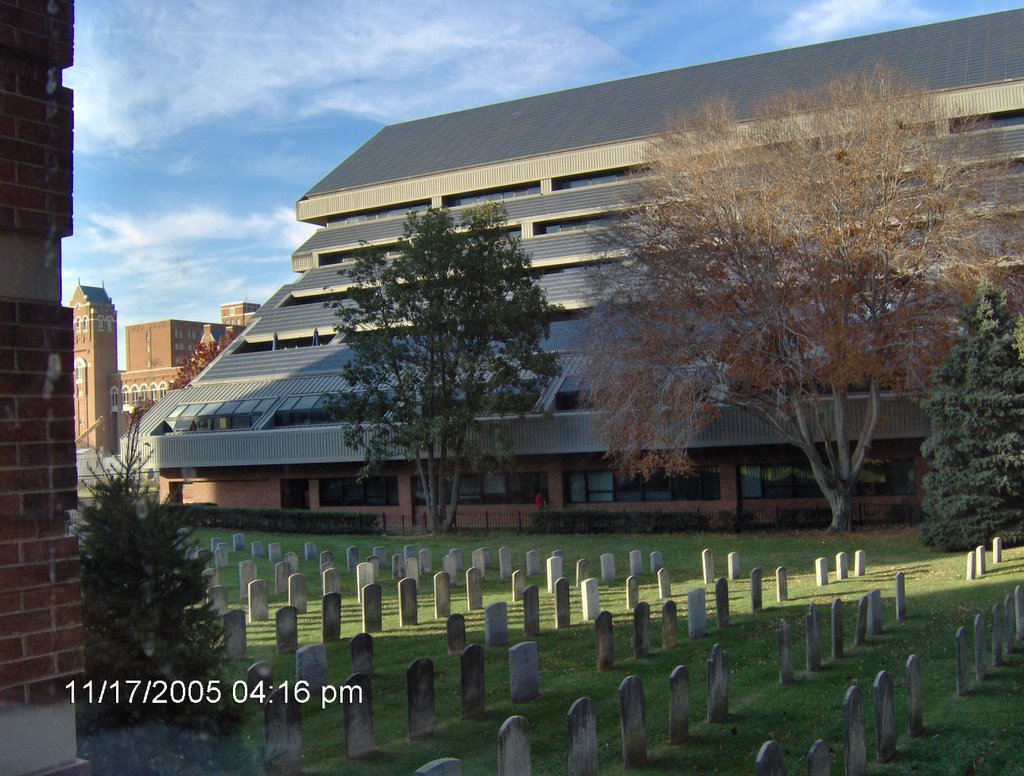
The Davis Center overlooks the Jesuit cemetery and the Intercultural Center.


Of course, the opposite is true, too: from the base of the ICC is a great view of the back of the new Davis Center, with the Jesuit graveyard in between the two academic buildings.

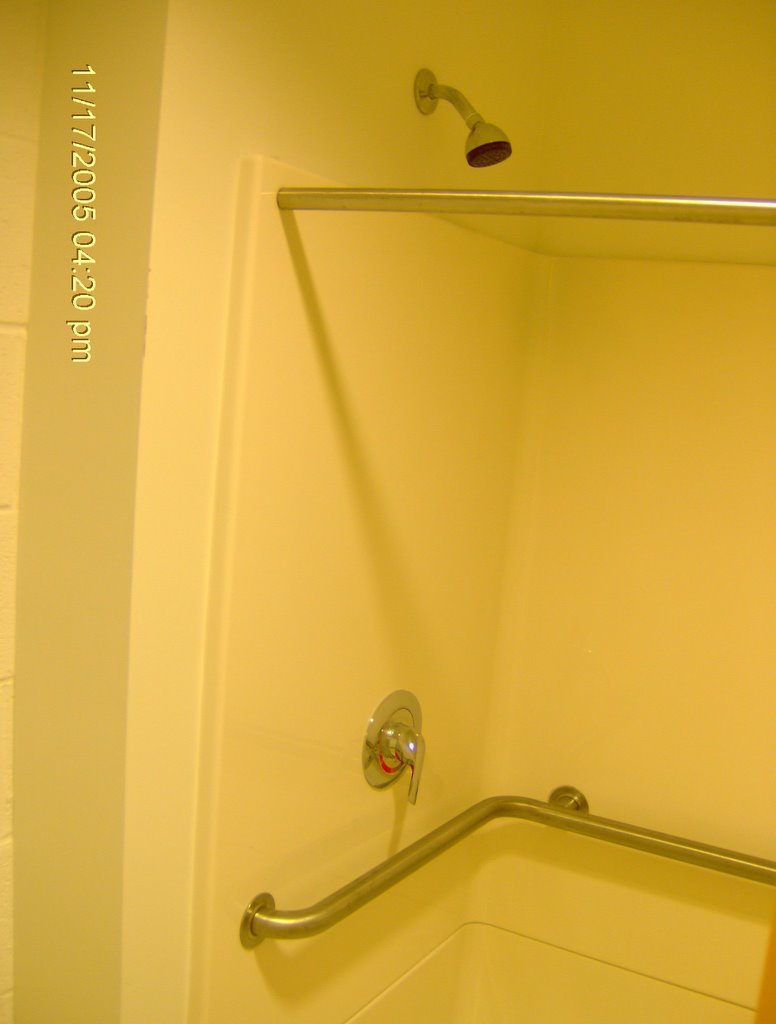
This image may seem quotidian to most people, but in the context of Georgetown theatre, this is earthshattering: What you see is a shower attached to the dressing room. And nearby is a toilet. And there is more than one dressing room with these amenities! (By the way, there were several actors performing in Our Country's Good last Friday whom I would happily photograph in this setting.)

I couldn't resist taking this picture. Current students will find this hard to believe, but Old North Hall, the oldest building on Georgetown's campus, was once a residence hall. Behind the window in the lower left of this photo is the room I lived in as a freshman. Really.

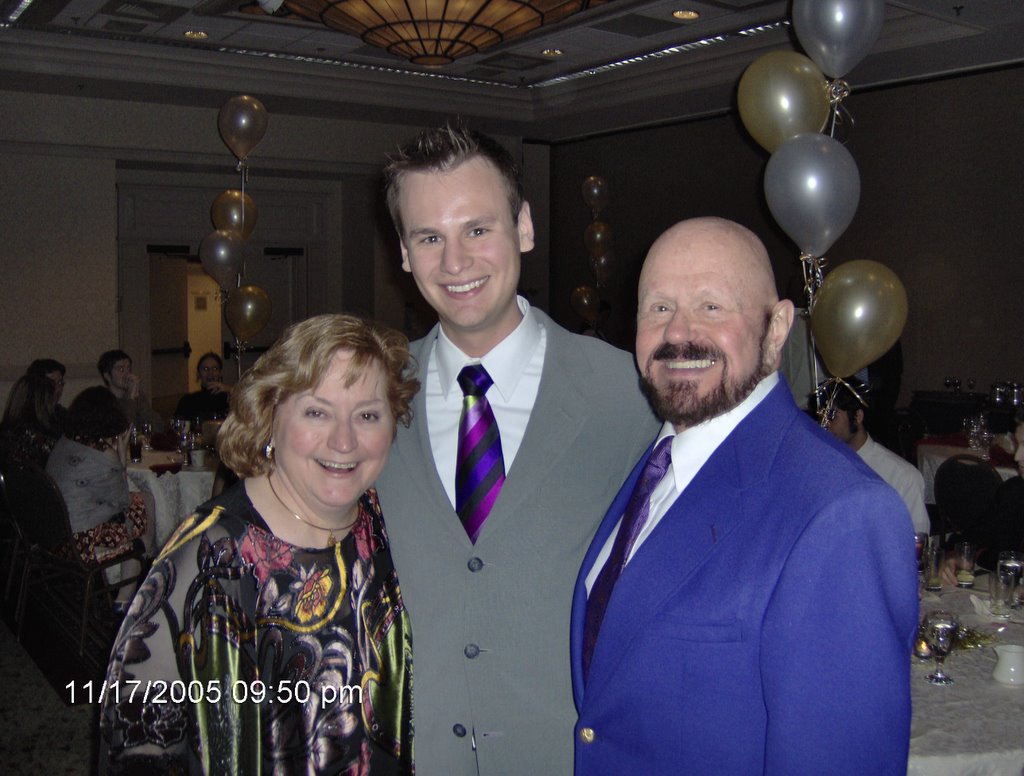
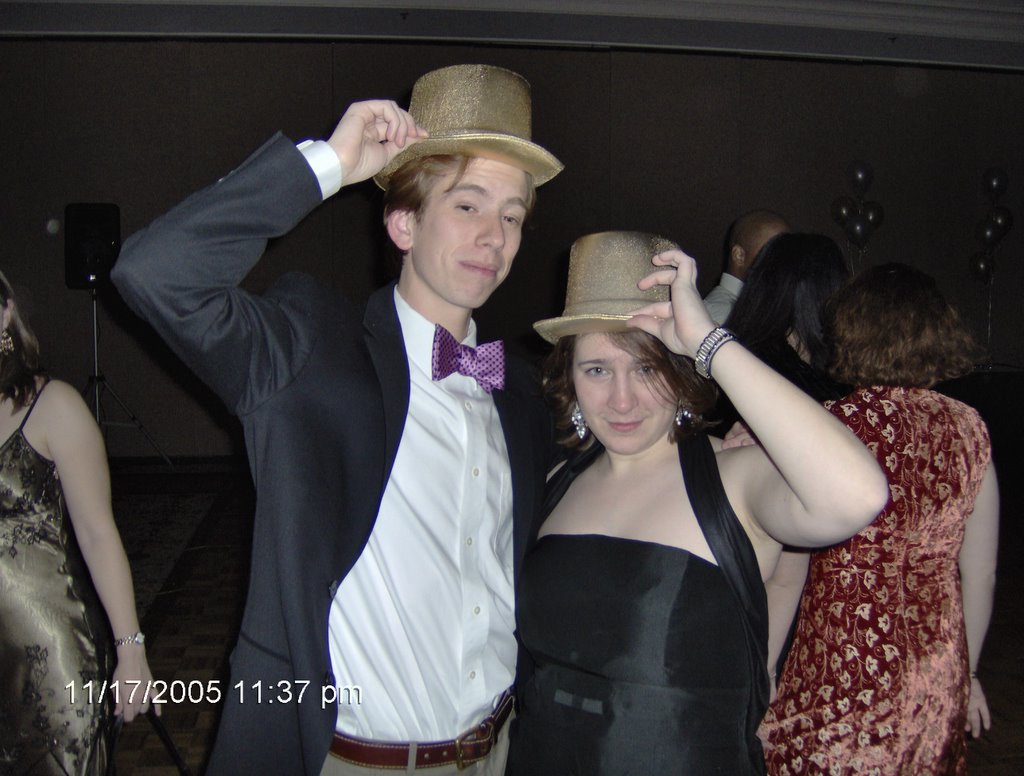
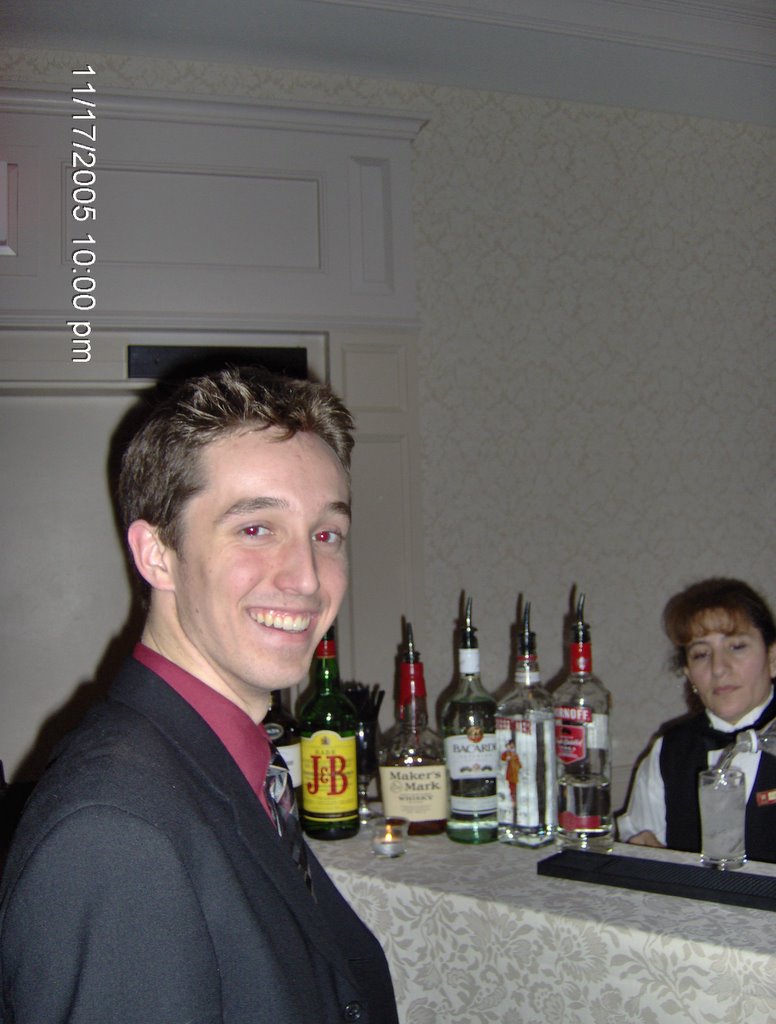
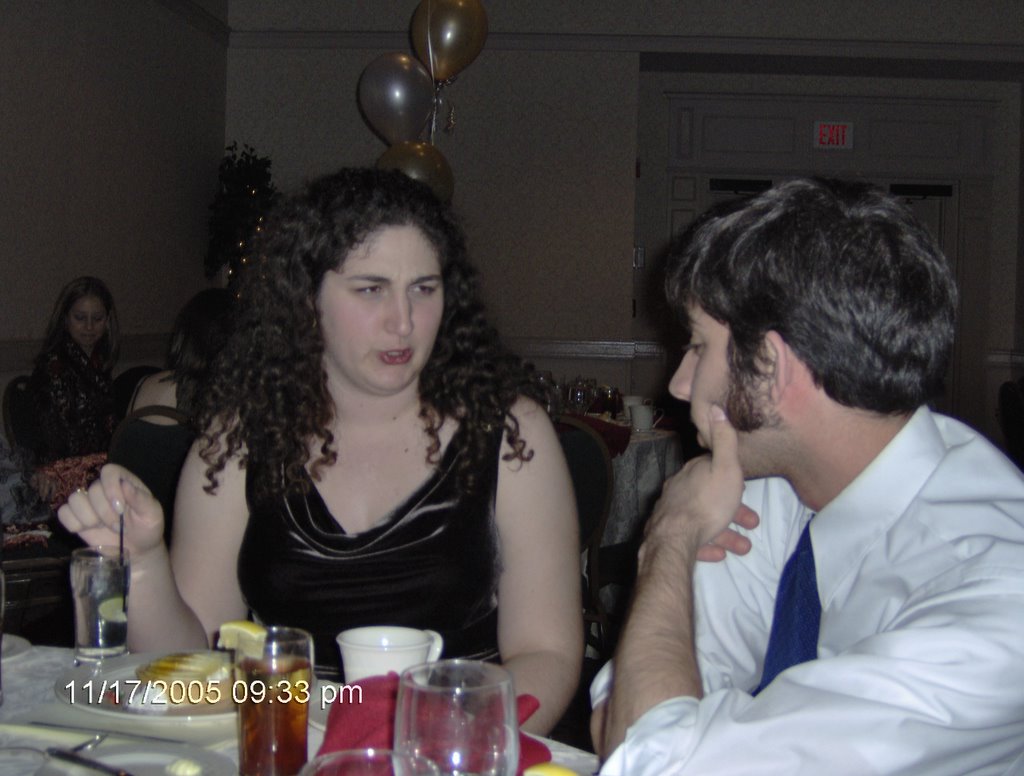
The banquet Saturday night was meant to add three new names to the Donn B. Murphy Hall of Fame, attracting about 50 alumni, students, and family members. Here are SFS alumna Susan Swope, GTA at-large board member Michael Radolinski, and the namesake of the Georgetown theatre hall of fame, Dr. Donn B. Murphy.


Having a good time? It looks like GTA board members Drew Courtney and Sally Richardson were enjoying themselves.


So too, it seems, was Austin Williams, currently Technical Director on the board of the Mask & Bauble Dramatic Society.


Meanwhile, GTA board member Christina Logothetis appears to be deep in conversation with M&B Executive Producer Sami Ghazi.


Still, Christina couldn't resist working her way to the dance floor to have some fun with Austin.


I took a good many other photos over the weekend, but I thought it best to leave with this image -- a string of balloons decorating the room where the Hall of Fame banquet took place. (I may post more images later this week.)