Tuesday, December 06, 2005

California Dreamin' 3


Writing is harder when I'm traveling. (I could never be an effective and efficient foreign correspondent.) So I'm going to rely once again on graphic images to describe my short stay in La-La Land.

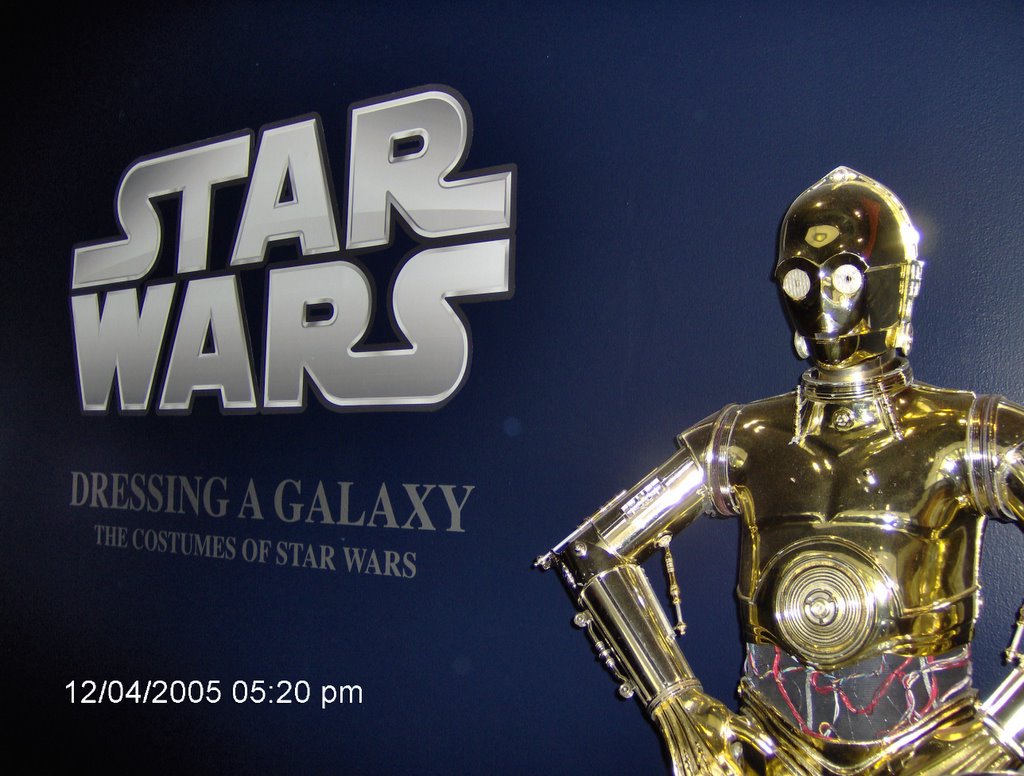
On Sunday, we went to downtown Los Angeles, to visit the Fashion Institute of Design Museum, where a display of Star Wars costumes from Episodes I, II, and III is nearing its end. As it happened, Sunday was "fan day," so there were an inordinate number of children (and adults, as well -- grown-ups who apparently emerged from the cocoons of their mothers' basements for the day) in costumes as authentic as those of designer Trisha Biggar inside the museum.

A few choice moments from the afternoon's excursion to "Dressing a Galaxy: The Costumes of Star Wars," which remains open until December 10:


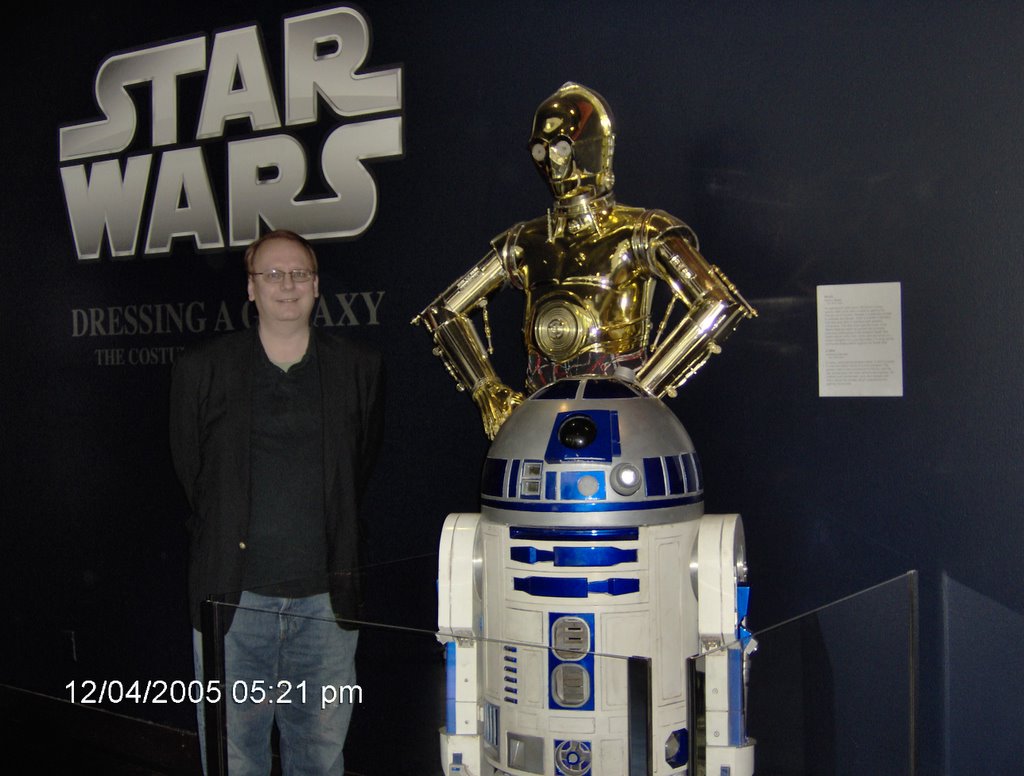
To my astonishment, photography was allowed in the "Dressing a Galaxy" exhibit, although flash photography was permitted only at the entrance, where visitors could pose with C3PO and R2D2, the two droids who provide a link through the six Star Wars movies.


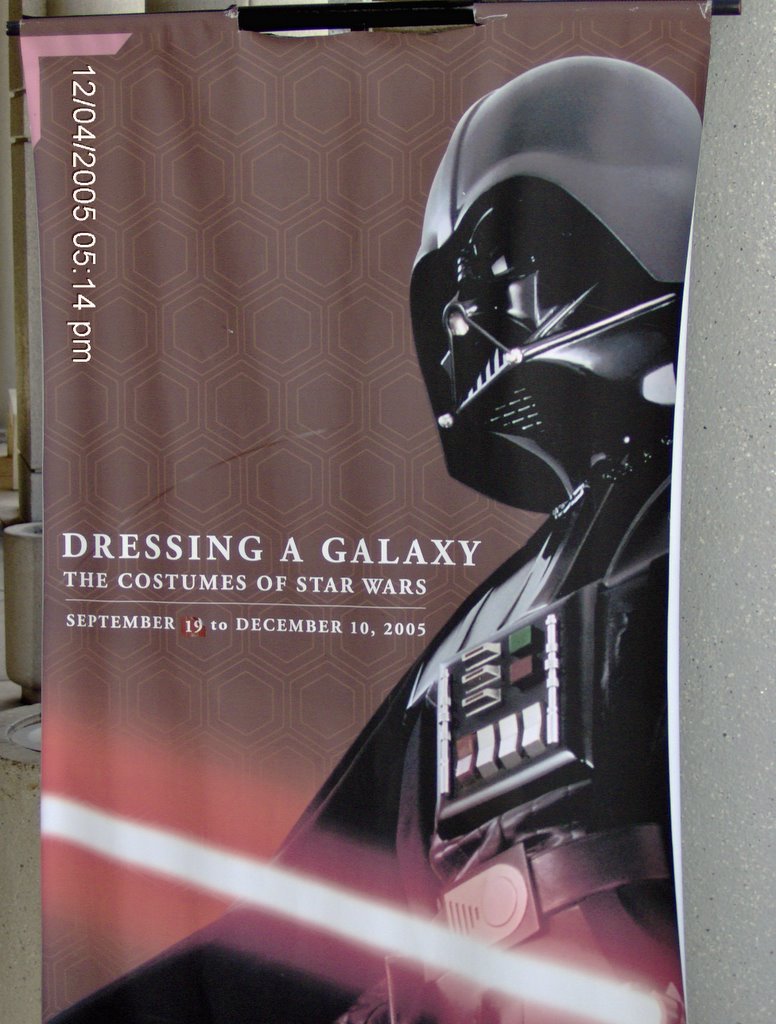
Inside the exhibit, where the lighting was iffy, at best, was a phantasmagorical collection of costumes (and models) representing many Star Wars characters, including the Dark Lord of the Sith, Darth Vader.


Ambassadors of the Trade Federation.


I'm not sure which of the Fetts this is, Boba or Jango. You've seen one bounty hunter, you've seen them all.

Outside the museum, where the lighting was better, was an X-Wing Fighter, looking ready for action.


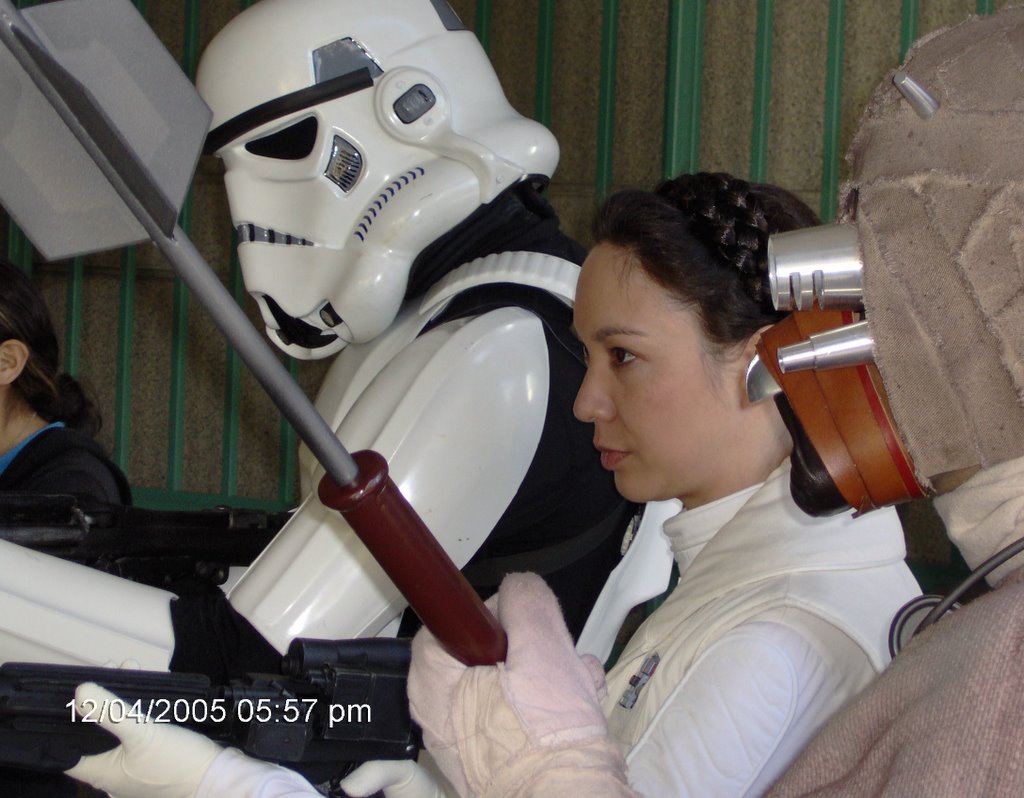
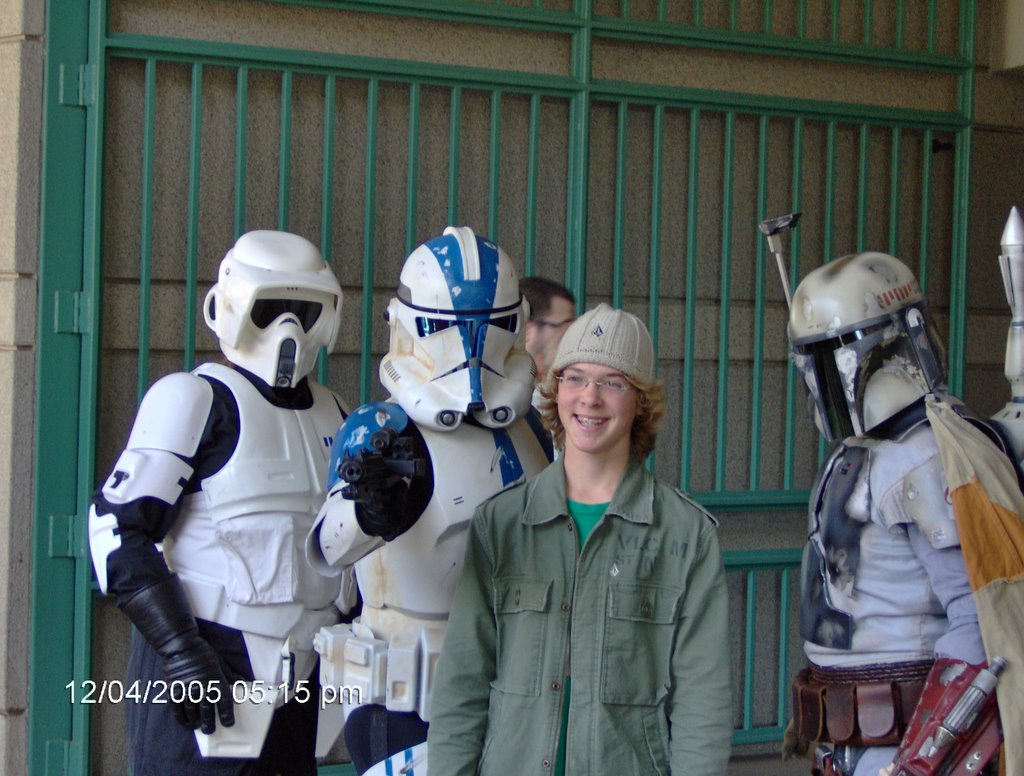
There were so many Storm Troopers wandering around the grounds of the FIDM, I thought I was on the set of a commercial advocating a stronger USA PATRIOT Act.


They certainly look determined, don't they?


And they seem to be trying to recruit from among our nation's youth.


See what I mean?


"Dressing a Galaxy" was a delight, and I am glad to have caught it in its final days. I recommend it highly to anyone who is able to attend before it closes next weekend.


Popularity

While lunching yesterday at an outdoor cafe in West Hollywood with my friend, screenwriter Dan Blatt (who blogs as "GayPatriotWest"), he mentioned that his blog, GayPatriot, is up for a Weblog award, and urged me to vote for it as "Best LGBT Blog."

I accommodated Dan's request, and then discovered that a few more blogs created and produced by friends and acquaintances are up for awards, too.

In the "Best Conservative Blog" category, Chad Dotson's Commonwealth Conservative is one of the nominees.

In the "Best of the Top 250 Blogs" category, the group blog, QandO ("Questions and Observations"), is nominated. I met QandO's Jon Henke at the Virginia bloggers' conference in August. Virginia Postrel's Dynamist blog is also nominated in this category; I mentioned that site a few days ago in my posting about dynamism vs. stasis. (Both Jon and Virginia deserve applause for reaching that top tier of much-visited blogs, regardless of how they fare in the contest.)

Commonwealth Conservative and QandO are members of the Old Dominion Blog Alliance.

The voting for the 2005 Weblog Awards continues through December 15 in these and other categories. You are permitted to vote once in each category per 24 hour period.

Saturday, December 03, 2005

California Dreamin' 2

My weekend in Los Angeles with my sister, Cathy, and her husband, Bryan, has begun.

We started out last night by going to the opening of a photography exhibit in Pasadena. I'll be writing about that event later.

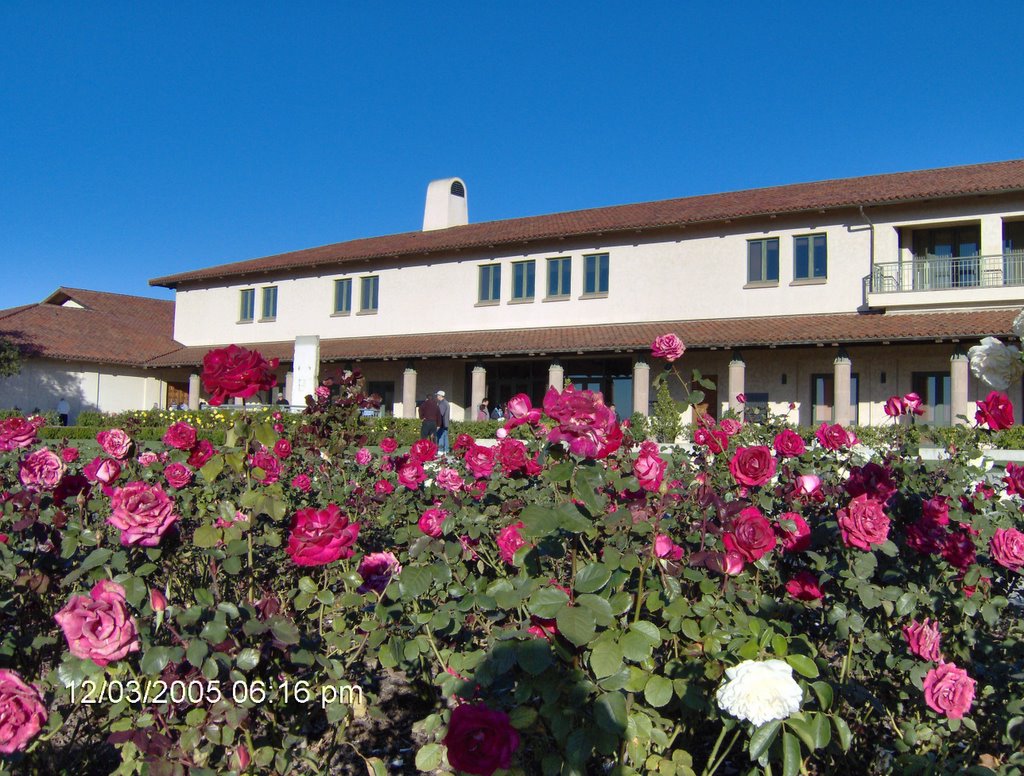
Today we went to the Ronald Reagan Presidential Library and Museum in Simi Valley.

The tour was at once educational, informative, nostalgic, and moving. Listening to even a short excerpt of "The Speech" ("You and I have a rendezvous with destiny...") brought tears to my eyes.

Let the pictures speak for themselves: The Reagan Library, photoblogged, follows.


That's me on the far right. Naturally.


Unless you look closely, you can miss this GOP elephant topiary near the main entrance to the library, as it blends in with the other shrubbery.


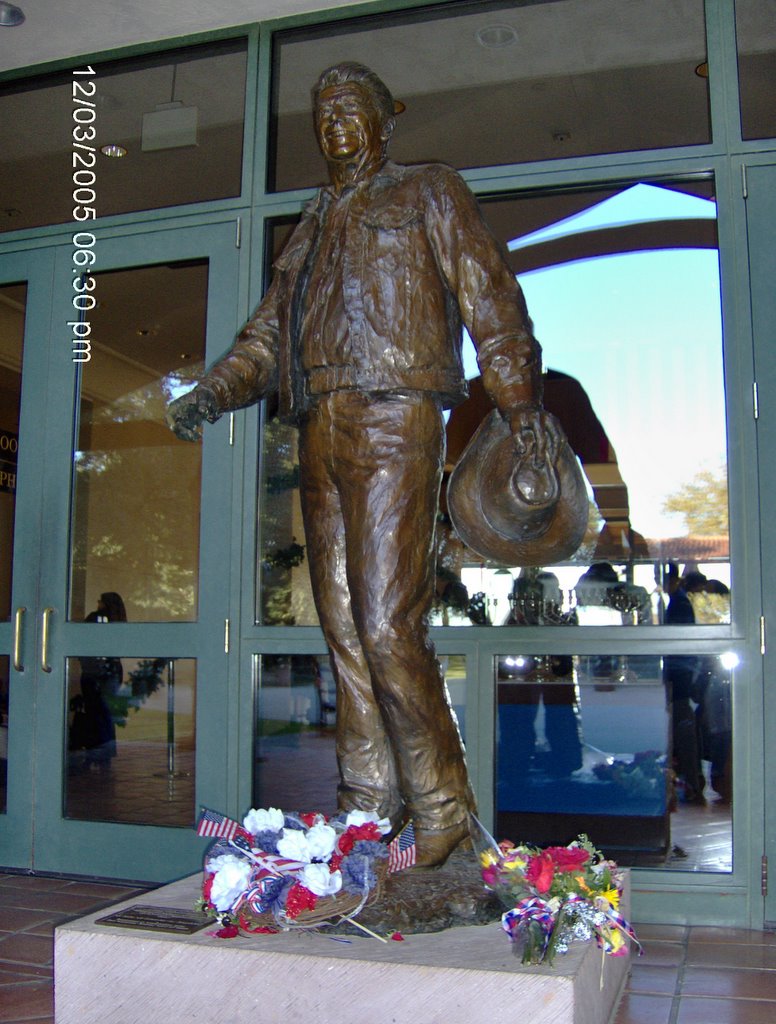
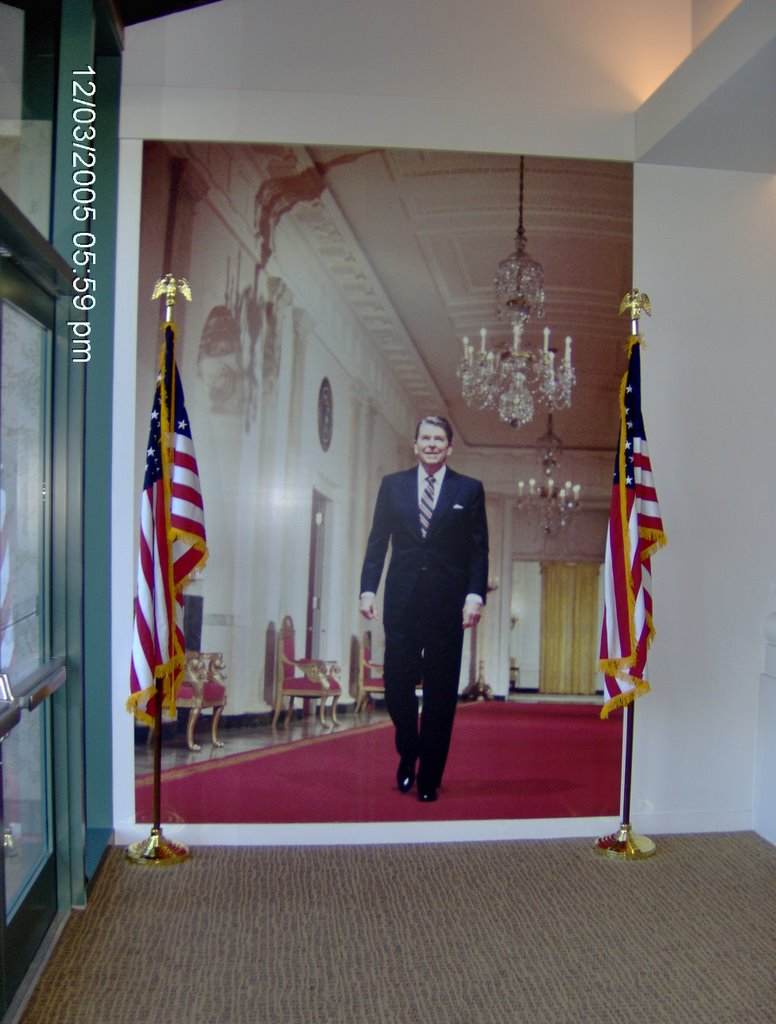
A statue of President Reagan greets all visitors with a bronze smile.


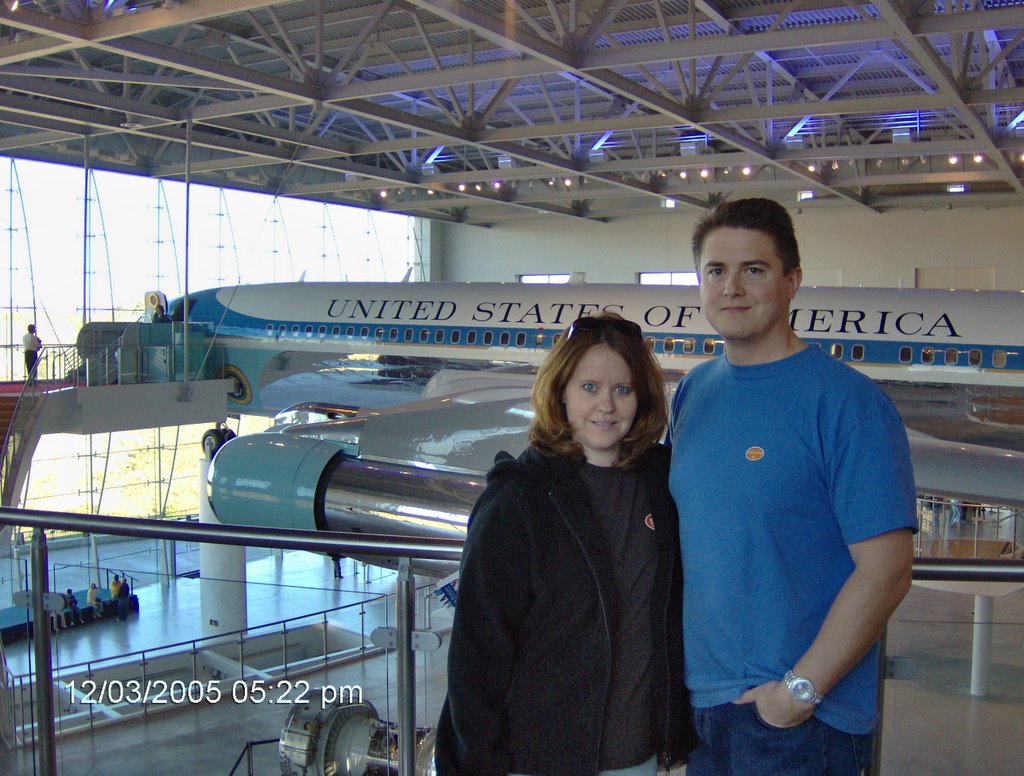
The Boeing 707 used as Air Force One during the Reagan administration is now hangared permanently in an addition to the Reagan Library. That's my sister, Cathy Biermann, on the left, with my brother-in-law, Bryan.


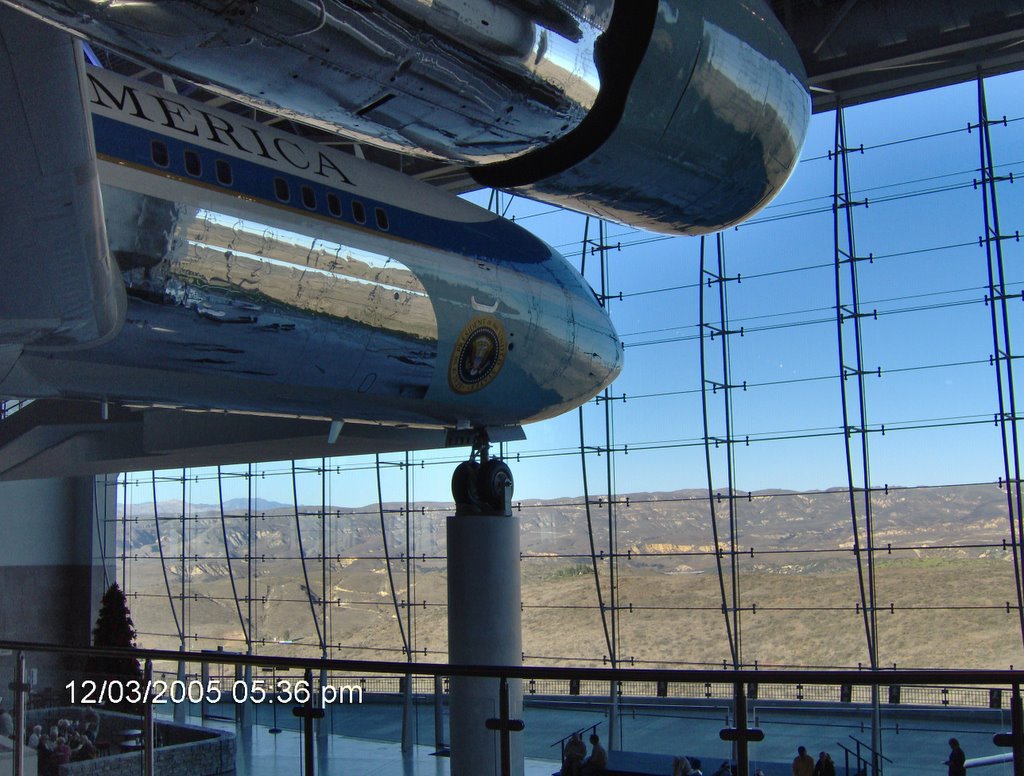
More Air Force One.


The Air Force One hangar has the best lighting for photography of all the rooms in the Reagan Museum, so I took a lot of pictures in it.


The Marine One helicopter is also housed in the Air Force One hangar.


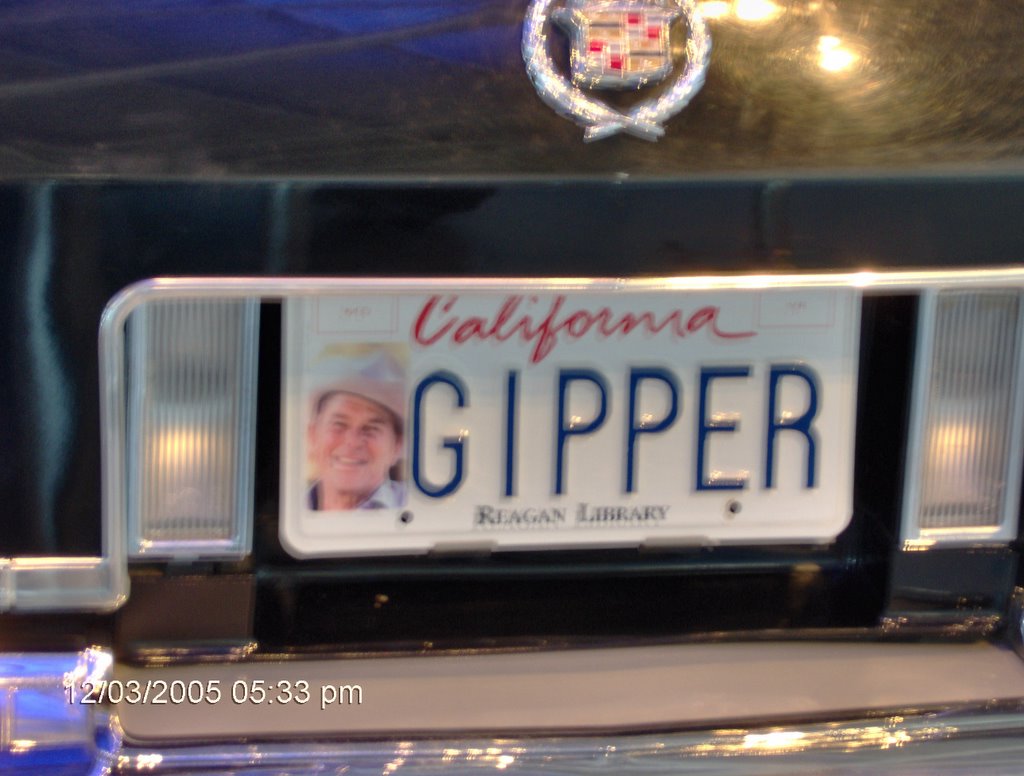
So is a presidential limousine ...


... with its special license plate.


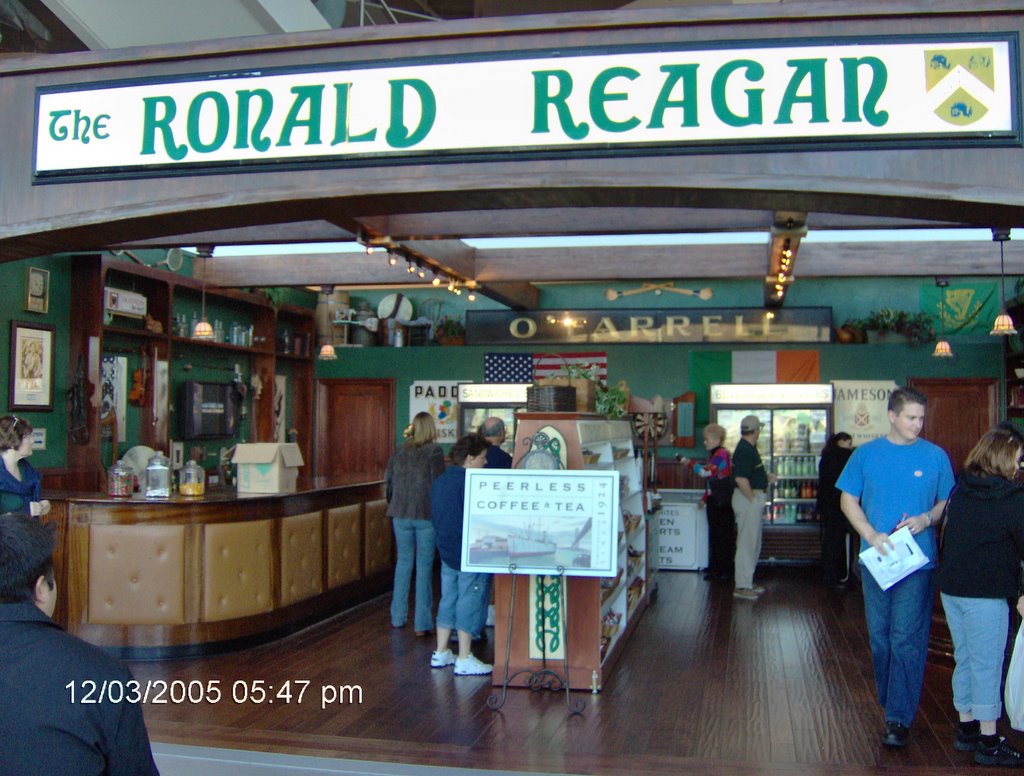
Steps away from Air Force One is a replica of an Irish pub, The Ronald Reagan. To our disappointment, the beer taps and bottles of spirits behind the bar are just for show. No alcoholic beverages are served, just an odd assortment of soft drinks like "Leninade," some kind of Soviet ginger ale. And we were so looking forward to a frothy pint of Guinness...


... I mean, isn't that false advertising?


One of my preoccupations during the Reagan administration was civil defense. It was nice to see it acknowledged. (Not my role, per se, but the topic itself.)


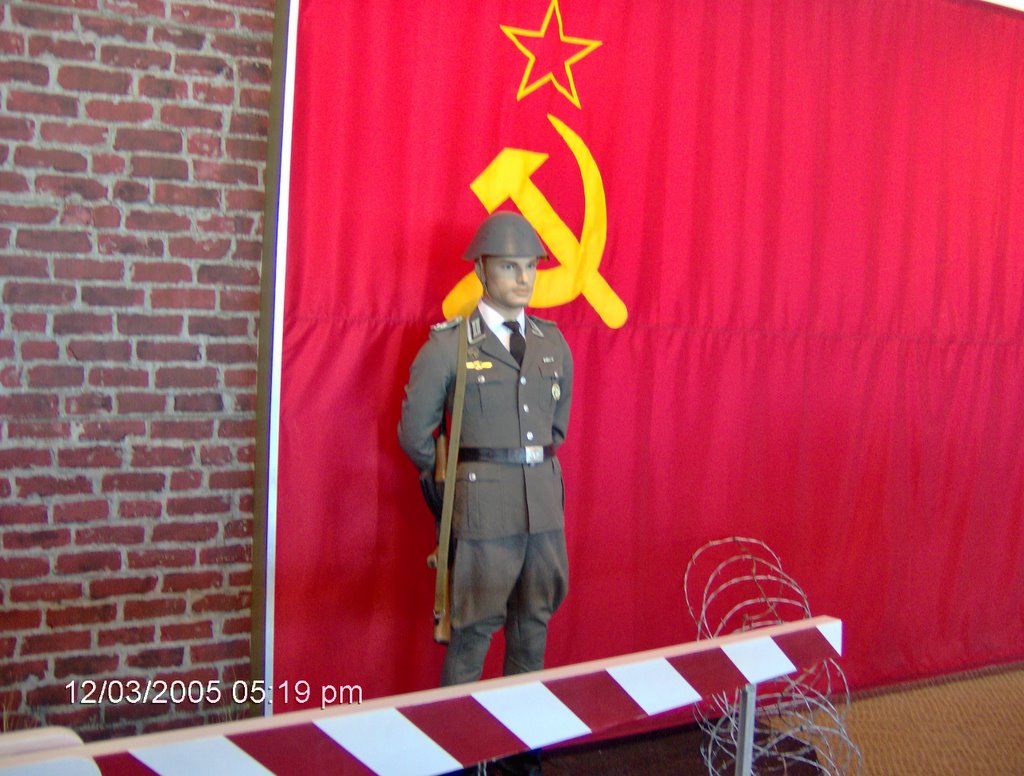
Reminders of the Cold War are found throughout the Reagan Museum, such as this replica of Checkpoint Charlie, where the Soviet and free sections of Berlin intersected ...


... but somehow I doubt the Soviet guards were so passive and waxen.


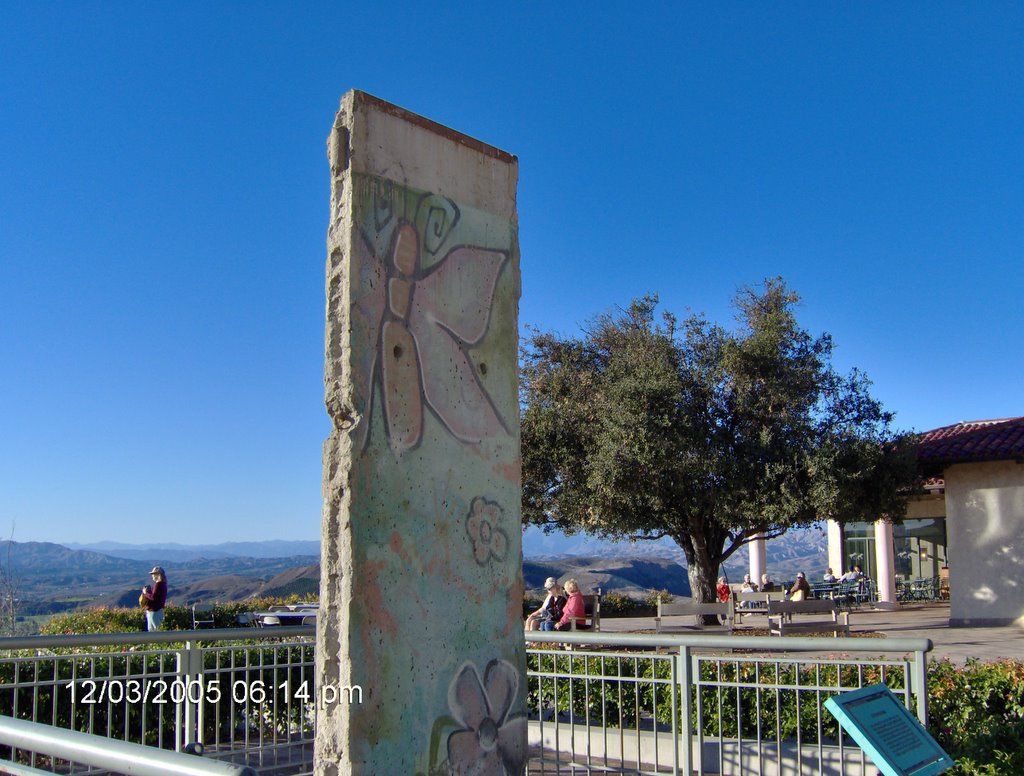
Ronald Reagan said, "Mr. Gorbachev, tear down this wall." And the Berlin Wall was torn down.


There's something impish about a "Reagan's Country Cafe" on the "Berlin Wall Terrace." It's like building a Wal-Mart in Manhattan.


According to a sign posted nearby, former big-band boy singer Merv Griffin donated a replica of the White House South Lawn that serves as the Reagan Museum's backyard.


Since last year, a new focal point for visitors is the Ronald Reagan gravesite.


Anything but ostentatious, nothing at the memorial even mentions the many accomplishments of Ronald Reagan -- just his name and dates of birth and death.


A visit to the Reagan Library and Museum can make you think that the occupant of the White House is a man of principle, character, intelligence, and focus; that he has a grasp of world affairs; and that he embraces true conservative principles of individual liberty, personal responsibility, and limited government, with its authority narrowly and specifically defined.

But then you realize that this is only a museum and a memorial, and Ronald Reagan is no longer with us.

Friday, December 02, 2005

California Dreamin'


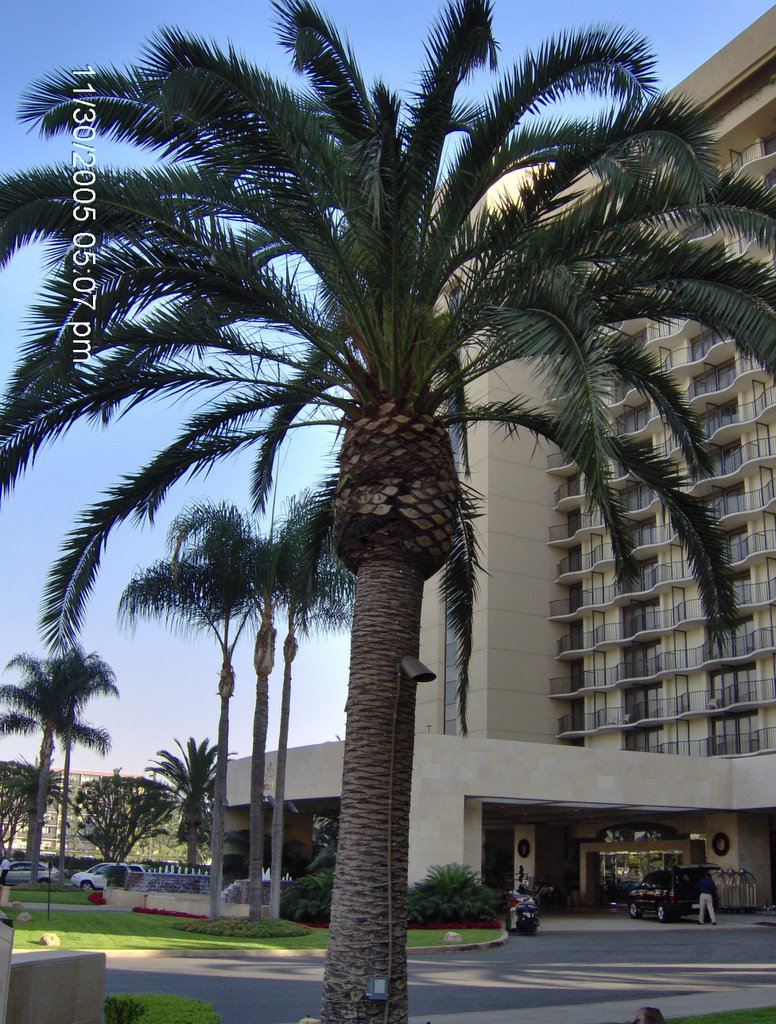
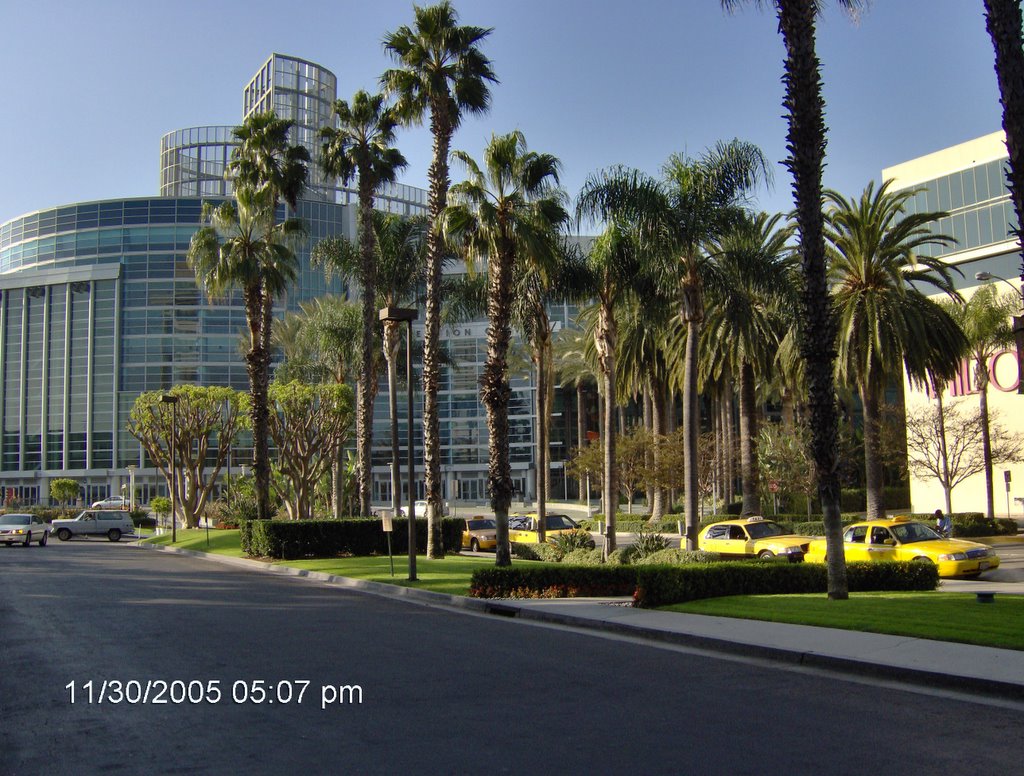
For the past several days, I have been in Anaheim, California, within spitting distance of Disneyland, to attend the annual conference of the Hart Users Group. This is made up of those localities around the country who use election equipment manufactured by Hart Intercivic, including the eSlate system (used by the City of Charlottesville) and BallotNow, a system that reads paper ballots (such as those used for mail-in absentee voting, and also used in Charlottesville).

There were about 80 election officials from six states attending the conference. Three Virginia jurisdictions were present: Charlottesville and the cities of Alexandria and Falls Church. There were also officials from Illinois, Texas, Washington state, and, of course, California.

The conference was hosted by Orange County, which is going to have an election on Tuesday (to fill the congressional seat vacated by SEC Chairman Christopher Cox) and another one a week later (a local ballot measure). We began the two days of meetings with a tour of the Orange County Registrar of Voters office, which is far more than an "office": It is a huge warehouse facility with special rooms for telecommunications, voter registration processing, automated mailing systems, and videography.


Orange County is the fourth-largest county in the United States, by population. It has 1.5 million registered voters, including 400,000 "permanent absentee" voters. In a major election, Orange County has as many as 1,700 precincts and 9,000 pollworkers. (Even in a small election, such as the November election for Governor Arnold Schwarzenegger's four ballot initiatives, Orange County consolidates its precincts and still ends up with 900.) By law, ballots in Orange County must be printed and available in five languages: English, Chinese, Korean, Spanish, and Vietnamese. Acting Registrar Neal Kelley, who hosted the tour of the facility, noted that a sixth language, Tagalog, may soon be required, as well.

In contrast, Charlottesville has eight precincts and in a typical election deploys about 100 election officials (pollworkers). Our ballots appear in one language, English. The contrast is fascinating, yet the equipment is the same.

Most of the proceedings of the conference dealt with improvements in Hart's software that are coming down the line and demonstrations of new hardware, including a VVPAT (voter-verifiable paper audit trail) add-on for the eSlate, which will be tested in Orange County's congressional election in five precincts on Tuesday. The devices were also tested last month in a local election in Woburn, Massachusetts. At some point in the not-too-distant future, we will be testing this equipment in Charlottesville, too. The device looks to be easy to use, secure, and trustworthy. (Though by my assessment such an add-on is a useless expense of $1,000 that the taxpayers need not pay, simply to satisfy the paranoid dreams of a few malcontented and self-anointed "experts.")

Last year, Charlottesville hosted the Hart Users Group and about 50 people attended. This year there were about 80 attendees in Anaheim. Next year's Hart Users Group conference will be at the home of Hart's corporate headquarters, Austin, Texas. With Hart winning more customers every month, it will not be unreasonable to expect 100 or more people to attend.

These conferences are valuable because election officials from many different jurisdictions, who face correspondingly different (yet comparable) circumstances, can trade information about how to handle problems, how best to address issues of security and customer service (remembering that our customer is the voter), and generally exchanging ideas about best practices and procedures to make elections run smoothly (never "flawlessly," that would be a pipe dream) and efficiently in a manner that undergirds the confidence of voters, candidates, and the media.

I want to do a bit of a news roundup in regard to events occurring in my absence from home and the Web:

My piece on George Will's commentary on budget-cutting officials in Indiana was mentioned in Below the Beltway as part of the Carnival of Liberty XXII. And Brandon Meyer, hosting the thirteenth in the series of Virginia Blog Carnivals, noted my review of the Moscow Boys Choir concert at Charlottesville's Paramount Theatre. The next Virginia Blog Carnival will be found at Sophispundit.

The biggest news on local television in southern California for the past few days has been the theft of Gregory Peck's star from the Hollywood Walk of Fame. It was impossible to watch the early evening or 11:00 o'clock newscasts without seeing at least one segment on this earth-shattering story. Still, whatever the reason, it was nice to see honorary Hollywood Mayor Johnny Grant on TV while I was here. (Not to worry: Although the original is still missing, a new star has replaced the old one on the Walk of Fame.)

Preparations for the statewide recount in the Virginia Attorney General's race are proceeding deliberately. The State Board of Elections has sent each locality a questionnaire, asking about voting equipment and the staffing that will be needed to perform a recount. These questionnaire's are being turned over to the judge who will rule on Creigh Deeds' petition for a recount. We expect the recount to begin on or about December 19. Insider's prediction: Look for an unusual number of votes to be changed from the absentee ballots cast in the City of Alexandria, due to the way paper ballots were counted on election day (machine-read) and the way they will be recounted (by human eye and hand). We anticipate few, if any, numbers to change in Charlottesville.

The successor to retiring Delegate Glenn Weatherholtz, Delegate-elect Matt Lohr of Broadway, has announced he will continue his predecessor's fools' errand to ban Gay-Straight Alliances from government schools in Virginia. Jeff Mellott of the Daily News Record of Harrisonburg quotes Lohr as saying, "Our public schools are not the place [for] clubs based on sexual orientation, whether gay or straight." I have addressed the bill originally introduced by Weatherholtz earlier ("At Seventeen," October 11), and the federal law governing equal access to government school facilities has not been repealed since then.


There will be more news to come from California. I'm spending the weekend in the San Fernando Valley with my sister and her husband, and we plan to immerse ourselves in La-La Land culture, including a visit to a photographic exhibit in Pasadena and another to a display of costumes from the two Star Wars trilogies.

Sunday, November 27, 2005

On the Banks of the Wabash

In his syndicated column today, George F. Will points to Indiana as an example of how libertarian conservatives can have a genuine, positive effect on government by reining in its size and scope.

Writing in the Washington Post in a piece entitled "Indiana's Book of Daniels," Will points out the divide in the Republican party and conservative movement between social conservatives, who want to use social engineering to control the lives of citizens, and libertarian conservatives, who don't. Referring to Indiana Governor Mitch Daniels, who was once a high-ranking official in both the Reagan and Bush 43 administrations, Will says:

In the division between social conservatives, who emphasize nurturing virtue, and libertarian conservatives, who emphasize expanding liberty by limiting government, Daniels is with the latter. For example, regarding immigration, an issue that dramatizes this division, many social conservatives are restrictionists, but Daniels, whose state's population is, he says, "getting older and not growing," welcomes immigrants, who usually are "young people with dreams -- a good development."
Will provides several concrete examples of how Daniels has cut Indiana's state budget. The individual items may seem trivial, but as Senator Everett McKinley Dirksen once said, "a billion here, a billion there, pretty soon you're talking about real money."
Ending bottled water for employees of the Bureau of Motor Vehicles (annual savings, $35,000).

Ending notification of drivers that their licenses are expiring; letting them be responsible for noticing (saving $200,000).

Buying rather than renting floor mats for BMV offices (saving $267,000 this year).

Initiating the sale of 2,096 surplus state vehicles (so far, $1.95 million in revenue from 1,514 sales).

Changing the state lottery's newsletter from semimonthly and in color to a monthly and black-and-white (annual savings, $21,670).

And so on, and on, agency by agency.
Nor is Mitch Daniels the only Indiana politician who cares about cutting spending to sensible amounts. Representative Mitch Pence (whom I have cited elsewhere), is trying to bring responsibility to the federal government, too:
What is it about Indiana? In this annus horribilis for conservatives, one of their few reasons for rejoicing has been the ascent to influence in the U.S. House of Representatives of the Republican Study Committee, more than 100 parsimonious members under the leadership of Mike Pence, a third-term Hoosier from a few miles east of here. The RSC's doctrine, a response to a one-third increase in federal spending during the current president's first four years, might be called Danielsism, which is: There is more to limited government than limiting its spending, but there will be nothing limited about government unless its spending is strenuously limited.

This tenet of traditional conservatism, although more frequently affirmed than acted on, is producing fresh plans for action. A 24-page RSC proposal calls for rescinding $25 billion in pork spending from the transportation bill, saving $30.8 billion by delaying for one year the start of the Medicare prescription drug entitlement, and much more.
Will suggests that political leaders like Daniels and Pence are learning from the intellectual libertarian movement, represented by organizations like the Cato Institute and Reason Foundation. He cites the former editor of Reason magazine, Virginia Postrel, as an influence on what he calls, not pejoratively, "Danielsism":
Daniels believes that Danielsism, far from being an exercise in small-mindedness, actually serves a large vision. He subscribes to a distinction made by Virginia Postrel in her book "The Future and Its Enemies" -- the distinction between advocates of stasis and advocates of dynamism. The former believe in managing the unfolding of the future.

The latter believe in minimal management of that unfolding; hence they believe in minimizing government, which has a metabolic urge to manage and a stake in preserving the status quo that government's bureaucracies are comfortable serving.

In the introduction to her book (an autographed copy of which sits in the libertarian section of my home library), Postrel explains more fully the difference between stasism and dynamism:
... Static visions depend on hiding the connections between disparate aspects of life. My purpose is to expose them. Stasists gain credibility by treating dynamism as a shallow fad. My aim is to reveal its rich heritage. Stasists thrive by issuing prescriptions that ignore the details of life, believing that details are unimportant, the stuff of anonymous specialists, and can safely be ignored. My goal is to encourage respect for those details, even when they can only be evoked in passing. Piling up widely divergent examples, reflecting a tiny sample of the plenitude of life, is one way to do that.

Stasist social criticism -- which is to say essentially all current social criticism -- brings up the specifics of life only to sneer at or bash them. Critics assume that readers will share their attitudes and will see contemporary life as a problem demanding immediate action by the powerful and wise. This relentlessly hostile view of how we live, and how we may come to live, is distorted and dangerous. It overvalues the tastes of an articulate elite, compares the real world of trade-offs to fantasies of utopia, omits important details and connections, and confuses temporary growing pains with permanent catastrophes. It demoralizes and devalues the creative minds on whom our future depends. And it encourages the coercive use of political power to wipe out choice, forbid experimentation, short-circuit feedback, and trammel progress.

... A word about terminology: Stasis and dynamism are ordinary words, and I use them in a fairly ordinary way, to represent stable or evolving states. The only variation from the conventional meaning is that I use dynamism more precisely, meaning not just change but evolution through variation, feedback, and adaptation. Stasis and dynamism may be actual or envisioned states; their qualities, in either case, are described as static or dynamic. The coined words stasist and dynamist -- which, like feminist or socialist, may be either nouns or adjectives -- refer to intellectual positions and the people who hold them. A dynamist is one who supports dynamism.

For readers who would like more informaiton about the ideas in this book, I have established a Web site at www.dynamist.com.
Using the categories of "stasist" and "dynamist" is not the same as assigning the values of "right" or "left" or "conservative" or "liberal." In Postrel's typology, someone like Pat Buchanan, an icon of the right, is a stasist, as is left-wing thinker Jeremy Rifkin. Wal-Mart bashers, like documentary film director Robert Greenwald, are stasists, as are city and county officials who were among the few who were pleased by the Supreme Court's decision about eminent domain in Kelo v. City of New London, and just about anyone who subscribes to the NIMBY view of life.

Dynamists include people like Wal-Mart founder Sam Walton, author and public intellectual Jane Jacobs, and Peruvian economist Hernando de Soto.

Science writer Ron Bailey addresses some of these same issues in his new book on advances in biotechnology and the opposition they face. As noted in a recent issue of The Hook,
If you're like most people, you probably avoid talking about politics and religion. Well, Charlottesville journalist Ron Bailey isn't most people. In fact, he relishes biotechnology debates-- and they usually involve both religion and politics.

As the science correspondent for Reason magazine, Bailey often finds himself extolling the merits of cloning, euthanasia, and harvesting stem cells. And in his most recent book, Liberation Biology: The Scientific and Moral Case for the Biotech Revolution, he addresses pretty much every touchy subject in the field.

The book, released in July, attacks both the Academy and the Administration. Bailey goes after prominent Boston University bioethicist George Annas for his "precautionary principle" as well as Dr. Leon Kass, the former head of the President's Council on bioethics.

"The Bush administration doesn't much care for me," says Bailey.

What exactly is it about the man that compels him to endorse such unpopular subjects?

"I'm a technological optimist," says Bailey, "and a lot of people-- both left-wingers and right-- focus only on the bad possibilities of science. We create these scary monsters that never come true."
A few weeks ago, I saw Bailey speak before an audience at the University of Virginia, in a lecture sponsored by Students for Individual Liberty, and he gave an entertaining outline of his book based upon his original subtitle (rejected by the publisher): "Why You Should Relax and Enjoy The Brave New World of Immortality, Stem Cells, and Designer Babies." His remarks were both provocative and informative.

But back to the main point: We certainly need more dynamists in public office, so my hat, like George Will's, is off to Indiana Governor Mitch Daniels.
Saturday, November 26, 2005

It's Beginning to Look a Lot Like Christmas

Yesterday was "Black Friday," which sounds much more sinister than it ought to sound. ("Black Tuesday" was the name given to the day of the 1929 Stock Market Crash.) "Black" refers to the fact that it is the day of the year that bookkeepers for retail businesses change the color of their ink from red to black, representing the move into profit-making for the year.

The Washington Post business section reported on Black Friday in a style normally reserved for -- well, reserved for the Post's Style section. The article, "Going for Broke -- and Bargains," focused on the human interest angle, through an hour-by-hour account of the day at several different retail facilities. For instance:
The first customer to get through the sliding doors of the Wal-Mart on Fair Lakes Parkway in Fairfax County had been sitting outside the store in frigid temperatures since Thursday at 6:30 p.m. Others spent the night camped in tents in the parking lot.

It took Wal-Mart store manager Lee Lowe nearly half an hour to usher hundreds of people waiting outside into the store for the 5 a.m. opening, under the watchful eye of police and amid some pushing and shoving. Those last in line had little chance of getting their hands on two of the big specials of the morning: a 42-inch plasma TV for $997 and an HP Pavilion laptop for $398. They were gone within minutes.

Anna Lam of Centreville packed her cart with 12 two-quart slow cookers, on sale for $3.98. She couldn't resist the price, she said, and would give some to friends and family.
Some news reports focused on the ill manners of many shoppers, citing stampedes and injuries that occurred when the doors opened to eager and impatient customers. The Hartford Courant, for example, noted:
In Grand Rapids, Mich., the race for bargains led to a woman getting stepped upon as dozens of shoppers rushed into a Wal-Mart store as early as 5 a.m. When the stampede ended, the woman and a 13-year-old girl had suffered minor injuries.
Despite the hype, Black Friday is not the busiest shopping day of the year. Last year that honor fell on December 18, the last Saturday before Christmas. Mastercard says that, according to its records, Black Friday is just the sixth busiest shopping day.

Perhaps the myth began in with the traditional arrival of Santa Claus at Macy's at the end of the Thanksgiving Day parade, or with President Franklin D. Roosevelt's decision to change the day of Thanksgiving from the last Thursday in November to the fourth Thursday, responding to the urgings of merchants who already recognized the day after Thanksgiving as the start of the Christmas shopping season, and who wanted to see that season's length extended. Thanksgiving has been the fourth Thursday of November ever since the Great Depression.

I have written before about the counterintuitive value of Christmas commercialism, both to our economy and to our culture. But it's nice to rise above the pecuniary for a moment to reflect on some of the aesthetic pleasures of the season.

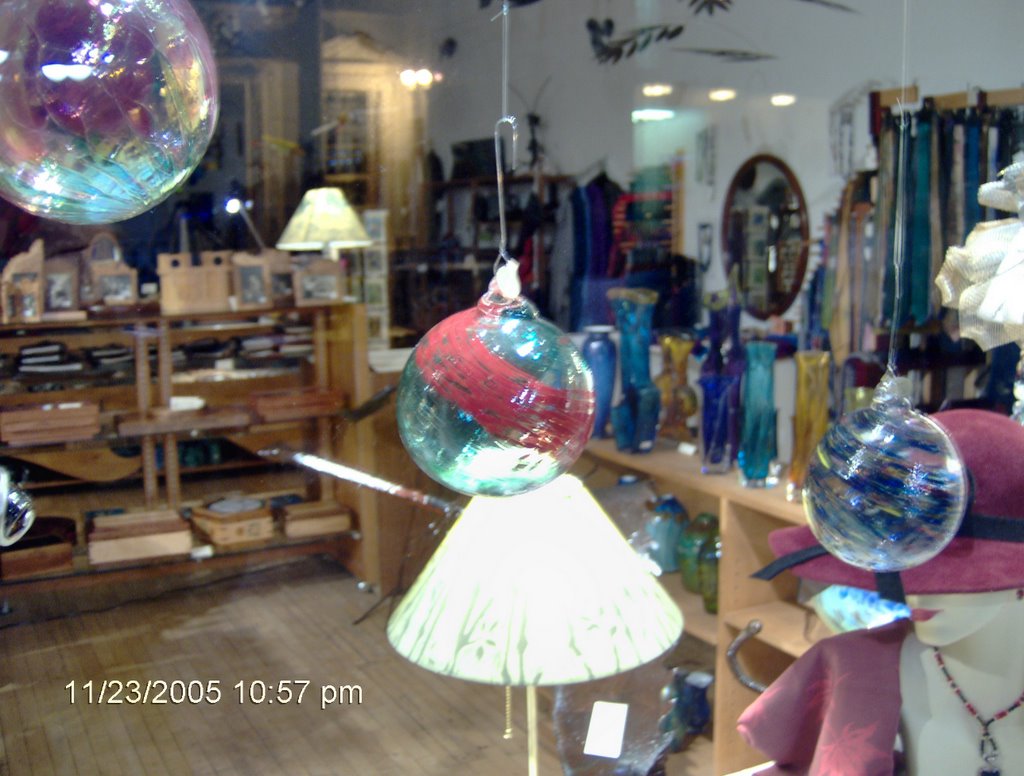
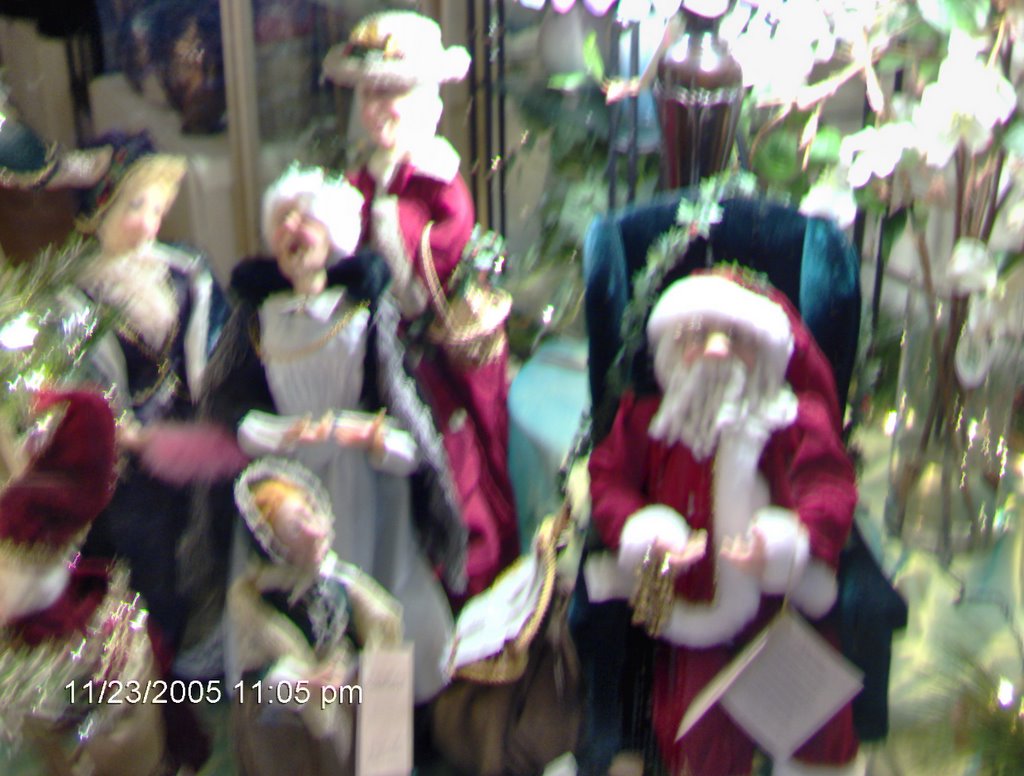
I missed the tree-lighting ceremony on Charlottesville's downtown mall early last evening, but after enjoying the Moscow Boys Choir concert at the Paramount Theatre, I wandered down the mall and took a few photos of Christmasy scenes warmly enclosed inside shop windows.

Consider this to be "photoblogging Christmas."