Friday, May 19, 2006

Kennedy Center Spring Gala - Part 2

Shortly after returning home from the Kennedy Center Spring Gala, I posted some photographs from the event.

What I did not do was write much about the substance of the evening, which centers on a performance preceded by a reception and dinner and followed by a reception and dancing.

Here is my review of the performance, as prepared for The Metro Herald. (I expect this article to appear in today's edition.):

Kennedy Center Celebrates 35 Years with Gala Fundraiser
Rick Sincere
Metro Herald Entertainment Editor

(WASHINGTON) — The John F. Kennedy Center for the Performing Arts marked its 35th anniversary on May 7 with a gala banquet, performance, and reception. Hundreds of people packed the Center’s corridors and the Concert Hall to celebrate along with the stars of past, present, and future.

Looking back on the Kennedy Center’s beginnings, with the passage of the National Cultural Center Act in 1958, to the present, the gala performance was directed by Marvin Hamlisch, the principal conductor of the National Symphony Orchestra Pops.

The first segment featured the Preservation Hall Jazz Band, joined by the Master Chorale of Washington and the NSO Pops, who played a rousing rendition of “When the Saints Go Marching In,” which energized the crowd. The song featured Mardi Gras-style dancers and was introduced by Brandon Ridenour, a third-year trumpet student from Juilliard and a rising star in the world of brass music.

Calling the Kennedy Center as a “wondrous national jewel,” the gala’s honorary chair, Tony-winning actress Angela Lansbury, was brought on stage to the melody of “Not While I’m Around,” from Stephen Sondheim’s 1979 musical Sweeney Todd. (Later in the show, Lansbury recreated her performance of “A Little Priest,” with co-star George Hearn. The pair appeared at the Kennedy Center in the national company of Sweeney Todd in 1980.)

Lansbury noted that the Kennedy Center runs the largest performing arts education program in the world, reaching some 11 million children last year. Referring to the early plans for what became known as the Kennedy Center, Lansbury said we should “be proud that the dream has been fulfilled.”

Hamlisch put together a section of the program that remembered the 2002 Sondheim Celebration. He noted that Ben Brantley of the New York Times called that series of performances “Eden in Washington” and that Entertainment Weekly said it was “the most important theatrical event of the year.” Hamlisch then conducted the NSO Pops in a medley of “The Tale of Sweeney Todd” and “You Must Meet My Wife” (from A Little Night Music) – both songs, perhaps coincidentally, introduced by Len Cariou, who last appeared at the Kennedy Center in Neil Simon’s The Dinner Party.

The medley was followed by Judy Collins singing “Send in the Clowns,” perhaps Sondheim’s only Top Ten hit, which she made famous in her 1974 recording. Hamlisch spoke for the audience when he said of Collins’ performance, “That’s a thrill, that’s just a thrill.”

The Sondheim segment was topped off with “A Little Priest,” a macabre song about serving up meat pies made with human flesh. Kennedy Center chairman Steven Schwartzman quipped afterwards that “neither Angela Lansbury nor George Hearn will be allowed near the Roof Terrace kitchen.”

In his own remarks for the occasion, Schwartzman called the Kennedy Center a “national repository for the human spirit.” He revealed that the gala had raised over $2.8 million in support of the performing arts and arts education. “That is a record,” he said.

In addition to thanking the gala’s co-chairs and the various individuals, corporations, and foundations that had contributed to the event’s success, he thanked the Veterans for National Security Foundation, which had made available dozens of tickets for members of the armed forces who have recently returned from overseas duty. When he asked the uniformed service members to rise and be recognized, the entire Concert Hall erupted in a standing ovation.

Introducing a short film about competitive ballroom dancing in New York public schools (excerpted from the documentary, Mad Hot Ballroom), Lansbury spoke of the “transformative power of the arts” and how “the arts reveal the human spirit in the most unlikely places.” When the kids from Mad Hot Ballroom took the stage and showed what they had learned, the audience went wild.

Even with the presence of such celebrities as opera singer Harolyn Blackwell, who performed an aria from Carmen Jones, violin virtuoso Sarah Chang, and not one but three Broadway actors who have played Jean Valjean in Les Miserables, among all the others mentioned, the plucky kids from Mad Hot Ballroom surely made the Kennedy Center’s 2006 Gala a night that will be remembered for years to come.

Tuesday, May 16, 2006

And Slavery Is Freedom, Too ...

An article in this week's C-VILLE about a recent meeting of left-wingers (their term, not mine -- they call themselves "Left of Center") to discuss "affordable housing" (an issue I have previously addressed in Economics 101 terms that seem beyond the ken of the discussants) has this paragraph about local neighborhood activist Joy Johnson:

“Housing is a right,” said Joy Johnson, a panelist and herself a beneficiary of public housing. As she explains it, she relies on her publicly funded residence to keep her from having “to depend on a man or the system to take care of my family. It allows me to be independent.”
Johnson gives a new meaning to "independent" that would make George Orwell blanch. As a "beneficiary of public housing," Johnson is, in fact, dependent on the taxpayers, who pay a good portion of the market value of her rent. Only in the lexicon of the loony left can "dependency" be synonymous with "independence."

The fact that people like Johnson suck on the public teat as a means to subsidize their lifestyle choices does not make them "independent" -- it makes them infantile.

In other "affordable housing" news, the executive director of the Free Enterprise Forum was on WVTF-FM's "Evening Edition" tonight, to discuss that group's new report on housing in Albemarle County. Neil Williamson said that the report, called "Locked Out: The Impact of Local Regulation on Affordable Housing," argues that land-use and other regulations have driven up the cost of housing in suburban Charlottesville.

According to a news release summarizing the report's findings:
Albemarle County ranks lowest in housing affordability in the Metropolitan Statistical Area (MSA) according to a new report issued today by The Free Enterprise Forum. The “Locked Out” report finds that just 16% of Albemarle homes are available to families earning median income. The report also finds Albemarle County has the largest planning department staff, the largest comprehensive plan and the longest approval time for subdivisions. Fluvanna County had the highest percentage of homes available to families earning median income.

Underwritten by The Charlottesville Regional Chamber of Commerce and Hi-Tech Signs, the “Locked Out” report seeks to identify existing regulatory barriers and encourage an open cost/benefit analysis between regulation and affordability. The report includes an analysis of new urbanist design regulations, growth boundaries and their impact on land use patterns.

“Hopefully this report is the start of a new dialog with all the municipalities regarding their regulatory environments and its impact on housing affordability”, said Free Enterprise Forum Executive Director, Neil Williamson, “Median income workers in Detroit, Atlanta, Dallas and Houston have a better opportunity for homeownership than here in our region”.
That news release includes an interesting and informative graphic. (You'll have to open it in a new window to be able to read it properly.) It compares housing costs in the Charlottesville area to major metropolitan areas:

The Free Enterprise Forum study merely reiterates what we have known for a long time -- restrictions, whether of land use or of other sorts, drive up costs and therefore the prices available to the consumer.

For instance, a 2002 report in the Journal of Real Estate Research found (according to a summary by the Reason Public Policy Institute):
According to the authors, the results suggest that local growth restrictions impede housing growth and lead to a larger appreciation in housing prices. This research also supports decades of scholarly research showing that growth controls can reduce housing affordability if they increase housing costs and limit the supply of land available for new housing units.
One of the favorite suggestions by "smart growth" advocates -- in Albemarle County and elsewhere -- is that local governments should encourage infill development.

Chris Fiscelli, a research fellow in the Urban Futures Program at the Reason Public Policy Institute, wrote about this topic in a 2003 article:
Smart growth and the buzzwords that accompany it are swarming our neighborhoods - sustainable development, viable communities, healthy neighborhoods, and infill development are just some of the terms of choice for planners and politicians these days.

Infill housing, promoted by a new California law, is a process where vacant sites located closer to established, developed areas receive preferential treatment for development than sites not located as close to historical city centers. Infill housing is supposed to increase density, promote affordable housing closer to jobs, preserve open space, reduce traffic congestion, and improve the environment. It doesn't. An examination reveals this policy actually exacerbates many of the aforementioned problems and does very little to alleviate the others. . . .

Simultaneously, relatively cheap land on the urban fringe remains vacant-land that could be developed to allow subsidy-free homeownership opportunities for families with low to moderate incomes. It is clear that promoting infill rental housing over "for-sale" housing located on the urban perimeter is a more expensive alternative to society and hurts overall long-term housing affordability.

The traffic congestion and air quality benefits of infill housing, touted by smart growth advocates, are also based on misconceptions. The underlying assumption is that as densities increase, residents will reduce their driving and walk and use transit for their trips. This belief has little grounding in reality. With the exception of places with very high densities such as the downtowns of New York City, Boston, Chicago, and San Francisco, increased density does not force people out of their cars. Since most markets will not bear densities high enough to induce the switch to mass transit, it is unlikely people will be leaving their cars at home. Witness Los Angeles; it is the one of the densest metropolitan areas in the country, but has very low transit use.

Since infill housing won't increase transit use, the increased density will actually increase traffic congestion as more drivers use the same amount of roadway. And that also means increased air pollution since vehicles emit more gases when traveling at slow speeds in stop-and-go traffic.
Dr. Samuel Staley, a member of the Board of Scholars for the Virginia Institute for Public Policy and director of RPPI's Urban Futures Program, summed up the problems with "smart growth" as a response to the lack of affordable housing in an article he wrote for the Virginia Institute in 2002:
Virginians need to think outside the box. As incomes rise and consumer housing preferences become more and more diverse, real-estate markets need flexibility and room to adapt. Conventional planning is incapable of achieving this. The seemingly endless stream of public hearings, micromanagement of site plans, and special-interest opposition to new development creates a cumbersome, costly, and highly uncertain approval process. This process does more to stifle housing innovation than promote it.
The most fundamental problem with "smart growth" and urban planning, in general, is that it assumes too much knowledge on the part of planners. The late Jane Jacobs and Friedrich Hayek, among other freedom-oriented thinkers, taught us decades ago that the market, with its diffusion of knowledge and communication through the price mechanism, is the best and most reliable "planner" we have available.

Prelude to the Tony Awards

When the nominations for the Tony Awards were announced today, I recognized the names of composer Matthew Sklar and lyricist Chad Beguelin, who received a nod for their work on The Wedding Singer, a musical based on the 1998 Adam Sandler movie of the same name.

I remembered the names as the creators of a 2000 musical that had its premiere at Signature Theatre in Arlington, but never made it to Broadway (despite their hopes and my prediction): The Rhythm Club, set in 1938 Germany.

Speaking to Playbill, composer Sklar gave his reaction to the news of being nominated for best score of a musical:

"I was just at home sitting on my couch watching NY1. When they read the score nomination, I let out a little scream. Well, actually a big scream. I wanted to be nice to my neighbors. Then my friends and family started calling. It meant so much for our show that we get recognized. We got five nominations in five big categories. It feels amazing. I'm sort of at a loss for words. It's been a dream of mine for a long time. We'll get to do a number on the Tony telecast."
I haven't yet seen The Wedding Singer (neither play nor movie), but here is my review of Sklar and Beguelin's earlier musical play, The Rhythm Club, as it appeared in The Metro Herald on October 13, 2000:
The Rhythm Club: Waiting for the Explosion
Rick Sincere
Metro Herald Entertainment Editor

The Rhythm Club is a firecracker ready to explode – yet some of its powder is just a bit damp. A work in progress that still needs some tweaking, it already provides an evening of great music, fine choreography, and evocative design. With some minor improvements, it will be a powerful piece of musical drama and a potential classic.

On its way to Broadway, The Rhythm Club has the potential to be for Signature Theatre what The Great White Hope was for the Arena Stage. That is, it could permanently set this small regional company into the firmament of theatrical trendsetters.

The Rhythm Club continues what seems to be Signature’s recent affinity for – or is it fascination with – musicals set in the 1920s and ‘30s. Last year’s Floyd Collins was about events in 1924 Kentucky; and Side Show recreated Depression-era vaudeville. Later this season, Donna Migliaccio will play Mama Rose in Gypsy, also from the same period. And here The Rhythm Club, although not about America, gives us Nazi Germany: Hamburg, 1938.

If nothing else, this affinity gives Signature’s costume designers a wonderful opportunity: Gregg Barnes’ costumes in The Rhythm Club are marvelous. Each piece of clothing not only represents a unique period in history, it supports and enhances the character who wears it.

The Rhythm Club
treads on ground already covered, as a musical, by Cabaret, and in terms of storyline by the movie, Swing Kids. The main characters are adolescents who rebel against Nazi authority by listening to, performing, and dancing to forbidden music – the swing music of Benny Goodman, Artie Shaw, Glenn Miller, and others, as well as the pure jazz of Louis Armstrong and the hybrid sounds of Duke Ellington and Count Basie.

Why was this music forbidden? The Nazis saw it as “Negro music performed by Jews – a double whammy in that racially-based legal system. But the impetus for such control goes back much farther. In The Republic, Plato (speaking as Socrates) said that “the introduction of a new kind of music must be shunned as imperiling the whole state; since styles of music are never disturbed without affecting the most important political institutions,” adding: “It is here in music that our guardians should erect their guardhouse.” To this, Socrates’ colleague Adeimantus replied: “At any rate it is here that lawlessness easily creeps in unawares.” If nothing else, Hitler understood what the ancient Greeks did: by control of music and art, the state can also control the minds and souls of the people.

Enter two friends, Jake and Adam (Jeremy Kushnier and Tim Martin Gleason). Adam is a composer who absorbs the works of the American swingmasters. Jake is a conductor who admires their zest and celebrity. Together, they have put together a small ensemble and even have persuaded a classically trained singer, Petra (Lauren Kennedy), to front for their band. With the assistance of manager Greta (Megan Lawrence), they persuade Gustav Hebert (Buz Mauro), the owner of the underground Rhythm Club, to let them play for his customers.

Jake and Adam meet with success. In the argot of swing, they ride and send like Satchmo. Their talents merit the attentions of the menacingly effete Herr Kroger (Jonathan Hogan), a Nazi official with connections to the music business in America. He offers them their ticket to stardom and out of the path of danger that Nazi Germany presents (particularly to Adam and his family, who are Jews) – or does he?

To go further in this synopsis would give away too much. At this point, let us be frank about The Rhythm Club’s shortcomings, then go on to its superlatives.

First, the backstory of The Rhythm Club has a number of holes in it. How, for instance, do the musicians in Jake and Adam’s band learn their stuff, aside from listening to smuggled acetates? They seem to rise sui generis, like some kind of Hamburg Howard Roark. While important bits of information about each character are revealed over time in the play, there are still questions that need answering. Perhaps a prologue could help, or some flashbacks.

Second, anyone can see the play’s ending from a mile away. I won’t reveal it now, but suffice it to say that a reasonable closing line could be something akin to “Round up the usual suspects.”

Third, the sound design (by Tony Angelini) in Signature’s space is seriously flawed. Particularly with some of the hotter numbers, it was difficult to hear the singers over the orchestra. This is one rare instance in which body microphones would have been helpful. (Signature used them for The Fix, so the intimate staging alone does not explain their absence here.)

That said, one cannot praise highly enough The Rhythm Club’s music and dancing. Just as Stephen Sondheim filled his Follies with pastiches of the music from the Broadway revues of the 1920s and ‘30s, composer Matthew Sklar and lyricist Chad Beguelin emulate – not imitate, but emulate – the various musical styles of the great swing bands. Much credit for this must go to orchestrator Don Sebesky (fresh from winning a Tony Award© for the revival of Kiss Me, Kate) and music director Robert Billig. Particularly given the small size of the orchestra – only seven pieces – it is astounding that they wereable to recreate so accurately the sound of the era. Some numbers evoked Artie Shaw so accurately, one expected to see Lana Turner waiting in the wings. (Or is it Ava Gardner?)

Sklar and Beguelin and their collaborators successfully evoke the sometimes unique, sometimes overlapping musical styles of the 1930s. (“Up in Heaven They Play Swing,” which becomes something of a theme for the show, sounds remarkably like Jimmy Lunsford.) The other, “Broadway” tunes are not so remarkable, but they bear echoes of Sondheim (“Inside the Music”) and Kander & Ebb (“They Taught Me Well,” sung by mothers Florence Lacey and Barbara Walsh, is virtually a duet version of “What Would You Do?” from Cabaret).

Integrated with the music is what really makes The Rhythm Club shine: the choreography by Jodi Moccia. Although the show comes a few years late to capitalize on the swing dancing craze of the mid-1990s (and the remarkable TV ads for The Gap), Moccia pulls out every trick in her leotard to make the joint jump.

Altogether, director Eric Schaeffer has pulled together a visually brilliant, musically inventive production.

A prediction: The Rhythm Club will be a modest success on Broadway, but a huge hit when it arrives in London’s West End.

Monday, May 15, 2006

New Virginia Blog Carnival

The latest installment in the weekly Virginia Blog Carnival series is up at The Jefferson Mammoth. Nickfinity does a terrific job in excerpting and summarizing this week's entries, including my photoblog of the Kennedy Center Spring Gala.

Other topics he highlights from around the Commonwealth include the arts in Richmond, alternative fuels, bipartisanship in Virginia politics, priorities for the next election cycle, legislative redistricting, gay marriage, and a recipe for baked ziti.

Saturday, May 13, 2006

'An Absolute Right'

In a Washington Times article today about the bloody, unfortunate killing of one Fairfax County police officer and the serious wounding of another in a shoot-out with an 18-year-old last week, longtime Fairfax County Commonwealth's Attorney Robert F. Horan, Jr., was quoted as saying:

"That's America. You have an absolute, unqualified constitutional right not to talk to police if you don't want to."
This quotation should be emblazoned in every high school civics textbook. We have to remember, the Bill of Rights is for everyone, not just those who were smart enought to be paying attention in class.

No one should ever submit to interrogation by law enforcement officials without first insisting that an attorney be present, and no one should ever say a word until that attorney arrives. When the police read a suspect his Miranda rights, they are not kidding when they repeat "Anything you say will be used against you in a court of law."

Young Alan Newsom and his parents learned that at their peril, since he was convicted of a serious crime solely on the basis of a statement he made to police without an attorney present. As reported last week in The Hook,
Attorney Bill Hicks has insisted his 15-year-old client was convicted solely on his statement to police, which took place without legal counsel or his parents, an interrogation so stressful that the boy "would have confessed to the Kennedy assassination," his father says.
The Fourth and Fifth Amendments are there for the protection of all of us, guilty and innocent alike. The Founding Fathers did not put them in the Constitution for cosmetic reasons. The Fairfax Commonwealth's Attorney knows this; I'm not so sure about prosecutors and ex-prosecutors elsewhere in the state.

Monday, May 08, 2006

Kennedy Center Spring Gala


Celebrating its 35th birthday this year, the John F. Kennedy Center for the Performing Arts on Sunday presented its annual spring gala, which brought in $2.8 million in funds to underwrite the performing arts and performing arts education.

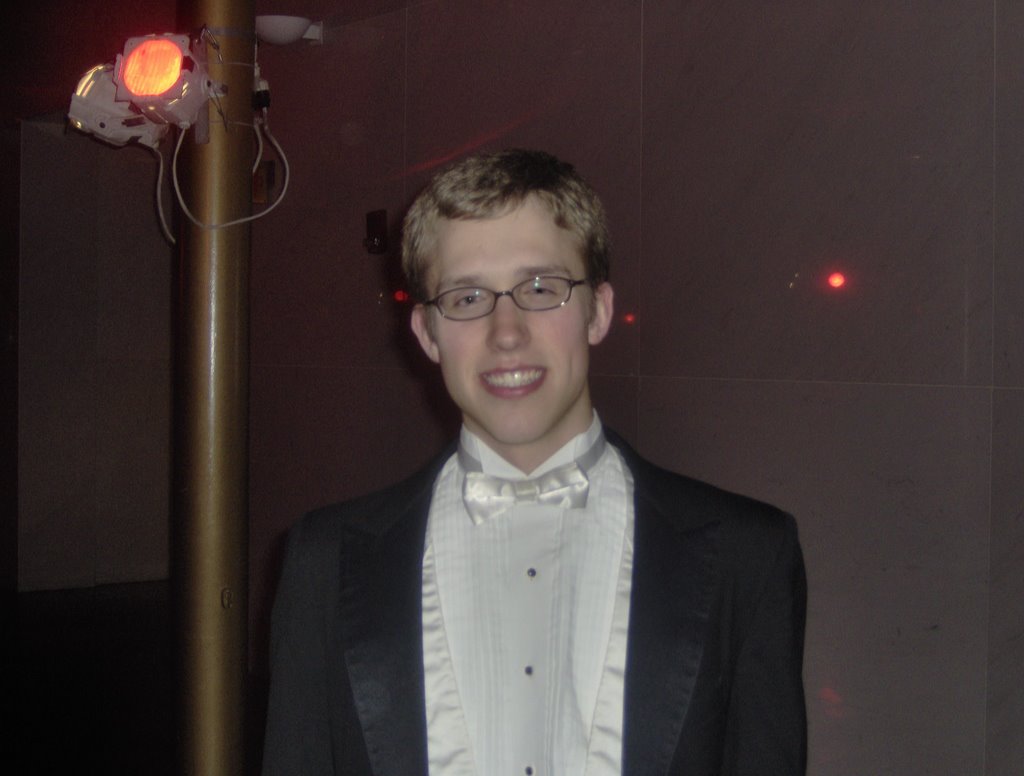
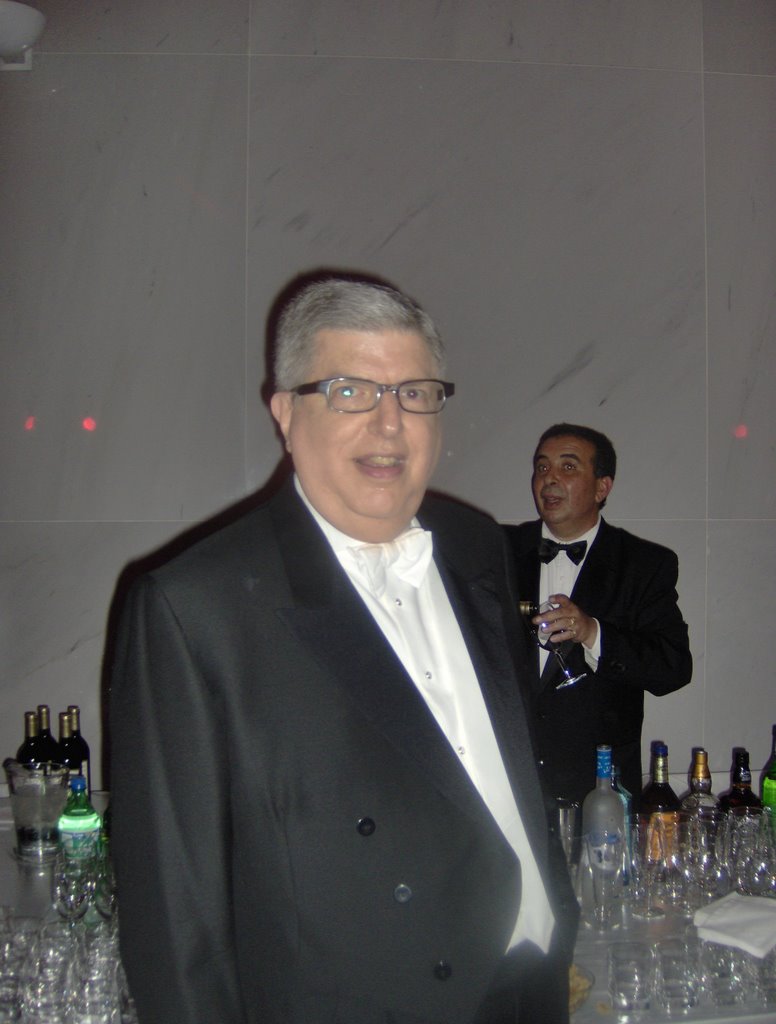
After a really big show in the Concert Hall, featuring the National Symphony Orchestra Pops, the Ailey II dancers, the kids from Mad Hot Ballroom, the Preservation Hall Jazz Band, the Master Chorale of Washington, and many more stars of past, present, and future, gala-goers and celebrities mingled on the Kennedy Center's Rooftop Terrace, enjoying cocktails and desserts. Here are a few of the shots I snapped at the party.


The Honorary Chair of the evening's festivities was Angela Lansbury, Oscar-nominated and Tony-winning actress and star of the musical theatre milestones Anyone Can Whistle, Mame, Gypsy, and Sweeney Todd. (We'll pass by Dear World for the moment.)


Tony-Award-winning actor George Hearn, Broadway's original Albin in La Cage Aux Folles, was Angela Lansbury's costar in the national company and television productions of Sweeney Todd -- by many accounts, the best of the many Sweeney Todds to play the role. He and Lansbury sang "A Little Priest" on the Concert Hall stage Sunday night, to rousing applause. Mr. Hearn told me he will be doing an evening of Sondheim songs at Ravinia this summer, and he also plans to perform in a concert version of Frank Loesser's The Most Happy Fella.


One of the young artists featured at Sunday's gala was trumpeter Brandon Ridenour, a third-year student at Juilliard, who was recommended to NSO Pops conductor Marvin Hamlisch by Juilliard's president, Joseph W. Polisi, and the chair of the brass department, Raymond Mase. He has a new recording with his pianist father (Rich Ridenour), called Trumpet Invasion, (which his mother was kind enough to give to me, drawing it from her purse like a magician pulls a rabbit from his hat).


Speaking of musicians, the aforementioned Marvin Hamlisch -- who has brought home Oscars, Tonys, Grammys, Emmys, Golden Globes, and even the Pulitzer Prize -- was on hand as well. Maestro Hamlisch was credited with directing the whole amazing show, whose music spanned the spectrum from opera to Broadway to salsa to tap to spirituals to tango to the Bruch violin concerto.


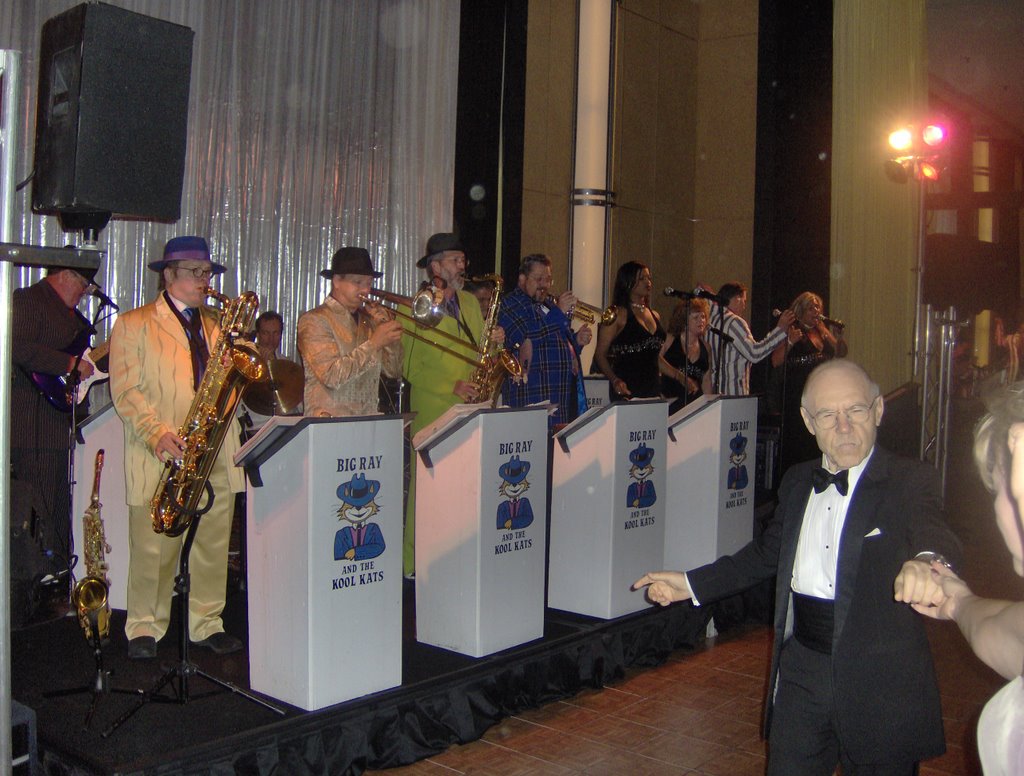
Amidst all this star power, it was Charlottesville's own Big Ray and the Kool Kats that provided the dance music for the post-gala reception!


Some people are not old enough to remember Angela Lansbury from Gaslight or The Manchurian Candidate or as Auntie Mame or Mama Rose. But they do, as George Mason University student Richard Morrison does, remember her as Jessica Fletcher on TV's long-running Murder, She Wrote. (That's Richard to the right, the one not wearing diamonds.)

Update: I have posted the review I wrote about the Gala performance for the Metro Herald here.

Saturday, May 06, 2006

The Odd and the Inscrutable

It has been a while since I last looked at the odd, eccentric, and simply inexplicable search terms that lead people to this blog.

The top fifteen search terms that bring people here are all fairly straightforward, but they also fall into two main categories: "Dave Moffatt" and "Aaron Carter." (Thanks to all their fans for driving my traffic upward.) Here are the top fifteen in order:

dave moffatt

dave moffatt gay

rick sincere

aaron carter drugs

aaron carter pot

scott moffatt

sincere

dave moffat

aaron carter marijuana

dave moffatt nude

karen hospital

dave moffat gay

aaron carter smoking pot

dave moffatts

aaron carter on drugs
Truth be told, some of the strange searches also include these teen-idol celebrities, and certainly many more in that broad category of The Young and the Cute and the Talented.

I've alphabetized the list except for one group of terms, which you will see at the end.

"a Priest and a Rabbi are on an Airplane"


aaron carter circumcised


adam smith dueling banjos


aluminum christmas tree rage


america's fungible humans: females and tin soldiers


Ayn Rand "does not understand socialism"

boxer fraud voting 2006 taxes iraq


cheats on senior seminar intent papers literature restaurant

circumcised celebrities

criminal laws are they real orare they fiction

Daniel Radcliffe is attending UVA in 2007

Dave Moffatt Gay Porn


did Tom Lehrer inspire Mel Brooks and hitler


Frankie Muniz circumcised


funerals advantages and disadvantage


gay people named arlene

gregory pecks gravesite

hooters fairfax hillary

hot gossip on Ronald Reagan

Is Rex Smith circumcised??

jamaican bobsled 2006 fiat video


jeremy sumpter in emergency room


middle school student models nude

milton friedman prostitution

national underpants

No one in France wears their underpants

older porn sample pics over 40

oliver wendall holes jr. on court management
(Yahoo: Did you mean: oliver wendell holes jr. on court management)

photos when thomas jefferson was a baby

pronouncing sommelier

public sex with old lady pics

really like dick

rumors of elephant man being gay


scared plant traditions, charlottesville virginia


Sodomizing a child tips

spongebob at tinky winky pool party

Swedish bestiality clips

teenagers who want to be gay


Who is hotter? Jesse mccarthy Or daniel Radcliffe

And in the similar patterns category:

"lou taylor pucci" shirtless

"hunter parrish" shirtless

Josh Hutcherson Shirtless

"joshua bell" shirtless photo

daniel bruhl shirtless

aaron carter shirtless

"rick santorum" "shirtless"


I recognize all of the names there but "Josh Hutcherson." But really -- Rick Santorum?!

Thursday, May 04, 2006

'Wait, Wait ... Don't Tell Me'

Funny thing -- in all the years I've lived and worked in Washington, D.C., I never attended an event at Lisner Auditorium, one of the area's biggest performance venues. Until tonight.

Funny thing -- in all the years that I have listened to radio programs, been a guest on radio programs, and even (on one rather unmemorable midnight-to-dawn shift) co-hosted a radio program, I never saw a radio program performed. Until tonight.

Tonight I attended a taping of the National Public Radio news quiz show, Wait, Wait ... Don't Tell Me. WWDTM is one of my favorite weekend listening habits. I used to listen on Saturdays on WMRA out of Harrisonburg, but that station no longer carries it. Even when WMRA broadcast the program, I also listened a second time each Sunday on WVTF out of Roanoke. The problem is, WVTF plays the show at 10:00 a.m., when I need to be getting ready to go to church. So I often find myself simply listening on line at the Wait, Wait ... Don't Tell Me web site. (In the D.C. broadcast area, WAMU-FM carries the show at 11:00 a.m. on Saturdays. WAMU was a cosponsor of tonight's taping.)

As I suspected, the hour-long program takes longer than that to record. Tonight's performance lasted about 90 minutes, which included some "re-dos" that provided a surreal, disjointed quality to the end of the evening.

The panel tonight consisted of regulars Charlie Pierce, Roxanne Roberts of the Washington Post (the hometown favorite), and Tom Bodett (who did not tell us "we'll leave the light on for you.").

Of course, Chicago Public Radio's Peter Sagal was the host and compere while NPR Morning Edition's venerable Carl Kasell was announcer, official judge, and scorekeeper.

The "Not My Job" segment guest was -- as I might have predicted -- D.C. Mayor Anthony Williams, who arrived wearing a Nationals' baseball cap, which he had to remove when he donned his headphones. Williams was quizzed on odd facts concerning the president of Turkmenistan.

Why would WWDTM visit Washington when it could just as easily tape the show back home in Chicago? Peter Sagal said that, when coming to Washington every two years, as they try to do, "we feel like big bacon fans do when they get to visit a swine farm." "We take so much from Washington" in the form of material for questions and jokes, Sagal said, "we feel we should give something back."

Wait, Wait ... Don't Tell Me claims to have about 2 million weekly listeners. (Most of them, said host Sagal, "socially unsuccessful in high school.") If tonight's audience is evidence, that claim is true -- the part about 2 million, not the nerd factor. Lisner Auditorium was stuffed to the gills with fans of all ages, from grammar-school kids to their grandparents. And the audience was enthusiastic, engaged, and happy, too. (The person sitting next to me, a reporter for the Chicago Tribune Washington bureau, said that a friend of his calls Wait, Wait ... Don't Tell Me "Hollywood Squares for smart people." How true.)

I'll be writing a full-length article on the show for The Metro Herald next week. I just wanted to get the basics down on pixels before driving home to Charlottesville. I'm looking forward to listening this weekend to see how the edited version of Wait, Wait ... Don't Tell Me differs from the live performance. (I can think of a few hilarious off-color remarks that won't make the final cut ... but beyond that?)

I have to add that it seems odd, in answer to the question, "What were you doing tonight?", to say, "I was watching a radio program." Odd, but oddly satisfactory.

Update, May 5 @ 3:47 p.m.: "Galileo" has a LiveJournal entry on the same performance I saw, with the amusing title "Bong Hits for Jesus." (I have to go back to my notes, but I know that was the punchline to one of the jokes last night.)

Tuesday, May 02, 2006

Election May Day

Charlottesville held a historic election today: Its first for a school board, at last jettisoning one of the remnants of Jim Crow; and its last to take place in May, since local elections will move to November in 2007.

It was a long day and a busy one, but I had a chance to take a few photos along the way.


It was still dark in the morning when election officials reported to work. The three presidents on the facade of city hall stood watch in an almost preternatural predawn glow.


Signs near the voter registration office point potential voters toward the Recreation Precinct, the city's largest by number of registered voters.


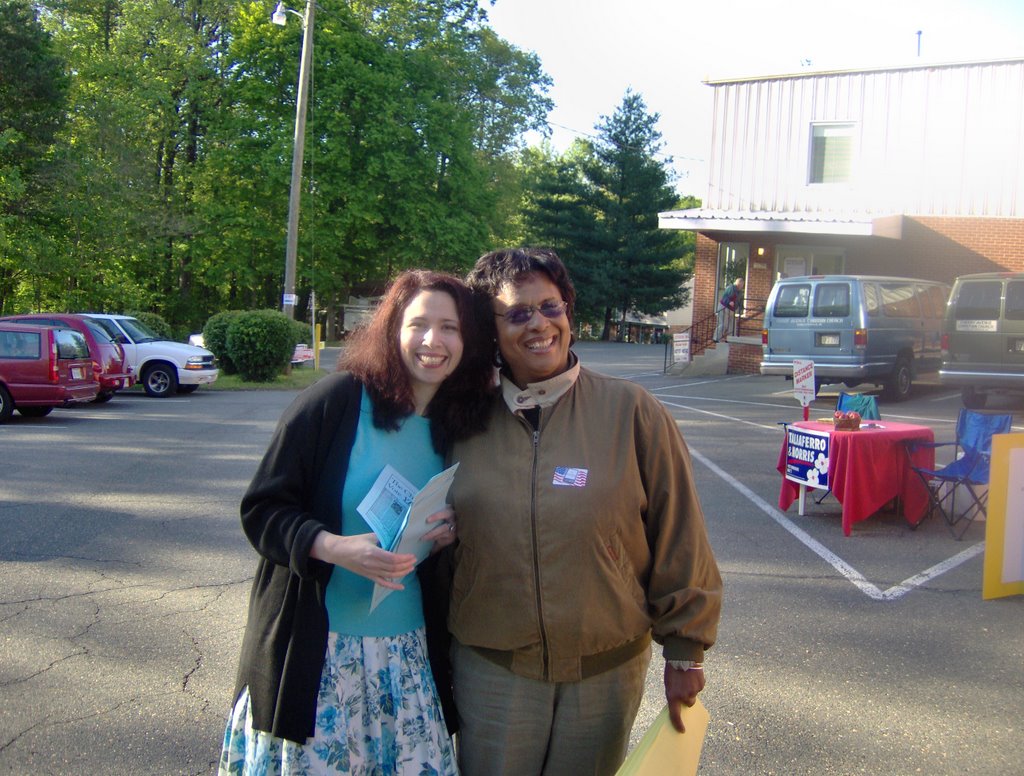
Delegate David Toscano (D-57) campaigns with former Charlottesville Fire Chief Julian Taliaferro. Toscano told me he enjoys reading this blog (Taliaferro did not).


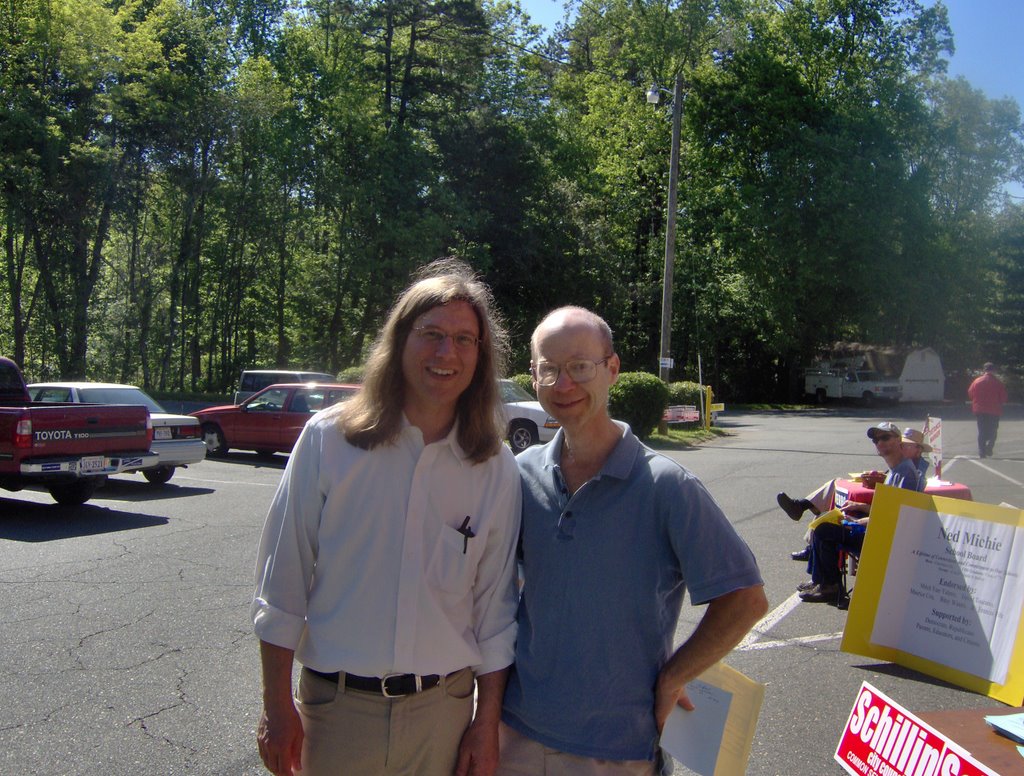
Joan Schilling shares a laugh at Jefferson Park Precinct with School Board candidate Leah Puryear.


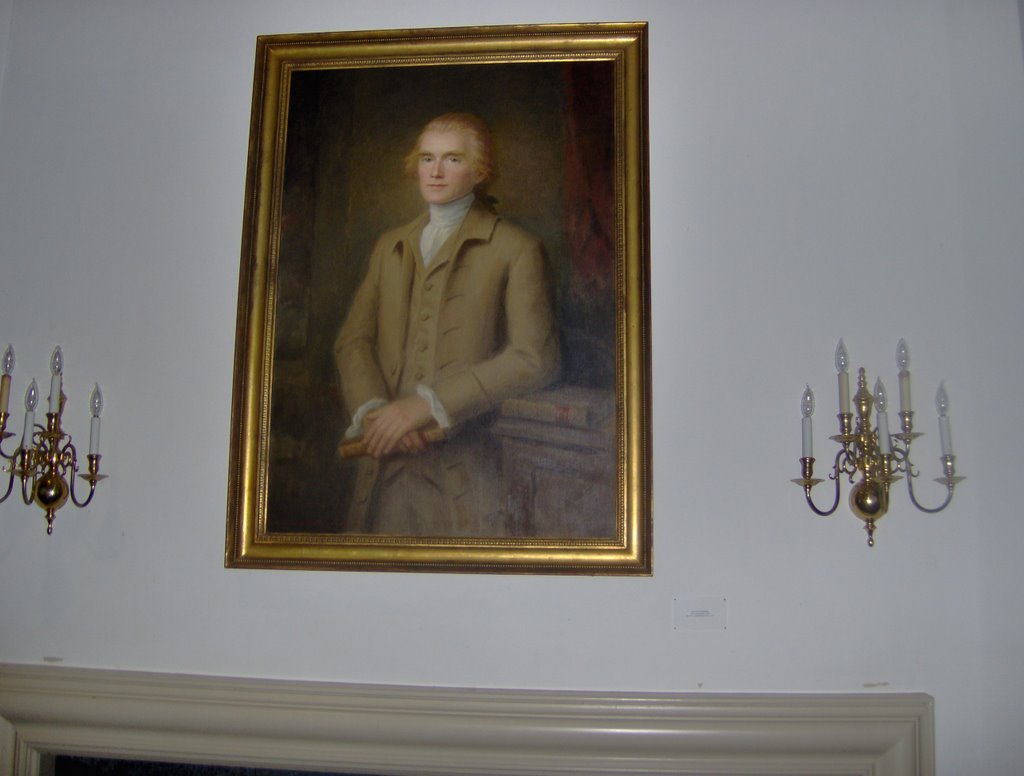
I found this portrait of Young Mr. Jefferson on the way out of the voting area of Alumni Hall Precinct.


City Councilor Rob Schilling with School Board candidate Vance High outside Jefferson Park Precinct.


Campaign signs were everywhere you turned.


City Council candidate Dave Norris (right) with some College Republicans at Alumni Hall. Norris also told me he enjoys reading this blog. (Is there some secret, liberal Democrat code embedded in my prose?)

Turnout for this election was slightly more than 25 percent of registered voters. The day ran smoothly and was virtually incident-free. Chief election officials returned their documents and equipment to the Voter Registration Office along with raves about how good the day was in comparison to past elections. They were especially full of praise for the first-time election officials (including 27 University of Virginia students recruited through a special program organized by Deputy Registrar -- and UVa alumnus -- Evan Smith) who demonstrated dedication, competence, and interest in their (largely) volunteer positions.

At the end of the day, Julian Taliaferro and Dave Norris were victorious, with incumbent Councilor Rob Schilling coming in third. Despite strongly-worded endorsements for Schilling by the Daily Progress and the Charlottesville-Albemarle Tribune (an African-American weekly), the Democrats once again took monopoly control of City Council, using their well-practiced get-out-the-vote machinery and sheer numbers to their advantage. (Unofficial election results can be found on the Charlottesville City web site.)

Winners of the School Board race were incumbent Ned Michie and the team of Leah Puryear and Juandiego Wade. Bob Gibson has that story here.

As usual, there were a handful of write-in votes cast by those who were dissatisfied with the options on the ballot. No votes for Mickey Mouse of Daffy Duck, but a lot of scattered votes for people whose names don't make the front pages. (Apparently a number of people wrote in their own names or those of close friends.) Still, a few Charlottesville "names in the news" show up in the write-in category: Blair Hawkins, Jon Bright, Coran Capshaw, Peter Kleeman, Tom McCrystal, Shirley Presley, and Waldo Jaquith all got votes for City Council. Write-ins for School Board included Andy Warhol, Bill Igbani, Dede Smith, Ho Chi Mama, and Karen Waters.

A quick glance at the numbers shows that the Schilling campaign's decision to encourage "single-shot" voting ("Vote for Rob and Rob alone") had an impact, but was not sufficient to overcome the Democratas traditional advantages. It looks like more than 1,700 Charlottesville voters chose to vote only for Schilling, with about 600 voting for Schilling and one of the other two candidates. (It will take a thorough examination of the Cast Vote Records -- snapshots of how each individual voter combined his or her voting choices -- to determine the precise numbers of single-shots.)

Speaking of single shots, in a letter to the editor published in Tuesday's edition of C-VILLE, Gene Fifer simultaneously insults elementary school teachers, musicians, property managers, entrepreneurs, web designers, and real estate salesmen. He does so in an efficiently-delivered, multipronged calumny directed at Councilor Schilling, who (Fifer asserts) "has never had to work a day in his life." Since Schilling has held all of those named jobs over the years, one can logically infer from Fifer's rhetoric that he believes nobody who does those jobs works hard for a living.

Tomorrow is the canvass, when the official election results will be certified. Now it is time for bed.