Showing posts with label The Last Jedi. Show all posts

Monday, December 18, 2017

Guest Post: 'The Last Jedi' Resonates with the Lessons of Lord Acton

Power corrupts, regardless of whether you're Jedi or Sith.

by Mateusz Machaj

[The following article contains a few elements of the plot of The Last Jedi, which some may consider spoilers.]

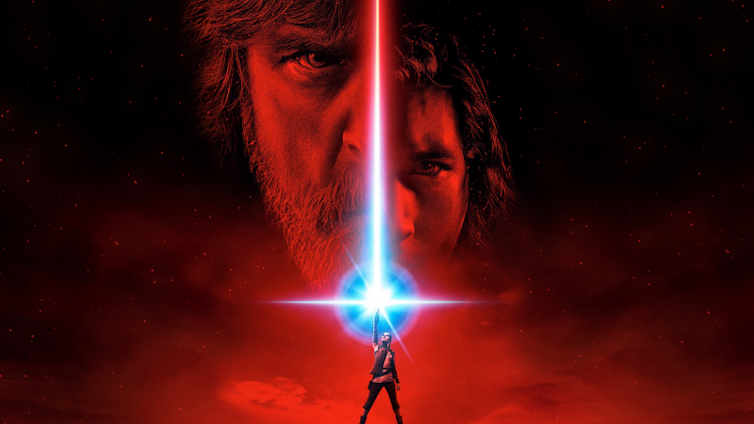
Luke SkywalkerPutting aside the creative and entertaining value of the new Star Wars movie, one major element remains strong with the saga: its warnings about the dangers of power. They actually go even further than they did in the previous installments.

The title itself may be mind-boggling to some of the fans, much as the line we heard in the trailer from the Jedi hero, Luke Skywalker, who wants the “Jedi to end.” Some were wondering what big secret may be hidden in those words, but not the people who paid attention to the messages already present in the previous episodes, especially the prequel trilogy (however imperfect it was). The main protagonist and idealist wants the Jedi to end because the school has become a legacy of failure, hypocrisy, and hubris.

The Role of the Jedi
They were a part of the Old Republic system and served as a special service having superior privileges granted by the government. Besides the legal commands, they had their own education system which raised new generations of followers. Eventually, they failed miserably in training the pupils. One of them even became the leading man responsible for building terror in the evil Empire. Careful observation would lead the viewer to such conclusions – now the main hero states so openly and with merits (it is also a good artistic tool for the character on screen to repeat fans’ views as it happens in the movie).

What Luke offers in his reinterpretation of events (as compared to his personal predecessors) is the more thoughtful understanding of the way world functions. He notices that knowledge and the workings of everything in the universe (the “force”) are not things that belong to one group of people called the Jedi. To argue so is vanity as those things cannot, and should not, be monopolized by one agency — perhaps a reflection that previous Jedi teachers did not see in full picture.

Moreover, that has led to arrogance and blindness to the obvious dangers of political systems, of which they were part. We got to see them training many of the younglings, but mostly in a physical and spiritual way. Nobody was teaching them about social sciences, human relations, and how politics functions — at least nowhere we could see. The downplaying of political economy is what eventually killed them and destroyed the Republic, finally to be substituted by the evil Hobbesian rule of the Emperor.

The Lesson of Lord Acton
power corrupts absolute power corrupts absolutelyLuke learned the hard way what Lord Acton taught us: power is corruptive. Control over other people can easily make one focused only on a particular goal at the expense of the free will of others. Part of the reflection made by Luke can be inferred by historically studying what happened to the Jedi in the past episodes. Luke further learns this in his personal experience: how even a mature teacher can be easily tempted to make wrong and authoritarian judgments about people, leading them to disastrous consequences.

No human agency or real person should have the ultimate power over everyone else’s fate. Such themes were always the main messages of the Star Wars movies that started right at the beginning in 1977. The newest movie makes a shining and almost Tolkienian conclusion reached by simply following the logical inferences. The rule of power applies not only to the people we consider “bad,” “evil,” or “corrupted" because not a single human being is either forever lost or always free from misplaced temptations or free from being prone to failure. Both redemption and temptation are not far away from anybody. Anyone can make a mistake. We should distrust any rules giving too much power to any person or group of people, not just the ones recognized as the “bad guys.”

The original trilogy showed that bad people are also human beings who still can be converted from bad to good. The prequel trilogy showed that good people can do bad things, too, willingly or not. As we further learn from The Last Jedi, corruptive potency hidden in the meanders of power is actually nothing personal.

That is why solutions for efficiently curtailing expansionary power have to be universal and impersonal.

Mateusz Machaj Star Wars The Last Jedi

Mateusz Machaj is an assistant professor of economics at the University of Wroclaw (Poland). He is the author of Money, Interest, and the Structure of Production. Resolving Some Puzzles in the Theory of Capital.


This article was originally published on FEE.org. Read the original article.


Friday, December 15, 2017

Guest Post: What the robots of 'Star Wars' tell us about automation


Paul Salmon, University of the Sunshine Coast

Millions of fans all over the world are eagerly anticipating this week’s release of Star Wars: The Last Jedi, the eighth in the series. At last we will get some answers to questions that have been vexing us since 2015’s The Force Awakens.

Throughout the franchise, the core characters have been accompanied by a number of much-loved robots, including C-3PO, R2-D2 and more recently, BB-8 and K2-SO. While often fulfilling the role of wise-cracking sidekicks, these and other robots also play an integral role in events.

Interestingly, they can also tell us useful things about automation, such as whether it poses dangers to us and whether robots will ever replace human workers entirely. In these films, we see the good, bad and ugly of robots - and can thus glean clues about what our technological future might look like.


The fear of replacement


One major fear is that robots and automation will replace us, despite work design principles that tell us technology should be used as a tool to assist, rather than replace, humans. In the world of Star Wars, robots (or droids as they are known) mostly assist organic lifeforms, rather than completely replace them.


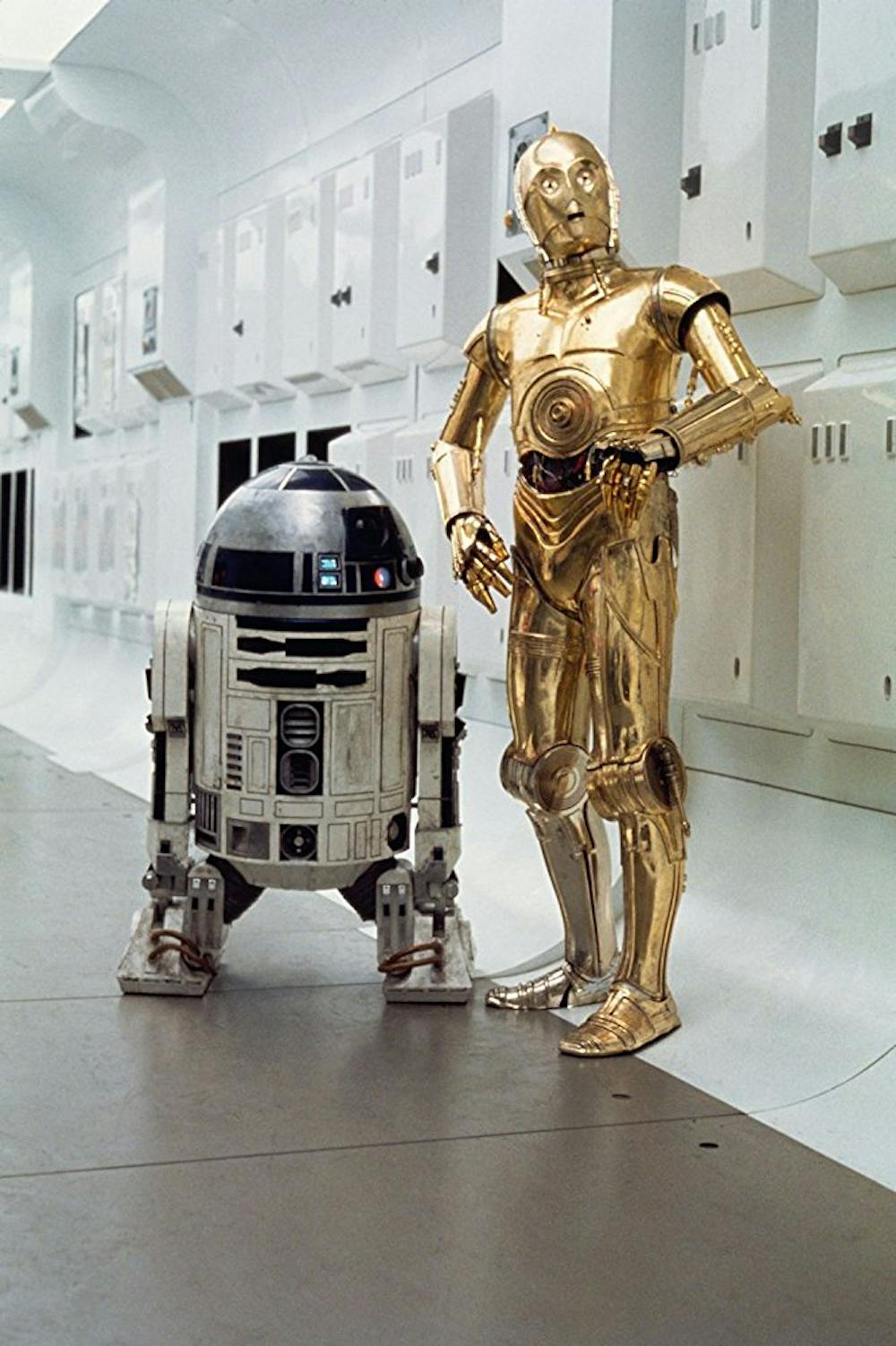
R2-D2 and C3PO in A New Hope.
Lucasfilms/IMDB


So for instance, C-3PO is a protocol droid who was designed to assist in translation, customs and etiquette. R2-D2 and the franchise’s new darling, BB-8, are both “astromech droids” designed to assist in starship maintenance.

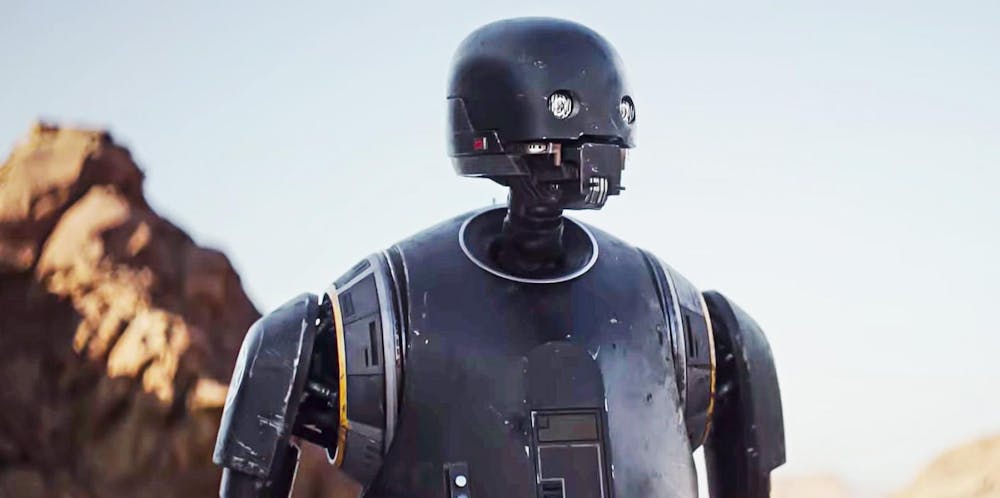
In the most recent movie, Rogue One, an offshoot of the main franchise, we were introduced to K2-SO, a wisecracking advanced autonomous military robot who was caught and reprogrammed to switch allegiance to the rebels. K2-SO mainly acts as a co-pilot, for example when flying a U-Wing with the pilot Cassian Andor to the planet of Eadu.

In most cases then, the Star Wars droids provide assistance – co-piloting ships, helping to fix things, and even serving drinks. In the world of these films, organic lifeforms are still relied upon for most skilled work.

When organic lifeforms are completely replaced, it is generally when the work is highly dangerous. For instance, during the duel between Annakin and Obi Wan on the planet Mustafar in Revenge of the Sith, DLC-13 mining droids can be seen going about their work in the planet’s hostile lava rivers.

Further, droid armies act as the frontline in various battles throughout the films. Perhaps, in the future, we will be OK with losing our jobs if the work in question poses a significant risk to our health.


K2-SO in Rogue One Lucasfilm IMDB Star Wars robots droids

K2-SO in Rogue One.
Lucasfilm/IMDB


However, there are some exceptions to this trend in the Star Wars universe. In the realm of healthcare, for instance, droids have fully replaced organic lifeforms. In The Empire Strikes Back a medical droid treats Luke Skywalker after his encounter with a Wampa, a yeti-like snow beast on the planet Hoth. The droid also replaces his hand following his battle with Darth Vadar on the planet Bespin.

Likewise, in Revenge of the Sith, a midwife droid is seen delivering the siblings Luke and Leia on Polis Massa.


Droids assist the birth of Luke and Leia Skywalker in Revenge of the Sith.


Perhaps this is one area in which Star Wars has it wrong: here on earth, full automation is a long way off in healthcare. Assistance from robots in healthcare is the more realistic prospect and is in fact, already here. Indeed, robots have been assisting surgeons in operating theatres for some time now.

Automated vehicles


Driverless vehicles are currently flavour of the month – but will we actually use them? In Star Wars, despite the capacity for spacecraft and star ships to be fully automated, organic lifeforms still take the controls. The spaceship Millenium Falcon, for example, is mostly flown by the smuggler Han Solo and his companion Chewbacca.

Most of the Star Wars starship fleet (A-Wings, X-Wings, Y-Wings, Tie Fighters, Star Destroyers, Starfighters and more) ostensibly possess the capacity for fully automated flight, however, they are mostly flown by organic lifeforms. In The Phantom Menace the locals on Tatooine have even taken to building and manually racing their own “pod racers”.

It seems likely that here on earth, humans too will continue to prefer to drive, fly, sail, and ride. Despite the ability to fully automate, most people will still want to be able to take full control.

Flawless, error proof robots?


Utopian visions often depict a future where sophisticated robots will perform highly skilled tasks, all but eradicating the costly errors that humans make. This is unlikely to be true.

A final message from the Star Wars universe is that the droids and advanced technologies are often far from perfect. In our own future, costly human errors may simply be replaced by robot designer errors.


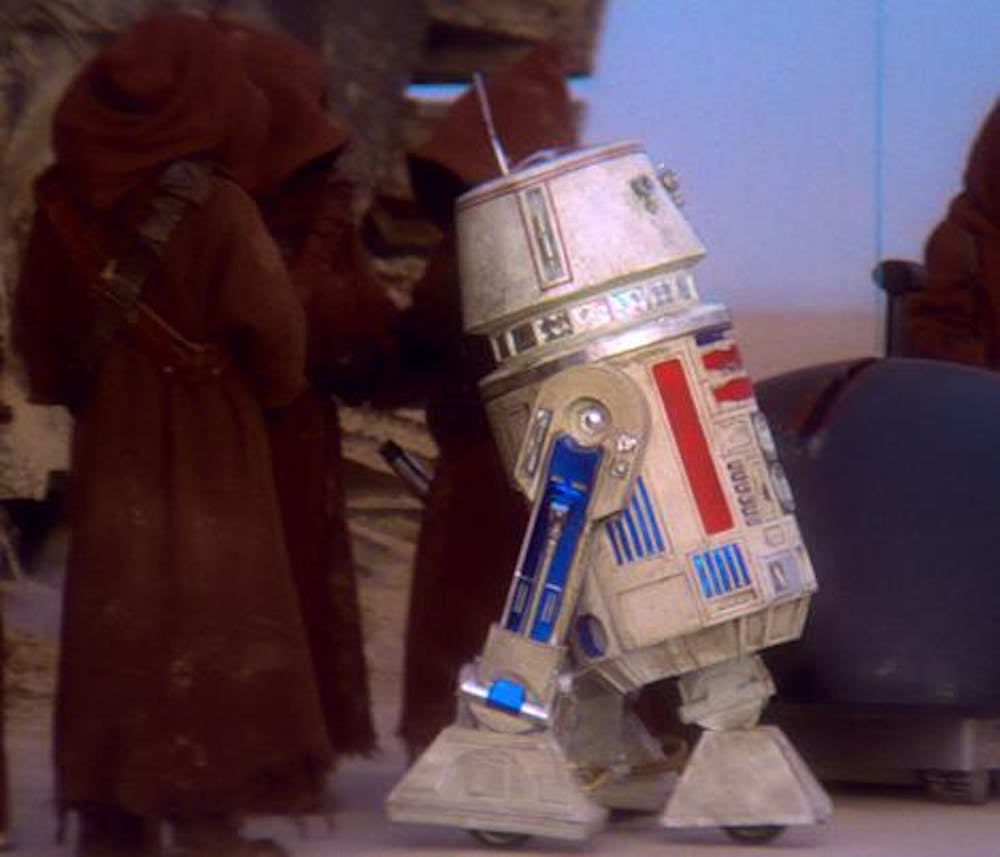
R5-D4, the malfunctioning droid of A New Hope Star Wars

R5-D4, the malfunctioning droid of A New Hope.
Lucasfilms/IMDB


The B1 Battle Droids seen in the first and second Star Wars films lack intelligence and frequently malfunction. C-3PO is notoriously error prone and his probability-based estimates are often wide of the mark.

In the fourth film, A New Hope, R5-D4 (another astromech droid) malfunctions and explodes just as the farmer Owen Lars is about to buy it. Other droids are slow and clunky, such as the GNK Power droid and HURID-327, the groundskeeper at the castle of Maz Kanata in The Force Awakens.

The much feared scenario, whereby robots become so intelligent that they eventually take over, is hard to imagine with this lot.

The ConversationPerhaps the message from the Star Wars films is that we need to lower our expectations of robot capabilities, in the short term at least. Cars will still crash, mistakes will still be made, regardless of whether humans or robots are doing the work.
Paul Salmon, Professor of Human Factors, University of the Sunshine Coast

This article was originally published on The Conversation. Read the original article.

Thursday, December 14, 2017

Guest Post: Why Hollywood needs more films like 'Star Wars'

Neil Archer, Keele University

Try to imagine a world without Star Wars. It’s 40 years since George Lucas unveiled the first in his sci-fi franchise and, with The Last Jedi now upon us, it’s a question worth asking. A recent Vanity Fair article came to the conclusion that it’s almost impossible – unless, that is, we can imagine the past four decades without Space Invaders, Pixar, or even Photoshop.


In short, Star Wars is unavoidable. Since 1977, the Star Wars films have been the benchmark – if not the catalyst – for modern Hollywood’s “synergy-driven strategies” – linking big-screen outings with “ancillary products” in the form of action figures and other commercial tie-ins. Now owned by Disney, the Star Wars property extends to theme-park rides, videogames and, more recently, spin-off films and animated TV series.

Much like Marvel’s comic-book multiverse or the Harry “Potterverse”, the original Star Wars film – since rebranded as Episode IV: A New Hope – sits now as part of an endlessly proliferating set of episode and merchandising possibilities.

Some commentators on contemporary Hollywood bemoan this “conglomerate” logic and the types of movies it supposedly throws up. Star Wars inevitably becomes a whipping boy in this discussion, since the huge success of the 1977 film (only Gone with the Wind has sold more tickets at the box office) helped turn Hollywood away from films like The Godfather, Chinatown and Taxi Driver and taught it to rely on comic-book superheroes, literary wizards and the new worlds of CGI.


Star Wars Luke Skywalker The Last Jedi Disney Lucasfilm


Disney/Lucasfilm


Star Wars’ other lesson is that the “standalone” movie, especially in a modern movie climate where attracting an audience is never guaranteed, is too risky. Better to rely on established franchises, “spread” across multiple titles and media platforms. A quick glance at 2017’s US box office top ten, or the more-or-less identical UK list, illustrates this logic at work on a global scale.

The more positive spin on the franchise is its capacity for extending narrative in diverse and often richer ways; a process often known as “world building”. I’m fairly comfortable among Assembled Avengers or other Fantastic Beasts – and the dispersed, interweaving story-worlds they inhabit. But when this becomes the only possibility for large-scale filmmaking, even I find modern Hollywood’s dependency on the sequel constricting. Yet it’s odd if Star Wars (to stick with its original title) takes the rap for this, since it actually has so little in common with many of the franchise films that followed it – not to mention the extended Star Wars series itself.


Strangely enough, in fact, Star Wars offers positive lessons to filmmakers and producers hoping to change things up in the Hollywood game. Some French critics serendipitously use their word for UFO - “un ovni” (objet volant non identifié) - to describe films that, like Star Wars, seemed to come from nowhere. Given sci-fi’s box-office dominance over the past 40 years, it’s hard to imagine that in 1977 it was not yet a trusted form. Consequently, no one was sure what to do with Lucas’s film. His friends did not get it. Many of the hired production crew laughed at it. In its place, 20th Century Fox promoted forgotten squibs such as Damnation Alley. We eventually learned that Lucas was planning a saga and media empire all along. But in 1977, we just saw an out-of-the-blue epic.

Breaking the mould


Since Star Wars, the possibility of Hollywood losing money has been mitigated, paradoxically, by expensive “saturation” releases, with movies marketed intensively and opened simultaneously across thousands of screens. This wasn’t the case with Lucas’s cut-price film, which opened on just 32 of them. Contemporary Hollywood, critics might say, stifles choice. But in 1977, against the grain, audiences chose Star Wars.

Why? For my six-year-old self, Star Wars was both new and exotic. Technologically it broke new ground, pre-CGI, effectively ushering in the digital effects houses that are the engines of the modern industry. But it was also a film steeped in a cinematic past both strange and familiar: a past of Flash Gordon serials, John Ford Westerns and Kurosawa’s samurai films. It was set in a sumptuously designed galaxy far, far away – yet one that harked back to older war movies, scored to an old-fashioned orchestral soundtrack. Ironically, in drawing on so many films, Star Wars was like few other films made before, or even since.

The eventual problem with Lucas’s “prequel” trilogy, starting with 1999’s The Phantom Menace, was that it was no longer engaging with any other reference points beyond its own. Shot almost entirely against a CGI green screen, and loaded down by Lucas’s wordy script, the films felt dutiful but dull: they filled gaps in the saga, but related to nothing but the series itself.

I thrilled to 2015’s The Force Awakens, and its return to the series’ original cinematic values of adventure, pathos and wit, bolstered by the agile performances of its young, relatively unknown cast. Even here, though, as the film’s director and co-writer J J Abrams has admitted, the film was in many respects a reprise of everything good about the 1977 movie.


My point though is that we shouldn’t look to films that imitate Star Wars, but to those which follow its example. Like Lucas’s film, Damien Chazelle’s recent La La Land was a comparatively cheap picture out of step with its time and place – a one-off, non-adapted and (I hope) sequel-proof musical; one that started out screening in a few cinemas and festivals, but eventually turned into a worldwide hit.

The film’s nostalgic heart and look also owed to the cinematic past – to a Hollywood and Europe of the 1950s – yet it too seemed to emerge from its own gorgeously self-crafted world. It was proof that in Hollywood you don’t have to be totally original to be original. But you do need a bit of faith.

The ConversationAnd, as in 1977, it felt refreshingly new. But the lesson we might learn from La La Land is an old one: if the Hollywood that Star Wars helped build wants to do something new, it actually needs more films like Star Wars.

Neil Archer, Lecturer in Film Studies, Keele University

This article was originally published on The Conversation. Read the original article.