Showing posts with label film. Show all posts

Sunday, February 24, 2019

Guest Post: 2019 Oscars may be more remembered for the crises than the ceremony


Julie Lobalzo Wright, University of Warwick

Comedian Kevin Hart lasted just three days as the host of the 2019 Academy Awards. Almost immediately after his name was announced on December 4, a backlash began on social media about homophobic jokes Hart had made on Twitter between 2009 and 2011. After refusing to apologise, even when the Academy demanded it, Hart stepped down as host on December 7, leaving the ceremony without a host.

The last time that happened was in 1989, an occasion the Academy would prefer to forget as, instead of a host, producer Allan Carr had arranged a bizarre revue involving Snow White and Rob Lowe singing Proud Mary. Disney sued for breach of copyright.

This year’s ceremony is shaping up to be just as controversial. Ratings for the awards show have been declining for some years, perhaps because people have grown tired of the overt political messaging. (It’s interesting to note here that there’s also a strong correlation between the box office performance of the film that wins multiple Oscars and the ratings for the awards show. So, in 1998, when Titanic won 11 Oscars and took US$2.1 billion worldwide, more than 57m people watched the show. Last year, when The Shape of Water won best picture – having earned less than US$200m at the box office – less than half that number of people tuned in: 26.5m.)

With the thought of boosting ratings this year, in August the Academy proposed the introduction of a new category: best popular film. This was widely thought to be a Really Bad Idea.


People involved in fims such as Black Panther, which took more than $US1 billion within 26 days of release, asked whether the film’s global popularity meant it would be pigeonholed as “popular” rather than “excellent”. “What,” asked the New York Times,, “if it received a nomination for the populist Oscar but not for best overall picture? Would that mean Black Panther and films like it were second-class citizens?” The idea was swiftly shelved.

At least it will be diverse


In the end, when the nominations were announced in February, box office behemoths, such as Black Panther (the first best picture award for a superhero movie), were nominated alongside critical successes, such as The Favourite and Roma.

Queen biopic, Bohemian Rhapsody (which has also done very brisk box office at US$850m and counting) is also nominated for best picture, despite mixed critical reviews – the film has the lowest average scores of any of the best picture nominees on Rotten Tomatoes. The Guardian reviewer, Steve Rose took particular exception to the film’s handling of Freddie Mercury’s private life, casting “Mercury’s wilderness years as a symptom of his gayness”. And, shortly after the Queen biopic won best picture at the Golden Globes, The Atlantic published a long list of allegations of sexual misconduct against director Bryan Singer, who had been fired by 20th Century Fox in December 2017, with three weeks of filming left – reportedly over differences with the cast and crew. His name was removed from nominations at the Baftas. Singer has denied the allegations, telling the BBC that the story “rehashes claims from bogus lawsuits filed by a disreputable cast of individuals willing to lie for money or attention”.


One accusation this year’s Oscars is hoping to avoid is the unwelcome tag of #oscarssowhite, which has dogged the awards in recent years, exposing the lack of diversity in Hollywood cinema and in the voting branch of the Academy. Nominations for Black Panther and Blackkklansman, in addition to the Mexican film Roma and the queer female ensemble film The Favourite, should ensure the ceremony has at least the impression of diversity it has so craved previously.

Bad timing


But, ever conscious of ratings, the show’s planners set about designing a shorter ceremony, hoping to encourage viewers who have previously been put off by a running time of three and a half hours (four hours and 23 minutes in 2002). But when it was announced that only two of the five songs nominated in the best original song category would be performed, there was a widespread backlash – and musicians reportedly showed solidarity: either all the songs would be performed, or none. Once again the Academy relented.

It was also announced that four awards would be given out during the ad breaks – cinematography, film editing, live action short, and makeup and hairstyling. None of these categories, it was quickly noticed, involved nominees representing films made by Disney (the parent company of ABC, the network broadcasting the ceremony). And surely cinematography and editing are two of the most fundamental crafts to the art of cinema. Movie makers certainly thought so.


After protests from, notably, the American Society of Cinematographers as well as a host of big names such as Martin Scorsese, Alfonso Cuarón, Spike Lee and Quentin Tarantino, within the week the Academy announced that all 24 awards would be presented live on TV.


What else could go wrong? It is possible the awards will still feature spontaneous moments, surprise wins, and sensational stars to supplant the months of negative publicity leading up to the event. Only two years ago when an otherwise fairly unremarkable evening became one of the most talked-about Oscars in years when Faye Dunaway and Warren Beatty read out the wrong name for best picture. This year it’s going to take something pretty sensational or outrageous on the night to save the Oscars from being remembered as a fiasco from planning to broadcast.The Conversation

Julie Lobalzo Wright, Teaching Fellow in Film Studies, University of Warwick

This article is republished from The Conversation under a Creative Commons license. Read the original article.

Guest Post: Oscars 2019: Roma, Yalitza Aparicio and the fascinating history of non-professional actors

Catherine O'Rawe, University of Bristol

The surprise nomination of non-professional indigenous woman Yalitza Aparicio for this year’s best actress Oscar for her role as a domestic servant in Alfonso Cuarón’s critically acclaimed Roma has been greeted as a “fairytale”.

Aparicio was training to be a teacher when she reluctantly went to an audition where Cuarón was immediately struck by her. Her presence and her similarity to his own childhood maid – on whom the film is based – secured her the role.


Propelled into the spotlight by her role, she has become the first indigenous woman to grace the cover of Mexican Vogue. She also endeared herself to her growing social media following by uploading to Twitter a video of her sobbing reaction to news of her nomination.


If Aparicio wins, she will be the first indigenous Latina Oscar winner and will join the small number of non-professional actors to win an Oscar in recent times. This number includes Anna Paquin for her role in The Piano (1993) and Haing S Ngor, a former doctor from Cambodia, who won the 1985 best supporting actor Oscar for his role in Roland Joffe’s The Killing Fields, in which his own traumatic experiences informed his outstanding performance as a local journalist.

In the same year as acclaimed indie hits such as Chloé Zhao’s The Rider, in which Brady Jandreau played a version of himself as an injured rodeo rider, and Crystal Moselle’s Skate Kitchen, featured an all-girl skate collective from New York, it seems that authenticity in casting and performance is all the rage.

But Aparicio also stands out as being typical of the non-professional’s experience throughout cinema history. Her “journey” from naïve provincial girl to the red carpet hits many familiar notes. Interviews emphasise how little she understood of cinema, and how she had never heard of Cuarón and feared the job offer might be a trafficking scam.

Authenticity


Aparicio’s unpolished and untrained authenticity is sharply juxtaposed with the glamorous world in which she now finds herself. Part of the non-professional’s effect is to throw into relief the extraordinariness of stars, as well as their proficiency, understood as a product of years of training and dedication to their craft. Aparicio’s novelty, spontaneity, and natural appearance are all singled out as antithetical to the professionalism of her co-star, experienced stage actress Marina De Tavira, who has also been nominated for an Oscar.

Her story mirrors the “discovery” of Barkhad Abdi, the untrained Somali-American who played a memorable co-lead to Tom Hanks in Captain Phillips. It also recalls the children recruited by Danny Boyle from the Mumbai slums for global hit Slumdog Millionaire.


In the latter case, ethical concerns around the effects of sudden fame on vulnerable children were recognised by Boyle. He set up a trust fund for them, though this didn’t prevent allegations that the father of one of the girls tried to sell her to capitalise on her fame.

Power imbalance


The non-professional child actor came to prominence in post-WWII Italian neorealism, which specialised in taking performers from the streets. Vittorio De Sica’s Oscar-winning 1948 classic Bicycle Thieves was particularly celebrated for its non-actors, chosen for their faces and bodies rather than any acting talent.


Lamberto Maggiorani, who played the tragic father, lost his factory job after the film and struggled to find work as an actor; he repeatedly begged De Sica to help him out. Meanwhile, nine-year-old Enzo Staiola made several further films and retired at the age of 15. However, accounts of his treatment on set , which included De Sica publicly humiliating him to make him cry, match other testimonies of neorealist directors extracting performances from non-professionals by insulting and even beating them.

This power differential, always implicit in the actor-director relationship, is obviously exacerbated when the actor is inexperienced and has no manager to guide them through the film industry. While Aparicio and Cuarón’s on-set relationship seems to have been affectionate, one anecdote about the film’s shooting is somewhat disturbing. In a central, traumatic scene for her character Cleo, Cuarón admitted that he deliberately withheld from Aparicio what would happen. Her anguished reaction is genuine – and presumably she could not be trusted to generate that response otherwise.

Aparicio has declared that she would like to continue to act, though she admits that Roma may be a one-off. French film critic André Bazin wrote of neorealist actors that the non-professional can be used only once because their effect can never be replicated. But non-professionals have gone on to career success – Paquin, obviously, as well as Sasha Lane, discovered by Andrea Arnold for her film American Honey, is continuing to work. So is Abdi, though in low-profile parts. Others, like the kids of Slumdog Millionaire, have returned to their old lives.

In all the press talk and interviews with Cuarón and Aparicio, one thing is never mentioned: pay. While one presumes that she received a fair salary for the part, non-professionals generally come cheap because it’s often assumed that part of the reward is the experience itself, the fairytale story. But when the magic finishes and the closing credits roll, they all too often find themselves alone.The Conversation

Catherine O'Rawe, Professor of Italian Film and Culture, University of Bristol

This article is republished from The Conversation under a Creative Commons license. Read the original article.

Sunday, November 18, 2018

From the Archives: Filmmaker Stanley Nelson on ‘Freedom Riders,’ the news media, and civil rights

Filmmaker Stanley Nelson on ‘Freedom Riders,’ the news media, and civil rights
November 18, 2010 1:11 PM MST

"What the civil rights movement did,” reflected documentary filmmaker Stanley Nelson, was to force people “to make a choice. You couldn’t ignore it anymore. It was stuff that was on the front page, it was in your face, you had to choose: which way are you going?”

Nelson, whose new film, Freedom Riders, was screened at the Virginia Film Festival in Charlottesville on November 5, made his comments in a panel discussion following the screening.

Other participants in the discussion were civil-rights activists Dion Diamond, Reginald Green, and Joan Mulholland, who were among the original “freedom riders” of 1961. The panel was moderated by Larry Sabato of the UVA Center for Politics.

Effective engagement of the news media

In response to a question from Sabato, Nelson pointed out how the civil rights movement’s strategy of engaging the news media was slow in emerging but eventually “incredibly effective.”

American Experience Freedom Riders Stanley NelsonDuring the 1961 freedom rides, he said, “the media’s role really changed.”

When the freedom rides started in May of that year, “there was no media coverage except the black press,” such as the Washington/Baltimore Afro-American and Johnson Publications (Ebony and Jet), which each had a “representative on the ride.”

The rest of the news media, however, “totally ignored the rides and there was no media coverage at all,” Nelson said, which caused difficulty for him and his team of filmmakers, because there was a dearth of archival material from the early part of the freedom ride phenomenon.

What changed “by the end of the freedom rides,” he explained, was that there were “400 people coming in [and] that was a huge news story, so you had the nightly news and you have all the print journalists and camera people there.”

By mid-summer, the news media was reacting to the civil rights movement’s strategy “to hold the front page” for at least five days at a time, to keep people’s attention on the issue so that it became “impossible to ignore.”

Making a choice

In researching the freedom rides, Nelson explained, “one of the fascinating things that we found making the film was that” in the Deep South (Alabama, Georgia, Mississippi), “there was a very small percentage of people of white people who supported integration -- a tiny percentage [of] 1, 2, 3 percent.”

At the other extreme,he said, “there was another small percentage of people who were violent racists, maybe 10 [or] 15 percent.”

That meant, he explained, that “the rest of the people, 80-85 percent, just were able to kind of go on, and ignore what was going on” – hence his remark that the civil rights movement, in general, and the freedom rides, in particular, forced people to make a choice about which way to go.

How ‘Freedom Riders’ became a film

After the panel ended, Nelson told the Charlottesville Libertarian Examiner that the Freedom Riders project came to him while he “was working on a film for American Experience called Wounded Knee.”

Stanley Nelson Virginia Film Festival civil rights movement
The producers “called and said that they had purchased this book, Freedom Riders by Ray Arsenault, and would I take a look at it [because] they’re thinking of making it into a film.”

Nelson “said yes without even getting the book,” because he “knew a little bit about the story and realized it would be great, so that’s how that happened.”

Making the film took about 18 months from start to finish, Nelson explained. It will be broadcast on PBS as part of the American Experience series in May 2011, “which is the 50th anniversary of the freedom rides.”

Currently, Nelson is showing Freedom Riders at film festivals and also at schools, including a screening at Charlottesville High School earlier this month. In addition, some college students will be recreating the freedom rides next year as part of a fiftieth anniversary commemoration that will also promote the film.


Publisher's note: This article was originally published on Examiner.com on November 18, 2010. The Examiner.com publishing platform was discontinued July 1, 2016, and its web site went dark on or about July 10, 2016.  I am republishing this piece in an effort to preserve it and all my other contributions to Examiner.com since April 6, 2010. It is reposted here without most of the internal links that were in the original.


Sunday, November 04, 2018

2018 Virginia Film Festival: Ben Mankiewicz Discusses Horror Classics

Ben Mankiewicz TCM Virginia Film Festival
Ben Mankiewicz at 2018 Virginia Film Festival
Ben Mankiewicz is a journalist and film historian who is best known as a host on Turner Classic Movies (TCM), where he introduces movies, offering tidbits on how they were made or how they were received by critics and audiences, and what influences they may have had on producers, directors, and screenwriters.

Mankiewicz has been a frequent guest presenter at the Virginia Film Festival in Charlottesville. In 2011, for instance, he introduced the 1973 Terrence Malick film, Badlands, and moderated a discussion with actress Sissy Spacek and designer Jack Fisk. This year, he will be interviewing Peter Bogdanovich (via Skype) about the “new” Orson Welles film, The Other Side of the Wind, and he has introduced two classic horror films.

Movies are in Ben Mankiewicz's blood: He is the cousin of screenwriter Tom Mankiewicz (credits include Diamonds Are Forever, Live and Let Die, and TV's Hart to Hart), grandson of screenwriter Herman J. Mankiewicz (Citizen Kane, The Wizard of Oz, The Pride of the Yankees, among many other credits), and great-nephew of screenwriter, producer, and director Joseph L. Mankiewicz (inter alia, All About Eve, Guys and Dolls, Julius Caesar).

I spoke with Mankiewicz on November 3 after a screening of George A. Romero’s 1968 film, Night of the Living Dead at the Violet Crown cinema on Charlottesville's downtown mall.  This transcribed interview has been slightly condensed and edited for clarity.

RS: Last night you introduced Bride of Frankenstein; tonight you introduced Night of the Living Dead, separated by about 30 years. What were their impacts on film making? They obviously are iconic films.

Night of the Living Dead is one of the most important horror films ever made. Bride of Frankenstein, I think, is one of the best, certainly from different eras. Night of the Living Dead was made during the era, 1967 to 1976, when independent, auteur filmmaking in America was taking over -- really the ten best years of American film making. It was, and then Night of the Living Dead is a good example of that.

Bride of Frankenstein is studio film making at its finest, so they came from completely different systems. Bride of Frankenstein is not as influential as Frankenstein, because it came first, although it’s probably a better film.

It seemed to be a better film to me, watching it last night. What animated George Romero in making this film? Obviously, he had a very low budget, was working largely with what looked like amateur actors, people from community theater…

A lot of just townspeople obviously playing the zombies.

How did he put it all together? Did he know he was creating a genre?

No, no. He certainly didn’t. I mean, he had an interest, there was already zombie culture that was already a thing but he sort of figured out how they looked, how they moved, how they walked (at least on screen). [He worked] creatively with writer John Russo, who he co-wrote it with. They just set the template because there was no rule, right? You can have them do anything. And so all the things we now know, like shooting a zombie in the head, or burn them [Romero invented], because he had the news man explain it.

If I’m not mistaken, the news man [played by Charles Craig], he wrote his own stuff. That’s why it sounds so authentic. He was a real news man, if I remember correctly. But that’s certainly the way it sounds to me. Romero was like, 'Look, here’s the information I want conveyed, now you frame that and say it like it was a real news story.'

Now obviously Romero went on to make several sequels but the actors in the film, I don’t think I’ve seen any of them anywhere again.

They acted a little bit. [Leading man] Duane Jones acted a little bit. He always thought that people would identify him as Ben throughout his career. Some others worked but no, nobody went on to win an Oscar.

That’s true. Well, Ben Mankiewicz, thanks for coming to the Virginia Film Festival. I appreciate your taking time to talk to me.

Oh, I love Charlottesville, I love coming. My pleasure.


The complete audio interview with Ben Mankiewicz will be available for listening on The Score from Bearing Drift, a weekly podcast, on November 10.

Monday, February 19, 2018

From the Archives: Moving Picture Institute announces first annual Liberty in Film Awards

Moving Picture Institute announces first annual Liberty in Film Awards
February 19, 2013 4:06 PM MST

Speaking at the Heritage Foundation in Washington on February 19, Adam Guillette of the Moving Picture Institute announced the winners of the first annual Liberty in Film Awards, timed to coincide with the awarding of the Oscars in Hollywood on February 24.

Among the winners he listed:

  • Best explanation of what makes charity possible: The Dark Knight Rises. When Bruce Wayne asks Alfred why the Wayne Family Foundation is no longer contributing to the boys’ home, Alfred explains that contributions are made possible by the profits of their company. ”No profits, no charity.”
  • Best adaptation of an impossible-to-adapt book: Atlas Shrugged: Part II. The rare sequel that improves upon its predecessor, Atlas Shrugged: Part II does an incredible job of showing both the terrible destruction of big government and the incredible power of the individual.
  • Fan Favorite: The Hunger Games. MPI supporters demanded an award for this dystopian tale of an evil centralized government that forces its teenaged citizens to kill each other for sport.

Among the “negative” awards on the list:
  • Best performance as a publicist for Arab Oil: Matt Damon in Promised Land. Damon’s anti-fracking film was funded by the government of Abu Dhabi.
  • Best propaganda piece for toddlers: The Lorax. The writers of this film turned Dr. Suess’ story about conservation into blatant anti-capitalist propaganda aimed at children.

In an interview with the Charlottesville Libertarian Examiner after his presentation, Guillette explained that the mission of the Moving Picture Institute is “to promote freedom through film.”

The organization does that, he said, “by supporting films and filmmakers that can make a significant impact, either change laws or change the culture to promote freedom-oriented ideas.”

'Different approach'
The Moving Picture Institute's “strategy is an entirely different approach than An American Carol,” for instance, a Kelsey Grammer-Jon Voight vehicle from 2008 that tried to portray conservative values through a lighthearted comedy/satire.

Moving Picture Institute Liberty in Film Awards
“What we do” instead, he explained, is to “support rising filmmakers rather than [make] the massive gamble of an expensive film.”

The institute supports young directors and screenwriters by helping them “make short films to pitch their talent to the major studios in Hollywood, which helps get them development deals and representation” to make more movies commercially.

“At the same time,” Guillette continued, “their films made for these purposes end up going viral on line or end up in classrooms being viewed by hundreds of thousands of students.”

Incentives
Whether the Liberty in Film Awards have an impact on thinking in Hollywood relies on old-fashioned incentives, he said.

“Like anything else,” Guillette explained, “you've got to reward good behavior and point out bad behavior. This is an excellent opportunity to point out some of the bad behavior in Hollywood but reward those doing an excellent job promoting freedom.”

To learn about the films produced by or supported by the Moving Picture Institute, Guillette pointed to the organization's web site.

“The easiest way is to go to movingpictureinstitute.org. We have all of our films listed and you can instantly click through to NetFlix, Amazon, or anywhere that film is available. It compiles all of them at one place.”


Publisher's note: This article was originally published on Examiner.com on February 19, 2013. The Examiner.com publishing platform was discontinued July 1, 2016, and its web site went dark on or about July 10, 2016.  I am republishing this piece in an effort to preserve it and all my other contributions to Examiner.com since April 6, 2010. It is reposted here without most of the internal links that were in the original.


Tuesday, December 26, 2017

Guest Post: 'Magical Mystery Tour' paved the way for Monty Python


Adam Behr, Newcastle University

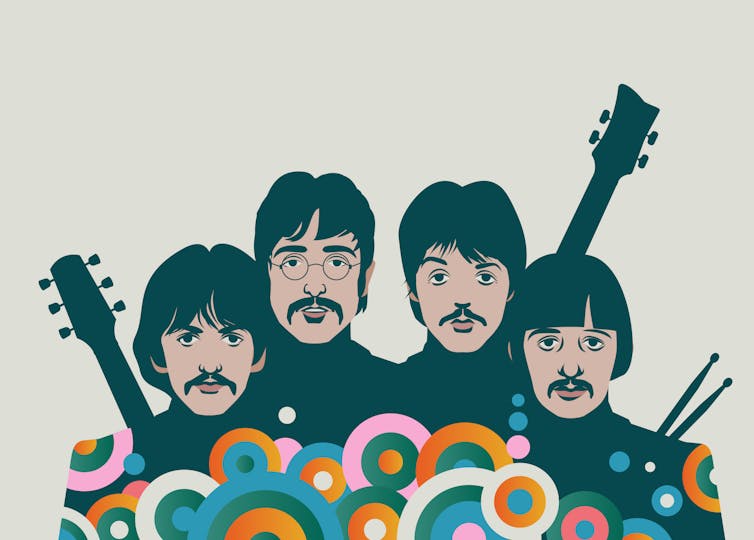
The 50th anniversary of Sergeant Pepper’s Lonely Hearts Club Band was much celebrated in 2017. But this Christmas also marks 50 years since the release of another Beatles production that received much less critical acclaim – the Magical Mystery Tour film.

Much of the music within it was produced during a particularly fecund period (even by the Beatles’ standards) and is, or course, peerless – from the music hall echoes of Your Mother Should Know through the plaintive, melodic Fool on the Hill to the boundary breaking I Am the Walrus.


Beatles Magical Mystery Tour fiftieth anniversary


Shutterstock/Anita Ponne


Unfortunately the film itself fell far short of that artistic bar. First broadcast on Boxing Day 1967, it is, to put it mildly, seriously flawed. Incoherent, sexist, technically shaky and verging on boring, history hasn’t been kind to its cinematic qualities.

Contemporary reviews and audience responses were also so generally scathing that Paul McCartney was moved to issue an apology of sorts to the television broadcast’s 20m viewers. He said in a hastily convened interview:

We don’t say it was a good film. It was our first attempt. If we goofed, then we goofed. It was a challenge and it didn’t come off. We’ll know better next time.


Matters weren’t helped by the Beatles’ psychedelic, colourful exploration being broadcast in black and white on BBC1. A repeat on BBC2 (then the only colour TV service) a few days later did little to redress the situation, if only because there were fewer than 200,000 colour sets in the UK at the time.

Pushing institutional boundaries


For all the defensiveness of McCartney’s response (“You could hardly call the Queen’s speech a gasser”) they do point towards some retrospectively mitigating aspects of the Magical Mystery Tour film.

The film’s distinctly British surrealism and cavalcade of barking sergeant majors, fat aunts, dolly birds, wacky racers and midgets clearly prefigured Monty Python’s explosion of absurdity into mainstream television.

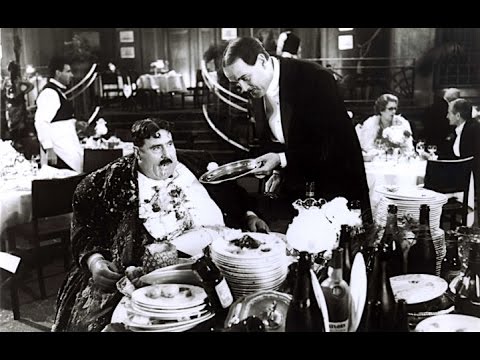
Indeed, George Harrison said later on that he saw Monty Python as a continuation of the spirit of the Beatles. He also funded some of their films, including The Meaning of Life – whose notorious Mr Creosote sketch has visual echoes of a scene in Magical Mystery Tour where John Lennon, dressed as a waiter, serves pasta to Ringo’s fictional Aunt Jessie by the spade full.

What the Pythons added to the mix were sharply honed scripts. Magical Mystery Tour, by contrast, was almost entirely ad-libbed from a one-page diagram. The Beatles’ skill as writers and arrangers was poured into their music instead.

Something else the Pythons had, and which the Beatles lacked, was the benefit of Oxbridge educations. Magical Mystery Tour’s sensibility was more rooted in working class entertainment and tropes than the Pythons’ Oxbridge-infused references.

The very concept of a coach journey – albeit one largely filmed at a decommissioned RAF base – was based on the “charabanc” trips (group bus excursions) of the band members’ childhoods.

The film evokes the past – both a British past in general and, more specifically, as filtered through the Beatles’ own histories. It certainly shows them pushing the boundaries of what a rock band of four Liverpudlians (whose post-school education essentially took place in the nightclubs of Hamburg) could attempt, both artistically and institutionally. Their commercial and creative clout allowed them to broadcast the film during a key annual peak slot for British television viewing.

Prime time


Magical Mystery Tour occupied a particular space in the history of mass entertainment – from the “end of the pier” shows, through the Donald McGill postcards that George Orwell defended against artistic snobbery, to the anarchic weirdness of the likes of Mr Blobby on Saturday night TV.

The Beatles infused that particular strand of entertainment with the forward looking experimentalism of their music, while retaining a characteristic, widely recognisable Britishness. It was this that paved the road for Python and others to follow.

That Magical Mystery Tour was their first real failure since breaking through into the mainstream was also partly a matter of practicalities. While still flowering creatively, they were logistically rudderless after the death earlier that year of their manager Brian Epstein.


Their lack of understanding of the demands of editing a film foreshadowed their later business-related shortcomings, notably the Apple boutique and record label. If the latter of these was revived to become the familiar Beatles brand of today, it was initially a costly failure that contributed to the band’s demise.

But while the film may have overreached, it still demonstrates a clear broadening of mainstream creative boundaries. Popular music fans were certainly receptive to their successful experiments. And even if the broader television public was less ready for a caustic, psychedelic vision of Britain in prime time during the Christmas holidays, Magical Mystery Tour still stands as a useful cultural document.

The ConversationThe Beatles being what they ultimately became, there’s much to be gleaned from their falls as well as their flights.
Adam Behr, Lecturer in Popular and Contemporary Music, Newcastle University

La version originale de cet article a été publiée sur The Conversation.

Saturday, December 16, 2017

Guest Post: The secret behind the success of the new 'Star Wars' films

Subimal Chatterjee, Binghamton University, State University of New York

In the 40 years since the original “Star Wars” film premiered, the franchise has been a pop culture powerhouse.

“The Last Jedi” – the latest edition in the series – looks to continue the trend, with huge box office returns expected.

It also looks poised to join “The Force Awakens” (93 percent on Rotten Tomatoes) and “Rogue One” (85 percent) as “Star Wars” films that are both commercially and critically successful.


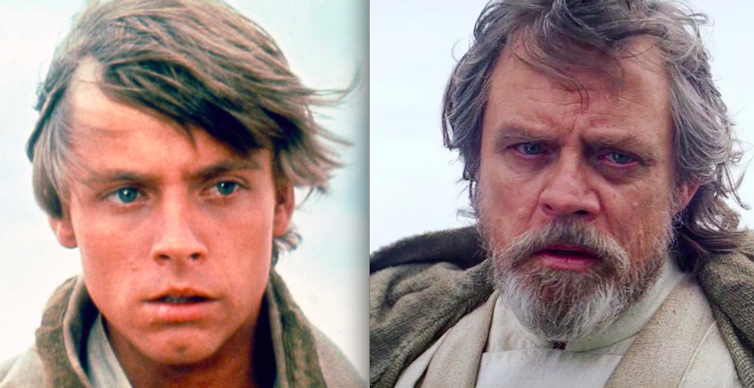
Actor Mark Hammill reemerged in ‘The Force Awakens’ and ‘The Last Jedi.’

Actor Mark Hammill reemerged in ‘The Force Awakens’ and ‘The Last Jedi.’
Nick Lehr/The Conversation via Lucasfilm , CC BY-NC-ND


Not all “Star Wars” films have hit that sweet spot. It’s sometimes easy to forget the prequel trilogy – “The Phantom Menace” (1999), “Attack of the Clones” (2002) and “Revenge of the Sith” (2005) – wasn’t met with the same enthusiastic response from critics and fans, and hasn’t been looked upon kindly since.

What made the prequel trilogy such a (relative) dud? Why are the more recent films being so much better received?

If it isn’t broke, don’t fix it


Research I helped conduct on what makes for a good extension (sequel or prequel) may provide some insight.

My colleagues and I tracked audience reactions to sequels and prequels over the course of nearly a hundred franchises, from “Psycho” to “X-Men.”

Our results show that the successful franchises make smaller, gradual updates – rather than sweeping changes – in each successive film. And it fits well with what we know about audience behavior: They seek a balance between the familiar and the new; while they aren’t looking for a carbon copy of the originals, they’re hoping to relive some of the most vivid, nostalgic moments from the first films.

With these findings in mind, let’s reexamine prequel series of “Star Wars.” When “The Phantom Menace,” the first of the prequels, was released in 1999, it had been 16 years since audiences had seen a new “Star Wars” film. (The original trilogy had just finished up a successful theatrical re-release.)

But fans hoping to relive the magic of the originals were in for a surprise.

The beloved trio of Mark Hamill (Luke Skywalker), Harrison Ford (Han Solo) and Carrie Fisher (Princess Leia) gave way to new faces: Liam Neeson, Ewan McGregor and Natalie Portman. Instead of relying on real sets, miniatures and models to pull off the breathtaking special effects in the originals, director George Lucas opted mostly for computer-generated and digital effects. There were also changes to the rules of the “Star Wars” world. The Force was no longer being described as an all-encompassing life force that bound everyone together; it was now being explained as the result of special biological cells called “midichlorians.” (And I won’t even go into the widely loathed Jar Jar Binks.)

Out with the new, in with the old


In contrast the newest film, “The Last Jedi,” includes many of the original cast members. Mark Hamill and Carrie Fisher return to portray Luke Skywalker and Princess Leia, respectively. And it features the popular “hero’s journey” plot device of the original films, in which an ordinary person’s life is unexpectedly upended, and he is thrust into the role of the hero.

We see this phenomenon in other film series and even product lines. Though the lead actor will occasionally change, the James Bond series never strays from its action-film formula. Apple has a similar approach when releasing new iPhones; before taking the leap to a radically new version, it will release an incremental “S” version of the previous model as a bridge.

That isn’t to say the new “Star Wars” films aren’t making any changes: There are more female protagonists, in addition to a host of new characters. But this isn’t exactly shattering fans’ expectations.

Our research also found that the deeper into a franchise you get, the more major changes audiences are willing to accept. The next “Star Wars” trilogy will expand the boundaries of the “Star Wars” world, exploring planets and featuring characters not yet seen on film.

With this move, the studio is willing to bet that audiences are finally ready to accept some major changes in the franchise – something they weren’t quite ready for yet when the prequels were released.

The ConversationHowever, in order to ensure the Force remains strong over the franchise’s lifetime, these future films would be wise to continue including at least a handful of nods to the original trilogy.
Subimal Chatterjee, Professor of Marketing, Binghamton University, State University of New York

This article was originally published on The Conversation. Read the original article.

Friday, December 15, 2017

Guest Post: What the robots of 'Star Wars' tell us about automation


Paul Salmon, University of the Sunshine Coast

Millions of fans all over the world are eagerly anticipating this week’s release of Star Wars: The Last Jedi, the eighth in the series. At last we will get some answers to questions that have been vexing us since 2015’s The Force Awakens.

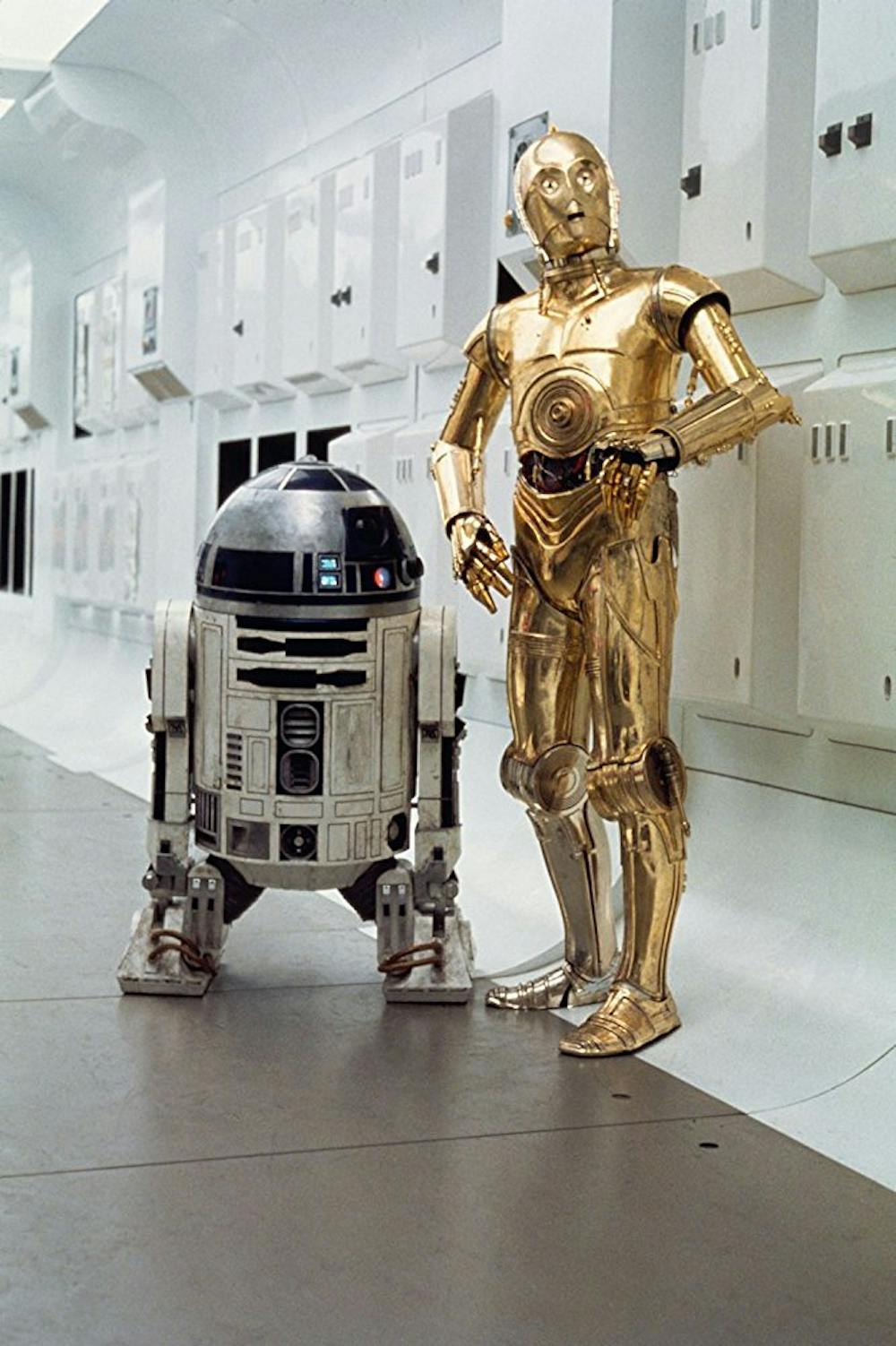
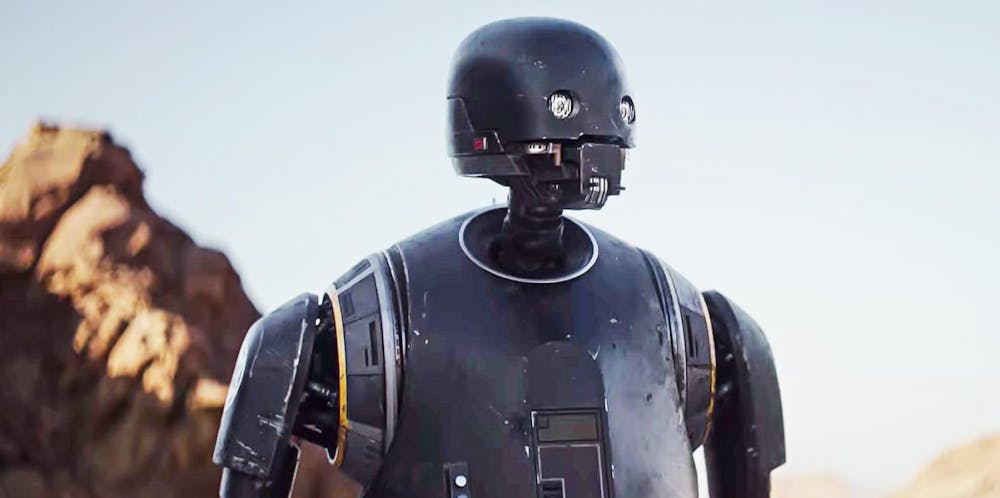
Throughout the franchise, the core characters have been accompanied by a number of much-loved robots, including C-3PO, R2-D2 and more recently, BB-8 and K2-SO. While often fulfilling the role of wise-cracking sidekicks, these and other robots also play an integral role in events.

Interestingly, they can also tell us useful things about automation, such as whether it poses dangers to us and whether robots will ever replace human workers entirely. In these films, we see the good, bad and ugly of robots - and can thus glean clues about what our technological future might look like.


The fear of replacement


One major fear is that robots and automation will replace us, despite work design principles that tell us technology should be used as a tool to assist, rather than replace, humans. In the world of Star Wars, robots (or droids as they are known) mostly assist organic lifeforms, rather than completely replace them.


R2-D2 and C3PO in A New Hope.
Lucasfilms/IMDB


So for instance, C-3PO is a protocol droid who was designed to assist in translation, customs and etiquette. R2-D2 and the franchise’s new darling, BB-8, are both “astromech droids” designed to assist in starship maintenance.

In the most recent movie, Rogue One, an offshoot of the main franchise, we were introduced to K2-SO, a wisecracking advanced autonomous military robot who was caught and reprogrammed to switch allegiance to the rebels. K2-SO mainly acts as a co-pilot, for example when flying a U-Wing with the pilot Cassian Andor to the planet of Eadu.

In most cases then, the Star Wars droids provide assistance – co-piloting ships, helping to fix things, and even serving drinks. In the world of these films, organic lifeforms are still relied upon for most skilled work.

When organic lifeforms are completely replaced, it is generally when the work is highly dangerous. For instance, during the duel between Annakin and Obi Wan on the planet Mustafar in Revenge of the Sith, DLC-13 mining droids can be seen going about their work in the planet’s hostile lava rivers.

Further, droid armies act as the frontline in various battles throughout the films. Perhaps, in the future, we will be OK with losing our jobs if the work in question poses a significant risk to our health.


K2-SO in Rogue One Lucasfilm IMDB Star Wars robots droids

K2-SO in Rogue One.
Lucasfilm/IMDB


However, there are some exceptions to this trend in the Star Wars universe. In the realm of healthcare, for instance, droids have fully replaced organic lifeforms. In The Empire Strikes Back a medical droid treats Luke Skywalker after his encounter with a Wampa, a yeti-like snow beast on the planet Hoth. The droid also replaces his hand following his battle with Darth Vadar on the planet Bespin.

Likewise, in Revenge of the Sith, a midwife droid is seen delivering the siblings Luke and Leia on Polis Massa.


Droids assist the birth of Luke and Leia Skywalker in Revenge of the Sith.


Perhaps this is one area in which Star Wars has it wrong: here on earth, full automation is a long way off in healthcare. Assistance from robots in healthcare is the more realistic prospect and is in fact, already here. Indeed, robots have been assisting surgeons in operating theatres for some time now.

Automated vehicles


Driverless vehicles are currently flavour of the month – but will we actually use them? In Star Wars, despite the capacity for spacecraft and star ships to be fully automated, organic lifeforms still take the controls. The spaceship Millenium Falcon, for example, is mostly flown by the smuggler Han Solo and his companion Chewbacca.

Most of the Star Wars starship fleet (A-Wings, X-Wings, Y-Wings, Tie Fighters, Star Destroyers, Starfighters and more) ostensibly possess the capacity for fully automated flight, however, they are mostly flown by organic lifeforms. In The Phantom Menace the locals on Tatooine have even taken to building and manually racing their own “pod racers”.

It seems likely that here on earth, humans too will continue to prefer to drive, fly, sail, and ride. Despite the ability to fully automate, most people will still want to be able to take full control.

Flawless, error proof robots?


Utopian visions often depict a future where sophisticated robots will perform highly skilled tasks, all but eradicating the costly errors that humans make. This is unlikely to be true.

A final message from the Star Wars universe is that the droids and advanced technologies are often far from perfect. In our own future, costly human errors may simply be replaced by robot designer errors.


R5-D4, the malfunctioning droid of A New Hope Star Wars

R5-D4, the malfunctioning droid of A New Hope.
Lucasfilms/IMDB


The B1 Battle Droids seen in the first and second Star Wars films lack intelligence and frequently malfunction. C-3PO is notoriously error prone and his probability-based estimates are often wide of the mark.

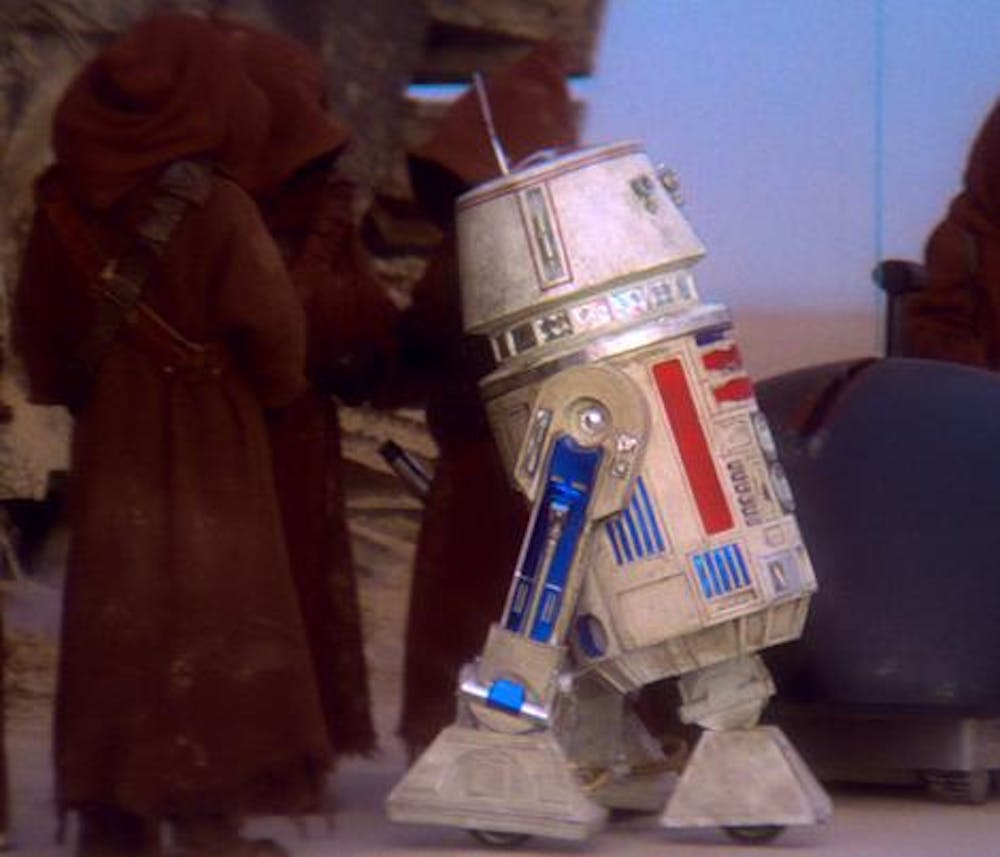
In the fourth film, A New Hope, R5-D4 (another astromech droid) malfunctions and explodes just as the farmer Owen Lars is about to buy it. Other droids are slow and clunky, such as the GNK Power droid and HURID-327, the groundskeeper at the castle of Maz Kanata in The Force Awakens.

The much feared scenario, whereby robots become so intelligent that they eventually take over, is hard to imagine with this lot.

The ConversationPerhaps the message from the Star Wars films is that we need to lower our expectations of robot capabilities, in the short term at least. Cars will still crash, mistakes will still be made, regardless of whether humans or robots are doing the work.
Paul Salmon, Professor of Human Factors, University of the Sunshine Coast

This article was originally published on The Conversation. Read the original article.

Thursday, December 14, 2017

Guest Post: Why Hollywood needs more films like 'Star Wars'

Neil Archer, Keele University

Try to imagine a world without Star Wars. It’s 40 years since George Lucas unveiled the first in his sci-fi franchise and, with The Last Jedi now upon us, it’s a question worth asking. A recent Vanity Fair article came to the conclusion that it’s almost impossible – unless, that is, we can imagine the past four decades without Space Invaders, Pixar, or even Photoshop.


In short, Star Wars is unavoidable. Since 1977, the Star Wars films have been the benchmark – if not the catalyst – for modern Hollywood’s “synergy-driven strategies” – linking big-screen outings with “ancillary products” in the form of action figures and other commercial tie-ins. Now owned by Disney, the Star Wars property extends to theme-park rides, videogames and, more recently, spin-off films and animated TV series.

Much like Marvel’s comic-book multiverse or the Harry “Potterverse”, the original Star Wars film – since rebranded as Episode IV: A New Hope – sits now as part of an endlessly proliferating set of episode and merchandising possibilities.

Some commentators on contemporary Hollywood bemoan this “conglomerate” logic and the types of movies it supposedly throws up. Star Wars inevitably becomes a whipping boy in this discussion, since the huge success of the 1977 film (only Gone with the Wind has sold more tickets at the box office) helped turn Hollywood away from films like The Godfather, Chinatown and Taxi Driver and taught it to rely on comic-book superheroes, literary wizards and the new worlds of CGI.


Star Wars Luke Skywalker The Last Jedi Disney Lucasfilm


Disney/Lucasfilm


Star Wars’ other lesson is that the “standalone” movie, especially in a modern movie climate where attracting an audience is never guaranteed, is too risky. Better to rely on established franchises, “spread” across multiple titles and media platforms. A quick glance at 2017’s US box office top ten, or the more-or-less identical UK list, illustrates this logic at work on a global scale.

The more positive spin on the franchise is its capacity for extending narrative in diverse and often richer ways; a process often known as “world building”. I’m fairly comfortable among Assembled Avengers or other Fantastic Beasts – and the dispersed, interweaving story-worlds they inhabit. But when this becomes the only possibility for large-scale filmmaking, even I find modern Hollywood’s dependency on the sequel constricting. Yet it’s odd if Star Wars (to stick with its original title) takes the rap for this, since it actually has so little in common with many of the franchise films that followed it – not to mention the extended Star Wars series itself.


Strangely enough, in fact, Star Wars offers positive lessons to filmmakers and producers hoping to change things up in the Hollywood game. Some French critics serendipitously use their word for UFO - “un ovni” (objet volant non identifié) - to describe films that, like Star Wars, seemed to come from nowhere. Given sci-fi’s box-office dominance over the past 40 years, it’s hard to imagine that in 1977 it was not yet a trusted form. Consequently, no one was sure what to do with Lucas’s film. His friends did not get it. Many of the hired production crew laughed at it. In its place, 20th Century Fox promoted forgotten squibs such as Damnation Alley. We eventually learned that Lucas was planning a saga and media empire all along. But in 1977, we just saw an out-of-the-blue epic.

Breaking the mould


Since Star Wars, the possibility of Hollywood losing money has been mitigated, paradoxically, by expensive “saturation” releases, with movies marketed intensively and opened simultaneously across thousands of screens. This wasn’t the case with Lucas’s cut-price film, which opened on just 32 of them. Contemporary Hollywood, critics might say, stifles choice. But in 1977, against the grain, audiences chose Star Wars.

Why? For my six-year-old self, Star Wars was both new and exotic. Technologically it broke new ground, pre-CGI, effectively ushering in the digital effects houses that are the engines of the modern industry. But it was also a film steeped in a cinematic past both strange and familiar: a past of Flash Gordon serials, John Ford Westerns and Kurosawa’s samurai films. It was set in a sumptuously designed galaxy far, far away – yet one that harked back to older war movies, scored to an old-fashioned orchestral soundtrack. Ironically, in drawing on so many films, Star Wars was like few other films made before, or even since.

The eventual problem with Lucas’s “prequel” trilogy, starting with 1999’s The Phantom Menace, was that it was no longer engaging with any other reference points beyond its own. Shot almost entirely against a CGI green screen, and loaded down by Lucas’s wordy script, the films felt dutiful but dull: they filled gaps in the saga, but related to nothing but the series itself.

I thrilled to 2015’s The Force Awakens, and its return to the series’ original cinematic values of adventure, pathos and wit, bolstered by the agile performances of its young, relatively unknown cast. Even here, though, as the film’s director and co-writer J J Abrams has admitted, the film was in many respects a reprise of everything good about the 1977 movie.


My point though is that we shouldn’t look to films that imitate Star Wars, but to those which follow its example. Like Lucas’s film, Damien Chazelle’s recent La La Land was a comparatively cheap picture out of step with its time and place – a one-off, non-adapted and (I hope) sequel-proof musical; one that started out screening in a few cinemas and festivals, but eventually turned into a worldwide hit.

The film’s nostalgic heart and look also owed to the cinematic past – to a Hollywood and Europe of the 1950s – yet it too seemed to emerge from its own gorgeously self-crafted world. It was proof that in Hollywood you don’t have to be totally original to be original. But you do need a bit of faith.

The ConversationAnd, as in 1977, it felt refreshingly new. But the lesson we might learn from La La Land is an old one: if the Hollywood that Star Wars helped build wants to do something new, it actually needs more films like Star Wars.

Neil Archer, Lecturer in Film Studies, Keele University

This article was originally published on The Conversation. Read the original article.