Showing posts with label youth. Show all posts

Saturday, July 14, 2018

From the Archives: Libertarian youth leader from New Zealand discusses his party’s politics

Libertarian youth leader from New Zealand discusses his party’s politics
May 22, 2012 12:25 PM MST

Libertarians are not active in politics solely in the United States. There are libertarian movements and political parties scattered through the Western democracies.

Peter McCaffrey New Zealand ACT Party Rick Sincere
In New Zealand, for instance, there is the ACT Party. That name may seem funny, at first, until one understands that it began as an acronym.

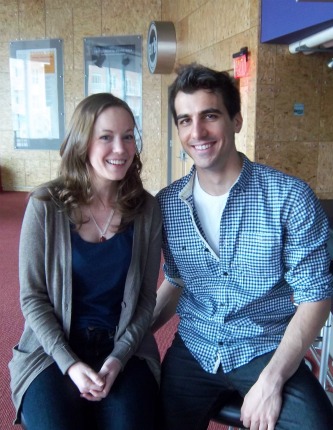
Peter McCaffrey was a parliamentary candidate for the ACT Party in 2008 and 2011, when he was just 21 and 24 years old, respectively. He recently sat down for an interview with the Charlottesville Libertarian Examiner during a Republican Liberty Caucus social event.

At the time, McCaffrey was traveling through the United States on his way to take a job with a free-market think-tank in Regina, Saskatchewan.

About that acronym

The letters A-C-T, he explained, “used to stand for the ‘Association of Consumers and Taxpayers.’ That was when ACT was set up as a think-tank” almost 20 years ago.

“New Zealand adopted the mixed-member proportional electoral system” in 1994, he continued, with plans to hold the first election under that system in 1996. At that time, “the Association of Consumers and Taxpayers decided that with the implementation of a proportional electoral system, actually it would be better to be set up as a party rather than a think tank and so it became the ACT Party.”

The initials do not “stand for anything now but that’s the origin of the name,” McCaffrey said.

‘Classical liberal’

He describes the party as “a classical liberal party but there’s a bit of a fusion there.”

Peter McCaffrey Rick Sincere New Zealand politics ACT Party youth libertarianOlder members, he explained, tend to be “more conservative-leaning” or split among liberals and conservatives, while “the younger membership tends to be much more liberal, even leaning towards libertarian.”

During the most recent parliamentary elections in November 2011, McCaffrey explained, the party’s “main focus was on the economy, getting tax rates down, [and] cutting regulation,” as well as advocating for school choice.

“We’ve been doing a big push for charter schools,” he said.

“In New Zealand, we have some private schools that are generally privately funded and we have state schools that are state-funded and state-run but there’s not a lot of choice in between those, so we ran a big push for more choice in education,” he said.

During the election campaign, he noted, the ACT Party made a coalition agreement with the National Party, a conservative party in New Zealand, and the two partners “pushed for an implementation of some trials of charter schools in New Zealand.” As a result, he said, “we’ll be setting up a couple of charter schools, one in South Auckland and one in Christ Church and hopefully more over the next three years as part of that deal.”

Under the new charter school law, he explained, the schools may “be run by any number of different non-profit organizations. Whether that’s Iwi, which are local Maori groups (Maori are the indigenous people in New Zealand) or charities, church groups, anything like that will be able to set up a school and run it.”

The new rules allow “more flexibility in the arrangements of the school so that there’s more choice for people in which schools they send their children to,” he said.

Liberalized drug laws

Generally, McCaffrey said, the ACT Party does not “get too involved in social issues. We try to focus on economics but that doesn’t always happen. Our leader last year” -- Donald Brash, a former New Zealand reserve bank governor – “surprised a lot of the journalists when he came out in support of liberalization of marijuana laws,” including decriminalization or legalization. That position came after heavy lobbying on the part of “some of the younger members of the party.”

That position, he pointed out, “startled a lot of people and maybe scared off some of our older members and supporters but it really got the media talking about the issue. It surprised a lot of people who saw us as sort of an old white conservative party, which, I think, was good for the image of the party long run.”

McCaffrey’s own involvement in ACT is relatively recent but it has spanned his whole adult life, so far.

Learning in high school

“I turned 18 in 2005,” he said, which is the voting age in New Zealand, as it is in the United States.

While he was still in high school, he said, “I just read the web sites of all the main parties that were in the parliament and had a bit of a think. ACT seemed to make the most sense, and so I voted for ACT in 2005,” the first year he was eligible to cast a ballot.

Then, he said, “having voted for ACT, when I got to university, there was a table at the orientation week for ACT on Campus, which is the youth wing of the ACT Party. I signed up to ACT on Campus and then over the next couple of years I got more and more involved in the ACT on Campus group and also in the party itself.”

McCaffrey explained that the “party is very open to young people, volunteers coming in, even coming into the parliamentary offices, helping out, volunteering, doing research -- all that sort of stuff -- so just sort of slowly I got more and more involved.”

Eventually, he “ended up being the ACT on Campus president, leading the youth wing of the party” and later he was selected to serve on “the board for the Wellington region” (equivalent to the unit committee of an American political party) “and stood as a candidate for the party for parliament in 2008 and 2011 in my local district,” Otaki.

He was not elected, however, noting modestly that “to be honest, my district isn’t a very good area for ACT, so I was kind of the only one who was willing to do it in my area.”

That turn of events, of course, is what brought McCaffrey to North America, where he continues to work on the sorts of issues that brought him into politics in his native New Zealand.


Publisher's note: This article was originally published on Examiner.com on May 22, 2012. The Examiner.com publishing platform was discontinued July 1, 2016, and its web site went dark on or about July 10, 2016.  I am republishing this piece in an effort to preserve it and all my other contributions to Examiner.com since April 6, 2010. It is reposted here without most of the internal links that were in the original.


Monday, June 26, 2017

Guest Post: There's something queer about Tumblr


Paul Byron, Macquarie University and Brady Robards, Monash University

Tumblr is a site that can leave many adults confused. But for more than 330 million users worldwide it is a visual medium for self-expression where anything from politics to fan groups goes.

What makes Tumblr special is the mix of content you will find there. Think of it as the long-form, image-centric version of Twitter – but more personal. A blog can feature sentences that describe a user’s day, and this could be scattered among photo sets of refugees being rescued at sea, cat gifs, pornography, or complex paragraphs that analyse Donald Trump’s presidency. Above all, Tumblr characterises itself as a space of creative freedom.


Tumblr gay queer non-binary cisgender transgender keyboard fingers

More young people are turning online for peer support networks.
shutterstock


Like most other social media platforms, it is also ripe with peer networking, community building, and opportunities to explore gender and sexual identities. And despite the panic that often surrounds the perceived effects of social media on young people – such as fears about Facebook and privacy, Snapchat and sexting, and Instagram and narcissism – Tumblr is often left out of the debate.

Perhaps that’s because it mostly appeals to a niche audience, and can be seen as the “weird” cousin of these major platforms. This makes it a perfect venue for queer and questioning youth to hang out.

It’s a queer world


In 2016, we organised a research project called Scrolling Beyond Binaries to explore the ways young people of diverse genders and sexualities use social media. We looked particularly at how young lesbian, gay, bisexual, transgender, intersex, queer, and asexual (LGBTIQA+) people use the network. To do so, we surveyed over 1,300 people aged 16-35 who identified in these ways.

Compared to broader surveys of young people’s social media use, we found young LGBTIQA+ people are using Tumblr much more frequently.


Tumblr Internet usage statistics survey Australia LGBTIQ Pew Sensis

Queer and gender diverse youth in Australia are using Tumblr more than their straight and cisgender peers.


There are some issues in comparing these studies – the number of people surveyed, where they lived, and their ages – but that 64% of our respondents used Tumblr is noteworthy.

So why are this many young queer and gender diverse Australians using Tumblr? For many, it offers an intricate network that supports safe explorations of identity and a sense of self.

For instance, writer and Tumblr user Jonno Revanche said it provides social connections that are otherwise unavailable due to geographic isolation and social anxiety. Others have used Tumblr to foster mental health support, such as Mea Pearson, who took to the platform to chronicle her experience with borderline personality disorder.

While care must be taken when associating mental health with queer identity, these matters often intersect. Evidently, many young people’s everyday dealings with key social institutions like family, work and school can be uncomfortable or even traumatic.

The view from Tumblr


Many of our respondents said that Tumblr was crucial to nurturing their individual identity. One person said it helped them identify as agender (loosely defined as without gender).

I actually learnt about agender and all the other genders from Tumblr. (20, agender, bisexual, rural)

One participant described how Tumblr assisted them in coming to terms with their pansexuality (attraction to all genders), and finding a space where this was more accepted and not reduced to bisexuality:

I came out as Pan on Tumblr a few years ago, when being Pan was seen as just a fancy way of saying Bi. I felt very alone for a long time, but found other Pan people to talk to. (22, non-binary, pansexual, urban)

Other participants attributed Tumblr to broadening their overall understanding of identity:

I had no idea that lgbt+ people existed (my parents are quite homophobic and very strict, so you could say I was very sheltered), and by using Tumblr I was able to fully immerse myself within its very lgbt+ culture. It also brought up words … I had never heard before, and through this I was able to “find myself” within a safe environment. (17, female, lesbian, urban)

I would’ve never realised my real gender or sexual orientation without tumblr. (25, trans masculine, asexual, regional)

For many Tumblr users, the platform is a supportive place. Engaging with online peer networks can be easier, and less risky, than talking to close friends. Young people reported making friends on Tumblr too, and most of them felt safe in doing so, citing the ability to block and unfollow others if needed.

I’ve made a lot of friends through there, and Tumblr helped me working out my own sexuality when I was younger. Because when I was younger I didn’t know anything, I thought there was just gay and lesbian and when I didn’t fit into any of those categories I was like “what the hell do I do now.” It was honestly, like going on Tumblr and [finding] there’s this thing where you can like more then one, I was like “woah, that’s amazing.” (19, trans male, queer, urban)

Disconnecting from Tumblr


At the same time, these digital spaces come with their own challenges. Although Tumblr is often used daily, it also seems to have a limited lifespan – which is unsurprising, given the intensity of interaction and content that many users report. Some respondents discussed their need to disconnect from the site to avoid drama, to free up time, or to spend more time in other social media spaces.

I stopped [using Tumblr] because I often used it to talk about my problems and it got to be really upsetting to have such a negative space. I feel like it just fed my mental health issues. (18, non-binary, bisexual, rural)

In this sense, Tumblr can be productive for a time but it can also become overwhelming. Users manage this by moving between platforms and taking breaks.

Safe spaces


Brady Robards Youth culture AustraliaAt a time when young queer and gender diverse people are in the spotlight, with support programs coming under fire and human rights being trampled upon in political crossfires, they continue to find and build their own safe spaces.

LGBTIQA+ young people should feel safe and empowered in everyday physical spaces, and many do – often with support from a wider community of peers who share similar experiences.

The ConversationBut until the world becomes more friendly for queer and gender diverse people, we expect they’ll continue to find safety, community, identity, and friendship on Tumblr.

Paul Byron, Associate Lecturer, Macquarie University and Brady Robards, Lecturer in Sociology, Monash University

This article was originally published on The Conversation. Read the original article.

Monday, October 07, 2013

Debate and dissension on GOP's future will continue

College Republican National Committee's report on Millennial voters
(This article originally appeared on Virginia Politics on Demand on June 6, 2013.)

Like it or not, members of the Republican party and the conservative movement are engaged in a strenuous debate about the party's (and the movement's) future. The various factions of the movement that were first brought together under James Burnham's "fusionism" in the 1950s have split apart, reorganized, reconfigured, split again, redefined themselves, and reunited on numerous occasions over the past six decades.

Taft vs. Eisenhower, Goldwater vs. Scranton, Reagan vs. Bush (yes, Reagan vs. Bush), and Mitt Romney vs. practically everybody else were just the figureheads in a struggle that has included traditionalists, libertarians, isolationists, internationalists, anti-Communists, country-club Republicans, Eastern liberal elites, fiscal hawks, social conservatives, and all manner of single-issue advocates on topics ranging from the Second Amendment to free trade to sexual permissiveness to home schooling ad nauseum.

A few weeks ago, the Republican National Committee published its lengthy post-mortem analysis of what went wrong for the Republican Party in the 2012 presidential election. The results of the RNC's survey were not encouraging, and its prescriptions for improvement met with a range of responses from "meh!" to outrage.

This week, the College Republican National Committee brought out its own 95-page report on why the GOP fails to connect with the Millennial generation of voters aged 18 to 29. Among its findings: 58 percent of this age group get most of their news about current affairs from Facebook, while only 21 percent get their news through either talk radio or NPR. For fully a quarter of this cohort, the fact that the GOP is hostile toward marriage equality is a "deal breaker" -- they won't vote for Republican candidates regardless of their views on other issues.

As the Cato Institute's David Boaz summarizes the CRNC's report,
young voters are very much against excessive government spending (though they do support higher taxes on the wealthy) and are strongly in favor of gay marriage. They want to reform entitlements but see the Republican party as “closed-minded, racist, rigid, old-fashioned.”
Yesterday on NPR's "Talk of the Nation," former Republican National Committee chairman Michael Steele, the last GOP candidate elected to be lieutenant governor in the deeply-blue state of Maryland, gave his take on the current discussions:
The old way doesn't work. The old strategies don't work. I think Reince Priebus proved that. Surprisingly, he didn't learn from me when I was chairman that you can't go back to the old model, and you cannot have a strategy that has a conversation with a 21-year-old, you know, African-American entrepreneur at the same time you're having that conversation with a 35-year-old mother, white mother of two.

So, you know, the reality is the reality. You're not going to change that. So adapting, recognizing that those core ideas of individual liberty, opportunity, responsibility, freedom, matter to people. Now how they translate that in their everyday life is up to them, but we can lay out some broad policy views and principles that they can then pull into their lives and say, oh, yeah, I like the idea of, you know, having the freedom to choose where to send my kids to school and what that means for me as a parent, how that empowers me as a parent, versus being stuck with the old model of having to go to the failing school in the neighborhood because it's in the neighborhood, and I live in that district.

So those are the types of opportunities and choices that I think are valuable to voters that I think the party needs to talk about and not losing sight of the fact that you raised about the numbers. In fact, I think that's the incentive to get off of the old stick and recognize the new opportunities.
In response to a listener's question, Steele specifically addressed how the GOP can win the votes of young people:
Millennials are changing the way we do politics. They deconstruct those old institutions. They break them out into pieces. And so their response to a problem is we can build an app for that.

We can create a universe of people that can generate action and activity around a particular issue without necessarily relying on these old institutions and these old strategies. We can bring something fresh to feeding people, clothing people, employing people. And I think that that's going to be very definitional for both parties. I think is uniquely opportunistic for the Republican Party to grab that energy that was just released in the report, for example, that came out this week from the [College] Republican National Committee - that talks about these words and these terms that are very important to people and how we translate that.
Steele also had advice for Republican candidates running in Democratic areas:
[T]here's a way which I think Republicans in blue states do win, and I always say it: Just be yourself. Our values, our ideas, our principles align with voters when we lay them out for them in an open, honest way, without trying to cherry-pick or make them like us.

You know, Republicans should run in the communities as they find them, not as you want them to be or think they are. And the moment you sort of get past that pretense and that falsehood that, you know, everybody, you know, is with you because they're with the other guy, you can have a conversation about the things that matter. You can have a conversation about the things that matter to people, as opposed to matter to your party.
Virginia is the first post-2012 state where the GOP can test new messaging techniques and improve upon ways in which the Obama campaign capitalized on social media. Whether the Republican ticket in the Old Dominion wins big or loses big, there will be lessons to be learned -- as long as we're willing to pay attention.

And as far as "like it or not"? I like it.


Sunday, July 01, 2012

Mini-Review: 'Snoopy!!! The Musical'

Last night I had an opportunity to see the Four County Players' production of Snoopy: The Musical, the follow-up to the much more successful (and familiar) 1967 off-Broadway hit, You're a Good Man, Charlie Brown, which had a short-lived Broadway revival in 1971 and was revived again on Broadway in 1999.

Despite running only 149 performances, that 1999 production was nominated for a best-musical-revival Tony Award, with Kristin Chenoweth as Sally and Roger Bart as Snoopy winning their own Tonys in the "best featured" category. (That cast also included Anthony Rapp as Charlie Brown and B.D. Wong as Linus.)

Snoopy: The Musical lacks such a storied history, although it does have cast recordings from San Francisco (1975) and London (1983), and an animated movie version available on VHS but not DVD or Blu-ray. (Twin trivia: The San Francisco production was Pamela Myers' follow-up to Company. Her career never really recovered. The animated film, meanwhile, includes in its cast Growing Pains' Jeremy Miller as Linus.)

As sequels go, this could be worse -- but not by much. Fortunately the exuberant young actors ignored the show's mediocrity and gave it their all, so the evening was entertaining enough to justify the cost of the tickets and the 30-minute drive to Barboursville from Charlottesville.

None of the cast of seven is past high school age (even if you include one Princeton-bound recent graduate), and a couple have not yet reached junior high, but all of them show talents that could be put to more effective use with better material.

Simply put, the score of Snoopy: The Musical lacks any of the wit and tunefulness of its predecessor. Frankly, there's not a memorable song in the piece.

While there are attempts by the songwriters (Larry Grossman and Hal Hackady) to ape some of Clark Gesner's successful Charlie Brown numbers, they don't come close to "My Blanket and Me," "Suppertime," or "Book Report (on Peter Rabbit)," not to mention the big hit, "Happiness."

Snoopy's score is second-rate through-and-through, although there seems to be a Raffi-like sense that the writers intend their audience to be elementary-school children rather than adults.  (More trivia:  Grossman was the composer of five original Broadway musicals, including Minnie's Boys and Grind, none of which had runs longer than three months.  Lyricist Hackady was his collaborator on two of them; those plus two other shows also failed to run longer than three months.)

As for the book, one of the co-writers is "Charles M. Schulz Creative Associates." Enough said about that?

How distant this opening show of the Four County Players' 40th season is in quality from the musical that will close it, Into the Woods. That's something to look forward to. especially if one of the three young male actors in this show's cast -- Peter Balcke (Snoopy), Daniel Neale (Charlie Brown), or Aaron Cohen (Linus) -- ends up playing Jack. Any of them could do it, really.

If you've got kids, feel free to take them to see Snoopy: The Musical. Even if you're disappointed, they won't be.

Snoopy: The Musical continues through July 8 (evening performances at 8:00 p.m. on July 5, 6, and 7; matinees at 2:30 p.m. on July 1 and 8) at the Barboursville Community Center, 5256 Governor Barbour Street in Barboursville, Virginia. All tickets are $12. Call 540-832-5355 for ticket information.

Be sure to visit my CafePress store for gifts and novelty items!
Read my blog on Kindle!
Follow my tweets on Twitter! 

Monday, February 13, 2012

Ambiguity Reigns in Signature Theatre’s New Play, 'Really Really'

When Haley, the sister of the protagonist in Signature Theatre’s new drama, Really Really, first arrives at the beginning of the second act, it’s as if a window has been opened to allow fresh air to blow across the stage.

No: A more accurate analogy is that a cork has been popped on a bottle of soda that was all shook up, because Haley, plainspoken to the point of being (really, really) offensive, stands in stark contrast to the other characters, who are each tightly wound and waspish, even the ostensible slacker of the group. Haley relieves the pressure that has been building for the first hour.

Even the names of the guys on the rugby team suggest old-moneyed uptightness. Cooper (Evan Casey), Davis (Jake Odmark), and Johnson (Paul James) are either surnames, or last names used as first names, but in any case seem to be WASP-y prep-school holdovers. Only Leigh’s boyfriend, Jimmy (Danny Gavigan), has an unmistakable first name. (Suffice it to say that Grace [Lauren Culpepper] turns out to lack it.)

After Haley (played by Kim Rosen) blows in, we find it hard to believe that she and Leigh (Bethany Anne Lind) are sisters. Despite Haley’s claims to the contrary, the two look nothing alike: Haley dark and buxom, Leigh willowy and flaxen.

Neither, it seems, do they have much in common in terms of character traits. Leigh, we gather, is a diligently studious college student who has distanced herself from a dysfunctional and poor family, while Haley embraces the trailer-trash lifestyle. (She’s living, she says, in a Super 8 motel outside Waterbury, Connecticut, with a guy named “Rico” and all that implies.)

Bethany Anne Lind (Photo: Scott Suchman)
Leigh prefers to keep tight control over her circumstances while sister Haley likes to snoop around and interfere, as long as her own aims can be advanced in the process.

As events unfold, however, we find that the two are not so different as they wish to appear.

Haley’s cubic zirconium entrance into a diamond-studded, ivy-covered world breathes life into the story, which up to that point has been merely a conventional he said/she said exposition of the two sides of a story about what might or might not have been a date rape at an off-campus party.

By coincidence, Really Really, written by first-time playwright and New York University graduate Paul Downs Colaizzo, had its premiere in the same week that New York University law professor Richard Epstein wrote about how the U.S. Department of Education has issued rules that skew the due process rights of college students accused of sexual assault.

Writing in reference to the recent case of Yale University football star Patrick Witt, who seems to have withdrawn from consideration for a Rhodes Scholarship because of anonymous accusations of sexual assault, Epstein notes of recent rules promulgated by the Office of Civil Rights in the Department of Education:

“The entire matter is shrouded in secrecy; the internal investigation cannot be postponed until the criminal charges, if any, are resolved; and the question of proof of guilt or innocence should be decided by the ‘preponderance of evidence’ standard. That standard puts a far lower burden on the complainant than the 'beyond a reasonable doubt' standard used in criminal cases or the 'clear and convincing evidence' standard used in many legal disputes (including defamation cases brought against the press by public officials) where some important constitutional right is at stake.”

Considering that the playwright began the first draft of Really Really in 2007, it is mere coincidence that the world premiere occurred even as the very real topic of sexual assault on campus, and the presence or absence of due process for the accused, was in the headlines. It means that Really Really is not just an entertaining and provocative dramatic work, but also a cultural artifact of contemporary relevance.

Jake Odmark, Evan Casey. Photo: Scott Suchman.
Comparisons of Colaizzo’s new play will be made with John Patrick Shanley’s Doubt, David Mamet’s Oleanna, and Rebecca Gilman’s Spinning Into Butter. Each comparison is apt, though, despite some similarities in subject matter and stylistics, there is no direct parallel for any of them with Really Really.  What they all have in common is an ambiguous answer to the question, Who is guilty?

Colaizzo, 26 years old, has a sharp ear and a knack for writing dialogue. He recognizes, and hence expresses, how 20-somethings in 2012 actually talk. While each of his characters starts off superficially as little more than party boys (and girls) with few distinguishing characteristics, by the final tableau we realize that each of them is siloed into his or her own, distinct personality – for better or for worse.

It’s difficult to describe what happens in Really Really because so much turns on what we learn in the last ten or so minutes of the play. To reveal too many details of the plot would be like telling a friend that Haley Joel Osment sees dead people and that’s why he can see Bruce Willis.

Suffice it to say that, within a running time of two hours, Colaizzo stuffs his play with highly charged accusations of sexual assault (already noted), class warfare, sibling rivalry, manipulative behavior, homophobic banter, unrequited lesbian lust, drunkenness, hangovers, and the potential for McCarthy-like guilt by association. It’s enough to fill a full day of Lifetime movies.

Director Matthew Gardiner keeps the action at a steady pace and he is ably served by a set, designed by Misha Kachman, divided into two living rooms that represent feminine order and masculine chaos.

There is nothing black or white about Really Really. It thrives on shades of grey and is built on uncertainty.

Audiences will find plenty to talk about during the ride home from the theatre, and there is enough disagreement on offer that couples may find themselves not talking about it at the breakfast table the next morning.

Performances of Really Really continue through March 25 in the ARK at Signature Theatre, with show times at 7:30 p.m. on Tuesdays and Wednesdays, 8:00 p.m. on Thursdays and Fridays, and Saturdays at 2:00 and 8:00 p.m. and Sundays at 2:00 and 7:00 p.m. Ticket prices range from $56 to $80 and are available by calling Ticketmaster at 703-573-7328 or visiting www.signature-theatre.org.

Really Really contains strong language and explicit situations and is recommended for mature audiences.


Be sure to visit my CafePress store for gifts and novelty items!
Read my blog on Kindle!
Follow my tweets on Twitter! 

Thursday, February 09, 2012

Interview with Actress Bethany Anne Lind

Bethany Anne Lind at Signature Theatre
Bethany Anne Lind is an Atlanta-based actress who plays the role of “Leigh” in Signature Theatre’s world premiere production of Really Really.

When asked in an interview to describe Leigh, Lind demurs by looking toward playwright Paul Downs Colaizzo and saying, “I don’t know what I’m allowed to say.”

The producers of Really Really, it seems, are trying to keep a lid on what the play is really, really about, though rumors have circulated that it is loosely based on the 2006 Duke lacrosse incident. Colaizzo himself prefers to talk about the theme of the play rather than the plot, although he grants permission to Lind to “talk about who she is.”

Leigh, she finally says, is “a person who has grown up with nothing and always has had to fight to get where she is, as opposed to most of the other characters who have been handed their educations and their places in life. She has had to work and fight to get there, so she has a very clear goal of what she wants out of life and she is going to do whatever she has to do to get it.”

Lind herself seems unusually demure to play a hardscrabble role like that, but her own life story indicates a determination to achieve, even if it was generated in a more genteel environment.

Homeschooled in North Carolina, Lind started acting in church plays and in the living room and backyard.

“I did a lot of making up plays with my siblings and my cousins and my neighbors,” she said, and her parents “fostered a very creative atmosphere, so we were always pretending and making stuff up.”

Eventually, she went to college at Campbell University, a small, liberal-arts school.

After she graduated, Lind moved to Atlanta “and did a couple of educational shows and the little things you’ve got to do to start out” in the acting business. She chose Atlanta instead of New York or Los Angeles because she did not want to “get lost in the sea of billions of actors who are already there.”

In Atlanta, she “found a great theatre community and artistic home.” She has lived there for about five years, getting film and television work in Atlanta and traveling to New York “every now and then” to audition for shows like Really Really.

Among Lind’s credits on stage are August: Osage County and Steel Magnolias. On screen, she has been in Mean Girls 2 and the forthcoming films Flight and Crackerjack, and the TV series, Army Wives.

The way she won the role of Leigh (described to me elsewhere as “pivotal”) hinged on a local connection.

“I have extended family in Northern Virginia,” she said, “and I check the Equity web site frequently for auditions for things and had seen a call for this particular role. I didn’t really know anything about the play. I just saw a character description and thought, ‘that sounds interesting.’”

Since she was going to be in Northern Virginia for Thanksgiving, she sent an email to Really Really’s director, Matthew Gardiner, even though she didn’t know him, and asked if she could read for him.

Bethany Anne Lind with Paul Downs Colaizzo
Lind hadn’t heard from him but, just before she was to return to Atlanta, she “just emailed him one more time just to see, and he said, ‘We’re actually having auditions in New York on Monday. We can see you there if you can come.’”

So, Lind explained, “I took the bus up to New York, read the script on the way there, just loved it and auditioned -- and here I am.”

Colaizzo, who wrote the play, interjected to point out that the character of Leigh was transformed once he and Gardiner saw Lind audition.

“We may have thought we knew who the character of Leigh was, before Bethany came in to audition,” the playwright said, “but she also taught us who the character was, in an audition that was magnetic.”

That magnetism, he explained, “has transferred into her work in this play.”

Lind appreciates being part of a world premiere.

“It’s always fun working on it with the playwright in the room,” she said. “I feel like we inform each other on the character. It’s just exciting to be part of that part of the development of the play and the character.”

Performances of Really Really run through March 25, 2012. Show times are Tuesdays and Wednesdays at 7:30 pm, Thursdays and Fridays at 8:00 pm, Saturdays at 2:00 pm and 8:00 pm, and Sundays at 2:00 pm and 7:00 pm.

Tickets range from $56 - $80 and are available by calling Ticketmaster at 703-573-SEAT (7328) or visiting www.signature-theatre.org. Student discount tickets are $30 and must be purchased the week of the performance. For more information please visit www.signature-theatre.org.
Be sure to visit my CafePress store for gifts and novelty items!
Read my blog on Kindle!
Follow my tweets on Twitter! 

Interview with Playwright Paul Downs Colaizzo

Signature Theatre’s press release announcing its next production, Really Really, begins like this:

“An elite university. A not-to-be-missed party. A startling accusation.”

Rumors have circulated that Really Really is loosely based on the Duke lacrosse case of 2006, but playwright Paul Downs Colaizzo is reticent about the plot.

When posed what The Metro Herald characterized as “a basic question: What’s your play about?,” Colaizzo hesitates.

“That’s actually not a basic question,” he replies.

“That’s actually proved to be a very hard question,” he explains. “When people ask me these questions, I tend to answer thematically because that, to me, is what the play is about but usually that’s not what people are looking for.”

Playwright Paul Downs Colaizzo at Signature Theatre
The reticence – or intrigue, depending on how one looks at it – extends to members of the cast, as well. During an interview with actress Bethany Anne Lind, she responds to a question about her character, Leigh, by looking over to Colaizzo shyly and saying, “I don’t know what I’m allowed to say.”

The intrigue may be uncovered after Really Really has its official opening on February 12, but in the meantime we will have to remain satisfied with the thematic background information that the playwright is willing to discuss.

Really Really is Colaizzo’s first professionally produced play, at the age of 26. He found his inspiration for the play, he says, in what he calls the “post-abortion generation” of people born since the U.S. Supreme Court’s 1973 decision in Roe v. Wade.

The post-abortion generation, he says, is “the most wanted generation in American history, because there was the option not to have us.”

The conscientious desire of that generation’s mothers and fathers to have offspring led to a lot of what is called helicopter parenting and the inculcation of self-esteem in children without regard to actual achievement or, as Colaizzo puts it, the idea that “everybody gets a trophy.” This, in turn, resulted in “an incredibly entitled and narcissistic generation that is sort of an anomaly in American life.”

Colaizzo describes “this period of time,” in which is own generation was brought up, as one that saw every child as “wanted and loved” and told that every one of them is “amazing, just for being them.”

When that generation reached young adulthood after being pampered during a period of economic abundance, they suddenly faced the economic crisis of 2008 and the recession and slowdown that followed. College graduates who expected a job immediately after graduation were sorely disappointed. Failure and the necessity to cope were new to them.

This situation, Colaizzo explained, led to a “divide” between those who really were resilient in the face of the challenge” of the economic downturn despite the “entitlement teachings” they grew up with, and “those who went the other way,” the ones “who live in their parents’ basements” and who accept the poor job market as a given and have given up looking for something better to do with their lives.

This is the background of Really Really but, Colaizzo asks rhetorically, “Will you see any of that in the play?” The answer is no.

The cast of Signature Theatre's 'Really Really'
The closest Colaizzo gets to describing what happens in his play is to say it “is about a rugby team. It takes place after a party on campus, the morning of the return from the party, and [during] the next two days that follow.”

In the course of the play, “the truth of what happened at the party comes into question. It becomes every man for himself,” in that “there’s suddenly a risk to each character’s future.”

The question is, Colaizzo concedes, “at what level will these characters and members of this generation go to protect [their futures] in an unpromising world [of] these days?”

In his own life, Colaizzo was born in Pittsburgh but his family moved around a lot as he was growing up. They lived in New Jersey and Florida and he went to high school in Georgia. When it was time for college, his parents moved to California while he went to New York University, where he studied drama.

After graduation with a BFA from the Tisch School of the Arts, he acted for two years but “wasn’t happy enough,” and that is when he “decided to switch my path to writing.”

His interest in “exploring social ideas in a dramatic way” was sparked by his encounter with Alan Ball’s work while he was in high-school. (Ball is the Oscar-winning screenwriter of American Beauty and creator of the TV series, Six Feet Under.)

Ball, he said, was writing about “the dark side of American life that wasn’t painted in this glittering-gold way that my conservative upbringing had led me to believe” was the normal way that people lived.

As a high-school student in Georgia, Colaizzo found that point of view “fascinating.”

That informs what Colaizzo enjoys about playwriting.

“My favorite thing about working on plays is,” he says, the way that he can “try to explore dichotomies in contemporary American life without pretension.”

He likes to hold “a mirror to the audience and say, What are you terrified of? What part did you relate to?”

He also likes to “explore unanswered questions or things that are a little scary to confront.”

Colaizzo compares his role as a playwright to that of a pet owner with a sick pet who needs medicine but refuses to swallow it.

“I call it the pill in the peanut butter,” he says, “because when you feed a dog a pill, you have to put it in peanut butter because the dog’s not stupid enough to just take the pill. So I have the pill that I really want to sell, but I have to put it in peanut butter,” so the audience will swallow it.

“The trickiest, and probably also the most fun part,” he explains, “is figuring out a way to explore these real human emotions and parts of our culture that are incredibly terrifying and put it in peanut butter so the audience can digest it and [be] willing to take it while also secretly getting the medicine.”

Colaizzo wrote the first draft of Really Really in 2007 and friends of his sent a copy to Matthew Gardiner, who is directing the production at Signature Theatre. In 2009, it had a reading as a work-in-progress at the Kennedy Center, where Gardiner saw it and recommended it to Signature’s founder and artistic director, Eric Schaeffer.

Schaeffer decided he wanted to produce the play but Colaizzo was skeptical. He asked, “Are you sure?” but, as Colaizzo reports it, Schaeffer replied: “Everyone is afraid of this play, and that’s why I want to do it.”

Colaizzo has nothing but praise for the way he has been treated at Signature. Schaeffer, Gardiner, and managing director Maggie Boland, he said, “have been so incredibly supportive,” urging him to make changes in the script only when the play demands them for artistic reasons and not simply to please audiences and make it more commercially acceptable.

He calls their attitude “unbelievably liberating” and “so I admire everything that they’ve done so far.”

Performances of Really Really run through March 25, 2012. Show times are Tuesdays and Wednesdays at 7:30 pm, Thursdays and Fridays at 8:00 pm, Saturdays at 2:00 pm and 8:00 pm, and Sundays at 2:00 pm and 7:00 pm.

Tickets range from $56 - $80 and are available by calling Ticketmaster at 703-573-SEAT (7328) or visiting www.signature-theatre.org. Student discount tickets are $30 and must be purchased the week of the performance. For more information please visit www.signature-theatre.org.

Be sure to visit my CafePress store for gifts and novelty items!
Read my blog on Kindle!
Follow my tweets on Twitter! 

Sunday, May 15, 2011

PVCC's 2011 Commencement Exercises at UVA's JPJ

After a fast-moving thunderstorm drenched the afterparty of last year's outdoor commencement ceremonies at Piedmont Virginia Community College, a new, indoor venue was sought and found.

It turns out, however, that the first choice -- University Hall -- became unavailable two weeks before the scheduled May 13 (that's Friday the 13th,, by the way) and a back-up plan became necessary.  Fortunately, the John Paul Jones Arena had no bookings that night, and PVCC officials worked quickly to adapt their seating and platform arrangements to the JPJ space.

Strategically placed black curtains set off most of the JPJ, permitting PVCC's 38th annual commencement exercises to be held indoors but without getting lost in the cavernous basketball arena's vastness.

About 400 students were awarded degrees of certificates, cheered on by family, friends, and teachers.  They heard speeches from Fifth District Congressman Robert Hurt (R-Chatham) and from graduating student Shagun Adhikari, who came here from Nepal to earn two degrees, one in computer science and the other in engineering, with plans to continue his studies at the University of Virginia.

PVCC president Frank Friedman, board chair Suzanne Morse Moomaw, and vice presidents John Donnelly and William Jackameit also offered brief remarks, as did Sasha Gong, a member of the State Board for Community Colleges.  Voice student James Tubbs sang the national anthem, as he did last year, and the Charlottesville Municipal Band offered a musical prelude and accompaniment to the processional and recessional.  (Elgar's "Pomp and Circumstance" for the former, naturally.)

After the ceremony, I was able to interview Congressman Hurt for Examiner.com.  His answers to my questions resulted in two articles, "U.S. Representative Robert Hurt discusses eminent domain and redistricting" and "Robert Hurt answers questions on pending legislation and the Constitution."

After I finished, Hurt faced the cameras from Jessica Jaglois of the Newsplex and Derick Waller of NBC29.

The Daily Progress also has a report on the commencement ceremony.

Here are video highlights of the occasion, in four parts.

Part I features the procession of faculty and graduates, plus the singing of "The Star-Spangled Banner."

Part II has PVCC President Frank Friedman's welcome and demographic topology of the graduating class, and Sasha Gong's brief words.

In Part III
, Congressman Robert Hurt delivers his commencement address, after an introduction by Suzanne Morse Moomaw.
Part IV starts with vice president for instruction and student services John Donnelly's introduction of student speaker Shagun Adhikari, followed by closing comments by vice president for finance and administrative services William Jackameit, and a final benediction done call-and-repeat style by Mr. Adhikari.

Note:  After last year's ceremony, I interviewed Virginia Secretary of Education Gerard Robinson and Delegate Rob Bell.


Be sure to visit my CafePress store for gifts and novelty items!
Read my blog on Kindle!
Follow my tweets on Twitter! 

Monday, October 04, 2010

From the Archives: 1988's 'The why of teen-age suicides'

The topic of suicide by gay teenagers is in the news again, illustrated most vividly by the death of a Rutgers University student, Tyler Clementi, who leapt from the George Washington Bridge last month.  (The circumstances of Clementi's suicide are fraught with questions and not a little hyperbole, so I will not be commenting directly on that particular case.)

Some gay activists have called four suicides by gay teenagers in the past month an "epidemic," although it does not appear that any of them were related to each other.  (They occurred in California, Indiana, and Texas, in addition to Clementi's death in New Jersey.)

David Link on the Independent Gay Forum and conservative columnist (and, as of today, Eliot Spitzer's sparring partner on CNN) Kathleen Parker in the Washington Post both draw attention to a new project on YouTube called "It Gets Better," initiated by advice columnist Dan Savage and supported by talk-show host Ellen DeGeneres.

The aim of the It Gets Better Project is to showcase the personal stories of gay men and lesbians who used to be gay and lesbian children or teenagers. In short video clips, today's young (and some not-so-young) adults explain, from their own perspective, that bullying, disrespect, alienation, and disorientation are temporary phenomena that can be overcome with time, patience, and effort. In a phrase, "it gets better" -- life gets better, and it's worthwhile to stick around to find out where it takes us.

Although it is not a topic I have followed closely in recent years, I first wrote about gay teen suicide in 1988 -- about two years before I came out to more than my close circle of friends and classmates.  The article appeared in the Pittsburgh Post-Gazette and, although the statistics cited may be different (and probably more accurate) today, the general theme remains solid.

I am grateful to an email correspondent (and old friend) who reminded me of this article and gave me a reason to repost it as an archival piece on this blog.  (I do not believe the article, given its age, is available in any easily accessible electronic format on-line.)

Here it is as it appeared in the Pittsburgh Post-Gazette on Saturday, December 10, 1988.


The why of teen-age suicides

WASHINGTON
The drama is played out again and again in towns and cities across the country.

A young man of 16 or 17, good-looking. personable, popular, intelligent, often the captain of the football team or president of his class, takes his own life.

This tragedy grips family and friends, who question: “Why?” There seems to be no explanation for this senseless act. “No warning signs,” “every reason to live,” “not even his girlfriend had a clue” — these phrases are numbly repeated, in vain.

Wherever you turn, the tragedy of teen suicide has attracted enormous attention. Each year 5,000 people between the ages of 15 and 24 kill themselves. The rate has tripled over the past 30 years and doubled since 1960, so that today suicide Is the third leading cause of death in this age group.

Why do so many of our young people consider suicide, attempt it, and sometimes succeed at it?

Multiple causes are likely. Certainly the familiar woes of adolescence are a part of it, as are parental and peer-group pressures toward often contradictory goals — the drive for high grades or a well-paying job and the abuse of drugs and alcohol. Yet one factor deserves special attention, perhaps most of all because fear and prejudice have prevented our taking it fully into account.

This factor has been illuminated by films that portray the suicide of adolescents with sexual problems. In "Another Country," an English schoolboy hangs himself in the chapel after a teacher catches him in the passionate embrace of a fellow student. In "Ode to Billy Joe," the title character leaps off the Tallahatchee Bridge, unable to deal with the fact that he had been seduced by an older man.

These gripping images may help explain the deaths of so many “handsome young men” with “every reason to live.”

Contemporary discussions of teen-age suicide generally neglect to touch on the contributing factor of adolescent homosexuality. Reasons for this are vague. Society’s taboos against discussing teen sexuality In general and homosexuality in particular have hindered full examinations of adolescent suicide. In fact, outside the medical literature, only publications with primarily gay and lesbian readers do the story justice.

In 1986, sociologist Joseph Harry of Northern Illinois University reported that young people who are homosexual are six times more likely to attempt suicide than their heterosexual peers. Dr. Harry’s research indicates that as many as half the males in the 15-24 age group who try to kill themselves are gay. His conclusions were partially confirmed in the prestigious Journal of the American Medical Association in July 1987.

Future studies of the teen-suicide problem must explore this factor more thoroughly. Shervert Frazier of the National Institute of Mental Health insists: “There’s no question that the issue of gay and lesbian adolescents who have suicidal behavior has to be considered.”

Statistics dictate such an examination: While only 3 percent of heterosexual men and 14 percent of heterosexual women attempt suicide, as many as 18 percent of gay men and 23 percent of lesbians do so. This is a striking comparison.

Considering that gay men constitute at most 10 percent of the male population, and lesbians an even smaller percentage of women, this attempted suicide rate is significantly out of proportion. It suggests that gay people encounter social pressures that undermine their sense of self-worth and undercut their basic human dignity unlike anything heterosexuals experience.

Our society continues to castigate and condemn gay and lesbian youth. In spite of the constant teaching of most religions that homosexuals should be treated with the same compassion as all other people, some Christians and Jews still ostracize gay men and women — teenagers, too — not so much for what they do but for who they are.

According to family counselor Wayne Pawlowski, young homosexuals have a lot of unique worries: “condemnation, rejection by family, friends, society at large; forced isolation from the family and/or peers; physical abuse; discrimination, legal problems; constraints on educational and career goals. In addition to these realistic fears, the same adolescents lack positive role models.”

As a result, he writes, gay teen-agers suffer “low self-esteem, poor self-image, guilt, loneliness, confusion, fear of being sick and different, depression, anxiety, suicidal thoughts.”

Society’s treatment of homosexual youth contributes to the high incidence of runaways and their prostitution, exploitation and drug abuse. Many families discard gay and lesbian teenagers when their sexual orientation surfaces. Directly or indirectly, these children are told by their families that they are unwanted and unloved — so they choose to run away or commit suicide. Either risk seems better than the real pain they encounter.

Coming to terms with one’s sexuality is always stressful. To return to Dr. Harry’s report, gay young people have experiences and characteristics that “may create special difficulties for them. And for some, suicide may seem preferable to other solutions.”

Suicide can be an escape from painful schoolyard taunts of “faggot” and “dyke” — and, worse than taunts, threats and assaults as well. Such intolerance is not limited to junior high or high school. It continues ever among “mature” college students.

Parents, friends, siblings and teachers who have had to face the suicide or attempted suicide of a young person should not be ashamed or afraid to consider the combination of homosexuality and homophobia (the irrational fear and hatred of homosexuals) as a motivation for this drastic act. There is much more to fear from covering it up, and much more shame in ignorance.

The captain of the football team or class president who kills himself is only the most visible and attractive example of a phenomenon that is much more far-reaching. Having hidden their sexual orientation for most of their lives from those closest to them, it was easy to hide the most recent troubles that have pushed them over the brink. That is why there were no clues. In almost every one of these cases, a little digging will reveal that the victim was either gay or thought he was or, sometimes, he had had an isolated homosexual experience — in either case, death appeared to be preferable to lifelong humiliation.

To combat this phenomenon, adults and teens alike must be more compassionate toward those who are or who think they may be gay. As one doctor urged in the Journal of the American Medical Association, we must all treat each other in a way “that promotes self-acceptance and tolerance of individual differences.” Only then can we fully grapple with the tragedy of teen suicide.

Richard Sincere is a Washington-based policy analyst and writer.


Be sure to visit my CafePress store for gifts and novelty items!
Read my blog on Kindle!
Follow my tweets on Twitter! 

See my articles on Examiner.com!