Showing posts with label television. Show all posts

Wednesday, January 10, 2018

From the Archives: Wrestling with the 'Naked Truth' About Religion on TV (1996)

This article appeared in various newspapers, including The Metro Herald, in January 1996:

Wrestling with the "Naked Truth" About Religion on TV
Richard E. Sincere, Jr.

By most accounts, modern entertainment media seldom -- if ever -- treat religious belief and practice with the seriousness and respect they deserve. Gone are the days when religious commitment was portrayed in a positive light. Unlike the 1940s, when movies such as Going My Way and The Song of Bernadette won both crowds and awards, the 1990s are strangely bereft of authentic portrayals of religious life.

There have, indeed, been some attempts to use religious life as the basis for TV series. Remember The Flying Nun? The Father Dowling Mysteries featured a priest and a nun as crimesolvers -- a gimmick to dress up a ho-hum detective story in clerical garb. Amen, starring a post-Jeffersons Sherman Hemsley, was set in an urban, vaguely Baptist church. None of these, however, dealt with religious belief in a sustained, serious manner. Religion was simply a frame in which to project otherwise unexceptionable storylines.

Although Americans are about the most religious people in the world, those who produce and write television programs tend to be among the "non-believers." These media elite live the lives Thomas Carlyle had in mind when he suggested that "if Jesus Christ were to come today, people would not even crucify him. They would ask him to dinner, and hear what he had to say, and make fun of it."

Tea Leoni The Naked Truth TV Guide 1995Thus it was with some surprise that the January 10 episode of The Naked Truth, an ABC-TV sitcom, focused respectfully on religious belief.

For those unfamiliar with this series, its main character, Nora, is a professional photographer who, through bad luck and poor personal choices, has been forced to take a job with a supermarket tabloid, The Comet, which makes The National Enquirer look like The Wall Street Journal. Once nominated for a Pulitzer Prize, Nora has descended to the depths of taking snapshots of buxom model Anna Nicole Smith at her gynecologist's office, and of Tom Hanks with his hand stuck down the fly of his trousers.

On January 10, The Naked Truth found Nora improbably dating a young man who spent the past five years on Zarkon-B, a planet 7,000 light-years from Earth. (He was, it seems, abducted by aliens.) At the same time, trying to track down Drew Barrymore for a Comet story, Nora disguises herself as a nun and runs into an old college friend -- once known as "Luscious" -- who is now Sister Katherine.

Nora, who in each episode frantically defends herself against the slings and arrows of daily life, is impressed by Sister Katherine's serenity and inner peace. ("Why did you become a nun?" Nora asks. Replies Sister Katherine: "Somehow being a drunken slut was strangely unfulfilling.")

When all the world seems to be against her, Nora takes her troubles to a drinking buddy, who makes Nora confront her own lack of belief. She plaintively asks why Sister Katherine can be so serene, while her own life is consumed by one trouble after another. Nora's friend suggests that Sister Katherine has found the love of God to guide her. Nora responds by saying she can't buy into that God business. "I haven't prayed since I was in grade school," she says.

Her friend gets right to the point. You can believe that your boyfriend was abducted by aliens and came to Earth from another planet, he says, but you can't believe there's a superior being who loves us? "What made you too cool for God?" he asks.

Nora returns to the convent to tell Sister Katherine that she, too, would like to become a nun. Sister Katherine, appropriately skeptical, suggests that Nora feels a great thirst and wants "to drink the ocean." Perhaps it would be better, the sister says, to start with "one glass of water." Departing for vespers, Sister Katherine invites Nora to wait an hour for her return. "What will I do for an hour?" Nora asks. "You'll think of something," says Sister Katherine.

Indeed she does. The scene closes with Nora kneeling in a pew, facing the altar, saying out loud: "Hello, God, this is Nora. Long time no see."

Tea Leoni The Naked Truth This summary does little justice to this tightly-packed, amusing half-hour. The writers are to be commended for their ability to deal with serious philosophical issues in a light-hearted, yet respectful, manner. Sister Katherine shows that, even in a convent, she and the other nuns are part of this world, not some other ethereal one. Nora displays her heartfelt need to seek something beyond herself, something that can guide her decisionmaking. Not yet sure of what she needs, she approaches Sister Katherine for assistance.

All this, despite the humor, is done without mockery. What shocks is not the placement of religious topics in a situation comedy -- this has been done before (Buddy Sorrell's bar mitzvah on The Dick Van Dyke Show, or the presence of Father Mulcahy on M*A*S*H). What is startling is the respectful treatment, something one simply does not expect in the 1990s. The message is clear: Faith in God is something worth seeking; religious faith can help us define our identities and guide our actions.

If this episode of The Naked Truth is idiosyncratic, it means that the Hollywood elite are just as hostile toward -- or indifferent to -- the religious commitment of the vast majority of Americans as they have been over the past 40 years. If, however, it is not unique, we have reason to remain hopeful.

* * * * * * * * * *
Richard Sincere is entertainment editor of The Metro Herald, a weekly newspaper based in Alexandria, Virginia.


Tuesday, December 26, 2017

Guest Post: 'Magical Mystery Tour' paved the way for Monty Python


Adam Behr, Newcastle University

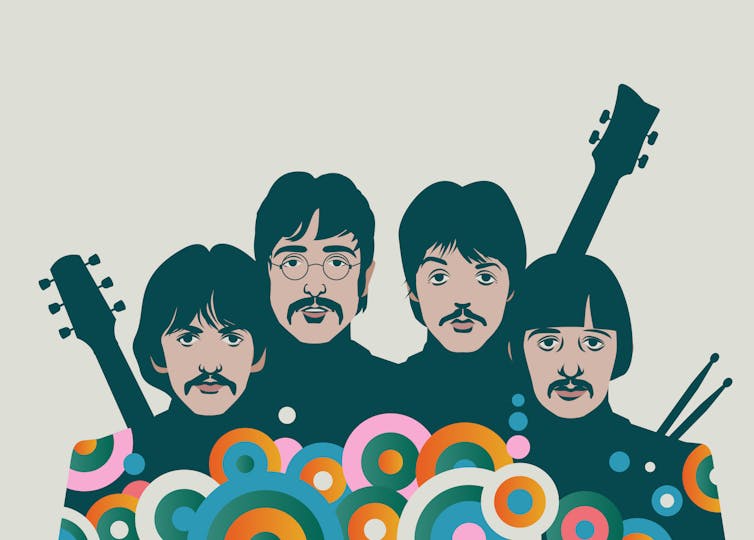
The 50th anniversary of Sergeant Pepper’s Lonely Hearts Club Band was much celebrated in 2017. But this Christmas also marks 50 years since the release of another Beatles production that received much less critical acclaim – the Magical Mystery Tour film.

Much of the music within it was produced during a particularly fecund period (even by the Beatles’ standards) and is, or course, peerless – from the music hall echoes of Your Mother Should Know through the plaintive, melodic Fool on the Hill to the boundary breaking I Am the Walrus.


Beatles Magical Mystery Tour fiftieth anniversary


Shutterstock/Anita Ponne


Unfortunately the film itself fell far short of that artistic bar. First broadcast on Boxing Day 1967, it is, to put it mildly, seriously flawed. Incoherent, sexist, technically shaky and verging on boring, history hasn’t been kind to its cinematic qualities.

Contemporary reviews and audience responses were also so generally scathing that Paul McCartney was moved to issue an apology of sorts to the television broadcast’s 20m viewers. He said in a hastily convened interview:

We don’t say it was a good film. It was our first attempt. If we goofed, then we goofed. It was a challenge and it didn’t come off. We’ll know better next time.


Matters weren’t helped by the Beatles’ psychedelic, colourful exploration being broadcast in black and white on BBC1. A repeat on BBC2 (then the only colour TV service) a few days later did little to redress the situation, if only because there were fewer than 200,000 colour sets in the UK at the time.

Pushing institutional boundaries


For all the defensiveness of McCartney’s response (“You could hardly call the Queen’s speech a gasser”) they do point towards some retrospectively mitigating aspects of the Magical Mystery Tour film.

The film’s distinctly British surrealism and cavalcade of barking sergeant majors, fat aunts, dolly birds, wacky racers and midgets clearly prefigured Monty Python’s explosion of absurdity into mainstream television.

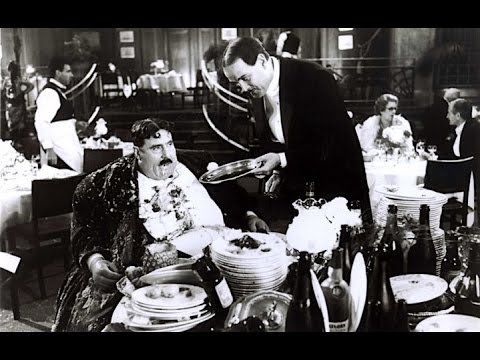
Indeed, George Harrison said later on that he saw Monty Python as a continuation of the spirit of the Beatles. He also funded some of their films, including The Meaning of Life – whose notorious Mr Creosote sketch has visual echoes of a scene in Magical Mystery Tour where John Lennon, dressed as a waiter, serves pasta to Ringo’s fictional Aunt Jessie by the spade full.

What the Pythons added to the mix were sharply honed scripts. Magical Mystery Tour, by contrast, was almost entirely ad-libbed from a one-page diagram. The Beatles’ skill as writers and arrangers was poured into their music instead.

Something else the Pythons had, and which the Beatles lacked, was the benefit of Oxbridge educations. Magical Mystery Tour’s sensibility was more rooted in working class entertainment and tropes than the Pythons’ Oxbridge-infused references.

The very concept of a coach journey – albeit one largely filmed at a decommissioned RAF base – was based on the “charabanc” trips (group bus excursions) of the band members’ childhoods.

The film evokes the past – both a British past in general and, more specifically, as filtered through the Beatles’ own histories. It certainly shows them pushing the boundaries of what a rock band of four Liverpudlians (whose post-school education essentially took place in the nightclubs of Hamburg) could attempt, both artistically and institutionally. Their commercial and creative clout allowed them to broadcast the film during a key annual peak slot for British television viewing.

Prime time


Magical Mystery Tour occupied a particular space in the history of mass entertainment – from the “end of the pier” shows, through the Donald McGill postcards that George Orwell defended against artistic snobbery, to the anarchic weirdness of the likes of Mr Blobby on Saturday night TV.

The Beatles infused that particular strand of entertainment with the forward looking experimentalism of their music, while retaining a characteristic, widely recognisable Britishness. It was this that paved the road for Python and others to follow.

That Magical Mystery Tour was their first real failure since breaking through into the mainstream was also partly a matter of practicalities. While still flowering creatively, they were logistically rudderless after the death earlier that year of their manager Brian Epstein.


Their lack of understanding of the demands of editing a film foreshadowed their later business-related shortcomings, notably the Apple boutique and record label. If the latter of these was revived to become the familiar Beatles brand of today, it was initially a costly failure that contributed to the band’s demise.

But while the film may have overreached, it still demonstrates a clear broadening of mainstream creative boundaries. Popular music fans were certainly receptive to their successful experiments. And even if the broader television public was less ready for a caustic, psychedelic vision of Britain in prime time during the Christmas holidays, Magical Mystery Tour still stands as a useful cultural document.

The ConversationThe Beatles being what they ultimately became, there’s much to be gleaned from their falls as well as their flights.

Adam Behr, Lecturer in Popular and Contemporary Music, Newcastle University

La version originale de cet article a été publiée sur The Conversation.

Sunday, December 24, 2017

Guest Post: 'A Charlie Brown Christmas' and the Triumph of Common Sense

by Annie Holmquist

December 9th marks the anniversary of the Christmas TV special which basically birthed all others: “A Charlie Brown Christmas.”

A Charlie Brown ChristmasMost Americans know the plot well. The despondent Charlie Brown who just can’t work up his Christmas cheer amidst crass commercialism. The confident and obnoxious Lucy, who finds the allegedly perfect solution to Charlie Brown’s gloom. The ill-fated Christmas pageant, which confirms Charlie Brown’s status as a loser. And finally, the rebirth of Christmas cheer that comes through Linus’ recitation of the original Christmas story.

But while the basic story is a charming tale with which many of us can empathize, I find the backstory of “A Charlie Brown Christmas” almost more so.

The Backstory 
For those unfamiliar with the tale, “A Charlie Brown Christmas” went from conception to classic in a manner of months, something that simply doesn’t happen in the world of television production.

But what few people know is that before the special aired on television, Peanuts creator Charles Schulz and his crew believed their Christmas special was following in the footsteps of Charlie Brown himself and was doomed to be a failure.

Just like in Charlie Brown’s Christmas story, those who had commissioned Schulz and his crew to do the show were quick to pile on and express their disappointment with the television product. Mark Evanier, an animator and historian, explains this disappointment in “A Christmas Miracle: The Making of a Charlie Brown Christmas”:

The networks were against it. It went against the conventional thinking at the time of what a children’s special – a Christmas special – had to be.”
Fred Silverman, a CBS executive at the time explains:
There was (sic) specific, negative comments about the music, you know, the piano music. Some of the voicing, which sounded kind of amateurish – and indeed it was amateurish because a lot of them were kid actors. But it was a commitment and the film was made.”
Producer Lee Mendelson continues the story:
They said, ‘Well, it’s on the TV Guide logs, we’ve got to put it on the air, but nice try, you know, we’ll put it on once and that will be it.’ So we figured it was over and it was done.”

A Timeless Classic
But as we now know, Schulz, his crew, and the executives from CBS were dead wrong. The program became an overnight hit, pulling in almost half of the TV ratings for the evening. The show went on to win both an Emmy and a Peabody award and has been broadcast every Christmas since that memorable one in 1965.


The reason I find the backstory behind “A Charlie Brown Christmas” so fascinating is because of how it highlights the great disconnect between the ordinary, average American and those in life who pull the strings.

Charles Schulz is the epitome of the average American. He had a simple, common sense, yet often forgotten message to tell in “A Charlie Brown Christmas.” He insisted on sticking with that message and that simplistic style, even when it looked like it wouldn’t get off the ground. In other words, he was a man who stuck to his principles and wouldn’t compromise them even when they might land him in hot water.

The bigwigs at CBS, however, thought they knew better, and if time hadn’t constrained them, they likely would have attempted to rewrite Schulz’s simple, common sense production for something flashy and more politically correct. They were, in a sense, the precursor of today's marketing elites, who all seem to know what is best for middle America to digest and swallow.

In the current culture of chaos, it’s easy to throw up our hands and give in to the demands of those who stand out and seemingly call the shots. But instead of giving in to political correctness, do we need to take a page from Charles Schulz’ book? In the end, will gentle persistence, common sense, and faithful adherence to solid principles be the pathway to success and fulfillment?


Annie Holmquist

Annie Holmquist is a research associate with Intellectual Takeout. In her role, she writes for the blog, conducts a variety of research for the organization's websites and social media pages, and assists with development projects. She particularly loves digging into the historical aspects of America's educational structure.

This article was originally published on FEE.org. Read the original article.


Friday, December 15, 2017

From the Archives: 'Cable Competition' (1991)

With all the talk about net neutrality these days, I was reminded of this letter to the editor from me published in the Chicago Tribune on September 11, 1991, about cable television monopolies:

Cable Competition
September 11, 1991|By Richard E. Sincere Jr.

ARLINGTON, VA. — Should cable TV monopolies be ended and competition take their place?

TV Guide cover Cable televisionThis seemed to be the question professor Tas Papathanasis asked in an Op-Ed article on Aug. 26 ("Inject competition into cable TV"). Unfortunately, Mr. Papathanasis does not deliver what he promises.

There is no reason, technical or economic, why cable TV companies cannot compete head-to-head in the same local market. Yet Mr. Papathanasis proposes a timid solution to the current problem of cable monopolies-make companies compete periodically for exclusive contracts to serve localities. In reality, this is no different than the current situation in most markets.

In those places where companies are allowed to compete in every sense of the word-Allentown, Pa., is one notable example-the price of basic cable service is kept low and consumers have more choices regarding the channels they receive and the services companies make available.

A temporary monopoly such as that proposed is still a monopoly; we consumers remain the losers. Once local governments allow competition among currently available services and once the federal government allows telephone companies to enter the cable TV business, consumers will be the big winners.


Friday, December 23, 2016

From the Archives: TV star Tina Fey argues for importance of the arts at University of Virginia

Publisher's note: This article was originally published on Examiner.com on September 14, 2013. The Examiner.com publishing platform was discontinued July 1, 2016, and its web site went dark on or about July 10, 2016. I am republishing this piece in an effort to preserve it and all my other contributions to Examiner.com since April 6, 2010. It is reposted here without most of the internal links that were in the original.

TV star Tina Fey argues for importance of the arts at University of Virginia

Award-winning actress, writer, and producer Tina Fey was the inaugural speaker at the University of Virginia's President’s Speaker Series for the Arts on September 14. Fey, a 1992 graduate of the University, was introduced by UVA president Teresa Sullivan and, following her lecture, engaged in a Q&A with drama professor Robert Chapel. Virginia Film Festival director Jody Kielbasa opened the evening's proceedings.

In a wide-ranging, hour-long address that drew on her experiences on stage in high school and college, in television on Saturday Night Live and 30 Rock, and as a mother of two young daughters, Fey discussed the importance of the arts – including music, theatre, film, and graphic arts – to society and human fulfillment.

Fey singled out three artists that she particularly admires and views as role models: British feminist playwright Caryl Churchill (Cloud Nine, Top Girls, Mad Forest); stand-up comedian Chris Rock; and Broadway composer-lyricist Stephen Sondheim (Into the Woods, Follies).

These three artists, she explained, “meant a lot to me,” saying that, although she had often acknowledged the influence of comediennes like Mary Tyler Moore, Gilda Radner, and Carol Burnett, “I've never really talked about these particular people whose work really thrills me and really inspires me, which is the way I think art should make you feel.”

Caryl Churchill

Churchill's work, she said, is “so fascinating to me because it really made you think about what you think is normal and what is deviant and what is societally acceptable. It didn't tell you what to think, but it made you think about it.”

The things she “loves most about Caryl Churchill's writing,” Fey explained, are that she writes “spare dialogue,” that she plays around with theatrical conventions, and that “she inspires me to write politically, to try to write about something, to write about things that are important.”

On that latter point, Fey gave the example of her film Mean Girls, costarring Lindsay Lohan.

That movie, she said, was a high school comedy but also “intended to be a jumping-off point for a conversation about what they call 'relational aggression' among girls."

"And we fixed it; the movie fixed it,” she added sarcastically.

The TV series 30 Rock, she explained, was meant to explore gender, class, and racial differences among the main characters, Liz Lemon, Jack Donaghy, and Tracy Jordan.

Chris Rock

What she admires about Chris Rock, Fey said, is that he is “the greatest stand-up comedian of his generation, of my generation.”

Rock, she explained, has a special ability to “look closely, to look at the world really, really, really closely and notice something that's true, that no one's ever said before, and then say it. Call out something that no one's ever said out loud before. That's the best way to write a joke because only the truth is funny.”

Rock's social and (sometimes) political commentary, Fey noted, is sometimes too vulgar to repeat in front of a general audience like the one gathered in the McIntire Amphitheatre, but it is no less sharp-edged and relevant because of that.

Stephen Sondheim

“Obviously, the third artist in this completely organic triumvirate of my favorite people, is musical theater composer and lyricist Stephen Sondheim,” Fey said, noting that she used to watch the VHS copy of Into the Woods every Friday night in UVA's Clemons Library.

Sondheim “is the master of many things,” she said, recommending his two books on lyric-writing to the audience. “My favorite thing about him is that he's the master of a beautiful song in a creepy context,” giving as an example “Not While I'm Around” from Sweeney Todd, as well as the show Assassins.

Like Fey, Sondheim is in the theatre because “he's interested in communication with audiences.”

What she has hoped to have learned from Sondheim, Fey said, are to “set the level of difficulty really high … and to challenge your audience, expect them to pay attention and to be smart, expect them to love language.”

Sondheim's work is “so finished,” she said, “it's made with so much care,” adding that she and her colleagues at 30 Rock would treat their script pages “as though they were going to the Smithsonian.”

“We would check every detail of the set because it's your work. It doesn't matter if it's a school play or a dumb TV show. It's your work. You should care about it so much that people get annoyed with you.”

Another lesson Fey learned from Sondheim is that it's OK to make things that are not for everyone. Setting out to create a huge commercial success is like “a recipe for Cream of Wheat.” She suggested that the “best-selling book in the world,” Fifty Shades of Grey, was written by a malfunctioning ATM machine.

“Money is not the way to measure success in the arts,” Fey concluded.

Tuesday, December 20, 2016

From the Archives: UVA English professor Paul Cantor explores zombies and liberty in pop culture

Publisher's note: This article was originally published on Examiner.com on November 16, 2013. The Examiner.com publishing platform was discontinued July 1, 2016, and its web site went dark on or about July 10, 2016. I am republishing this piece in an effort to preserve it and all my other contributions to Examiner.com since April 6, 2010. It is reposted here without most of the internal links that were in the original.

UVA English professor Paul Cantor explores zombies and liberty in pop culture

Speaking at the Mercatus Center at George Mason University on November 14 on the topic, “The Economics of Apocalypse: Flying Saucers, Alien Invasions, and the Walking Dead,” UVA English professor Paul A. Cantor drew upon his research on popular culture to discuss opposing visions of individualism and collectivism in contemporary catastrophe narratives in film and television.

Cantor, a Shakespeare scholar, is author of a recent book, The Invisible Hand in Popular Culture: Liberty vs. Authority in American Film and TV, a follow-up to Gilligan Unbound: Pop Culture in the Age of Globalization, published in 2001. He is also co-editor, with Stephen Cox, of the 2010 volume, Literature and the Economics of Liberty. Cantor and Cox are among the most prominent libertarian thinkers working in the field of English literature today.

After his lecture and an audience discussion moderated by Reason magazine's Jesse Walker, Cantor explained to the Charlottesville Libertarian Examiner why he was looking into the presence of zombie themes in pop culture today.

'Self-reliance'

“These zombie stories are a very interesting way of exploring questions that Americans are interested in,” he said.

What he has noticed in zombie stories, he explained, is that “almost the first thing that results from the zombie apocalypse is the collapse of the federal government. These stories explore what life would be like in a world that was more like the American western, more like the frontier, in which people are forced to rely on their own resources.”

Sometimes, he said, those situations are “frightening but for many of the characters, particularly in The Walking Dead, the experience is empowering. They develop a sense of self-reliance, they face a a challenge, and they meet it.”

In his book, Cantor traces recurring themes in film and TV since the 1950s, a time when there were just three television channels available to most viewers, compared with the hundreds available through cable and satellite services today.

The proliferation of channels, he said, “has really opened up the creativity in television.”

Citing The Simpsons and The X-Files as pertinent examples, Cantor explained that “a lot of shows almost certainly wouldn't have made it onto television in the era of the three networks. It was the Fox Network, the fourth network, that really opened things up.”

'Greater quality'

Despite the increase in the number of networks and shows, he said, “there's a lot of continuity. Again, what I'm seeing in these contemporary zombie narratives is in many ways a reconstitution of what westerns were like in the Fifties. What we certainly have now is greater variety and, frankly, greater quality because people are able to take more creative chances.”

Cantor's new book, The Invisible Hand in Popular Culture, he said, “carries on some of the same issues” addressed in Gilligan Unbound.

One section of the more recent work “is devoted to globalization,” the primary theme of Gilligan Unbound, which was published the same week as the September 11, 2001, terrorist attacks on New York and Washington.

“This book has given me a chance to see how things have played out in popular culture” over the past decade, Cantor said.

Writing the book gave him an opportunity to ask “how shows like Fringe, V, Invasion, [and] Fallen Skies have reacted to developments since 9/11 and [a] world with a threat of terrorism but also the problems created by the war on terrorism.”

Flying saucers and totalitarianism

He was also able to compare and contrast pop culture during the Cold War and during the post-9/11 era.

“I look at flying saucer movies in the 1950s,” he noted.

In those days, Cantor said, “the invaders are an image of real foreigners. It's Soviet Communism that's showing up in the flying saucers.”

By contrast, he pointed out, “when you look at shows like V, The Event, Invasion, [and] especially Fringe, the people invading us are us. 'We've met the enemy and he is us.' These shows explore a disturbing image of the American government as having moved in totalitarian directions.”

With so many choices of movies and TV shows to watch, Cantor sometimes relies on serendipity to find what he's looking for.

“It's chancy,” he said.

“Sometimes I just like a show, often because I like the characters or the actors in it. Sometimes I force myself to watch a show because it's obvious it's raising the kind of questions I'm interested in. For example, The Walking Dead, I really just like. It's really well-made, well-done.”

On the other hand, he watches Revolution on NBC “even though I don't think it's such a good show because it fits into my thesis and I've got to consider the evidence” as he continues exploration of libertarian and apocalyptic themes in popular culture.

Monday, December 19, 2016

From the Archives: Cultural critic Paul Cantor assesses the politics of the new TV season

Publisher's note: This article was originally published on Examiner.com on September 30, 2010. The Examiner.com publishing platform was discontinued July 1, 2016, and its web site went dark on or about July 10, 2016. I am republishing this piece in an effort to preserve it and all my other contributions to Examiner.com since April 6, 2010. It is reposted here without most of the internal links that were in the original.

Cultural critic Paul Cantor assesses the politics of the new TV season

While best known in academic circles as a scholar of Shakespeare and of 19th-century English Romanticism, University of Virginia English Professor Paul Cantor is also a well-regarded critic of popular culture whose 2001 book, Gilligan Unbound, took a close look at TV staples from the 1960s through the 1990s, including Gilligan’s Island, Star Trek, The Simpsons, and The X-Files.

Cantor’s most recent book, co-edited with Stephen Cox, is Literature and the Economics of Liberty: Spontaneous Order in Culture, which applies concepts of Austrian economics to the analysis of literary works.

At an event hosted by Students for Individual Liberty on the UVA grounds on September 29, Professor Cantor was in the audience and, afterward, spoke to the Charlottesville Libertarian Examiner about the new television season.

'CSI' and Justin Bieber

His first thought was about the season opening episode of CSI: Crime Scene Investigation (the original franchise, set in Las Vegas).

Paul Cantor
“I read a description of” the episode in TV Guide, he said, and “was a little suspicious of it.”

After viewing the first episode, Cantor suggested that it may have been “first salvo in Hollywood’s attack on the Tea Party,” because, as he described the show, “it more or less treated Tea Party types as if they were some sort of 1960s-style militia, as if they were terrorists.”

He explained that, “on the one hand, it [showed] a gathering of dissident political figures [who] clearly were attacking -- though not by name -- the Obama administration. On the other hand, they were then connected with bombings and terrorist acts,” including exploding a policeman’s coffin at his funeral.

“I’m afraid,” Cantor said ruefully, that “this is the Hollywood take on the Tea Party. This is the beginning of a lot that we’ll be seeing on television.”

Cantor is not alone in his assessment: political commentator Alex Knepper made a similar point on Big Hollywood on Wednesday.

The fact that Canadian singer Justin Bieber made his debut as a dramatic actor in the season opener of CSI was not coincidental, Cantor said.

“They were certainly exploiting” the teen idol’s celebrity, he explained. “Clearly they were trying to get him to get more interest in this episode.”

The producers “probably got a lot of people to watch the show who might not have watched it” otherwise. Bieber “actually gave a surprisingly good performance. He was supposed to convey an aura of innocence and yet then turn out to be involved,” in the domestic terrorism. Moreover, the ending of first show is “setting him up as a returning character.”

'The Event'

Cantor said the new NBC mystery-thriller series, The Event, is “clearly a recycling of The X-Files. I don’t know where it’s headed but it does seem to be the first attempt to portray Obama on television.”

In terms of plot, The Event is “an allegory of the issue of shutting down Guantanamo, though in this case it’s a holding area for extraterrestrials in Alaska. (Don’t ask me to explain that.)”

Veteran TV actor Blair Underwood plays a Cuban-American president, who is also black, and, Cantor said, “he’s being portrayed as a sympathetic character.”

In the second episode, the Underwood character is shown “in charge of things,” Cantor explained, “but there was this amazing line where he was trying to get information out of one of the aliens and he said, ‘I hope I’m not being too narcissistic, I hope I’m not being too obsessed with my place in history.’”

For Cantor, that line “was very interesting because it’s such an accurate characterization of Obama.”

'X-Files,' 'Weeds,' 'Breaking Bad'

Today’s cultural climate, Cantor agreed, is “absolutely” open to conspiracy-type shows along the lines of the 1990s Fox cult hit, The X-Files.

Having written about The X-Files in his book, Gilligan Unbound, Cantor said he gets “annoyed when people treat The X-Files as dead and buried and said it was, ‘a show for the ‘90s.’”

Virtually “half the shows on television now are conspiracy shows,” Cantor said, naming Rubicon, Sons of Anarchy, Weeds, and Breaking Bad as examples.

Shows like Weeds and Breaking Bad, he added, are rather sympathetic to (in this case) drug dealers” and they also “portray DEA officials in a very negative light.”

That, he said, is “an interesting sign of what’s going on in popular culture.”

Cantor’s personal “must-see TV” is Breaking Bad on AMC. He notes that it is produced by X-Files alumnus Vince Gilligan and judges it to be “the most powerful show dramatically.”

As an aside, Cantor adds, Breaking Bad “has a strong libertarian element in it, so I can recommend it on political as well as on aesthetic grounds.”

Monday, August 01, 2016

From the Archives: Monique Luiz, 'Daisy Girl' from controversial 1964 campaign ad, speaks at UVA

Publisher's note: This article was originally published on Examiner.com on October 15, 2014. The Examiner.com publishing platform was discontinued July 1, 2016, and its web site was scheduled to go dark on or about July 10, 2016.  I am republishing this piece in an effort to preserve it and all my other contributions to Examiner.com since April 6, 2010. It is reposted here without most of the internal links that were in the original.

Monique Luiz, 'Daisy Girl' from controversial 1964 campaign ad, speaks at UVA

On September 7, 1964, Lyndon Johnson's presidential campaign bought time during NBC's “Monday Night at the Movies” for a 60-second ad that showed a little girl plucking the petals off a flower, followed by a nuclear mushroom cloud and an excerpt from one of Johnson's speeches.

Long known as the “Daisy Girl” ad (although the flower was a dandelion, not a daisy), the spot – for which NBC charged $24,000 – was produced by the Madison Avenue firm of Doyle Dane Bernbach (DDB), which had not previously done political ad-making. It was tremendously controversial and, along with other DDB ads that aired in 1964, changed the style and substance of campaign advertising.

The little girl in the ad was 3-year-old Monique Corzilius, who had earlier appeared in print ads but had not acted on film. (She later went on to perform in commercials for products like Kool Pops and SpaghettiOs.)

Now known as Monique Luiz, the “Daisy Girl” participated in a panel discussion hosted by the University of Virginia Center for Politics on October 15, along with Robert Mann, author of Daisy Petals and Mushroom Clouds: LBJ, Barry Goldwater, and the Ad That Changed American Politics, and veteran journalist Sid Davis, who was a White House correspondent in the early 1960s, covered the 1964 campaign, and was present at President John F. Kennedy's assassination in 1963.

Red hair stands out
After the panel, Luiz answered a few questions posed by the Charlottesville Libertarian Examiner about her role as the “Daisy Girl” and the reactions to it.

For more than four decades, Luiz did not acknowledge that she was the girl in the ad. In 2009, however, she discovered that another woman was claiming to be her and was trying to capitalize on the TV spot's notoriety. Luiz came forward with documentation that she was the authentic “Daisy Girl” and subsequently was interviewed by Mann for his book, which is how she came to appear at UVA this week.

When she auditioned for the part, neither she nor her parents knew that DDB was making a political ad. She stood out among the many little girls who tried out because of her red hair, and also because her father was persistent.

“I think it was my father who sold them” on the idea “that I could do it,” she recalled. “He pretty much said, 'I can't guarantee anything but she'll try.'”

Listening closely to her in the commercial, one can hear exasperation in little Monique's voice. That was, in part, because the final cut was taken from the 27th take in a long day of filming.

Surprise
Even after filming, Monique's parents did not know how the footage would be used. They found out by seeing the ad on TV.

Their reaction, as she remembered it, was: “'Oh my gosh, it's Monique! She's in a political ad!'”

After the ad appeared on TV for the first time, and it was repeated on news shows in the days that followed, there was a negative reaction, coming from the general public, causing her grandmother, in particular, to become “very concerned about it.”

As she was growing up, Luiz chose not to reveal her association with the ad, and she ended her modeling career at age 7 or 8, preferring to focus on school and normal girlhood.

“I knew about [the controversy] and I just avoided it. I remember my grandmother saying, 'Don't say you're the Daisy Girl! Don't say you're in that ad!' So I grew up not wanting to talk about it.”

For all the publicity that surrounded the “Daisy Girl” ad, Monique Corzilius was paid just one hundred dollars for appearing in it – which seemed pretty substantial in 1964.

As Luiz recalls now, with a smile, “I remember my parents saying, 'Wow! You made a lot of money.'”

The “Daisy Girl” ad is available in several forms on YouTube. Here is a link to one of them.

SUGGESTED LINKS

UVA Center for Politics commemorates 1960 Kennedy-Nixon debates
Larry Sabato discusses Cuccinelli, McAuliffe, Sarvis in 2013 election
Lee Harvey Oswald colleague recalls aftermath of Kennedy assassination
Witness to 1963 Kennedy assassination speaks at Virginia Film Festival
JFK was 'cautious, conservative' says UVA political scientist Larry Sabato

Original URL: http://www.examiner.com/article/monique-luiz-daisy-girl-from-controversial-1964-campaign-ad-speaks-at-uva

Tuesday, July 12, 2016

From the Archives: Congressmen Bob Goodlatte and Robert Hurt comment on WDBJ-TV killings

Publisher's note: This article was originally published on Examiner.com on August 26, 2015. The Examiner.com publishing platform was discontinued July 1, 2016, and its web site is scheduled to go dark on or about July 10, 2016.  I am republishing this piece in an effort to preserve it and all my other contributions to Examiner.com since April 6, 2010. It is reposted here without most of the internal links that were in the original.

Congressmen Bob Goodlatte and Robert Hurt comment on WDBJ-TV killings

Two Virginia television journalists were murdered during a live broadcast on Roanoke station WDBJ on Wednesday morning. The killer, Vester Flanagan, a former employee of the same TV station, was chased across the state and died of self-inflicted gunshot wounds in a Northern Virginia hospital.

Two Members of Congress who represent the area covered by WDBJ-TV offered messages of condolence.

In a statement issued by his office, Representative Bob Goodlatte (R-VA6), chairman of the House Judiciary Committee, said:

“The horrific murders that occurred this morning have impacted the entire Roanoke community. Maryellen and I offer our condolences to the families of Alison Parker and Adam Ward during this very difficult time"

Goodlatte noted that he "had the great opportunity to work with Alison and Adam, and they will be dearly missed by those in our community as well as their loved ones and colleagues at WDBJ. I continue to keep the WDBJ family as well as Vicki Gardner, who was wounded this morning, in my thoughts and prayers."

Gardner was being interviewed on the air as a spokesperson for the Smith Mountain Lake Chamber of Commerce.

Goodlatte continued: "As we continue to learn more about this terrible tragedy, I am thankful for the coordinated efforts of multiple federal, state, and local law enforcement agencies in responding quickly."

Congressman Robert Hurt, whose Fifth Congressional District is near Roanoke, offered a similar message in a news release distributed by email to reporters.

“I am deeply saddened by the horrific act of violence that occurred in Franklin County this morning," Hurt said. "Our prayers are with the families of Alison Parker and Adam Ward and the entire WDBJ team."

Hurt also mentioned that Vicki Gardner was in his prayers and he thanked "the local, state, and federal law enforcement personnel who worked diligently to apprehend the suspect and prevent further harm to our communities."

SUGGESTED LINKS

Congressman Bob Goodlatte 'skeptical' about U.S. military intervention in Syria
U.S. Representative Robert Hurt discusses eminent domain and redistricting
Congressman Bob Goodlatte finds ‘common ground’ for libertarians and GOP
Virginia Congressman Robert Hurt speaks out for free trade in Charlottesville
Virginia Congressman Robert Hurt reacts to federal unemployment report

Original URL: http://www.examiner.com/article/congressmen-bob-goodlatte-and-robert-hurt-comment-on-wdbj-tv-killings


Tuesday, December 02, 2014

Remembering Adolph Green at 100

A report from NPR's Jeff Lunden today on "All Things Considered" recalls that today marks the 100th birthday of Broadway lyricist and Hollywood screenwriter Adolph Green, whose works include On the Town, Wonderful Town, Bells Are Ringing, Singing in the Rain, The Bandwagon, and about half of the 1954 version of Peter Pan.  That last show will be presented on NBC-TV this coming Thursday as Peter Pan Live!

The 1954 Peter Pan had one set of songs by composer Mark Charlap and lyricist Carolyn Leigh, which included "I've Got to Crow," "I'm Flying," and "I Won't Grow Up," among others.  (The use of first-person nominative in those song titles must indicate something about the character of Peter Pan's embedded egoism.)

Along with his lyric-writing partner, Betty Comden, and composer Jule Styne, Green contributed a number of songs to Peter Pan, including "Wendy," "Ugg-a-Wugg," "Distant Melody," and the haunting "Neverland," sung in the clip below by Mary Martin in a kinescope of the 1955 live NBC-TV production.  (Kathleen Nolan appears as Wendy Darling in this production, which was directed and choreographed by Jerome Robbins.)


In the rare clip below, from a 1957 broadcast on the Dumont network of Art Ford's Greenwich Village Party, Comden and Green sing their duet from On the Town, "I Get Carried Away." Art Ford reminds his viewers that Comden and Green had worked with Judy Holliday in a nightclub act in the 1940s called The Revuers, which led to their collaboration with Leonard Bernstein on On the Town, and that Holliday was then starring in their latest collaboration (with Jule Styne), Bells Are Ringing.

After Green sets up the number, it begins at the 3:30 mark on the video.


Another snippet of Comden and Green and performers can be seen in this compilation of songs from the 1985 Follies in Concert.  They sing "Rain on the Roof" beginning at 2:00 (and, sadly, ending at 2:10).  The video clip also includes the late Elaine Stritch singing "Broadway Baby" and Adolph Green's wife, Phyllis Newman, as part of the ensemble on "Who's That Woman?" as well as Carol Burnett proclaiming "I'm Still Here" -- along with leading players Barbara Cook, George Hearn, Mandy Patinkin, and Lee Remick.

A look at Adolph Green's credits on IBDB shows how prolific an artist he was. In addition to the shows already mentioned, he contributed either book or lyrics (or, sometimes, both) to Billion Dollar Baby, with David Burns and Helen Gallagher (1945), Two on the Aisle, with Bert Lahr and Dolores Gray (1951), Say, Darling (1958), A Party with Betty Comden & Adolph Green (1958 and 1977), Do Re Mi, with Phil Silvers and Nancy Walker (1960), Subways Are for Sleeping, with Carol Lawrence and Sydney Chaplin (1961), Fade Out-Fade In, with Carol Burnett and Jack Cassidy (1964), Hallelujah, Baby!, with Leslie Uggams (1967), Applause, with Lauren Bacall and Len Cariou (1970), Lorelei, with Carol Channing (1974), On the Twentieth Century, with Imogene Coca, John Cullum, Madeline Kahn, and Kevin Kline (1978), A Doll's Life, with what seems like the cast of Sweeney Todd -- George Hearn, Betsy Joslyn, and Edmund Lyndeck (1982), and The Will Rogers Follies, with Keith Carradine, Dee Hoty, and the voice of Gregory Peck (1991).

The list of Adolph Green's collaborators could itself be a book about the history of the musical theatre:  George Abbott, Lee Adams, Richard Bissell, Abe Burrows, Jerome Chodorov, Cy Coleman, William and Jean Eckart, Lehman Engel, Ron Field, Joseph A. Fields, Bob Fosse, Paul Gemignani, Garson Kanin, Michael Kidd, Arthur Laurents, David Merrick, Harold Prince, Burt Shevelove, Irene Sharaff, Oliver Smith, Peter Stone, Charles Strouse, Tommy Tune, Robin Wagner, and Freddie Wittop -- to name just a few.

Considering that Peter Pan Live! goes on the air this week, that there is a current revival of On the Town on Broadway, and the first full Broadway revival of On the Twentieth Century opens early next year, Adolph Green is having a pretty good season for a centenarian who has been dead for twelve years.


Saturday, November 29, 2014

A Look Back at the Making of the First 'Peter Pan' Movie (1924)

Peter Pan Live NBC Christopher Walken Minnie DriverWith the much-hyped television broadcast of Peter Pan Live!, starring Allison Williams, Minnie Driver, and Christopher Walken, coming up on Thursday, December 4, on NBC, it seems worthwhile to look back on other versions of the classic J.M. Barrie work.  (On Twitter, the show is being promoted as #PeterPanLive.)  This production is a follow-up to last December's virally successful The Sound of Music Live! The cast also includes Broadway veterans Christian Borle and Kelli O'Hara and (relative) newcomers Taylor Louderman, Jake Lucas, and John Allyn as the Darling family.

I have seen Sandy Duncan on stage as Peter Pan and Mary Martin on TV, as well as the 1953 Disney animated production with Bobby Driscoll voicing Peter.  I missed Mia Farrow and Cathy Rigby in the role but, for my money, Jeremy Sumpter was the most heatedly erotic Peter in the movies, but most audiences are not looking for that particular quality in what is usually intended as a children's story.

The first movie presentation of Peter Pan was released in 1924 by Paramount.  It was produced by Adolph Zukor and directed by Herbert Brenon.  Sir James M. Barrie was involved in the project and approved of the casting although -- as the anecdotes recounted below note -- his original screenplay was set aside for one credited to Willis Goldbeck.  The film was shot by renowned cinematographer James Wong Howe.

Stewart Stern Rebel without a Cause James DeanIn 2007,  screenwriter Stewart Stern (Oscar-nominated for Rebel Without a Cause and an Emmy winner for Sybil) appeared at the Virginia Film Festival, where in addition to a shot-by-shot workshop of Rebel Without a Cause he offered opening remarks at a screening of the 1924 Peter Pan.

Stern, then 85 years old, recalls the casting process that resulted in the choice of Betty Bronson as the first screen Peter but he also describes his own experiences in seeing Eva Le Gallienne and Elsa Lanchester on stage as Peter, and the personal touches he received not just from those actresses but also from J.M. Barrie himself.

Here is video of screenwriter Stewart Stern, speaking at the Paramount Theater in downtown Charlottesville on November 3, 2007.  Part I offers some anecdotes about Barrie and the first stage production of Peter Pan and the casting of Bronson in the title role.  (Partial transcript follows the video clip.)

Stewart Stern on Peter Pan - Part I


It always begins with a writer. Sir James Matthew Barrie, who wrote Peter Pan, was a very small Scotsman, barely taller than a child, with a very large head, deep melancholy eyes, a mustache to cover his shyness, and a pipe that made everyone cough.

He rarely smiled but he could wiggle his ears and he mainly trusted children and certain Newfoundland dogs of his acquaintance, whom he would one day roll up into Nana. There were those five little boys in Kensington Gardens whom he fell in love with, and the Davies boys, whom he wisely treated as his superiors, and grew so close to, that in a way he stole them, even as Peter Pan stole the Darling children, and they made up Peter's story together.

It was born as a game they played at Barrie's country house, and it just kept making itself up as he and his boys played it – sometimes this way, sometimes that way – and that's how Barrie put it on the stage and that's why it always keeps changing. That's the character of Peter, too: he won't stand still, never remembers what he did last, and he's always finding new adventures to hide his loneliness inside.

During rehearsals, Barrie would sit huddled in the dark of the Duke of York's Theatre in London, his great coat and bowler hat, watching the children with envy as they practiced flying around the stage, until one days someone asked him what the matter was. He said, “I would very much like to fly, too!”

So, they hoisted him up in the magical arrangement that helps you do it, and flew him around the stage in absolute ecstasy, bowler hat, pipe, greatcoat and all, twinkling like a firefly, until they finally sat him down.

Barrie's favorite critic on opening night was a little boy whom he'd taken to the theatre. And he asked him, what part of it did you like best, when the final curtain came down. And the little boy said, “Oh, the part I liked best was tearing up my program into little bits and throwing them down on the people!” And of all the reviews his play received, Barrie liked that one the most.

In about 1920, my uncle, Adolph Zukor, who started Paramount Pictures, decided to make the first movie of Peter Pan. He had to find the perfect Peter to please Mr. Barrie, so a nationwide search began all across America.

Betty Bronson as Peter Pan silent movies
Betty Bronson as Peter Pan
Countless screen tests were made and the best ones were taken to London on an ocean liner by the movie's director, Mr. Herbert Brenon, and by another uncle of mine, Mr. Albert Kaufman, who was Uncle Adolph's studio manager. These men would show the tests to Barrie for him to choose his favorite, and among the candidates was a tiny, 17-year-old girl from New Jersey who had come to Hollywood to break into movies and who called herself Betty Bronson. She banged on every door at Paramount Studios until Mr. Brenon agreed to see her, and she told him that she was born to play Peter, she had to pay Peter, she would play Peter, and so Mr. Brenon had no choice but to make a test.

In the London screening room, the two Americans unreeled those tests for Barrie, day after day, and to break up a long afternoon, Barrie invited them to his flat, overlooking the River Thames, for tea.

They were awed to be at the home of such a famous man, a man great enough to be knighted by the king. Barrie left his guests in the big inglenook by the fire, where he wrote, to go and see about the tea. But while they waited in their straight-back chairs, saying very little, for the whistle at the kettle to come from the kitchen, there was such a long, alarming silence, that they went exploring through the flat, and they finally found Barrie frozen at the kitchen door with his shoes in his hands and his face a mask of terrible guilt. “It's housekeeper's day off,” Barrie said, “and I'm not allowed in the kitchen. Mrs. Porter absolutely forbids me to set foot in it.”

Uncle Al said, “Well, I'll go in. I'll make the tea.”

But Barrie said, “No, no, no, no. She'll be able to tell. She puts things around I have to move out of the way and that gives her hints.”

So that was it for tea.

The very next day, a telegram reached Uncle Adolph's desk in New York. It was from London. “Betty Bronson chosen to play the role of Peter Pan. Signed, Barrie.”

In part two of the video from the Virginia Film Festival, Stern describes the magic of Eva Le Gallienne as Peter Pan (in a production she also directed), and the fright that Elsa Lanchester brought to the role. He describes his own two degrees of separation from Sir James Barrie and his particular attachment to thimbles. (Partial transcript follows the video.)

Stewart Stern on Peter Pan - Part II

The film was a huge success and many of the effects in it – the great broom sweeping the fairies away, Captain Hook's Jolly Roger rising up off the mermaids' lagoon and flying the children home – were all Barrie's own ideas for the movie version, special effects way before their time. And it's a wonderful script to read. It's a complete screenplay and filled with fancy but they decided, no, they wouldn't use it – just this and that of it. And so the movie has a more theatrical look than what might have happened if Barrie had had his screenplay used.

Like all very old children who never grew up – this isn't a hook, by the way, it's to do Charlie Chaplin imitations and it's also a reminder that I'm 85, so I'm only half young – anyway, I have loved Peter Pan my whole life. My first Peter Pan when I was little was the great Eva Le Gallienne. She gave special children matinees at the old Civic Repertory Theatre in New York at 11 o'clock Saturday mornings, and then she went on in the rest of the day to play grown-up roles in the afternoon and evening, in plays like Camille, Romeo & Juliet, and Ibsen's Ghosts, and the next morning she was back being Peter Pan.

But they weren't half as exciting as Peter Pan, those other plays, those grown-up plays. So Saturday after Saturday, my mother moved us up to the cheaper and cheaper seats, up to the tip-tip-top of the theatre, where the poorest children sat on benches that only cost 50 cents.
Sitting on those hard seats, miles above the people, we had the best thrill of anyone in the theatre because at the end, Peter Pan flew, not just over the audience way down there but above the balconies that were below us – there were two that were below us, and then the audience down there – but all the way up here, she touched our hands as we leaned out over the railing and shouted good-bye as she flew past us and then zoomed down to the stage. It was the most thrilling thing I've ever seen in my life and it still stays with me.

Screenwriter Stewart Stern Virginia Film Festival 2007
Stewart Stern in Charlottesville, Nov. 3, 2007
All children who saw Peter Pan wanted to fly. Until I was ten, I dreamed of flying out my window so many times that one morning I found my bare footprints in the snow on my window sill facing out over New York City, eight floors up. The next my dad had metal guards attached to the window. I could never fly again.
I pleaded with my mom to make me a Peter Pan costume and I wore it everywhere except to school. I'd come home, climb onto my book case in my Peter Pan suit, doing my homework with Peter's rubber dagger stuck in my teeth in case Hook came into the room.

And one day, on Uncle Adolph's golf course, I was up in my usual tree, dressed as Peter and tootling on my pipes, when my father came along with a man I didn't know who had an English accent and wore knickerbockers. When he heard my tootling, as he was about to hit the ball, he said, “Good lord! That's the 'Pirate Song' from Peter Pan. What's it doing in that tree?”

My dad said, “It's just Peter, otherwise known as my son.”

The man peered through the leaves until he found me, and we stared at each other for one long meaningful moment, and I won.

He said, “By George, it is Peter Pan, the real one! Bicarbonate of soda, it is!”

That man with the accent turned out to be Sir William Wiseman, a friend of Barrie's, and a few weeks later a package came in the mail from London, a first edition of Peter Pan and Wendy autographed “To Stewart Stern, kind regards, from J.M. Barrie.”

I wished he had sent me a thimble in it, that silver thing you wear on your finger when you sew a button on, that Peter called a kiss.

My letters from Eva Le Gallienne all had thimbles in them. She'd write, “Bless you, my dear, I send you a very nice thimble.” And my letter from Betty Bronson had thimbles in it, too.

But not Elsa Lanchester's, who came down her flying wire like a black widow spider after its prey and acted the whole part – and she told me this – pretending to be Hitler at the age of 6. Children shook when she came on and they rushed to Captain Hook to comfort them – and Captain Hook was Charles Laughton, her husband.

Stewart Stern is still alive at the age of 92. No doubt, if he watches Peter Pan Live! next Thursday, his TV viewing experience will be warmed by his childhood memories of Peter Pan and the actresses who played him.