Showing posts with label music. Show all posts

Tuesday, December 26, 2017

Guest Post: 'Magical Mystery Tour' paved the way for Monty Python


Adam Behr, Newcastle University

The 50th anniversary of Sergeant Pepper’s Lonely Hearts Club Band was much celebrated in 2017. But this Christmas also marks 50 years since the release of another Beatles production that received much less critical acclaim – the Magical Mystery Tour film.

Much of the music within it was produced during a particularly fecund period (even by the Beatles’ standards) and is, or course, peerless – from the music hall echoes of Your Mother Should Know through the plaintive, melodic Fool on the Hill to the boundary breaking I Am the Walrus.
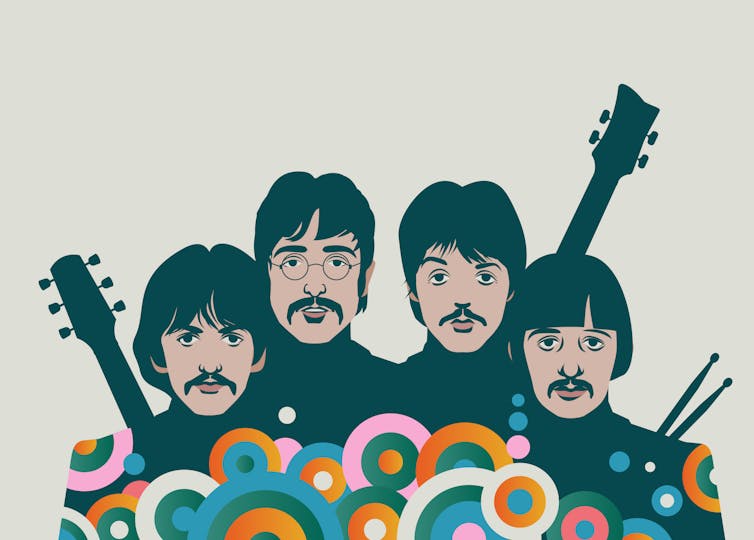


Beatles Magical Mystery Tour fiftieth anniversary


Shutterstock/Anita Ponne


Unfortunately the film itself fell far short of that artistic bar. First broadcast on Boxing Day 1967, it is, to put it mildly, seriously flawed. Incoherent, sexist, technically shaky and verging on boring, history hasn’t been kind to its cinematic qualities.

Contemporary reviews and audience responses were also so generally scathing that Paul McCartney was moved to issue an apology of sorts to the television broadcast’s 20m viewers. He said in a hastily convened interview:

We don’t say it was a good film. It was our first attempt. If we goofed, then we goofed. It was a challenge and it didn’t come off. We’ll know better next time.


Matters weren’t helped by the Beatles’ psychedelic, colourful exploration being broadcast in black and white on BBC1. A repeat on BBC2 (then the only colour TV service) a few days later did little to redress the situation, if only because there were fewer than 200,000 colour sets in the UK at the time.

Pushing institutional boundaries


For all the defensiveness of McCartney’s response (“You could hardly call the Queen’s speech a gasser”) they do point towards some retrospectively mitigating aspects of the Magical Mystery Tour film.

The film’s distinctly British surrealism and cavalcade of barking sergeant majors, fat aunts, dolly birds, wacky racers and midgets clearly prefigured Monty Python’s explosion of absurdity into mainstream television.

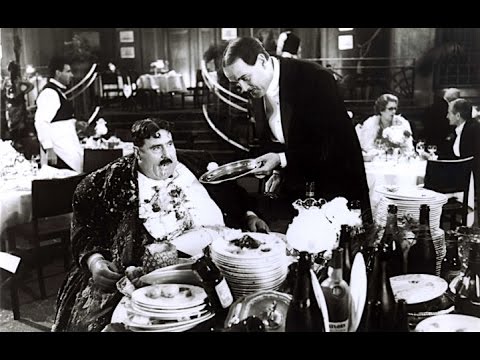
Indeed, George Harrison said later on that he saw Monty Python as a continuation of the spirit of the Beatles. He also funded some of their films, including The Meaning of Life – whose notorious Mr Creosote sketch has visual echoes of a scene in Magical Mystery Tour where John Lennon, dressed as a waiter, serves pasta to Ringo’s fictional Aunt Jessie by the spade full.

What the Pythons added to the mix were sharply honed scripts. Magical Mystery Tour, by contrast, was almost entirely ad-libbed from a one-page diagram. The Beatles’ skill as writers and arrangers was poured into their music instead.

Something else the Pythons had, and which the Beatles lacked, was the benefit of Oxbridge educations. Magical Mystery Tour’s sensibility was more rooted in working class entertainment and tropes than the Pythons’ Oxbridge-infused references.

The very concept of a coach journey – albeit one largely filmed at a decommissioned RAF base – was based on the “charabanc” trips (group bus excursions) of the band members’ childhoods.

The film evokes the past – both a British past in general and, more specifically, as filtered through the Beatles’ own histories. It certainly shows them pushing the boundaries of what a rock band of four Liverpudlians (whose post-school education essentially took place in the nightclubs of Hamburg) could attempt, both artistically and institutionally. Their commercial and creative clout allowed them to broadcast the film during a key annual peak slot for British television viewing.

Prime time


Magical Mystery Tour occupied a particular space in the history of mass entertainment – from the “end of the pier” shows, through the Donald McGill postcards that George Orwell defended against artistic snobbery, to the anarchic weirdness of the likes of Mr Blobby on Saturday night TV.

The Beatles infused that particular strand of entertainment with the forward looking experimentalism of their music, while retaining a characteristic, widely recognisable Britishness. It was this that paved the road for Python and others to follow.

That Magical Mystery Tour was their first real failure since breaking through into the mainstream was also partly a matter of practicalities. While still flowering creatively, they were logistically rudderless after the death earlier that year of their manager Brian Epstein.


Their lack of understanding of the demands of editing a film foreshadowed their later business-related shortcomings, notably the Apple boutique and record label. If the latter of these was revived to become the familiar Beatles brand of today, it was initially a costly failure that contributed to the band’s demise.

But while the film may have overreached, it still demonstrates a clear broadening of mainstream creative boundaries. Popular music fans were certainly receptive to their successful experiments. And even if the broader television public was less ready for a caustic, psychedelic vision of Britain in prime time during the Christmas holidays, Magical Mystery Tour still stands as a useful cultural document.

The ConversationThe Beatles being what they ultimately became, there’s much to be gleaned from their falls as well as their flights.

Adam Behr, Lecturer in Popular and Contemporary Music, Newcastle University

La version originale de cet article a été publiée sur The Conversation.
Monday, December 25, 2017

Guest Post: The science behind our love-hate relationship with holiday songs

Alexandra Lamont, Keele University

In the run-up to Christmas, we’re subjected to a daily barrage of festive music – on the radio and television, in shops, train stations, restaurants, pubs and bars. In the UK, old favourites by bands such as Slade and Weezer are doing their regular rounds along with newer contenders from Kelly Clarkson and Justin Bieber. And, of course, Britain’s two most popular Christmas songs by Mariah Carey and The Pogues are getting their annual airing.

So are you humming "Jingle Bells" or "All I Want for Christmas" while you wrap your presents? Catchy music, “sticky tunes” or earworms, as they have become known, are songs that get stuck in our heads – and while about two-thirds are pleasant or neutral, some can become quite annoying. Earworms are common. Nearly 90% of Finnish adults reported having one earworm a week.


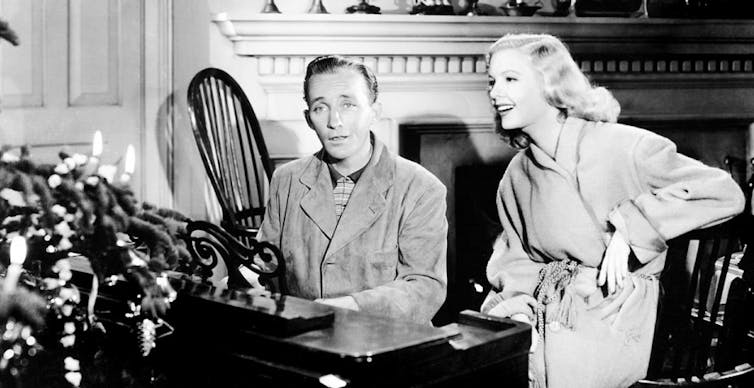
Bing Crosby White Christmas Holiday Inn

The best-selling Christmas song of all-time: White Christmas.


Musically, earworms seem to come more often from songs which have fairly conventional melodic patterns together with something unusual – a key change, or unexpected leaps or repetitions. Just like the well-known negative effects of actually heard background music on concentration and task performance, it seems that earworms can even impair our concentration on other tasks – whether those are songs with lyrics which could interfere with memory or even purely instrumental sequences like the Star Wars theme.

Read more: Why some songs get stuck in our heads more than others

There’s a piece doing the rounds written by journalism professor Adam Ragusea, who claims to have identified an elusive “Christmas chord” (a diminished minor 7th flat 5) that might explain the popularity of Christmas songs and why they give us earworms, although not all commentators are entirely convinced. New York-based musician Adam Neely argues it’s more about context.


But research suggests that although there could be some common features, the specific songs that evoke earworms are different from person to person. This chimes with what we find when we look at how people listen to music in general. Even very similar types of listeners who live together choose different daily favourite pieces of music – and our music listening and preferences are highly individualised.

What’s different about Christmas music is we are all listening to a much smaller pool of musical options at this time of year. Because of the dominance of Christmas music in public settings such as shops and bars or on the radio, we all get a lot more exposure to the same songs than we do at other times of year. So we could argue that Christmas music helps bring us together – whether we love it or hate it.

Dreaming of a hit record


Among the cheesy sleigh bells-filled tunes, there are some great Christmas classics – and it’s interesting to note that "White Christmas" by Irving Berlin is not only consistently one of the most well-known Christmas songs but is the best-selling song of all time. It also has the characteristics of an earworm, with melodic shifts and slides around a simple rising and falling melodic shape, and it (like many other songs) contains that scrunchy “Christmas chord”. But how does a song like that maintain its popularity over the decades?

The pattern of liking for an individual song over time is held to fit an inverted U-shape curve. According to this, when we first hear a new piece of music we tend to not like it very much. But repetition breeds liking – and repetition both within a song and through repeated listening over days, weeks and months will usually increase our liking in a fairly rapid linear way.


There’s a limit to this repetition effect. Too much exposure sends liking down the other side of the curve, meaning that when we have heard something too much we eventually, and quickly, get quite fed up with it. In our research we find that people regulate their own exposure to their own music over very long periods of time, putting things to one side in favour of new music and constantly keeping their current music fresh.

Following this, coming back to music after a period of time away means it moves back up the liking curve and we can tolerate or enjoy it again. Most of us do this quite intuitively, filing songs away physically or figuratively for later, and we have labelled this kind of listening the “squirrel” approach.

The ConversationThat means a lot of Christmas music, whether we think it’s good or bad, will be more popular than it might deserve to be as it usually only gets aired a few months of the year. By the time we’re taking down the Christmas tree in January, we’ve all become thoroughly sick of Mariah and Weezer and so we put them away in the attic with the tree, to be dusted off and enjoyed again next year.

Alexandra Lamont, Senior Lecturer in Music Psychology, Keele University

La version originale de cet article a été publiée sur The Conversation.

Monday, November 27, 2017

From the Archives: Modern Music Brightens NSO's Future

While primarily a theater critic during my tenure at The Metro Herald, occasionally I ventured into other aspects of the performing arts, such as this example, in which I reviewed a concert by the National Symphony Orchestra. Writing for a weekly newspaper, it sometimes made little sense to write about a one-time event (as most symphony concerts are) that was in the past, with no opportunities for readers to see (or hear) it. Yet newspapers do publish such reviews regularly. In any event, this review appeared in The Metro Herald in November 1995, and it does reference some recordings:

Modern Music Brightens NSO's Future
Rick Sincere
Metro Herald Entertainment Editor 

For conductor Leonard Slatkin to choose John Corigliano's Symphony No. 1 as the first piece he records with the National Symphony Orchestra speaks volumes about Slatkin's views about modern music and the direction the NSO should take. It suggests a dedication to modern, and to American, music that should undergird the NSO's entire mission.

John F Kennedy Center for the Performing Arts NSO Slatkin
Kennedy Center for the Performing Arts
Slatkin, who remains Music Director Designate until next year, explained before the Kennedy Center Concert Hall premiere of the Corigliano work that "music through the ages has traditionally been the abstract," but this composer works from the concrete. The symphony, he noted, had its "genesis" in the composer's response to two things: the AIDS epidemic and the famous Names Project Memorial Quilt, which serves as a vivid reminder of those who have lost their lives -- often very young lives -- to AIDS.

Strangely enough, the Corigliano First Symphony has been played by every major orchestra in America, in over 600 performances, since its commissioning by the Chicago Symphony Orchestra five years ago. Of the country's major orchestra's, only the National Symphony waited until now to perform the work for Washington audiences.

Corigliano has written a piece for a huge orchestra. The string sections are full, the horns and woodwinds are double and triple their normal composition, and the percussionists are busier than one ever sees them. The symphony calls for three piccolos, three flutes, three oboes, six clarinets, and three bassoons. The percussion section alone could fill a music store, with some instruments that are positively odd (yet add much to the totality of the work): The percussionists must play rototoms, temple blocks, crotales, a whip, a flexatone, a metal plate, a tam-tam, a brake drum, chimes, an anvil, and a police whistle. Corigliano has also written parts for two pianos, one onstage and one offstage.

Written, as symphonies are, in four movements, the third and fourth movements slide into each other imperceptibly. The first movement ("Of Rage and Remembrance") serves as an introduction of the themes that will predominate throughout the score. The second movement is manic in its form, which technically is a "tarantella," a wild folk dance of Italy. It is meant to represent the slowly building dementia suffered by so many people with AIDS. The third movement, by contrast, is far more lyric. It is dominated by a cello solo (with a bass continuo) that was inspired by a 1962 recording by the composer's good friend, Giulio, who died of AIDS-related causes. The fourth movement returns us to the themes that have been woven throughout the piece, and with "sonic waves" provided by the brass section, the solo cello continues, in dialogue with another cello, ending in a diminuendo that terminates the symphony on the same note with which it began.

The performances of Corigliano's Symphony No. 1 on November 9, 10, and 11 were recorded both by National Public Radio for future broadcast and by RCA Victor Red Seal. In a few months, we will be able to see whether Slatkin's interpretation of Corigliano will stand up against the premiere recording, by the Chicago Symphony under the baton of Daniel Barenboim.

Accompanying the Corigliano work in this set of concerts were three other pieces: Samuel Adler's organ fanfare, "Festive Proclamation," Henry Purcell's Chacony in G minor (orchestrated by Benjamin Britten), and Hector Berlioz's "Les nuits d'été," a song-cycle performed by Dutch mezzo-soprano Jard van Nes.

Slatkin's selection of the Britten/Purcell work is an indication of his tastes in music, too. Britten is seldom performed in the United States. Slatkin, however, has recorded several Britten works as director of the St. Louis Symphony, including the opera A Midsummer Night's Dream (which is available in a video recording in the Kennedy Center gift shop). Britten fans in the Washington area have much to look forward to, as the National Symphony has not offered much of the 20th century British composer's work in recent years.

Adler's organ fanfare is one of 25 fanfares commissioned for the NSO this season by the John and June Hechinger Commissioning Fund. Its driving rhythm, strong contrapuntal technique, and use of all the registers of the organ (including some significant pedalpoint work) will bring this work into the mainstream of organ music. Though written specifically for the NSO's organist, William Neil, it is not hard to believe that this composition will quickly find its way into the repertoires of many church organists throughout the country. It would be appropriate for weddings, ordinations, special celebrations, and even secular events such as theatre dedications or presidential inaugurations.


Thursday, April 20, 2017

Guest Post: Ella Fitzgerald's flirtation with reefer songs

Adam Gustafson, Pennsylvania State University

“The First Lady of Song” Ella Fitzgerald would have turned 100 on April 25: institutions from the Library of Congress to the Grammy Museum will be honoring her amazing contributions to the jazz canon. The Conversation

It will be interesting to see if any tributes mention Fitzgerald’s “Wacky Dust,” her song about cocaine.


Ella Fitzgerald Wacky Dust cocaine marijuana reefer 4/20


Nick Lehr/The Conversation via Wikimedia Commons


In the 1930s – just as Fitzgerald was getting her start – jazz was under fire for its purported ties to drug culture. The 1936 anti-drug film “Reefer Madness” featured party scenes of young people listening to jazz and ragtime while smoking marijuana. A year later, Harry Anslinger, the commissioner of the Federal Bureau of Narcotics, published “Marijuana, Assassin of Youth,” which pinned the use of drugs on a culture of unscrupulous partying – with big band jazz as its soundtrack.

In this climate, an ascendant singer named Ella Fitzgerald sought to take the opposite tack and cultivated a reputation as the “girl next door.” Fitzgerald walked the fine line between being understood as a jazz artist and an entertainer. Two recordings from the beginning of her career signal this tension. “A-Tisket, a-Tasket” and “Wacky Dust” were both released in 1938. One tune would go on to become a signature hit. The other would be largely forgotten, a side note to an otherwise squeaky-clean career.

A dressed-up nursery rhyme?


By 1938, Fitzgerald had established herself as the primary vocalist for Chick Webb’s orchestra at Harlem’s Savoy Ballroom. Under Webb, Fitzgerald began recording for Decca Records and in May 1938, Decca released Fitzgerald’s first major hit, “A-Tisket, a-Tasket.”

It was a song that perfectly encapsulates Fitzgerald’s girl-next-door image. It opens with Webb leading the orchestra through a stock series of simple chord changes. When Fitzgerald enters, listeners are treated to a reworked nursery rhyme that asks little of them other than to sit back and enjoy. There is no moral value, no hint of the singer’s inner life and no mention of drug use.


Ella Fitzgerald’s ‘A-Tisket, a-Tasket.’


In fact, “A-Tisket, a-Tasket” is barely jazz. As with Goodman and so many other bandleaders in the late 1930s, Webb and Fitzgerald seem more interested in creating a pop tune that fit the 78 RPM format than in staying true to their genre. Yet it became so popular that she and Webb recorded a follow-up track, “I Found My Yellow Basket,” that same year.

But then – just a few months after “A-Tisket, a-Tasket” – Webb and Fitzgerald recorded “Wacky Dust,” a song about the allure and dangers of cocaine use.

Ella’s reefer song


How Fitzgerald moved from a nursery rhyme to a song about cocaine says more about jazz culture than it does Fitzgerald’s own tastes. And while songs about drugs were common in jazz, “Wacky Dust” put Fitzgerald in the awkward position of recording a song that ran contrary to the image that she was trying to cultivate.


Ella Fitzgerald’s ‘Wacky Dust.’


The release of “Wacky Dust” coincided with a massive shift in cultural opinion taking place in the U.S. about the use of drugs like cocaine and marijuana. Once a relatively uncontroversial social issue, drug use in the 1930s increasingly came to be seen as a societal ill that was especially (and incorrectly) tied to African-Americans and jazz musicians. Even sympathetic artists couldn’t help but buy into the stereotype. George Gershwin’s operatic adaptation of DuBose Heyward’s novel “Porgy,” for example, was revolutionary for its diverse cast, but the story, written and adapted by two men of European descent, reinforced the popular perception of prevalent drug use among African-Americans.

Jazz artists in the early 1930s didn’t do much to help this view. Just as big band jazz was coming to dominate the music scene, two of the era’s biggest names released songs with direct references to drug use.

In 1933, Cab Calloway’s “Reefer Man” was used in the film “International House.” A year later, Benny Goodman released “Texas Tea Party,” a reference to both marijuana and to the trombonist on the recording, Jack Teagarden. These were not subtle works, and most jazz artists of the era produced what have since become known as “reefer songs.” Even Louis Armstrong – who, like Fitzgerald, cultivated a rather benign image – was arrested for smoking marijuana and recorded several tunes that allude to drug use.

So when “Wacky Dust” was released, the idea of one of the great New York City house bands recording a jazz tune about drugs wasn’t all that surprising. (Fitzgerald and Webb had experimented with a similar subject a couple of years earlier with the release of “When I Get Low I Get High.”)

Like “A-Tisket, a-Tasket,” Wacky Dust opens with Webb’s orchestra. Fitzgerald doesn’t enter until nearly one-third of the way through the song. The first verse aligns cocaine with jazz and describes how easy it is for musicians to access the drug. The second verse and bridge section describe its wonders, but the final verse takes a turn, with Fitzgerald warning that the drug can’t be trusted and might kill you.

While “A-Tisket, a-Tasket” went on to become one of Fitzgerald’s signature pieces, “Wacky Dust” has faded into relative obscurity outside of specialty albums that feature songs about drug culture. And this makes sense. Fitzgerald was extremely careful about her image, and “Wacky Dust” didn’t fit. In fact, after “Wacky Dust,” Fitzgerald moved entirely away from songs that alluded to drugs.

By the 1950s, she had embarked on a recording career that displayed an unrivaled musicianship and joy for singing. Nonetheless, one has to wonder what her career would have looked like had “Wacky Dust” been the hit of 1938, rather than “A-Tisket, a-Tasket.”

Adam Gustafson, Instructor in Music, Pennsylvania State University

This article was originally published on The Conversation. Read the original article.

Saturday, April 15, 2017

Guest Post: Easter Symbolizes a New Hope for Life and Liberty


by Jeffrey A. Tucker

Easter morning is filled with delight: bright colors, delicious foods, happy scenes of bunnies, and egg hunts. Above all, for those who are Christian, we are called to celebrate the joy of the resurrection of Christ from death to new life. The contrast between Good Friday and Easter could not be starker: with the quick turn of the calendar, we move from desperate sadness to unmitigated celebration.

It was not this way in the ancient Christian liturgy. Easter was the beginning of a process of discerning a new reality in the world. It was an entire season lasting five weeks, during which time the dramatic realization of what happened and what it implies for the world unfolds in stages, like spring itself. You can see it in the texts of liturgy and hear it in the chanted music from the first millennium. 

Spring Dawns Slowly
Initially, on Easter morning, there is not unmitigated joy, but rather an awe that approaches a kind of fear: the man who was dead is said to be alive again, which seems to lend credibility to those who said he was not a false prophet but rather the son of God. 

Listen to the melody of the Easter morning entrance song from the old liturgy, which isn’t celebratory but awe-struck and slightly frightened. 


What does this imply about the crucifixion itself, and what does this ask of those who stood aside as Jesus was put to death at the bloody hands of the civic authorities? 

In the second week after Easter, the ancient liturgy observes people’s dawning realization of the truth they have witnessed, and are thereby drawn by a sense of awe to a new faith, brought into the community of believers one person at a time. In the third week, you experience the first cries of joy, and in the fourth, the celebrations consist of new songs, songs that depart from tradition and introduce a new age. By the fifth, the experience of elation is completely unleashed and proclaimed to all the world. 

Life Moves Fast
But in modern times, the entire experience is put on fast-forward. Traditionalists regret this, but it is a defensible change that keeps track of the dramatic cultural shifts between the first millennium and the second. In the first, very few people experienced anything like what we call material progress today. The population barely grew and life was characterized by an unchanging tedium of survival. 

In the second millennium, over the course of hundreds of years, humanity experienced the first signs of the possibility of life improvement, longer and better lives even within a single generation, and modernity dawned with the gradual unfolding of freedom and the accumulation of material capital. Sickness and death gave way to health and life as a reasonable expectation. 

So, in this sense, it makes sense that stories about ourselves and even the past would speed up as well. Whatever it is today, we want it now and in the most time-efficient form of delivery possible. A website that sticks is abandoned. A book that is too long is not read. Even a sermon in church that drags on tempts people to leave their pews and find a better way to spend the hour. 

We have come to believe that life is about more than preparing our souls for eternity; it is about finding great experiences within the structure of time itself. Hardly anyone even questions this notion today. We carry it with us constantly. Our impatience with tedium is palpable.

This is a cultural change in us wrought by capitalism, and it is nothing to regret. The existence of “time preferences” – that we want to have what we desire sooner than later – is what might be called a Kantian category of action. It is baked into our choices as human beings. The material world either accommodates us or it does not. With the advent of capitalism, humanity experienced a realization of dreams that had been materially inaccessible throughout most of history. We are today surrounded by its blessings in ways we don’t fully appreciate.

It Needs to Happen Now
Let me just relay a story from this morning, which you might find trivial but is actually glorious.
I woke this morning determined to get my oil changed. Now, when my father was my age, he had to do it himself. There were no places where you can go and be in and out in 10 minutes. I, on the other hand, know that this is possible now, without fuss and without an appointment.

So I started driving, letting my mobile app guide me to the closest place and with full confidence that I could achieve my goal. I got my oil changed for $39 and they added fluid for my power steering, which fixed a whirling sound I’d been hearing. Then I got my car washed and the guy fixed my glove compartment that kept falling open. Somehow he just knew what to do, and he did it just to be nice.
Then I went to a car parts store and got some wipes that made my car smell great, and also some touch-up paint – yes, they happened to have the right color – that took away some scrapes on the paint. I did all this just by driving around and meeting nice people and engaging in beautiful commerce all designed to make my life better. I met fascinating, talented people and saw my life improve in real ways through human labor, courtesy, and commercial activity.

This is the way mornings should be. But of all the mornings in world history, it has only become possible to live this way in 0.00000009% percent of them (not scientific, but you get the point). But instead of celebrating how easy our lives are, what do most people do? They grumble about the traffic. They complain that they had to do this at all. They get upset that they are not otherwise at the office or languishing at home or huffing and puffing at the gym.

No matter how much we get, and however soon we get it, there is still something in us that aches for more. This too is a defensible impulse because it is that longing in us that causes us to act to make the world a better place through entrepreneurship, risk-taking, working hard, saving, and generally having the option as consumers to buy what it is that capitalists are selling us. So long as we are free in action and choice, our disgruntlement becomes a motivating force for improving the world. 

Politics Is a Different Matter
And yet, there is one space in life where wanting more sooner does not redound to our benefit. It is within the political sphere. We listen to candidates sell their nostrums and go to the voting booth to buy what they are selling. Then we are shocked when it turns out that they cannot and will not deliver on what they say. Then we do the same thing two years and four years later, never learning the lesson that the political marketplace doesn’t really exist to serve us but rather to serve an institution that, in so many ways, exists outside the sphere of social action. The state is different, radically different, from the marketplace. 

Because of this tendency to want more as soon as possible and to speed up life to accommodate our wishes, people tend to fall for charlatans in political life. Some dude comes along promising to make us great and we go for it, even if what he says makes no sense. Another person says he will deliver justice, equality, fairness, and goodness through taxing, regulating, spending, and war, and people figure that they will “spend” their vote and take the chance that it is true. 

Growing in Liberty
True maturity in political action requires two mental steps. First, we have to decide what it is we want. The burden of the liberal tradition has long been to convince people that the best possible world for us comes through voluntary action within a social setting we create for ourselves, and not from the imposition of someone else’s plan from the top down. Second, we have to cultivate patience that working for the long-term goal of humanity requires commitment, slow growth of intellectual communities, the persuasion of public intellectuals, and deep investment in an idea.

This is the only way it can work. Liberty is not something you can buy. It is something you must build through intellectual courage and hard work. It cannot be granted to you by a politician. It doesn’t even come from politics alone. The work of liberty is a cultural act, extended from the sphere you can control and working outwards to change the intellectual fabric of society. 

The work of liberty unfolds over time like the dawn of spring itself, or the unfolding of Easter in the ancient Christian liturgy. What is possible in this world is a slow realization, born first of awe, then turning to a new consciousness, unfolding in gradual celebration, and culminating in a message to the entire world. Liberty is what allows us all to cast off the old world of authority and imposition and sing a new song of freedom the world over.


Jeffrey A. Tucker FEE.org Easter liberty freedom
Jeffrey A. Tucker is Director of Content for the Foundation for Economic Education. He is also Chief Liberty Officer and founder of Liberty.me, Distinguished Honorary Member of Mises Brazil, research fellow at the Acton Institute, policy adviser of the Heartland Institute, founder of the CryptoCurrency Conference, member of the editorial board of the Molinari Review, an advisor to the blockchain application builder Factom, and author of five books. He has written 150 introductions to books and many thousands of articles appearing in the scholarly and popular press.


This article was originally published on FEE.org. Read the original article.


Thursday, December 22, 2016

Guest Post: A short history of three very famous Christmas carols


by Peter Roennfeldt, Griffith University

Singing and Christmas seem to go naturally together, like plum pudding and custard. Even those who would not normally attend a choir concert or church service throughout the year might happily participate in a civic Carols by Candlelight or a Midnight Mass. In these settings, the carols come thick and fast, and everyone joins in, almost involuntarily. But what is the origin of the choral music which adorns these settings?

The tradition of carol singing dates from the Middle Ages, and was not restricted to the Christmas season. There were carols for Easter, for New Year, and sometimes even for political events such as the Battle of Agincourt.

The poetic form was simple: a succession of stanzas with different texts, interspersed with a recurring refrain. In more recent times, the term “carol” has come to mean any song associated with Christmas.

Medieval carols from England and elsewhere have survived, though much transformed.
Good Christian Men, Rejoice dates from the 14th century, though only its text has been reliably attributed, to the Dominican friar Heinrich Seuse (Suso). The melody is known in Latin as In dulci jubilo (in sweet joy), and has been frequently used as the basis of extended instrumental or vocal compositions.


This song found its way into English through the 1853 publication Carols for Christmastide by J.M. Neale. This and other volumes of carols contributed materially to the Victorian era’s wholesale adoption of seasonal trimmings, along with royally sanctioned Christmas trees and greeting cards.

During the centuries between the first iteration of a carol tradition and the Dickensian revival of the Christmas spirit in the mid-1800s, there was comparatively little in the way of English composition of new works in this genre. A few pieces that are more appropriately termed Christmas hymns were, however, produced during the 18th century.

One of these is Adeste fideles or O Come, All Ye Faithful. Its authorship is disputed, but the most likely source is the 1751 volume Cantus diversi, published by John Francis Wade. Like most other Christmas carols, its text has clear Christian references.


Interestingly, it is also thought to contain covert Jacobite symbolism, with the phrases “all ye faithful” and “to Bethlehem” referring respectively to the supporters of Bonnie Prince Charlie and England itself. Wade fled to France after the failure of the 1745 Jacobite uprising, but his hymn soon came into regular use, particularly amongst English Catholics.

An indication of its wider adoption is the inclusion of O Come, All Ye Faithful within the Service of Nine Lessons and Carols, a familiar modern day tradition inaugurated at Cornwall’s Truro Cathedral in 1880. In the age of mass media, this most renowned Christmas ceremony, as practised in King’s College Cambridge has become universally familiar, firstly on radio and then television. Choirs around the world also perform their own Lessons and Carols programs every December, and most often conclude with this piece.

The most famous Christmas carol of all time is undoubtedly Silent Night, Holy Night. The original words for Stille Nacht, heilige Nacht were written by Joseph Mohr in 1816 and the melody two years later by Franz Xaver Gruber, when both were living in villages near Salzburg.

The German version was published soon afterward, and the familiar English translation in 1859, since when it has become known in nearly 150 languages. Due to its universality, Silent Night was in 2011 designated by UNESCO as an intangible item of cultural heritage.

With its stereotypical overlay of European winter costumes and snow-covered fir trees, the translation of Christmas traditions around the world is problematic. In Australia, there have been several attempts to develop parallel traditions of carols that eschew northern hemisphere references, in favour of local culture.

The best known are those composed by W.G. James, former federal controller of music for the ABC, to texts by John Wheeler. Outback images of drovers, summer heat, red dust and red-gold moon, dancing brolgas, mulga plains, Christmas bush, gully creeks and grazing sheep recur throughout these songs.


They were published in several sets, commencing in 1948. Despite several recordings by major ensembles, their familiarity and popularity has fluctuated greatly. However, two of James’ carols recently made it into a “top 10” list of Aussie Christmas songs by the Australian Times, whose target audience is expats living in the UK.

The tradition of singing Christmas carols is embedded in the season, even though the contexts where they are performed may differ widely from that where the words and music originated. We happily ignore the obvious disconnect between the imagery of some familiar carols and our hot Australian summers, and there is something reassuring about hearing and singing them once again, with feeling, every Christmastime.

The Conversation

Peter Roennfeldt, Professor of Music, Griffith University

This article was originally published on The Conversation. Read the original article.

Tuesday, December 20, 2016

Guest Post: How the Nazis co-opted Christmas

by Joe Perry, Georgia State University

In 1921, in a Munich beer hall, newly appointed Nazi party leader Adolf Hitler gave a Christmas speech to an excited crowd.

According to undercover police observers, 4,000 supporters cheered when Hitler condemned “the cowardly Jews for breaking the world-liberator on the cross” and swore “not to rest until the Jews…lay shattered on the ground.” Later, the crowd sang holiday carols and nationalist hymns around a Christmas tree. Working-class attendees received charitable gifts.

For Germans in the 1920s and 1930s, this combination of familiar holiday observance, nationalist propaganda and anti-Semitism was hardly unusual. As the Nazi party grew in size and scope – and eventually took power in 1933 – committed propagandists worked to further “Nazify” Christmas. Redefining familiar traditions and designing new symbols and rituals, they hoped to channel the main tenets of National Socialism through the popular holiday.

Given state control of public life, it’s not surprising that Nazi officials were successful in promoting and propagating their version of Christmas through repeated radio broadcasts and news articles.

But under any totalitarian regime, there can be a wide disparity between public and private life, between the rituals of the city square and those of the home. In my research, I was interested in how Nazi symbols and rituals penetrated private, family festivities – away from the gaze of party leaders.

While some Germans did resist the heavy-handed, politicized appropriation of Germany’s favorite holiday, many actually embraced a Nazified holiday that evoked the family’s place in the “racial state,” free of Jews and other outsiders.

Redefining Christmas


One of the most striking features of private celebration in the Nazi period was the redefinition of Christmas as a neo-pagan, Nordic celebration. Rather on focus on the holiday’s religious origins, the Nazi version celebrated the supposed heritage of the Aryan race, the label Nazis gave to “racially acceptable” members of the German racial state.

According to Nazi intellectuals, cherished holiday traditions drew on winter solstice rituals practiced by “Germanic” tribes before the arrival of Christianity. Lighting candles on the Christmas tree, for example, recalled pagan desires for the “return of light” after the shortest day of the year.

Scholars have called attention to the manipulative function of these and other invented traditions. But that’s no reason to assume they were unpopular. Since the 1860s, German historians, theologians and popular writers had argued that German holiday observances were holdovers from pre-Christian pagan rituals and popular folk superstitions.

So because these ideas and traditions had a lengthy history, Nazi propagandists were able to easily cast Christmas as a celebration of pagan German nationalism. A vast state apparatus (centered in the Nazi Ministry for Propaganda and Enlightenment) ensured that a Nazified holiday dominated public space and celebration in the Third Reich.

But two aspects of the Nazi version of Christmas were relatively new.

Nazi Christmas stamp light
A Christmas-themed stamp emphasizes light
First, because Nazi ideologues saw organized religion as an enemy of the totalitarian state, propagandists sought to deemphasize – or eliminate altogether – the Christian aspects of the holiday. Official celebrations might mention a supreme being, but they more prominently featured solstice and “light” rituals that supposedly captured the holiday’s pagan origins.

Second, as Hitler’s 1921 speech suggests, Nazi celebration evoked racial purity and anti-Semitism. Before the Nazis took power in 1933, ugly and open attacks on German Jews typified holiday propaganda.

Blatant anti-Semitism more or less disappeared after 1933, as the regime sought to stabilize its control over a population tired of political strife, though Nazi celebrations still excluded those deemed “unfit” by the regime. Countless media images of invariably blond-haired, blue-eyed German families gathered around the Christmas tree helped normalize ideologies of racial purity.

Open anti-Semitism nonetheless cropped up at Christmastime. Many would boycott Jewish-owned department stores. And the front cover of a 1935 mail order Christmas catalog, which pictured a fair-haired mother wrapping Christmas presents, included a sticker assuring customers that “the department store has been taken over by an Aryan!”

It’s a small, almost banal example. But it speaks volumes. In Nazi Germany, even shopping for a gift could naturalize anti-Semitism and reinforce the “social death” of Jews in the Third Reich.

The message was clear: only “Aryans” could participate in the celebration.

Taking the ‘Christ’ out of Christmas


According to National Socialist theorists, women – particularly mothers – were crucial for strengthening the bonds between private life and the “new spirit” of the German racial state.

Everyday acts of celebration – wrapping presents, decorating the home, cooking “German” holiday foods and organizing family celebrations – were linked to a cult of sentimental “Nordic” nationalism.


Swastika Christmas ornaments

Christmas tree bulbs featuring the swastika were only one of a number of ways that Christmas became Nazified.
Author provided


Propagandists proclaimed that as “priestess” and “protector of house and hearth,” the German mother could use Christmas to “bring the spirit of the German home back to life.” The holiday issues of women’s magazines, Nazified Christmas books and Nazi carols tinged conventional family customs with the ideology of the regime.

This sort of ideological manipulation took everyday forms. Mothers and children were encouraged to make homemade decorations shaped like “Odin’s Sun Wheel” and bake holiday cookies shaped like a loop (a fertility symbol). The ritual of lighting candles on the Christmas tree was said to create an atmosphere of “pagan demon magic” that would subsume the Star of Bethlehem and the birth of Jesus in feelings of “Germanness.”

Family singing epitomized the porous boundaries between private and official forms of celebration.

Exalted Night Clear Stars - Nazi Christmas carol
Sheet music for the popular carol Exalted Night of the Clear Stars
Propagandists tirelessly promoted numerous Nazified Christmas songs, which replaced Christian themes with the regime’s racial ideologies. Exalted Night of the Clear Stars, the most famous Nazi carol, was reprinted in Nazi songbooks, broadcast in radio programs, performed at countless public celebrations – and sung at home.

Indeed, Exalted Night became so familiar that it could still be sung in the 1950s as part of an ordinary family holiday (and, apparently, as part of some public performances today!).

While the song’s melody mimics a traditional carol, the lyrics deny the Christian origins of the holiday. Verses of stars, light and an eternal mother suggest a world redeemed through faith in National Socialism – not Jesus.

Conflict or consensus among the German public?


We’ll never know exactly how many German families sang Exalted Night or baked Christmas cookies shaped like a Germanic sun wheel. But we do have some records of the popular response to the Nazi holiday, mostly from official sources.

For example, the “activity reports” of the National Socialist Women’s League (NSF) show that the redefinition of Christmas created some disagreement among members. NSF files note that tensions flared when propagandists pressed too hard to sideline religious observance, leading to “much doubt and discontent.”

Religious traditions often clashed with ideological goals: was it acceptable for “convinced National Socialists” to celebrate Christmas with Christian carols and nativity plays? How could Nazi believers observe a Nazi holiday when stores mostly sold conventional holiday goods and rarely stocked Nazi Christmas books?

Meanwhile, German clergymen openly resisted Nazi attempts to take Christ out of Christmas. In Düsseldorf, clergymen used Christmas to encourage women to join their respective women’s clubs. Catholic clergy threatened to excommunicate women who joined the NSF. Elsewhere, women of faith boycotted NSF Christmas parties and charity drives.

Still, such dissent never really challenged the main tenets of the Nazi holiday.

Reports on public opinion compiled by the Nazi secret police often commented on the popularity of Nazi Christmas festivities. Well into the Second World War, when looming defeat increasingly discredited the Nazi holiday, the secret police reported that complaints about official policies dissolved in an overall “Christmas mood.”

Despite conflicts over Christianity, many Germans accepted the Nazification of Christmas. The return to colorful and enjoyable pagan “Germanic” traditions promised to revitalize family celebration. Not least, observing a Nazified holiday symbolized racial purity and national belonging. “Aryans” could celebrate German Christmas. Jews could not.

The Nazification of family celebration thus revealed the paradoxical and contested terrain of private life in the Third Reich. The apparently banal, everyday decision to sing a particular Christmas carol, or bake a holiday cookie, became either an act of political dissent or an expression of support for national socialism.

The Conversation

Joe Perry, Associate Professor of History, Georgia State University

This article was originally published on The Conversation. Read the original article.

Wednesday, August 31, 2016

From the Archives: Civil liberties lawyer John Whitehead recalls Beatles' social, political impact

Publisher's note: This article was originally published on Examiner.com on February 13, 2014. The Examiner.com publishing platform was discontinued July 1, 2016, and its web site was scheduled to go dark on or about July 10, 2016.  I am republishing this piece in an effort to preserve it and all my other contributions to Examiner.com since April 6, 2010. It is reposted here without most of the internal links that were in the original.

Civil liberties lawyer John Whitehead recalls Beatles' social, political impact

Sunday, February 9, will mark the 50th anniversary of the Beatles' first appearance on American television. That evening in 1964, the Fab Four – John, Paul, George, and Ringo – were guests on The Ed Sullivan Show. In the studio audience were hundreds of screaming teenagers but across the country, 73 million viewers tuned in, almost twice as many as had previously watched a single television broadcast.

Charlottesville civil liberties attorney John Whitehead reminisced on February 7 about that night and what followed that decade in an interview on WCHV-FM's “Inside Charlottesville.” On Friday afternoon's program, host Coy Barefoot asked him to recall the beginnings of Beatlemania and its subsequent impact on society.

Taken by surprise
Whitehead, founder of the Rutherford Institute, began by noting that, according to their photographer, when the Beatles landed in New York on February 7, 1964, “and they heard all this yelling and stuff, they thought the President had landed, or some dignitary. They didn't realize [until] they went down the ramp that all those 5,000 teenagers” who crowded the runway “were there for them. They were taken totally by surprise.”

They should not have been so surprised, however, because the Beatles' popularity had preceded them to America.

“They had the top five tunes in the Top 40” in February 1964, Whitehead explained. “No one's ever duplicated that, which is amazing. I think that seven out of the top 10 songs were Beatles songs when they landed in the country.”

So many people were indoors that Sunday to watch the band on Ed Sullivan, he said, the country experienced its lowest crime rate in something like ten years. George Harrison later quipped that “even the Kremlin was tuned in,” Whitehead recalled. “It was amazing.”

The Sixties begin
Reflecting on the Beatles' later impact on politics and society, he suggested that “the Sixties, in my opinion, started that night on The Ed Sullivan Show.”

That performance began “all that upheaval” that continued with the worldwide broadcast over the BBC of “All You Need Is Love” (with 400 million viewers) and culminated with “the summer of love” and Sgt. Peppers Lonely Hearts Club Band in 1967.

The Beatles, he said, “captivated the world with peace, harmony, and love, which was their great message.”

He added that John Lennon “took off on his own and started his worldwide campaign for peace, and anti-war.” In reaction to that, he said, “the FBI went after him, collected 400 pages” of intelligence on Lennon's activities “and tried to intimidate him and get him deported. Richard Nixon considered John Lennon his number one enemy at that time. It was really weird.”

Horrified parents
Asked by Barefoot where he was that night 50 years ago, Whitehead recalled that he “watched the show” and his “parents were horrified.”

Years later, he continued, shortly before his mother passed away, “I asked her, what was the worst thing that ever happened to America? She looked at me and said 'The Beatles.'”

His mother was not alone. He also remembered attending a conference in “1983 or 1984” when a prominent minister took the stage and said to the audience of 10,000, “I want to tell you what has really destroyed America: The Beatles.”

Whitehead looked around at the young people around him and they all had the same puzzled looks on their faces. The minister “never explained what he meant” but he was probably referring to “the youth rebellion” of the 1960s.

That rebellion, Whitehead went on, “was focused.” It “brought down a crooked president” and the protesters “stopped the Vietnam War.”

Youth in rebellion
He expressed his admiration for the youth rebellion of that era.

“I'd like to see all that again, folks. I've often said, if you've got a picket sign and you're out there active, I don't care what you believe. I may not like what you're saying, [but] I'll go to my death to defend it," Whitehead said. "I just like activism."

John Lennon, he pointed out, “epitomized” the spirit of youthful rebellion and was even vilified by some on the Left for his idealism.

When Lennon released the song “Revolution” (on The White Album) and said “if you want destruction, count me out,” Whitehead remembered, “The Village Voice actually criticized him for being too peaceful.” Lennon's response was along the lines of, “What do you want to do, kill people? Why would we destroy anyone if we want peace?”

It's that kind of idealism that Whitehead would “like to see all that again but I don't see a lot of it.”

Expressing some frustration, he added: “Here's the thing. A guy like Lennon, the other Beatles -- they took their fame and tried to advance an agenda, a very positive agenda, but I'm looking around for entertainers today like that. Justin Bieber? I don't know.”

John Whitehead, author of A Government of Wolves, has also published an essay, “50 Years After the Beatles: Isn’t It Time for Another Political & Cultural Revolution?,” on the Rutherford Institute's web site.

SUGGESTED LINKS

Charlottesville civil liberties lawyer assesses 2012-13 Supreme Court term
Rutherford Institute asks local lawmakers to speak out against drones
Charlottesville lawyers compile rules against ‘politically correct’ Xmas
Rutherford Institute endorses Charlottesville marijuana resolution
Attorney General Cuccinelli calls Charlottesville ABC sting operation 'overkill'

Original URL: http://www.examiner.com/article/civil-liberties-lawyer-john-whitehead-recalls-beatles-social-political-impact

Saturday, February 01, 2014

America asks: What time is the Super Bowl?

Friday evening's edition of the public radio show, Marketplace, ended with this squib by host Kai Ryssdal:

This final note which comes to us courtesy of the letters SEO. As in search engine optimization. So here you go: What time is the Super Bowl? (It starts at 6:30 p.m. ET, by the way.) Turns out most people, don't know how to spell Superbowl. Helpful hint: It's actually two words, both capitalized. A couple years back the Huffington Post published a story titled, "What time does the superbowl start?," just to game the web traffic. And, of course, it blew up. The rest of the Internet keeps trying to get a piece of that Super Bowl traffic. This year's version... the search words of choice … Superb owls.
That set me to thinking: What other questions are Americans asking the Google gods about the Super Bowl (or the "Big Game," as any unlicensed advertiser says to avoid trademark litigation)?

For instance, some people wonder, What is the best snack food for Super Bowl Sunday?

The Food Network has a hefty answer: "50 Super Bowl Snacks," from chunky guacamole to mini veggie pockets.

You might want to know, What is the best beer to drink during the Super Bowl?

Matt Rudnitzky of Sports Grid offers more than one choice in "Super Bowl BEER POWER RANKINGS: Buy These 9 Delicious Beers, Be Your Party’s Hero." His number one answer: "A German hefeweizen from Heaven, Germany."

If you want to combine those two questions, I recommend this article by my sister, who blogs as the Bierlady, called (naturally) "Cooking with Beer." There are some good recipes there.

Another question that comes to mind: What are the best Super Bowl commercials?

CNN is on top of that story already. Correspondent Breeanna Hare recommends "Seven Commercials to Watch" during the 2014 Super Bowl,including spots featuring Anna Kendrick, the Muppets, Noah's ark, and puppies.

Speaking of puppies, some people may want to know: "What time is the Puppy Bowl?" It turns out that the tenth addition of the adorability classic kicks off at 3:00 o'clock p.m. Eastern Standard Time on Sunday, February 2, on Animal Planet.

Here's a query you might not have thought about. What's the best book about the Super Bowl?

I know nothing about football, and therefore even less about football literature, but I'll go out on a limb and recommend The Ultimate Super Bowl Book: A Complete Reference to the Stats, Stars, and Stories Behind Football's Biggest Game - and Why the Best Team Won, a 2009 volume by Bob McGinn. At least it looks comprehensive.

Is there a "best movie about the Super Bowl"?

Again, I don't have a good base of knowledge from which to make a judgment, but Chris Eggertsen, Daniel Fienberg, Josh Lasser, Drew McWeeny, Melinda Newman, and Alan Sepinwall have created a list of the "10 greatest football films of all time" on HitFix.

Their choices include The Marx Brothers' Horse Feathers from 1932, which I have actually seen, as well as the tearjerker 1971 TV movie, Brian's Song. Also on the list is Harold Lloyd's silent classic, The Freshman, and Sean Astin's 1993 star turn in Rudy.

Tom Cruise's follow-up to Risky Business, All the Right Moves, is listed, along with Heaven Can Wait, the 1978 Warren Beatty-Buck Henry remake of Here Comes Mr. Jordan, and the Burt Reynolds' prison comedy, The Longest Yard (but not the 2005 remake with Chris Rock and Adam Sandler).


The last three on the HitFix list are Oliver Stone's Any Given Sunday, Peter Berg's Friday Night Lights (which became a TV series), and another Tom Cruise vehicle, Jerry Maguire,which won an Academy Award for Cuba Gooding, Jr.


Somehow the 1977 John Frankenheimer thriller, Black Sunday, did not make the list. Maybe the plot about a deranged Vietnam veteran facilitating a terrorist attack on a football stadium from the Goodyear Blimp was too distasteful to merit its inclusion.  (That movie starred one of this year's Oscar nominees, Nebraska leading actor Bruce Dern.)

Given that this is the tenth anniversary of "Nipplegate," the half-time show that gave the world the term "wardrobe malfunction," there may be a few people who wonder who this year's Super Bowl half-time entertainers will be.

It's a good bet not to be Justin Timberlake and Janet Jackson.  Or Justin Bieber.

No, this year the musical performers will be Bruno Mars and the Red Hot Chili Peppers. I'm guessing the former is meant to attract younger viewers and the latter group aims to satisfy the older crowd.

By the way, do you know who the most frequent Super Bowl half time performers have been?

According to The First Book of Seconds by Matthew Murrie & Steve Murrie,  the Grambling State University marching band played at the first two Super Bowl games (in 1967 and 1968) and four more times after that.  The squeaky-clean choral group, Up with People, has played the Big Game five times.

Finally, in answer to the question that started this whole discussion, the broadcast of the NFL's Super Bowl XLVIII between the Seattle Seahawks and Denver Broncos will begin on Fox at 6:30 p.m. EST.  Check your local listings.

As for "superb owls"? I have no idea. Maybe there's an ornithology blog that can point you in the right direction.