Showing posts with label Star Wars. Show all posts

Monday, December 18, 2017

Guest Post: 'The Last Jedi' Resonates with the Lessons of Lord Acton

Power corrupts, regardless of whether you're Jedi or Sith.

by Mateusz Machaj

[The following article contains a few elements of the plot of The Last Jedi, which some may consider spoilers.]

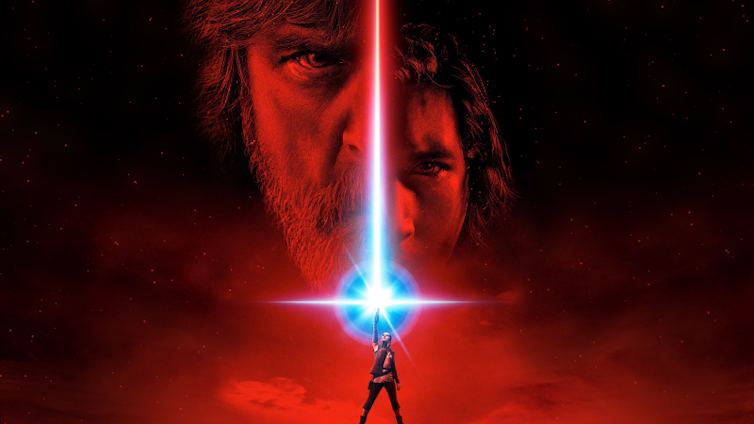
Luke SkywalkerPutting aside the creative and entertaining value of the new Star Wars movie, one major element remains strong with the saga: its warnings about the dangers of power. They actually go even further than they did in the previous installments.

The title itself may be mind-boggling to some of the fans, much as the line we heard in the trailer from the Jedi hero, Luke Skywalker, who wants the “Jedi to end.” Some were wondering what big secret may be hidden in those words, but not the people who paid attention to the messages already present in the previous episodes, especially the prequel trilogy (however imperfect it was). The main protagonist and idealist wants the Jedi to end because the school has become a legacy of failure, hypocrisy, and hubris.

The Role of the Jedi
They were a part of the Old Republic system and served as a special service having superior privileges granted by the government. Besides the legal commands, they had their own education system which raised new generations of followers. Eventually, they failed miserably in training the pupils. One of them even became the leading man responsible for building terror in the evil Empire. Careful observation would lead the viewer to such conclusions – now the main hero states so openly and with merits (it is also a good artistic tool for the character on screen to repeat fans’ views as it happens in the movie).

What Luke offers in his reinterpretation of events (as compared to his personal predecessors) is the more thoughtful understanding of the way world functions. He notices that knowledge and the workings of everything in the universe (the “force”) are not things that belong to one group of people called the Jedi. To argue so is vanity as those things cannot, and should not, be monopolized by one agency — perhaps a reflection that previous Jedi teachers did not see in full picture.

Moreover, that has led to arrogance and blindness to the obvious dangers of political systems, of which they were part. We got to see them training many of the younglings, but mostly in a physical and spiritual way. Nobody was teaching them about social sciences, human relations, and how politics functions — at least nowhere we could see. The downplaying of political economy is what eventually killed them and destroyed the Republic, finally to be substituted by the evil Hobbesian rule of the Emperor.

The Lesson of Lord Acton
power corrupts absolute power corrupts absolutelyLuke learned the hard way what Lord Acton taught us: power is corruptive. Control over other people can easily make one focused only on a particular goal at the expense of the free will of others. Part of the reflection made by Luke can be inferred by historically studying what happened to the Jedi in the past episodes. Luke further learns this in his personal experience: how even a mature teacher can be easily tempted to make wrong and authoritarian judgments about people, leading them to disastrous consequences.

No human agency or real person should have the ultimate power over everyone else’s fate. Such themes were always the main messages of the Star Wars movies that started right at the beginning in 1977. The newest movie makes a shining and almost Tolkienian conclusion reached by simply following the logical inferences. The rule of power applies not only to the people we consider “bad,” “evil,” or “corrupted" because not a single human being is either forever lost or always free from misplaced temptations or free from being prone to failure. Both redemption and temptation are not far away from anybody. Anyone can make a mistake. We should distrust any rules giving too much power to any person or group of people, not just the ones recognized as the “bad guys.”

The original trilogy showed that bad people are also human beings who still can be converted from bad to good. The prequel trilogy showed that good people can do bad things, too, willingly or not. As we further learn from The Last Jedi, corruptive potency hidden in the meanders of power is actually nothing personal.

That is why solutions for efficiently curtailing expansionary power have to be universal and impersonal.

Mateusz Machaj Star Wars The Last Jedi

Mateusz Machaj is an assistant professor of economics at the University of Wroclaw (Poland). He is the author of Money, Interest, and the Structure of Production. Resolving Some Puzzles in the Theory of Capital.


This article was originally published on FEE.org. Read the original article.


Saturday, December 16, 2017

Guest Post: The secret behind the success of the new 'Star Wars' films

Subimal Chatterjee, Binghamton University, State University of New York

In the 40 years since the original “Star Wars” film premiered, the franchise has been a pop culture powerhouse.

“The Last Jedi” – the latest edition in the series – looks to continue the trend, with huge box office returns expected.

It also looks poised to join “The Force Awakens” (93 percent on Rotten Tomatoes) and “Rogue One” (85 percent) as “Star Wars” films that are both commercially and critically successful.


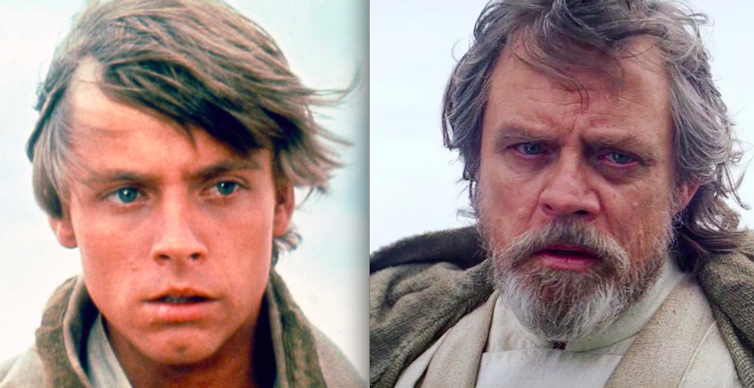
Actor Mark Hammill reemerged in ‘The Force Awakens’ and ‘The Last Jedi.’

Actor Mark Hammill reemerged in ‘The Force Awakens’ and ‘The Last Jedi.’
Nick Lehr/The Conversation via Lucasfilm , CC BY-NC-ND


Not all “Star Wars” films have hit that sweet spot. It’s sometimes easy to forget the prequel trilogy – “The Phantom Menace” (1999), “Attack of the Clones” (2002) and “Revenge of the Sith” (2005) – wasn’t met with the same enthusiastic response from critics and fans, and hasn’t been looked upon kindly since.

What made the prequel trilogy such a (relative) dud? Why are the more recent films being so much better received?

If it isn’t broke, don’t fix it


Research I helped conduct on what makes for a good extension (sequel or prequel) may provide some insight.

My colleagues and I tracked audience reactions to sequels and prequels over the course of nearly a hundred franchises, from “Psycho” to “X-Men.”

Our results show that the successful franchises make smaller, gradual updates – rather than sweeping changes – in each successive film. And it fits well with what we know about audience behavior: They seek a balance between the familiar and the new; while they aren’t looking for a carbon copy of the originals, they’re hoping to relive some of the most vivid, nostalgic moments from the first films.

With these findings in mind, let’s reexamine prequel series of “Star Wars.” When “The Phantom Menace,” the first of the prequels, was released in 1999, it had been 16 years since audiences had seen a new “Star Wars” film. (The original trilogy had just finished up a successful theatrical re-release.)

But fans hoping to relive the magic of the originals were in for a surprise.

The beloved trio of Mark Hamill (Luke Skywalker), Harrison Ford (Han Solo) and Carrie Fisher (Princess Leia) gave way to new faces: Liam Neeson, Ewan McGregor and Natalie Portman. Instead of relying on real sets, miniatures and models to pull off the breathtaking special effects in the originals, director George Lucas opted mostly for computer-generated and digital effects. There were also changes to the rules of the “Star Wars” world. The Force was no longer being described as an all-encompassing life force that bound everyone together; it was now being explained as the result of special biological cells called “midichlorians.” (And I won’t even go into the widely loathed Jar Jar Binks.)

Out with the new, in with the old


In contrast the newest film, “The Last Jedi,” includes many of the original cast members. Mark Hamill and Carrie Fisher return to portray Luke Skywalker and Princess Leia, respectively. And it features the popular “hero’s journey” plot device of the original films, in which an ordinary person’s life is unexpectedly upended, and he is thrust into the role of the hero.

We see this phenomenon in other film series and even product lines. Though the lead actor will occasionally change, the James Bond series never strays from its action-film formula. Apple has a similar approach when releasing new iPhones; before taking the leap to a radically new version, it will release an incremental “S” version of the previous model as a bridge.

That isn’t to say the new “Star Wars” films aren’t making any changes: There are more female protagonists, in addition to a host of new characters. But this isn’t exactly shattering fans’ expectations.

Our research also found that the deeper into a franchise you get, the more major changes audiences are willing to accept. The next “Star Wars” trilogy will expand the boundaries of the “Star Wars” world, exploring planets and featuring characters not yet seen on film.

With this move, the studio is willing to bet that audiences are finally ready to accept some major changes in the franchise – something they weren’t quite ready for yet when the prequels were released.

The ConversationHowever, in order to ensure the Force remains strong over the franchise’s lifetime, these future films would be wise to continue including at least a handful of nods to the original trilogy.
Subimal Chatterjee, Professor of Marketing, Binghamton University, State University of New York

This article was originally published on The Conversation. Read the original article.

Friday, December 15, 2017

Guest Post: What the robots of 'Star Wars' tell us about automation


Paul Salmon, University of the Sunshine Coast

Millions of fans all over the world are eagerly anticipating this week’s release of Star Wars: The Last Jedi, the eighth in the series. At last we will get some answers to questions that have been vexing us since 2015’s The Force Awakens.

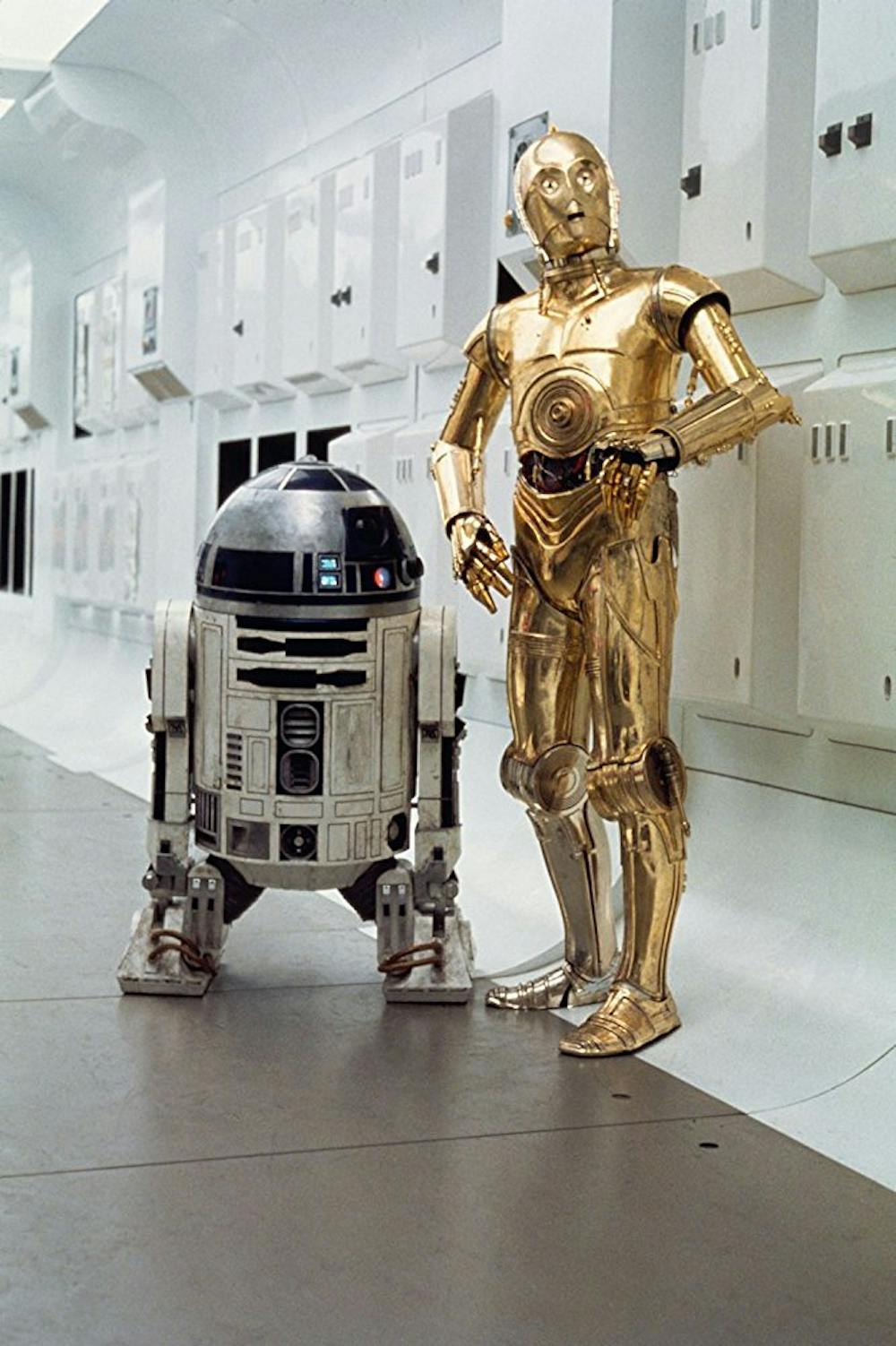
Throughout the franchise, the core characters have been accompanied by a number of much-loved robots, including C-3PO, R2-D2 and more recently, BB-8 and K2-SO. While often fulfilling the role of wise-cracking sidekicks, these and other robots also play an integral role in events.

Interestingly, they can also tell us useful things about automation, such as whether it poses dangers to us and whether robots will ever replace human workers entirely. In these films, we see the good, bad and ugly of robots - and can thus glean clues about what our technological future might look like.


The fear of replacement


One major fear is that robots and automation will replace us, despite work design principles that tell us technology should be used as a tool to assist, rather than replace, humans. In the world of Star Wars, robots (or droids as they are known) mostly assist organic lifeforms, rather than completely replace them.


R2-D2 and C3PO in A New Hope.
Lucasfilms/IMDB


So for instance, C-3PO is a protocol droid who was designed to assist in translation, customs and etiquette. R2-D2 and the franchise’s new darling, BB-8, are both “astromech droids” designed to assist in starship maintenance.

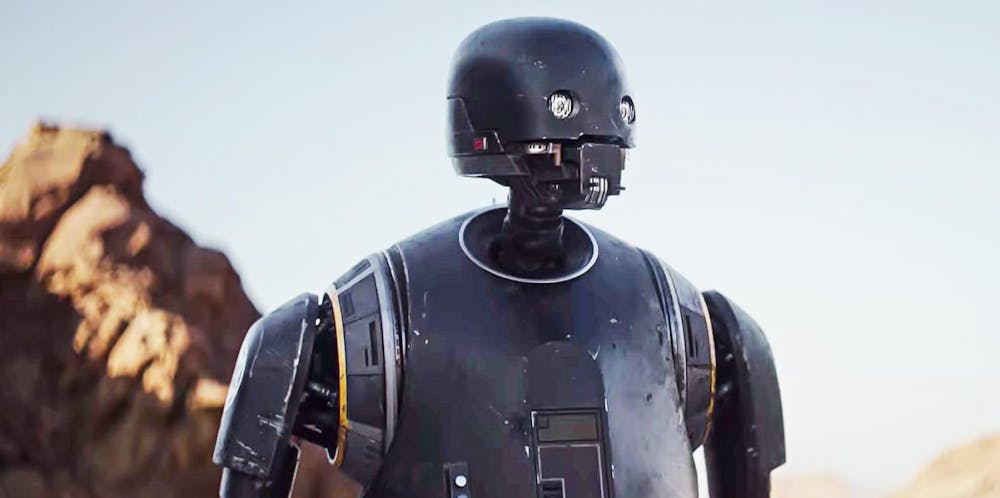
In the most recent movie, Rogue One, an offshoot of the main franchise, we were introduced to K2-SO, a wisecracking advanced autonomous military robot who was caught and reprogrammed to switch allegiance to the rebels. K2-SO mainly acts as a co-pilot, for example when flying a U-Wing with the pilot Cassian Andor to the planet of Eadu.

In most cases then, the Star Wars droids provide assistance – co-piloting ships, helping to fix things, and even serving drinks. In the world of these films, organic lifeforms are still relied upon for most skilled work.

When organic lifeforms are completely replaced, it is generally when the work is highly dangerous. For instance, during the duel between Annakin and Obi Wan on the planet Mustafar in Revenge of the Sith, DLC-13 mining droids can be seen going about their work in the planet’s hostile lava rivers.

Further, droid armies act as the frontline in various battles throughout the films. Perhaps, in the future, we will be OK with losing our jobs if the work in question poses a significant risk to our health.


K2-SO in Rogue One Lucasfilm IMDB Star Wars robots droids

K2-SO in Rogue One.
Lucasfilm/IMDB


However, there are some exceptions to this trend in the Star Wars universe. In the realm of healthcare, for instance, droids have fully replaced organic lifeforms. In The Empire Strikes Back a medical droid treats Luke Skywalker after his encounter with a Wampa, a yeti-like snow beast on the planet Hoth. The droid also replaces his hand following his battle with Darth Vadar on the planet Bespin.

Likewise, in Revenge of the Sith, a midwife droid is seen delivering the siblings Luke and Leia on Polis Massa.


Droids assist the birth of Luke and Leia Skywalker in Revenge of the Sith.


Perhaps this is one area in which Star Wars has it wrong: here on earth, full automation is a long way off in healthcare. Assistance from robots in healthcare is the more realistic prospect and is in fact, already here. Indeed, robots have been assisting surgeons in operating theatres for some time now.

Automated vehicles


Driverless vehicles are currently flavour of the month – but will we actually use them? In Star Wars, despite the capacity for spacecraft and star ships to be fully automated, organic lifeforms still take the controls. The spaceship Millenium Falcon, for example, is mostly flown by the smuggler Han Solo and his companion Chewbacca.

Most of the Star Wars starship fleet (A-Wings, X-Wings, Y-Wings, Tie Fighters, Star Destroyers, Starfighters and more) ostensibly possess the capacity for fully automated flight, however, they are mostly flown by organic lifeforms. In The Phantom Menace the locals on Tatooine have even taken to building and manually racing their own “pod racers”.

It seems likely that here on earth, humans too will continue to prefer to drive, fly, sail, and ride. Despite the ability to fully automate, most people will still want to be able to take full control.

Flawless, error proof robots?


Utopian visions often depict a future where sophisticated robots will perform highly skilled tasks, all but eradicating the costly errors that humans make. This is unlikely to be true.

A final message from the Star Wars universe is that the droids and advanced technologies are often far from perfect. In our own future, costly human errors may simply be replaced by robot designer errors.


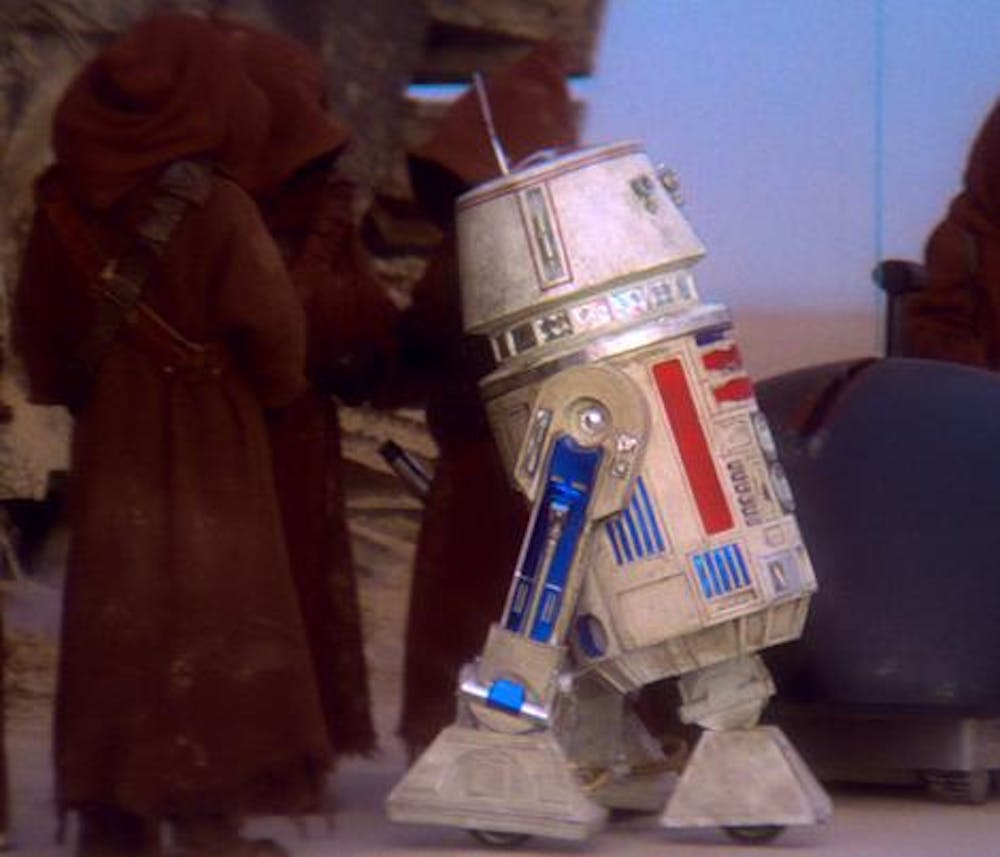
R5-D4, the malfunctioning droid of A New Hope Star Wars

R5-D4, the malfunctioning droid of A New Hope.
Lucasfilms/IMDB


The B1 Battle Droids seen in the first and second Star Wars films lack intelligence and frequently malfunction. C-3PO is notoriously error prone and his probability-based estimates are often wide of the mark.

In the fourth film, A New Hope, R5-D4 (another astromech droid) malfunctions and explodes just as the farmer Owen Lars is about to buy it. Other droids are slow and clunky, such as the GNK Power droid and HURID-327, the groundskeeper at the castle of Maz Kanata in The Force Awakens.

The much feared scenario, whereby robots become so intelligent that they eventually take over, is hard to imagine with this lot.

The ConversationPerhaps the message from the Star Wars films is that we need to lower our expectations of robot capabilities, in the short term at least. Cars will still crash, mistakes will still be made, regardless of whether humans or robots are doing the work.
Paul Salmon, Professor of Human Factors, University of the Sunshine Coast

This article was originally published on The Conversation. Read the original article.

Thursday, December 14, 2017

Guest Post: Why Hollywood needs more films like 'Star Wars'

Neil Archer, Keele University

Try to imagine a world without Star Wars. It’s 40 years since George Lucas unveiled the first in his sci-fi franchise and, with The Last Jedi now upon us, it’s a question worth asking. A recent Vanity Fair article came to the conclusion that it’s almost impossible – unless, that is, we can imagine the past four decades without Space Invaders, Pixar, or even Photoshop.


In short, Star Wars is unavoidable. Since 1977, the Star Wars films have been the benchmark – if not the catalyst – for modern Hollywood’s “synergy-driven strategies” – linking big-screen outings with “ancillary products” in the form of action figures and other commercial tie-ins. Now owned by Disney, the Star Wars property extends to theme-park rides, videogames and, more recently, spin-off films and animated TV series.

Much like Marvel’s comic-book multiverse or the Harry “Potterverse”, the original Star Wars film – since rebranded as Episode IV: A New Hope – sits now as part of an endlessly proliferating set of episode and merchandising possibilities.

Some commentators on contemporary Hollywood bemoan this “conglomerate” logic and the types of movies it supposedly throws up. Star Wars inevitably becomes a whipping boy in this discussion, since the huge success of the 1977 film (only Gone with the Wind has sold more tickets at the box office) helped turn Hollywood away from films like The Godfather, Chinatown and Taxi Driver and taught it to rely on comic-book superheroes, literary wizards and the new worlds of CGI.


Star Wars Luke Skywalker The Last Jedi Disney Lucasfilm


Disney/Lucasfilm


Star Wars’ other lesson is that the “standalone” movie, especially in a modern movie climate where attracting an audience is never guaranteed, is too risky. Better to rely on established franchises, “spread” across multiple titles and media platforms. A quick glance at 2017’s US box office top ten, or the more-or-less identical UK list, illustrates this logic at work on a global scale.

The more positive spin on the franchise is its capacity for extending narrative in diverse and often richer ways; a process often known as “world building”. I’m fairly comfortable among Assembled Avengers or other Fantastic Beasts – and the dispersed, interweaving story-worlds they inhabit. But when this becomes the only possibility for large-scale filmmaking, even I find modern Hollywood’s dependency on the sequel constricting. Yet it’s odd if Star Wars (to stick with its original title) takes the rap for this, since it actually has so little in common with many of the franchise films that followed it – not to mention the extended Star Wars series itself.


Strangely enough, in fact, Star Wars offers positive lessons to filmmakers and producers hoping to change things up in the Hollywood game. Some French critics serendipitously use their word for UFO - “un ovni” (objet volant non identifié) - to describe films that, like Star Wars, seemed to come from nowhere. Given sci-fi’s box-office dominance over the past 40 years, it’s hard to imagine that in 1977 it was not yet a trusted form. Consequently, no one was sure what to do with Lucas’s film. His friends did not get it. Many of the hired production crew laughed at it. In its place, 20th Century Fox promoted forgotten squibs such as Damnation Alley. We eventually learned that Lucas was planning a saga and media empire all along. But in 1977, we just saw an out-of-the-blue epic.

Breaking the mould


Since Star Wars, the possibility of Hollywood losing money has been mitigated, paradoxically, by expensive “saturation” releases, with movies marketed intensively and opened simultaneously across thousands of screens. This wasn’t the case with Lucas’s cut-price film, which opened on just 32 of them. Contemporary Hollywood, critics might say, stifles choice. But in 1977, against the grain, audiences chose Star Wars.

Why? For my six-year-old self, Star Wars was both new and exotic. Technologically it broke new ground, pre-CGI, effectively ushering in the digital effects houses that are the engines of the modern industry. But it was also a film steeped in a cinematic past both strange and familiar: a past of Flash Gordon serials, John Ford Westerns and Kurosawa’s samurai films. It was set in a sumptuously designed galaxy far, far away – yet one that harked back to older war movies, scored to an old-fashioned orchestral soundtrack. Ironically, in drawing on so many films, Star Wars was like few other films made before, or even since.

The eventual problem with Lucas’s “prequel” trilogy, starting with 1999’s The Phantom Menace, was that it was no longer engaging with any other reference points beyond its own. Shot almost entirely against a CGI green screen, and loaded down by Lucas’s wordy script, the films felt dutiful but dull: they filled gaps in the saga, but related to nothing but the series itself.

I thrilled to 2015’s The Force Awakens, and its return to the series’ original cinematic values of adventure, pathos and wit, bolstered by the agile performances of its young, relatively unknown cast. Even here, though, as the film’s director and co-writer J J Abrams has admitted, the film was in many respects a reprise of everything good about the 1977 movie.


My point though is that we shouldn’t look to films that imitate Star Wars, but to those which follow its example. Like Lucas’s film, Damien Chazelle’s recent La La Land was a comparatively cheap picture out of step with its time and place – a one-off, non-adapted and (I hope) sequel-proof musical; one that started out screening in a few cinemas and festivals, but eventually turned into a worldwide hit.

The film’s nostalgic heart and look also owed to the cinematic past – to a Hollywood and Europe of the 1950s – yet it too seemed to emerge from its own gorgeously self-crafted world. It was proof that in Hollywood you don’t have to be totally original to be original. But you do need a bit of faith.

The ConversationAnd, as in 1977, it felt refreshingly new. But the lesson we might learn from La La Land is an old one: if the Hollywood that Star Wars helped build wants to do something new, it actually needs more films like Star Wars.

Neil Archer, Lecturer in Film Studies, Keele University

This article was originally published on The Conversation. Read the original article.

Thursday, May 04, 2017

#StarWarsDay Guest Post: What's So Bad about the Galactic Empire?

by Sean Malone

Everyone familiar with Star Wars knows that the Empire is bad, and the Rebellion is good.

But, why?

Seriously. What makes life under Emperor Palpatine so unbearable, and what would make life under the New Republic so much better, for the ordinary citizens of the galaxy? The movies offer surprisingly little information as to what's actually wrong with Imperial rule.

Now, I'm not talking about blowing up planets or Anakin murdering Jedi children. I'm talking about the daily lives of ordinary citizens. People who don't have any connection to the Sith or the Jedi or the battle for the Senate or any of that stuff.


Sure, behind closed doors, Emperor Palpatine is secretly a Sith Lord who can shoot light bolts from his hands. That definitely seems evil, but, according to the movies, nobody but a few Jedi even knows about it. He doesn't walk down the street electrocuting random peasants.

For the most part, his brutality seems to be limited to confrontations with the Rebel Alliance.

And yeah, Darth Vader is one of the most intimidating villains of all time, and he's obviously a menace to Rebellion soldiers and the Jedi, b
ut imagine you're just some ordinary moisture farmer going about his business on Tatooine. Unless your name is Owen Lars, Darth Vader almost certainly doesn't care about you. He's mainly interested in finding Luke Skywalker. So the question is, what would it mean to live in a Galaxy "ruled" by the Empire, and why is it the ultimate depiction of Tyranny in popular culture?

Star Wars Episode 1 The Phantom Menace
The more I've thought about this, the more I have struggled to come up with an answer based on anything actually depicted in the films themselves.

Part of the problem is that in most Star Wars movies, the characters are all fighting in a single political struggle. And apart from Padme's interminable dialogue about Senatorial procedure in the Prequels, there's almost no discussion of governing philosophy in the entire series.

Ask yourself: What does the Rebel Alliance stand for besides the destruction of the Empire, and what does the Empire stand for apart from maintaining power?

In A New Hope, Grand Moff Tarkin at least offers some insight into the Empires operation, when he explains that regional governors have “complete control” over their territories.

But, what does that actually mean? What policies does the Emperor want to be enforced across the Galaxy? What is it that he's actually imposing on his citizens that requires multiple planet-destroying superweapons to enforce?

I mean, I get that Palpatine wanted power, but, what does he actually do with it?

Once he acquired political control over the Galaxy, did he ban gay marriage? Droid marriage? Gay droid marriage? Did he ban books and restrict speech? Does Star Wars even have books? Did he nationalize (or “Galactize”) major industries?

For something that's so important to the story, Star Wars doesn't really even try to answer these questions.

When Liberty Dies

But here's what we do know.

First, there's a lot of smuggling in the Star Wars universe. And that probably means that there are a lot of laws and regulations making various goods and services costly or illegal. Prohibiting or restricting trade creates Black Markets, it can also impoverish many people and make their lives much harder when they can't access the things that they want and need.

Even though it's the invisible fabric of everyone's daily life, commerce doesn't really seem to exist in the Star Wars universe at all, but one way the Empire could be ruining people's lives is by controlling what gets bought, sold, or traded; dictating prices; or by taxing everything so much that even basic necessities become impossible to afford.

Another thing we know is that the Imperial military uses its power against citizens of the Empire, and not just in terms of collateral damage.

In Star Wars: Rebels, Storm Troopers and other Imperial agents are often seen conscripting innocent people into their armies and seizing their property without compensation. More recently, in Rogue One, we see a Star Destroyer hovering over a Kybur Crystal mine, and the Empire appears to force people to work in the mines in order to acquire key components of the Death Star.

We might assume that the Imperial military gets many or most of its supplies and resources through similar means – stealing from people around the galaxy, taking their property by force. But that assumes some kind of property rights, and that's never fully established in that world.

Star Wars The Force AwakensAnd there's one more terrible thing we know about the Empire from Star Wars: The Force Awakens.

Reformed Storm Trooper Finn (FN-2187) explains to Rey that he was actually taken from his family as a child, conscripted into the Imperial Army, and trained to be a soldier. That's a form of slavery that many real-world governments have used throughout history. Sadly even the United States government still has the power to draft its citizens into war, though that hasn't happened for decades.

Unfortunately, Star Wars never actually wrestles with these issues in any meaningful way.

It seems to assume that the major difference between a "good" world and a "bad" world is the presence of Democracy, but that's hardly a guarantee. Many Democratic leaders have created misery for their citizens and even used Democracy to amass power and become dictators themselves – just like Emperor Palpatine did.

I think the idea that a Senator becoming Chancellor becoming the Emperor works so well in the film because it's so true to what we actually see in real life. And when Padme says “This is how liberty dies, with thunderous applause,” she gets to the real issue here.

Liberty.

The only answer to this question that actually makes sense is that the Empire is an awful place to live because its people lack individual freedom.

Citizens of the Empire aren't secure in their possessions and property. They can't go where they want without being stopped by Imperial forces. They can be imprisoned or forced into an army without a trial or the opportunity to say no, and restrictions on trade and commerce make them poor and condemn them to getting what they need from dangerous black markets, smugglers, and gangsters.

If the Rebellion stands against that, then they are true heroes.


Sean Malone Star Wars liberty #StarWarsDay
Sean Malone is the Director of Media at FEE. His films have been featured in the mainstream media and throughout the free-market educational community.


This article was originally published on FEE.org. Read the original article.


Wednesday, March 08, 2017

Guest Post: Why America Needs 'Star Wars'


by Stanton Skerjanec

Star Wars Phantom Menace Rick Sincere Uptown Theatre marquee 1999
My childhood, like those so many others, was the combination of George Lucas, Steven Spielberg, and, of course, John Williams. I would often sit, perhaps unhealthily, for hours at a time in front of a TV watching VHS tapes of dinosaurs eating people, a professor stealing holy artifacts, and lightsabers crashing. I absorbed it all, and my brothers and I practiced it. We would duel with our plastic (the old sturdy ones) lightsabers, hurting each other's’ fingers and feelings. Around high school, I had somewhat of a “nerd-retreat,” a time when being a fan of Star Wars was for some reason “uncool.” College reopened my love for the great saga, and now, I unashamedly utilize the galaxy far, far away in my classroom teaching economics and government.

Every fandom has its gloriously diverse and vast fan-fiction with theories that range from the plausible to conspiracy. Star Wars, through the former Expanded Universe (dubbed “Legends”) and the official Canon, is ripe with opportunity for fans to write, speculate, and imagine. My three younger brothers and I constantly engage in this activity, debating the merits of Emperor Palpatine as the murderer of Padme Amidala and the like. But while all of this is fun and engaging, it seems to lack a certain gravity of importance. I asked this question a few weeks ago: if it lacks importance, why do so many love to think and talk about Star Wars? What brings millions to engage in such an activity?

The Hero’s Journey through Space
In order to understand this question, we need to understand the definition of a key word: mythos. A mythos is a common set of stories that can be used to explain the world, and more often provide a foundation for a cultural morality. A mythos is not the equivalent of religion. Religion tends to provide an explicit and prescriptive morality. A mythos provides more of a cornerstone worldview, a basic layer for others to build upon with morality.

Any discussion of mythos has to include the renowned mythologist Joseph Campbell, whose seminal work The Hero with a Thousand Faces elaborated on what’s called the “hero’s journey.” Essentially, the hero’s journey is a basic story structure where a seemingly boring individual rises to become a hero with the aid of mentors and friends, and must brave great adventures and villains. Campbell identified the hero’s journey across all cultures. The same basic myth-narrative is repeated in nearly all geographies and ethnicities. The hero’s journey is, at heart, the common human story repeated everywhere.

This monomyth, as it is called, has been studied and examined ever since Campbell’s work was published in 1949. It’s changed here and there, with different scholars adding different things, but it remains more or less the same. The monomyth can be clearly seen through the Star Wars saga, but it is especially clear in Episode IV: A New Hope

Luke, a seemingly unbecoming farm boy, is called to the adventure of saving a captured princess from black-cloaked villain, and initially refuses. With the help of a wizardly mentor and a band of equally unbecoming allies, he becomes entrapped in the belly of the beast (the Death Star), from which they escape with their reward (the Death Star plans), but not before Luke endures the pain of watching his mentor (old Ben Kenobi) die. The final trial, destroying the beast, is Luke’s great transformation from the boy on Tatooine to the next generation of warriors (the Jedi Knights).

Star Wars heroic journey Stanton SkerjanecThis is fascinating stuff, and very exciting. Not only was the 1977 cinematic experience great, but the entire saga’s story is wonderful, however much it may be masked by poor dialogue and acting. Film critics have never been a fan of the movies, even for their stories. They say it’s too easy, made for children, cartoonish, etc. I read that as, “This isn’t morally ambiguous, and therefore, it’s not a good story.” Such nihilism is apparently cool, but I don’t buy it. No, the stories aren’t all that complex, but that’s the point. Remember, a mythos is supposed to aid us in developing an understanding of the world from a certain point of view.

Through stories, we lay a foundation to build an ethical code founded in morality. The purpose is to get us to think about how we act and why we act. If we get bogged down in Inception-class complexity, we lose that powerful purpose. 

The story in Star Wars is intentionally simple. The characters aren’t stereotypical, but archetypical, and resonate a certain set of traits we can easily identify. It can sometimes feel like a children’s story, but again, that’s the point. The essence of a mythos should make us wonder in awe, tap into our imagination, bring out our inner child. When I watch these movies, I’m like a giddy boy, relishing in the narrative. When the movie is done, it’s almost as if my inner child, having finished the adventure, returns and consults with my adult on what just happened. That’s mythos: the dialogue between wonder and reason.

The Great American Mythos
The master of this myth-creating process was J.R.R. Tolkien, author of Lord of the Rings and The Hobbit. He saw that England lacked a true mythos, one separated from reality (thus eliminating anything relating to King Arthur and Beowulf). He set out to create an entire universe he could populate with stories; thus was born Middle Earth. His goal wasn’t necessarily to write great stories (which he did), but to provide an epic universe with histories, a genesis (see: The Silmarillion), and languages with dialects. LOTR has a distinctly English feeling to it, one his countrymen could understand. He wrote it so others could think about the world in a certain way. Some of these stories, like The Hobbit, are so relatable they feel like a children’s story.

Now, George Lucas is no Tolkien. He is a controversial creator, one who nearly destroyed his saga. His storylines can be disjointed, almost contradictory, and he can seem self-serving. Nevertheless, his universe is a fountain of myth, and one that resonates with millions of Americans. Why?

America, at its core, is part of Western Civilization, and relies heavily upon its philosophy and religions. As such, it is greatly influenced by the moral idea that there exists objective good and evil. But we are also a multicultural nation, one that has accepted and welcomed many Eastern philosophies as well. As Americans, we are intrigued by the initially exotic beliefs of the East, and we find a certain tranquility in them. We are drawn toward the idea of a Buddhist monk devoid of personal possession and at peace with everything. We see his balance, and we desire it.

Star Wars seeks to establish a clear dynamic between good and evil: the Rebel Alliance and the Galactic Empire, the Jedi and Sith, Luke Skywalker and Darth Vader. There is great conflict between these easily identified sides (I mean, for crying out loud, the lightsaber colors reveal it all). Yet, the theme of balance is always present. Luke literally balances Yoda on his foot upside down while balancing rocks. C’mon. The Chosen One was to bring balance to the Force, a Force which is at once an inanimate energy field made up of microorganisms, and yet also a personal, willing thing. Is this a contradiction? No, it’s the basis of a mythos worldview.

Americans love a good cops and robbers story, the cowboys and Indians conflict. But we also seek a peaceful tranquility of balance. Star Wars gives us that battle, but simultaneously breathes of a harmonious spirituality. Destiny must be fulfilled in this universe, but personal choice never disappears. Americans, historically, believe they have a duty, a manifest destiny, in the world. But liberty is at our heart too, and we can choose to reject this perceived duty. We are drawn to Star Wars because it mimics what we feel in the first place.

Why does this matter? I believe it is very important for great societies to have a basic cultural commonality. For America, we used to be fairly homogenous in our Protestant religion. That’s not the case anymore, and even when it was, there was no unified denomination. Religion doesn’t make the cut to act as our cultural unifier, and politics certainly doesn’t either. We need a myth, one with an acceptable starting point, a Square One. Star Wars is arguably one of the only viable mythos for America. It has such a wide arrangement of characters and messages that different people can gain different things from it. It embraces our Western-Eastern dichotomy, and, quite frankly, it’s pure fun.
We need Star Wars not because it is a masterfully created cinematic experience, has great dialogue, or anything like that. We need it because the story, much like the Force itself, can surround and bind us together.
A version of this article first appeared at the Catholic Beer Club.

Stanton Skerjanec Star Wars heroic journey
Stanton Skerjanec is an economics and government instructor at Liberty Common High School, a classic liberal arts charter school in Fort Collins, CO.


This article was originally published on FEE.org. Read the original article.


Wednesday, May 04, 2016

From the Archives: May the Fourth Be With You - Part II

As I noted in my previous post, 17 years ago this month, I was one of hundreds of Star Wars fans who camped out in front of the Uptown Theatre in Washington, D.C., to be among the first to buy tickets and then to nab the best seats to see the long-awaited prequel to the epic trilogy, Episode 1: The Phantom Menace.

While my first report for The Metro Herald described the spontaneous community that emerged along the Connecticut Avenue sidewalks, my second report was a sort-of review of The Phantom Menace.

I just found this article in my archives and had not read it in many years.  The biggest surprise to me? Not a single mention, positive or negative, of Jar-Jar Binks.

The following article appeared originally in the Arts & Entertainment section of The Metro Herald in Alexandria, Virginia, on May 21, 1999:

Star Wars: Supernova or Firecracker?
Rick Sincere
Metro Herald Entertainment Editor

Raising more questions than it answers, The Phantom Menace, episode one of the Star Wars series, burst upon the nation this Wednesday, May 19.

Preceded by months of active anticipation and sixteen years of quiet waiting for fans and non-fans alike, the newest segment of the Star Wars phenomenon was accompanied by hype, hoopla, and hurrahs.

At the first showing at Washington’s Uptown Theatre on upper Connecticut Avenue, NW, the audience was on edge and playful. After more than 60 hours of sleeping, playing, and waiting patiently on the sidewalk outside, and taking their seats some 45 minutes before the program was scheduled to begin, members of the audience participated in mock light-saber battles in the area in front of the huge Cinerama screen. The slightest mention of Star Wars or its box-office champion nemesis, Titanic, elicited loud cheers or jeers.

And the moment the words “Lucasfilm, Ltd.” appeared on the screen, the auditorium was consumed by hoots, hollers, whistles, footstomping, and applause.

And how well-deserved this greeting was! The Phantom Menace is a tour de force of special effects. George Lucas, returning to the director’s chair for the first time since Episode 4: A New Hope of 1977, has given us a payoff for his long wait for technology to catch up to his imagination.
Drawing upon the mythological traditions of Europe, the Middle East, and East Asia, Lucas has created a story with universal appeal. Using archetypes that have been found throughout literature since before man learned to write, Lucas shows us, quite literally, the stuff that dreams are made of.

It is conventional in a review like this to resist revealing key plot developments and, in particular, the ending. So I will resist. But a few comments are in order.

Young Anikan Skywalker (played by nine-year-old Jake Lloyd) is intelligent, humble, and helpful beyond words. He is easy to love. Yet, at the same time, because we know what happens in Episodes 4-6, we also know that he will become the evil Darth Vader. Thus it is with some ambivalence that the audience applauds when things go well for young Anikan. Is Lucas trying to mess with our minds? Is he trying to personalize this Manichean struggle between good and evil? Is he helping us to demonstrate for ourselves that each of us has within us, as Jewish tradition would put it, a good yetzer and an evil yetzer?

Are we supposed to cheer and applaud, only to draw back and correct ourselves, saying, “Hey, this cute little kid is the bad guy! What am I doing?”

Some have faulted this episode of Star Wars with being big on special effects and short on characterization. This may be true, so far as it goes, but one should also keep in mind that this episode is meant as an exposition, setting up a situation for a payoff that will happen later. Half of the fun is to look for clues and links to events and characters we already know from Episodes 4-6. We can count on fuller character development in Episodes 2 and 3. Still, The Phantom Menace stands on its own as an entertaining whole. One need not have seen any of the previous (later?) Star Wars films to enjoy this movie.

The rest of the summer will no doubt be filled with Star Wars mania. Enjoy it while it lasts. The next film is not scheduled to be released until 2002.

My review of that 2002 release, Episode 2: The Attack of the Clones, is here. My look at Episode 3: Revenge of the Sith, is here, while memories of my first encounter with Star Wars in 1977 can be found in this group post on Bearing Drift.  My 2005 photo essay about "Dressing a Galaxy," an exhibit of Star Wars costumes, is here. (And just one mention of Jar-Jar Binks among them all.)


From the Archives: May the Fourth Be With You - Part I

Seventeen years ago this month, I was among the hundreds of Star Wars fans who camped out in front of the Uptown Theatre in Northwest Washington, D.C., to wait for an opportunity to be the first to buy tickets and, the next week, to see the first screening, of Episode 1: The Phantom Menace.

I also covered the gathering for The Metro Herald, which in succeeding weeks published my report on the sidewalk queue and my review of the movie.

Brought up from deep in the archives, this article ran on the Arts & Entertainment page of The Metro Herald in Alexandria, Virginia, on May 14, 1999:

ADVENTURES IN JEDI-LAND, DC
Rick Sincere
Metro Herald Entertainment Editor

Star Wars Episode 1: The Phantom Menace is, without a doubt, the most anticipated movie in a generation, perhaps since Gone With the Wind. Some would argue that it is more hype than substance, though that remains to be seen, since the vast majority of us have seen only tantalizing snippets in the form of trailers, commercials, music videos, and computer files that end in *.AVI or *.MOV.

For diehard Star Wars fans, however, this is a religious experience. They, like the rest of us, have been waiting for 16 years for the newest film in the series to be released. Yet their wait has not been casual. It has been intense, with the intensity growing in recent weeks as the magic date of May 19 approached.

Starting last Sunday evening with a handful of dedicated fans, growing as a trickle through Monday night, until by Wednesday morning some 325 or more devotees had gathered on the sidewalks outside the Uptown Theatre on upper Connecticut Avenue in Northwest Washington. The line snaked along from the south edge of the theatre, past Starbucks and Ireland’s Four Provinces, past the Cleveland Park Public Library, all the way to the end of the bridge that carries the avenue over Rock Creek Park.

There is no sense of crowdedness, certainly no rowdiness, but definitely a sense of hominess. The sidewalk is littered with sleeping bags, lawn chairs, coolers, pizza boxes, empty soda cans, knapsacks, and more. Some sit on inflatable furniture. (Inflatable Darth Maul chairs are available at Toys-R-Us for $21.95.) Some people have brought along radios and CD players. (The musical score from earlier Star Wars episodes floats through the air along with the chatter of fans.) For the overnight campers, there is the portable entertainment in the form of card games, Star Wars Trivial Pursuit sets, action figures, and plenty to read, from collections of “Bloom County” cartoon strips to J.R.R. Tolkien books to Douglas Adams’ Hitchhiker’s Guide to the Galaxy.

The crowd is mostly young, primarily college students but some people in their thirties and some in their teens. Some come dressed in Star Wars-inspired costumes, but most are dressed simply in shorts and t-shirts, jeans and sweatshirts. As the sun rises across Connecticut Avenue, they rub sleep out of their eyes, wrapped so tightly in their sleeping bags that an unwary observer might think this gathering is for a re-release of Cocoon or The Revenge of the Pod People. But soon they emerge from their protective covers and begin socializing amiably with their neighbors.
One 12-year-old boy is there alone and, in the middle of the night, his mother comes looking for him. Afraid to give away his location because she might be there to drag him home, nearby fans express their sense of hesitancy. “Oh, that’s not why I’m here,” Mom exclaims. “I just brought him some blankets and Three Musketeers bars.” She explains that when she was her son’s age, 22 years ago, she camped out to await the first Star Wars movie (Episode 4: A New Hope) and she felt it would be hypocritical of her not to let him do the same. From one generation to another…

Despite the discomfort of sleeping on concrete overnight, the queue of fans is remarkably chipper so early in the morning. A palpable friendliness permeates the atmosphere. For so many people, the situation is quite calm, peaceful, and orderly. It provides an excellent example of economist Friedrich von Hayek’s “spontaneous order” – particularly appropriate since Hayek’s 100th birthday was celebrated on Saturday, May 8. An ad hoc community has been formed here, where once and future strangers watch out for one another as friends. Need a drink? Does nature call? Leave your things behind; no one will allow them to be pilfered. Everyone seems to get along. Oh, there might be an occasional light-saber fight, but only on the friendliest terms. And in the middle of the night, the whole gang played an elaborate game of “telephone,” with whispering that starts at one end and finishes up three blocks and three hundred people later.

As people pull out their breakfasts – consisting of Mountain Dew, Doritos, potato chips, and chocolate bars – there is no hesitancy about sharing. Local businesses and radio stations have chipped in, too. They are passing out free doughnuts, and Ben & Jerry have brought a load of ice cream treats.

The local media are here, of course. Fox News has a crew on hand all morning long, doing periodic live broadcasts throughout the network’s morning news show. The perky Fox correspondent, Holly Morris, gets the fans to play Trivial Pursuit with her, share their yummy breakfasts, and sing along to the Star Wars theme song (using lyrics invented by Bill Murray on Saturday Night Live more than 20 years ago, in his character of a smarmy Vegas lounge singer). Local radio stations are here en masse: WPGC; WASH 97.1 FM; WHFS; 104.7; Mix 107.3. They’re all passing out promotional materials – free CDs, flyers, T-shirts, various Star Wars souvenirs. They recognize a captive audience when they see one – and they get the fans to play along, too, putting them on the radio, live via cell phone.

Cell phones are ubiquitous, too – a lifeline to home or work for those who have been absent for almost three days. Some troglodytes are still using the pay phones that dot the landscape, but these old-fashioned devices are far from necessary these days.

As the sun rises higher in the sky, shirts come off and the aroma of suntan lotion wafts through the air. The anticipation grows stronger as zero hour – 2:30 PM is when tickets go on sale – approaches. Each person in line will be limited to buying 12 tickets, and all of them must be for a single performance. The most eagerly sought tickets are those for the first showing at 10:00 AM on Wednesday, May 19. Those who are purchasing them are already planning to camp out for the three nights preceding the show, simply so they can have first choice of the choicest seats. It becomes a never-ending story.

Could such a gathering of people occur in the suburbs? It is hard to imagine hundreds of people camping out on the macadam outside a suburban multiplex for days at a time, with traffic zooming by on the surrounding four-lane highways. A barren parking lot lacks the vitality of a central city’s sidewalks. Star Wars fans, with their souls in another galaxy, far, far away, have their feet firmly on the ground in the most traditional of settings, the urban village.

Next week: Reactions to the movie.