Former Virginia Governor Gerald Baliles was laid to rest yesterday after a funeral service at Christ Episcopal Church in Charlottesville. After serving in the House of Delegates and as Attorney General, Baliles was elected governor in 1985 and served a four-year term ending in 1989. He succeeded Governor Chuck Robb and was, in turn, succeeded by Governor Doug Wilder.
Gerald Baliles (c) Rick Sincere 2013
During his term as governor, Baliles became a co-founder (with Patricia Kluge and others) of the Virginia Festival of American Film, which eventually became the Virginia Film Festival. The most recent film festival, the 32nd annual, took place across various venues in Charlottesville last month.
At the 26th annual Virginia Film Festival in 2013, I spoke to Governor Baliles -- who was then director of the Miller Center for Public Affairs at the University of Virginia -- and asked him about the beginnings of the film festival and his role in enhancing the footprint of the film industry in Virginia.
Baliles had just moderated a panel discussion following a screening of the CNN documentary film, Our Nixon, with the film's producer, Brian L. Frye, and Miller Center historian Ken Hughes (see below).
I began by asking whether the Virginia Film Festival, as it had developed over the years, had met or exceeded his expectations back in the 1980s.
"When one launches a new venture," he said, "one has a vision. One has hopes, expectations. I thought it was entirely conceivable that the first couple of years, if they went well, would provide the setting for a much larger public acceptance and interest in support of what has come to be known as the Virginia Film Festival."
He conceded that "it is impossible to predict the details but it is also possible to envision the possibilities and that's what we had 26 years ago."
I also asked about his desire to expand the activities of the film industry in Virginia. He explained how he used a legislative maneuver to authorize what became the Virginia Film Office.
Virginia Film Festival logo
Baliles explained that every state in the United States and foreign countries "are competing for production of films in their own localities."
He noted that, "when I was a young legislator, I was struck by a film that was made in Hampton Roads, and I read that the producers had left 40 percent of their budget in Hampton Roads and I thought, 'Why don't we do this sort of thing?'"
After he learned about that, he said, "I put a bill in to create a Virginia film office as a way of enticing producers to come to the state. We would provide advice and counsel and scouting locations and that sort of thing."
The bill failed, however, but then-Delegate Baliles "happened to serve on the Appropriations Committee and the budget always contains a lot of fine print in the back. So, when my bill was killed, I just inserted the same language in the back of the budget. The budget was approved, of course, and so was the film office. The film office then started, I think, to create the possibilities of attracting film producers to the state. The Virginia Film Festival was created 10 to 15 years later, when I was in office as governor."
His aim in seeing more movies in Virginia was not incidental, he continued.
"My interest in film has been one of long standing. I read a lot but I also recognize we are a visual society, and pictures speak louder than words."
Unrelated to the Virginia Film Festival, here is former Governor Baliles speaking at the ceremony marking the opening of the visitors' center at Monticello in 2009:
Comedian Kevin Hart lasted just three days as the host of the 2019 Academy Awards. Almost immediately after his name was announced on December 4, a backlash began on social media about homophobic jokes Hart had made on Twitter between 2009 and 2011. After refusing to apologise, even when the Academy demanded it, Hart stepped down as host on December 7, leaving the ceremony without a host.
The last time that happened was in 1989, an occasion the Academy would prefer to forget as, instead of a host, producer Allan Carr had arranged a bizarre revue involving Snow White and Rob Lowe singing Proud Mary. Disney sued for breach of copyright.
This year’s ceremony is shaping up to be just as controversial. Ratings for the awards show have been declining for some years, perhaps because people have grown tired of the overt political messaging. (It’s interesting to note here that there’s also a strong correlation between the box office performance of the film that wins multiple Oscars and the ratings for the awards show. So, in 1998, when Titanic won 11 Oscars and took US$2.1 billion worldwide, more than 57m people watched the show. Last year, when The Shape of Water won best picture – having earned less than US$200m at the box office – less than half that number of people tuned in: 26.5m.)
With the thought of boosting ratings this year, in August the Academy proposed the introduction of a new category: best popular film. This was widely thought to be a Really Bad Idea.
People involved in fims such as Black Panther, which took more than $US1 billion within 26 days of release, asked whether the film’s global popularity meant it would be pigeonholed as “popular” rather than “excellent”. “What,” asked the New York Times,, “if it received a nomination for the populist Oscar but not for best overall picture? Would that mean Black Panther and films like it were second-class citizens?” The idea was swiftly shelved.
At least it will be diverse
In the end, when the nominations were announced in February, box office behemoths, such as Black Panther (the first best picture award for a superhero movie), were nominated alongside critical successes, such as The Favourite and Roma.
Queen biopic, Bohemian Rhapsody (which has also done very brisk box office at US$850m and counting) is also nominated for best picture, despite mixed critical reviews – the film has the lowest average scores of any of the best picture nominees on Rotten Tomatoes. The Guardian reviewer, Steve Rose took particular exception to the film’s handling of Freddie Mercury’s private life, casting “Mercury’s wilderness years as a symptom of his gayness”. And, shortly after the Queen biopic won best picture at the Golden Globes, The Atlantic published a long list of allegations of sexual misconduct against director Bryan Singer, who had been fired by 20th Century Fox in December 2017, with three weeks of filming left – reportedly over differences with the cast and crew. His name was removed from nominations at the Baftas. Singer has denied the allegations, telling the BBC that the story “rehashes claims from bogus lawsuits filed by a disreputable cast of individuals willing to lie for money or attention”.
One accusation this year’s Oscars is hoping to avoid is the unwelcome tag of #oscarssowhite, which has dogged the awards in recent years, exposing the lack of diversity in Hollywood cinema and in the voting branch of the Academy. Nominations for Black Panther and Blackkklansman, in addition to the Mexican film Roma and the queer female ensemble film The Favourite, should ensure the ceremony has at least the impression of diversity it has so craved previously.
Bad timing
But, ever conscious of ratings, the show’s planners set about designing a shorter ceremony, hoping to encourage viewers who have previously been put off by a running time of three and a half hours (four hours and 23 minutes in 2002). But when it was announced that only two of the five songs nominated in the best original song category would be performed, there was a widespread backlash – and musicians reportedly showed solidarity: either all the songs would be performed, or none. Once again the Academy relented.
It was also announced that four awards would be given out during the ad breaks – cinematography, film editing, live action short, and makeup and hairstyling. None of these categories, it was quickly noticed, involved nominees representing films made by Disney (the parent company of ABC, the network broadcasting the ceremony). And surely cinematography and editing are two of the most fundamental crafts to the art of cinema. Movie makers certainly thought so.
After protests from, notably, the American Society of Cinematographers as well as a host of big names such as Martin Scorsese, Alfonso Cuarón, Spike Lee and Quentin Tarantino, within the week the Academy announced that all 24 awards would be presented live on TV.
What else could go wrong? It is possible the awards will still feature spontaneous moments, surprise wins, and sensational stars to supplant the months of negative publicity leading up to the event. Only two years ago when an otherwise fairly unremarkable evening became one of the most talked-about Oscars in years when Faye Dunaway and Warren Beatty read out the wrong name for best picture. This year it’s going to take something pretty sensational or outrageous on the night to save the Oscars from being remembered as a fiasco from planning to broadcast.
The surprise nomination of non-professional indigenous woman Yalitza Aparicio for this year’s best actress Oscar for her role as a domestic servant in Alfonso Cuarón’s critically acclaimed Roma has been greeted as a “fairytale”.
Aparicio was training to be a teacher when she reluctantly went to an audition where Cuarón was immediately struck by her. Her presence and her similarity to his own childhood maid – on whom the film is based – secured her the role.
Propelled into the spotlight by her role, she has become the first indigenous woman to grace the cover of Mexican Vogue. She also endeared herself to her growing social media following by uploading to Twitter a video of her sobbing reaction to news of her nomination.
If Aparicio wins, she will be the first indigenous Latina Oscar winner and will join the small number of non-professional actors to win an Oscar in recent times. This number includes Anna Paquin for her role in The Piano (1993) and Haing S Ngor, a former doctor from Cambodia, who won the 1985 best supporting actor Oscar for his role in Roland Joffe’s The Killing Fields, in which his own traumatic experiences informed his outstanding performance as a local journalist.
In the same year as acclaimed indie hits such as Chloé Zhao’s The Rider, in which Brady Jandreau played a version of himself as an injured rodeo rider, and Crystal Moselle’s Skate Kitchen, featured an all-girl skate collective from New York, it seems that authenticity in casting and performance is all the rage.
But Aparicio also stands out as being typical of the non-professional’s experience throughout cinema history. Her “journey” from naïve provincial girl to the red carpet hits many familiar notes. Interviews emphasise how little she understood of cinema, and how she had never heard of Cuarón and feared the job offer might be a trafficking scam.
Authenticity
Aparicio’s unpolished and untrained authenticity is sharply juxtaposed with the glamorous world in which she now finds herself. Part of the non-professional’s effect is to throw into relief the extraordinariness of stars, as well as their proficiency, understood as a product of years of training and dedication to their craft. Aparicio’s novelty, spontaneity, and natural appearance are all singled out as antithetical to the professionalism of her co-star, experienced stage actress Marina De Tavira, who has also been nominated for an Oscar.
Her story mirrors the “discovery” of Barkhad Abdi, the untrained Somali-American who played a memorable co-lead to Tom Hanks in Captain Phillips. It also recalls the children recruited by Danny Boyle from the Mumbai slums for global hit Slumdog Millionaire.
In the latter case, ethical concerns around the effects of sudden fame on vulnerable children were recognised by Boyle. He set up a trust fund for them, though this didn’t prevent allegations that the father of one of the girls tried to sell her to capitalise on her fame.
Power imbalance
The non-professional child actor came to prominence in post-WWII Italian neorealism, which specialised in taking performers from the streets. Vittorio De Sica’s Oscar-winning 1948 classic Bicycle Thieves was particularly celebrated for its non-actors, chosen for their faces and bodies rather than any acting talent.
Lamberto Maggiorani, who played the tragic father, lost his factory job after the film and struggled to find work as an actor; he repeatedly begged De Sica to help him out. Meanwhile, nine-year-old Enzo Staiola made several further films and retired at the age of 15. However, accounts of his treatment on set , which included De Sica publicly humiliating him to make him cry, match other testimonies of neorealist directors extracting performances from non-professionals by insulting and even beating them.
This power differential, always implicit in the actor-director relationship, is obviously exacerbated when the actor is inexperienced and has no manager to guide them through the film industry. While Aparicio and Cuarón’s on-set relationship seems to have been affectionate, one anecdote about the film’s shooting is somewhat disturbing. In a central, traumatic scene for her character Cleo, Cuarón admitted that he deliberately withheld from Aparicio what would happen. Her anguished reaction is genuine – and presumably she could not be trusted to generate that response otherwise.
Aparicio has declared that she would like to continue to act, though she admits that Roma may be a one-off. French film critic André Bazin wrote of neorealist actors that the non-professional can be used only once because their effect can never be replicated. But non-professionals have gone on to career success – Paquin, obviously, as well as Sasha Lane, discovered by Andrea Arnold for her film American Honey, is continuing to work. So is Abdi, though in low-profile parts. Others, like the kids of Slumdog Millionaire, have returned to their old lives.
In all the press talk and interviews with Cuarón and Aparicio, one thing is never mentioned: pay. While one presumes that she received a fair salary for the part, non-professionals generally come cheap because it’s often assumed that part of the reward is the experience itself, the fairytale story. But when the magic finishes and the closing credits roll, they all too often find themselves alone.
Ben Mankiewicz is a journalist and film historian who is best known as a host on Turner Classic Movies (TCM), where he introduces movies, offering tidbits on how they were made or how they were received by critics and audiences, and what influences they may have had on producers, directors, and screenwriters.
Mankiewicz has been a frequent guest presenter at the Virginia Film Festival in Charlottesville. In 2011, for instance, he introduced the 1973 Terrence Malick film, Badlands, and moderated a discussion with actress Sissy Spacek and designer Jack Fisk. This year, he will be interviewing Peter Bogdanovich (via Skype) about the “new” Orson Welles film, The Other Side of the Wind, and he has introduced two classic horror films.
Movies are in Ben Mankiewicz's blood: He is the cousin of screenwriter Tom Mankiewicz (credits include Diamonds Are Forever, Live and Let Die, and TV's Hart to Hart), grandson of screenwriter Herman J. Mankiewicz (Citizen Kane, The Wizard of Oz, The Pride of the Yankees, among many other credits), and great-nephew of screenwriter, producer, and director Joseph L. Mankiewicz (inter alia, All About Eve, Guys and Dolls, Julius Caesar).
I spoke with Mankiewicz on November 3 after a screening of George A. Romero’s 1968 film, Night of the Living Dead at the Violet Crown cinema on Charlottesville's downtown mall. This transcribed interview has been slightly condensed and edited for clarity.
RS: Last night you introduced Bride of Frankenstein; tonight you introduced Night of the Living Dead, separated by about 30 years. What were their impacts on film making? They obviously are iconic films.
Night of the Living Dead is one of the most important horror films ever made. Bride of Frankenstein, I think, is one of the best, certainly from different eras. Night of the Living Dead was made during the era, 1967 to 1976, when independent, auteur filmmaking in America was taking over -- really the ten best years of American film making. It was, and then Night of the Living Dead is a good example of that.
Bride of Frankenstein is studio film making at its finest, so they came from completely different systems. Bride of Frankenstein is not as influential as Frankenstein, because it came first, although it’s probably a better film.
It seemed to be a better film to me, watching it last night. What animated George Romero in making this film? Obviously, he had a very low budget, was working largely with what looked like amateur actors, people from community theater…
A lot of just townspeople obviously playing the zombies.
How did he put it all together? Did he know he was creating a genre?
No, no. He certainly didn’t. I mean, he had an interest, there was already zombie culture that was already a thing but he sort of figured out how they looked, how they moved, how they walked (at least on screen). [He worked] creatively with writer John Russo, who he co-wrote it with. They just set the template because there was no rule, right? You can have them do anything. And so all the things we now know, like shooting a zombie in the head, or burn them [Romero invented], because he had the news man explain it.
If I’m not mistaken, the news man [played by Charles Craig], he wrote his own stuff. That’s why it sounds so authentic. He was a real news man, if I remember correctly. But that’s certainly the way it sounds to me. Romero was like, 'Look, here’s the information I want conveyed, now you frame that and say it like it was a real news story.'
Now obviously Romero went on to make several sequels but the actors in the film, I don’t think I’ve seen any of them anywhere again.
They acted a little bit. [Leading man] Duane Jones acted a little bit. He always thought that people would identify him as Ben throughout his career. Some others worked but no, nobody went on to win an Oscar.
That’s true. Well, Ben Mankiewicz, thanks for coming to the Virginia Film Festival. I appreciate your taking time to talk to me.
Oh, I love Charlottesville, I love coming. My pleasure.
The complete audio interview with Ben Mankiewicz will be available for listening on The Score from Bearing Drift, a weekly podcast, on November 10.
As announced here on March 17, I have become host and producer of The Score, a podcast on Bearing Drift, Virginia's leading political web site for conservative and libertarian writers. In addition to appearing on Bearing Drift, The Score is also broadcast over-the-air on WINC-AM and FM in Winchester, Virginia, and is available as a podcast on the Red State Talk Radio Network.
Since that time, I have assembled, edited, and posted eight episodes of The Score, with a wide array of interviews and features.
Two weeks ago ("The Score: Barbara Bush, Tom Garrett, and Sgt. Stubby"), we spoke to Barbara Perry of the Miller Center about the late First Lady Barbara Bush, had a lengthy two-part interview with Congressman Tom Garrett (R-VA5), and pulled an interview with GMU Professor Colin Dueck "From the Archives." Tim Hulsey reviewed Sgt. Stubby, an animated film about a military dog in World War I.
Last week's show ("The Score: Madieu Williams, Tim Kaine, Pink House, General Assembly") included an interview with former NFL player and union representative Madieu Williams; a joint interview with David Toscano, minority leader in the House of Delegates, and state Senator Creigh Deeds; excerpts from an interview with Senegal's ambassador to the United States, Babacar Diagne; and an excerpt from a speech at UVA by Senator Tim Kaine; and Tim Hulsey's reviews of Little Pink House and I Can Only Imagine. The "From the Archives" segment featured author Evan Thomas.
This week's episode (posted just a few hours ago) has interviews with U.S. Senate candidates E.W. Jackson and Nick Freitas; Delegate Rob Bell; and Will Lyster of the Albemarle Charlottesville Historical Society. Tim Hulsey reviews Avengers: Infinity War and we look back at the 2012 U.S. Senate campaign with E.W. Jackson in "From the Archives."
I'll post these rundowns periodically and -- I hope -- more frequently in the months to come.
Who was Mary Magdalene? What do we know about her? And how do we know it? These questions resurface with the release of a new movie, Mary Magdalene, starring Rooney Mara in the titular role.
The question of how we know about her is a relatively simple one. She appears in a number of early Christian texts associated with the ministry of Jesus.
These texts comprise Gospels written in the first and second century of the Common Era (CE). The earliest of them are included in the New Testament, where Magdalene plays a significant role. She also appears in later Gospels, which were not included in the Bible and come from a later period in early Christianity.
The answer about who she was and what we know of her is more complex. In Western art, literature and theology, Mary Magdalene is portrayed as a prostitute who meets Jesus, repents of her sins, and pours oil on his feet in a gesture of humility, penitence and gratitude. She is sometimes depicted kneeling at the foot of the cross, hair unbound, emphasising the sinful past from which she can never quite escape, despite being declared a saint.
The tradition of the penitent prostitute has persisted in the Western tradition. Institutions that cared for prostitutes from the 18th century onwards were called “Magdalenes” to encourage amendment of life in the women who took refuge in them. The word came into English as “maudlin”, meaning a tearful sentimentality. It is not a flattering description.
Titian’s Penitent Magdalene, circa 1565. Wikimedia Commons
Artistic depictions continued to emphasise Magadelene’s sexuality in various ways, under a facade of piety. In another twist on the same theme, she is presented as the wife of Jesus, most notably in Dan Brown’s The Da Vinci Code (2003).
The tradition of Mary Magdalene as the archetypal penitent whore, whose sexuality somehow manages to persist beyond her conversion, can be dated to a sermon preached by Gregory the Great in the sixth century CE.
Admittedly, there are a confusing number of women called “Mary” in the Gospels and we might assume Pope Gregory was tired of distinguishing between them. He reduced them to two: on the one hand, Mary, the mother of Jesus, perpetual virgin, symbol of purity and goodness, and, on the other, Mary Magdalene, promiscuous whore, symbol of feminine evil from which the world must be redeemed.
A disciple of Jesus
Yet nowhere in the Gospels is Mary Magdalene associated either overtly or covertly with sexuality. The four Gospels of the New Testament present her in two significant roles.
In the first place, she is a disciple of Jesus: one among a band of women and men from Galilee who believed in his message of love and justice and followed him in his ministry.
Secondly, Magdalene is a primary witness in the Gospels to the resurrection of Jesus from the dead. Unlike many of the other disciples, she does not flee when Jesus is arrested. She remains at the cross when he dies and later visits his tomb to find it empty, with a vision of angels declaring his resurrection.
Mark’s Gospel, which we now know to be the earliest Gospel to be written, speaks of Magdalene as a disciple of Jesus who has followed him from Galilee along with other women, but it does not mention her until the crucifixion. These women disciples now stand near the cross, despite the danger in being present at the execution of a dissident.
Three of them, including Magdalene, visit the tomb on Easter morning where they meet an angel who informs them that Jesus has risen from the dead (Mark 16:1-8). The women’s subsequent departure from the tomb is ambiguous, and they leave in fear and silence, which is where the manuscript of Mark’s Gospel abruptly ends. An ending added later makes mention of the risen Jesus making an appearance first to Magdalene.
In Matthew’s Gospel, Magdalene meets the risen Christ as she leaves the tomb, this time with only one other female companion, who is also called “Mary” (Matt 28:1-10). In Luke’s account, Magdalene appears at the cross and at the empty tomb to hear the angel’s words, but she and her female companions are not believed when they convey the message of the resurrection to the apostles (Luke 24:1-11).
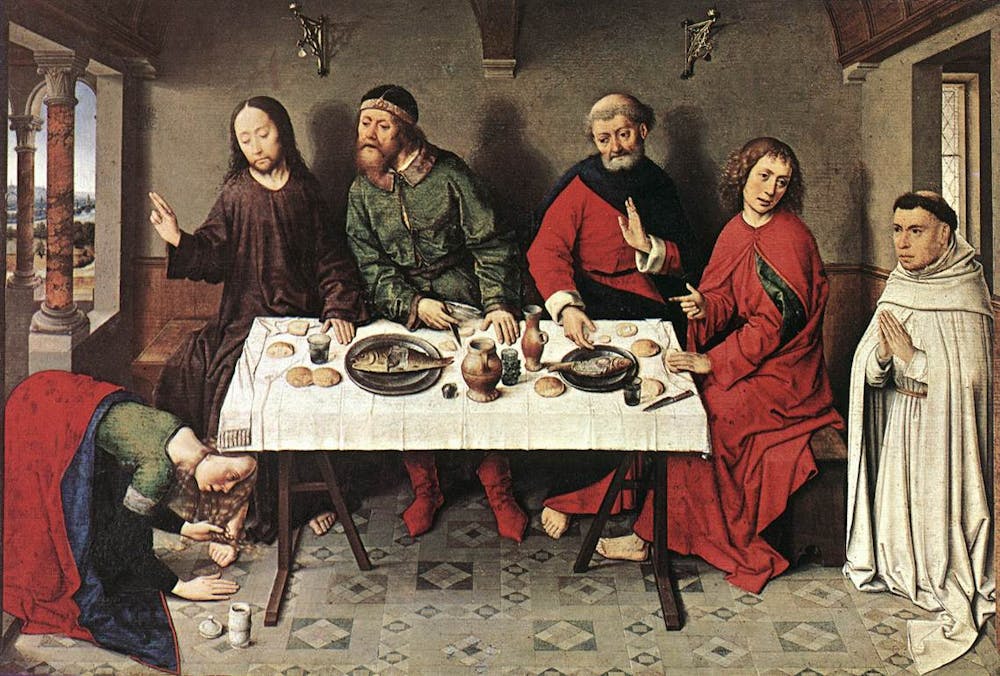
Mary Magdalene anoints Christ’s feet in Dieric Bouts’ Christ in the House of Simon (circa 1420–1475). Wikimedia Commons
In Luke, there is an earlier mention of Magdalene in Jesus’s ministry where she is present, along with other women, as a disciple and supporter of Jesus (Luke 8:1-3). She is described as having had seven demons cast from her. This description might lead to the conclusion, in some minds, that the many “demons” refer to her unfettered sexuality.
But that would be erroneous. Exorcisms — the casting out of evil spirits — are common in the first three Gospels. Those suffering demonic possession are never described as sinful but rather are victims of external evil.
These days, we would associate their symptoms with physical maladies such as epilepsy or mental illness. Magdalene, in other words, has been the victim of a serious illness and Jesus has healed her.
Furthermore, the description is unusual here in that she is not described in relation to a male figure, as other women at the time generally were: father, husband, brother. She is simply referred to as “the Magdalene”, that is, the woman from Magdala, a Jewish village in Galilee.
We might well assume, from Luke’s description, that she is an independent woman of some means, who is well able to fund, as well as participate in, the movement around Jesus.
Her most significant role
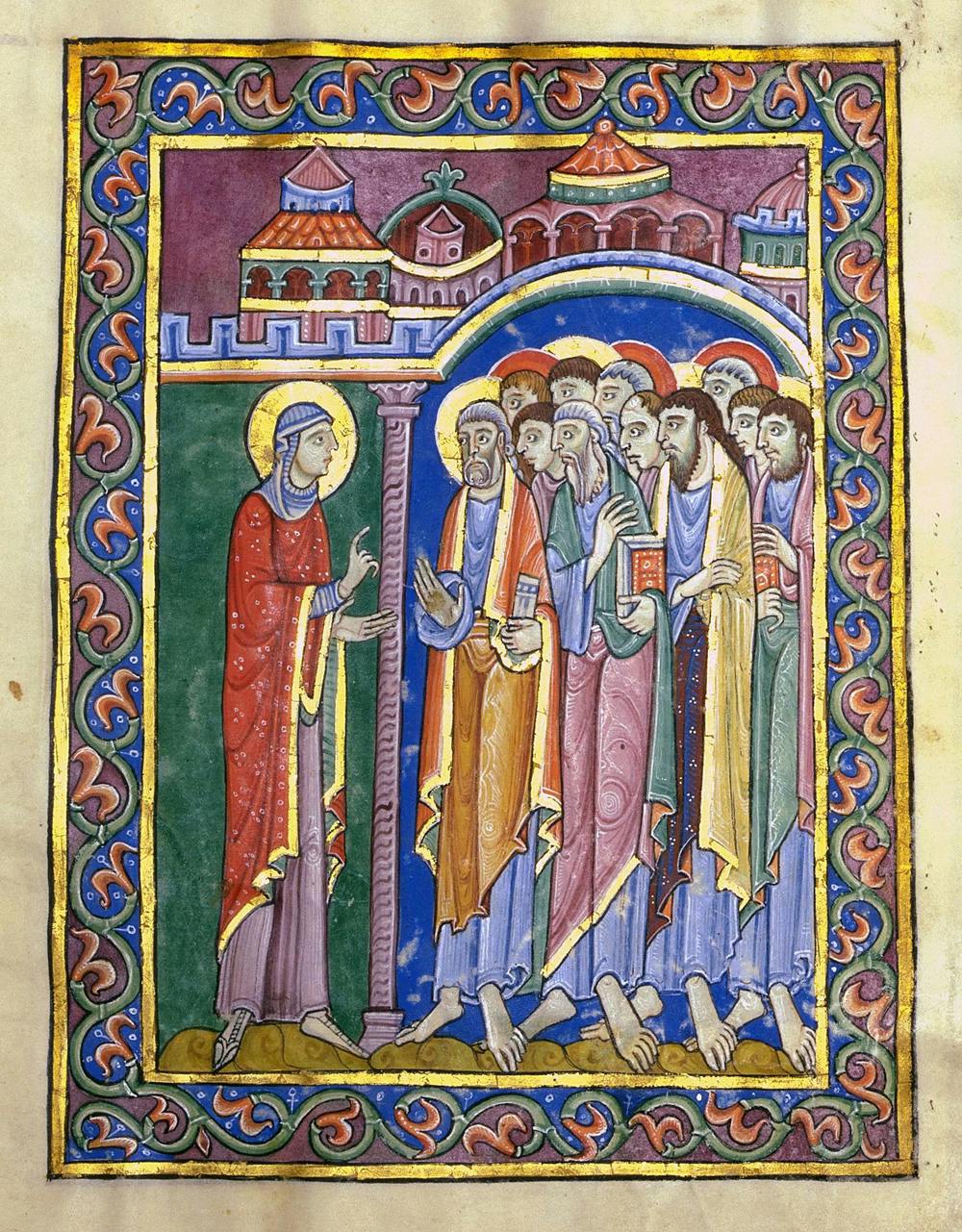
John’s Gospel, however, gives Magdalene her most significant role. Once again, she does not appear until the crucifixion. In the narrative that follows, she comes alone to the tomb on Easter morning, finds it empty, tries unsuccessfully to gain help from two other prominent disciples, and eventually meets the risen Christ himself in the garden (20:1-18). He is alive and commissions her to proclaim the message of his resurrection.
On the basis of John’s story, later tradition gave Magdalene the title of “apostle to the apostles” and recognised something of her significance for Christian faith, witness and leadership. A tragic consequence is that her role as witness to the resurrection was later overshadowed by the apparently more alluring but inaccurate picture of her as the penitent whore.
A more accurate portrayal of Mary Magdalene announcing the risen Christ from the 12th-century English illuminated manuscript St Albans Psalter. Wikimedia Commons
The later Gospels, beyond the New Testament, also emphasise Magdalene’s importance as a disciple of Jesus and witness to the resurrection. The manuscript of the Gospel of Mary, which describes her discussions with the risen Christ, is unfortunately damaged and the central section is missing. In this and other similar Gospels, however, Magdalene is presented as the favoured disciple. This situation leads to some tension with the other disciples, who are jealous of her closeness to Jesus and the teaching she alone is given.
One Gospel speaks of Jesus kissing her, but the imagery in the Gospel of Philip is metaphorical and refers to a spiritual union with Christ. In response to the objection by the other disciples, Jesus asks why he does not kiss them in the same way, implying that they do not as yet possess the same degree of spiritual knowledge.
No evidence of Magdalene anointing Jesus
There is no evidence, incidentally, that Magdalene ever anointed Jesus.
There are three anointing traditions in the Gospels. In one, an unnamed woman anoints Jesus’s head in prophetic recognition of his identity (Gospels of Mark & Matthew). In another, a named and known disciple, Mary of Bethany, who is a model disciple, anoints Jesus’s feet in gratitude for his raising her brother Lazarus from the dead (Gospel of John). In the third, a “sinful woman”, who is not explicitly identified as a prostitute, anoints Jesus’s feet in a gesture of repentance, gratitude and hospitality. None of these three figures is associated in any way with Mary Magdalene in the texts.
The movie Mary Magdalene, directed by Garth Davis, is a significant portrayal of this early Christian figure in the light of evidence from the earliest texts. The screenwriters, Helen Edmundson and Philippa Goslett, are quite clear that Mary is not to be associated with Jesus through her sexuality, either as harlot or wife. On the contrary, she is depicted as a faithful and deeply insightful disciple of Jesus, on whom he draws for his message of love, mercy and forgiveness.
Magdalene is beautifully portrayed in the movie, which draws on traditions from the earlier and later Gospels. She possesses an intense and compelling presence, which does much to restore her character from its later distortions.
It is true that the film makes somewhat erratic use of the New Testament, both in its presentation of Magdalene and of other characters in the story. Towards the end, for example, there is an implication that Magdalene and the church stand on opposite sides, the one in sympathy with Jesus’s teaching and the other anxious to build a self-glorifying edifice on his assumed identity.
This is unfortunate, as the New Testament itself is quite clear about the priority and identity of Magdalene as a key disciple, witness and leader in the early church, without seeing her in opposition to others.
Indeed, those who campaigned in a number of Christian churches for the ordination of women in the 20th century used precisely the example of Mary Magdalene from the New Testament as “apostle to the apostles” to support their case for women’s equality and leadership.
The recent installation of Kay Goldsworthy as Archbishop of the Anglican Diocese of Perth — the first woman in this country and across the world to be given this title — is the true heir of Magdalene as she is portrayed in the earliest Christian writings.
The film Mary Magdalene opens in Australian cinemas on March 22.
Moving Picture Institute announces first annual Liberty in Film Awards
February 19, 2013 4:06 PM MST
Speaking at the Heritage Foundation in Washington on February 19, Adam Guillette of the Moving Picture Institute announced the winners of the first annual Liberty in Film Awards, timed to coincide with the awarding of the Oscars in Hollywood on February 24.
Best explanation of what makes charity possible: The Dark Knight Rises. When Bruce Wayne asks Alfred why the Wayne Family Foundation is no longer contributing to the boys’ home, Alfred explains that contributions are made possible by the profits of their company. ”No profits, no charity.”
Best adaptation of an impossible-to-adapt book: Atlas Shrugged: Part II. The rare sequel that improves upon its predecessor, Atlas Shrugged: Part II does an incredible job of showing both the terrible destruction of big government and the incredible power of the individual.
Fan Favorite: The Hunger Games. MPI supporters demanded an award for this dystopian tale of an evil centralized government that forces its teenaged citizens to kill each other for sport.
Among the “negative” awards on the list:
Best performance as a publicist for Arab Oil: Matt Damon in Promised Land. Damon’s anti-fracking film was funded by the government of Abu Dhabi.
Best propaganda piece for toddlers: The Lorax. The writers of this film turned Dr. Suess’ story about conservation into blatant anti-capitalist propaganda aimed at children.
In an interview with the Charlottesville Libertarian Examiner after his presentation, Guillette explained that the mission of the Moving Picture Institute is “to promote freedom through film.”
The organization does that, he said, “by supporting films and filmmakers that can make a significant impact, either change laws or change the culture to promote freedom-oriented ideas.”
'Different approach'
The Moving Picture Institute's “strategy is an entirely different approach than An American Carol,” for instance, a Kelsey Grammer-Jon Voight vehicle from 2008 that tried to portray conservative values through a lighthearted comedy/satire.
“What we do” instead, he explained, is to “support rising filmmakers rather than [make] the massive gamble of an expensive film.”
The institute supports young directors and screenwriters by helping them “make short films to pitch their talent to the major studios in Hollywood, which helps get them development deals and representation” to make more movies commercially.
“At the same time,” Guillette continued, “their films made for these purposes end up going viral on line or end up in classrooms being viewed by hundreds of thousands of students.”
Incentives
Whether the Liberty in Film Awards have an impact on thinking in Hollywood relies on old-fashioned incentives, he said.
“Like anything else,” Guillette explained, “you've got to reward good behavior and point out bad behavior. This is an excellent opportunity to point out some of the bad behavior in Hollywood but reward those doing an excellent job promoting freedom.”
To learn about the films produced by or supported by the Moving Picture Institute, Guillette pointed to the organization's web site.
“The easiest way is to go to movingpictureinstitute.org. We have all of our films listed and you can instantly click through to NetFlix, Amazon, or anywhere that film is available. It compiles all of them at one place.”
Publisher's note:This article was originally published on Examiner.com on February 19, 2013. The Examiner.com publishing platform was discontinued July 1, 2016, and its web site went dark on or about July 10, 2016. I am republishing this piece in an effort to preserve it and all my other contributions to Examiner.com since April 6, 2010. It is reposted here without most of the internal links that were in the original.
This article appeared in various newspapers, including The Metro Herald, in January 1996:
Wrestling with the "Naked Truth" About Religion on TV
Richard E. Sincere, Jr.
By most accounts, modern entertainment media seldom -- if ever -- treat religious belief and practice with the seriousness and respect they deserve. Gone are the days when religious commitment was portrayed in a positive light. Unlike the 1940s, when movies such as Going My Way and The Song of Bernadette won both crowds and awards, the 1990s are strangely bereft of authentic portrayals of religious life.
There have, indeed, been some attempts to use religious life as the basis for TV series. Remember The Flying Nun? The Father Dowling Mysteries featured a priest and a nun as crimesolvers -- a gimmick to dress up a ho-hum detective story in clerical garb. Amen, starring a post-Jeffersons Sherman Hemsley, was set in an urban, vaguely Baptist church. None of these, however, dealt with religious belief in a sustained, serious manner. Religion was simply a frame in which to project otherwise unexceptionable storylines.
Although Americans are about the most religious people in the world, those who produce and write television programs tend to be among the "non-believers." These media elite live the lives Thomas Carlyle had in mind when he suggested that "if Jesus Christ were to come today, people would not even crucify him. They would ask him to dinner, and hear what he had to say, and make fun of it."
Thus it was with some surprise that the January 10 episode of The Naked Truth, an ABC-TV sitcom, focused respectfully on religious belief.
For those unfamiliar with this series, its main character, Nora, is a professional photographer who, through bad luck and poor personal choices, has been forced to take a job with a supermarket tabloid, The Comet, which makes The National Enquirer look like The Wall Street Journal. Once nominated for a Pulitzer Prize, Nora has descended to the depths of taking snapshots of buxom model Anna Nicole Smith at her gynecologist's office, and of Tom Hanks with his hand stuck down the fly of his trousers.
On January 10, The Naked Truth found Nora improbably dating a young man who spent the past five years on Zarkon-B, a planet 7,000 light-years from Earth. (He was, it seems, abducted by aliens.) At the same time, trying to track down Drew Barrymore for a Comet story, Nora disguises herself as a nun and runs into an old college friend -- once known as "Luscious" -- who is now Sister Katherine.
Nora, who in each episode frantically defends herself against the slings and arrows of daily life, is impressed by Sister Katherine's serenity and inner peace. ("Why did you become a nun?" Nora asks. Replies Sister Katherine: "Somehow being a drunken slut was strangely unfulfilling.")
When all the world seems to be against her, Nora takes her troubles to a drinking buddy, who makes Nora confront her own lack of belief. She plaintively asks why Sister Katherine can be so serene, while her own life is consumed by one trouble after another. Nora's friend suggests that Sister Katherine has found the love of God to guide her. Nora responds by saying she can't buy into that God business. "I haven't prayed since I was in grade school," she says.
Her friend gets right to the point. You can believe that your boyfriend was abducted by aliens and came to Earth from another planet, he says, but you can't believe there's a superior being who loves us? "What made you too cool for God?" he asks.
Nora returns to the convent to tell Sister Katherine that she, too, would like to become a nun. Sister Katherine, appropriately skeptical, suggests that Nora feels a great thirst and wants "to drink the ocean." Perhaps it would be better, the sister says, to start with "one glass of water." Departing for vespers, Sister Katherine invites Nora to wait an hour for her return. "What will I do for an hour?" Nora asks. "You'll think of something," says Sister Katherine.
Indeed she does. The scene closes with Nora kneeling in a pew, facing the altar, saying out loud: "Hello, God, this is Nora. Long time no see."
This summary does little justice to this tightly-packed, amusing half-hour. The writers are to be commended for their ability to deal with serious philosophical issues in a light-hearted, yet respectful, manner. Sister Katherine shows that, even in a convent, she and the other nuns are part of this world, not some other ethereal one. Nora displays her heartfelt need to seek something beyond herself, something that can guide her decisionmaking. Not yet sure of what she needs, she approaches Sister Katherine for assistance.
All this, despite the humor, is done without mockery. What shocks is not the placement of religious topics in a situation comedy -- this has been done before (Buddy Sorrell's bar mitzvah on The Dick Van Dyke Show, or the presence of Father Mulcahy on M*A*S*H). What is startling is the respectful treatment, something one simply does not expect in the 1990s. The message is clear: Faith in God is something worth seeking; religious faith can help us define our identities and guide our actions.
If this episode of The Naked Truth is idiosyncratic, it means that the Hollywood elite are just as hostile toward -- or indifferent to -- the religious commitment of the vast majority of Americans as they have been over the past 40 years. If, however, it is not unique, we have reason to remain hopeful.
* * * * * * * * * * Richard Sincere is entertainment editor of The Metro Herald, a weekly newspaper based in Alexandria, Virginia.
"One of the smarter blogs is the libertarian-leaning collection of Charlottesville posts put up by Rick Sincere..." -- Bob Gibson, The Daily Progress, May 8, 2005


 The following week drew on interviews with authors I met at the Virginia Festival of the Book in Charlottesville ("
 Last week's show ("
 The question of how we know about her is a relatively simple one. She appears in a number of early Christian texts associated with the ministry of Jesus.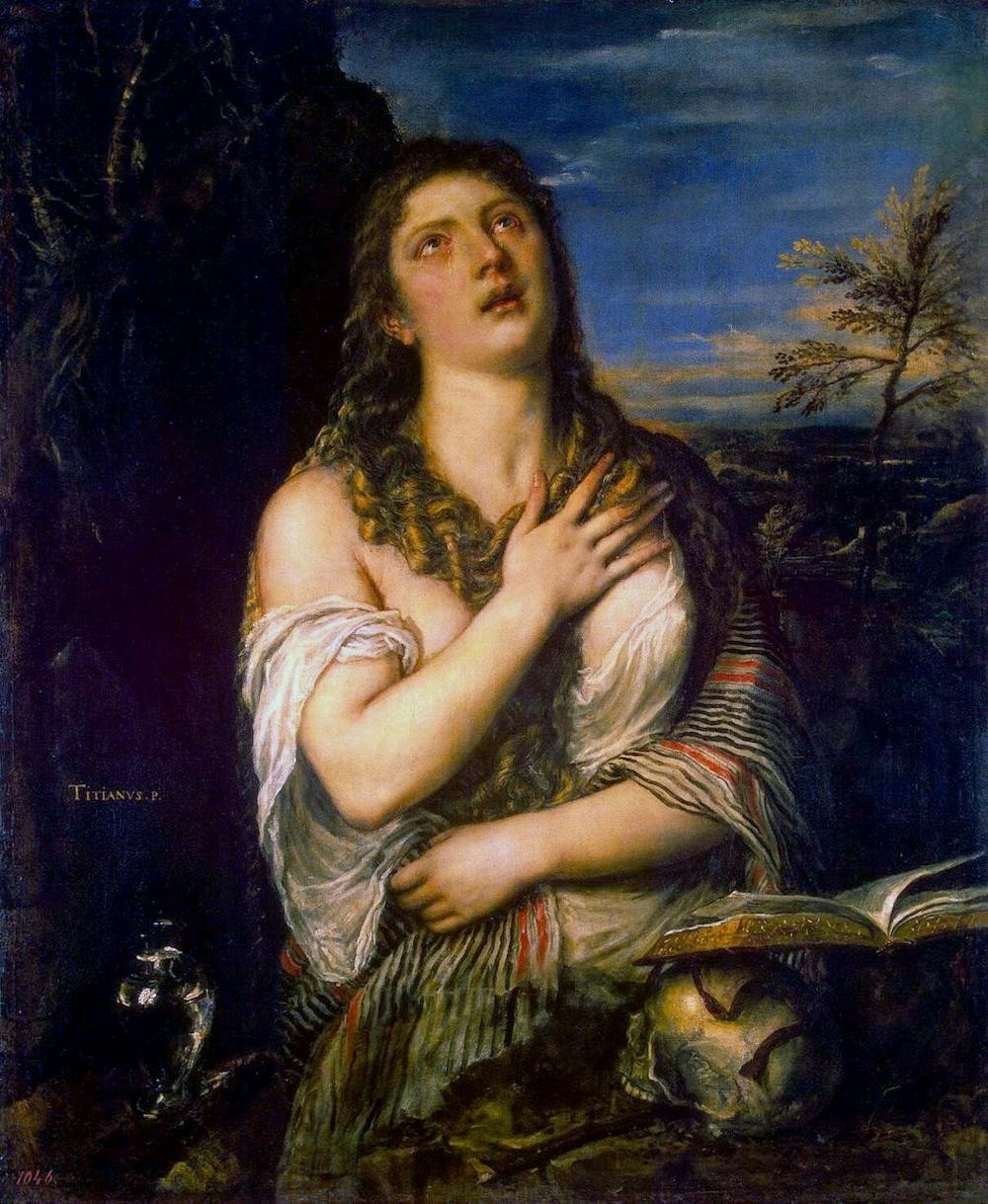
 The film Mary Magdalene opens in Australian cinemas on March 22.

 Thus it was with some surprise that the
 This summary does little justice to this tightly-packed, amusing half-hour. The writers are to be commended for their ability to deal with serious philosophical issues in a light-hearted, yet respectful, manner. Sister Katherine shows that, even in a convent, she and the other nuns are part of this world, not some other ethereal one. Nora displays her heartfelt need to seek something beyond herself, something that can guide her decisionmaking. Not yet sure of what she needs, she approaches Sister Katherine for assistance.

