Showing posts with label 1960s. Show all posts

Sunday, November 18, 2018

From the Archives: Filmmaker Stanley Nelson on ‘Freedom Riders,’ the news media, and civil rights

Filmmaker Stanley Nelson on ‘Freedom Riders,’ the news media, and civil rights
November 18, 2010 1:11 PM MST

"What the civil rights movement did,” reflected documentary filmmaker Stanley Nelson, was to force people “to make a choice. You couldn’t ignore it anymore. It was stuff that was on the front page, it was in your face, you had to choose: which way are you going?”

Nelson, whose new film, Freedom Riders, was screened at the Virginia Film Festival in Charlottesville on November 5, made his comments in a panel discussion following the screening.

Other participants in the discussion were civil-rights activists Dion Diamond, Reginald Green, and Joan Mulholland, who were among the original “freedom riders” of 1961. The panel was moderated by Larry Sabato of the UVA Center for Politics.

Effective engagement of the news media

In response to a question from Sabato, Nelson pointed out how the civil rights movement’s strategy of engaging the news media was slow in emerging but eventually “incredibly effective.”

American Experience Freedom Riders Stanley NelsonDuring the 1961 freedom rides, he said, “the media’s role really changed.”

When the freedom rides started in May of that year, “there was no media coverage except the black press,” such as the Washington/Baltimore Afro-American and Johnson Publications (Ebony and Jet), which each had a “representative on the ride.”

The rest of the news media, however, “totally ignored the rides and there was no media coverage at all,” Nelson said, which caused difficulty for him and his team of filmmakers, because there was a dearth of archival material from the early part of the freedom ride phenomenon.

What changed “by the end of the freedom rides,” he explained, was that there were “400 people coming in [and] that was a huge news story, so you had the nightly news and you have all the print journalists and camera people there.”

By mid-summer, the news media was reacting to the civil rights movement’s strategy “to hold the front page” for at least five days at a time, to keep people’s attention on the issue so that it became “impossible to ignore.”

Making a choice

In researching the freedom rides, Nelson explained, “one of the fascinating things that we found making the film was that” in the Deep South (Alabama, Georgia, Mississippi), “there was a very small percentage of people of white people who supported integration -- a tiny percentage [of] 1, 2, 3 percent.”

At the other extreme,he said, “there was another small percentage of people who were violent racists, maybe 10 [or] 15 percent.”

That meant, he explained, that “the rest of the people, 80-85 percent, just were able to kind of go on, and ignore what was going on” – hence his remark that the civil rights movement, in general, and the freedom rides, in particular, forced people to make a choice about which way to go.

How ‘Freedom Riders’ became a film

After the panel ended, Nelson told the Charlottesville Libertarian Examiner that the Freedom Riders project came to him while he “was working on a film for American Experience called Wounded Knee.”

Stanley Nelson Virginia Film Festival civil rights movement
The producers “called and said that they had purchased this book, Freedom Riders by Ray Arsenault, and would I take a look at it [because] they’re thinking of making it into a film.”

Nelson “said yes without even getting the book,” because he “knew a little bit about the story and realized it would be great, so that’s how that happened.”

Making the film took about 18 months from start to finish, Nelson explained. It will be broadcast on PBS as part of the American Experience series in May 2011, “which is the 50th anniversary of the freedom rides.”

Currently, Nelson is showing Freedom Riders at film festivals and also at schools, including a screening at Charlottesville High School earlier this month. In addition, some college students will be recreating the freedom rides next year as part of a fiftieth anniversary commemoration that will also promote the film.


Publisher's note: This article was originally published on Examiner.com on November 18, 2010. The Examiner.com publishing platform was discontinued July 1, 2016, and its web site went dark on or about July 10, 2016.  I am republishing this piece in an effort to preserve it and all my other contributions to Examiner.com since April 6, 2010. It is reposted here without most of the internal links that were in the original.


Tuesday, June 05, 2018

Remembering Bobby Kennedy's Death 50 Years Later

Barbara Perry RFK Robert Kennedy
Barbara Perry
Last Saturday's episode of The Score on Bearing Drift featured an interview with Barbara Perry, director of presidential studies at the Miller Center of Public Affairs at the University of Virginia.  I spoke to Dr. Perry about the fiftieth anniversary of the assassination of Senator Robert F. Kennedy (D-New York) as he was campaigning in California for his party's presidential nomination.

Kennedy was shot by Sirhan Sirhan on June 5 (although, as Dr. Perry acknowledges but dismisses in our interview, there is some dispute over whether Sirhan's gun killed RFK or if there was a second gunman) and died on June 6, 1968.  Coincidentally, California Governor Ronald Reagan, who also sought his party's presidential nomination that year, although briefly, died on June 5, 2004, and June 6 is the anniversary of the D-Day invasion of Normandy during World War II.

My interview with Barbara Perry can be heard at about the 26-minute mark of The Score for June 2, 2018, on Bearing Drift.  Here's an excerpt from the program notes for that episode.

This coming week, on June 6, Americans will mark the fiftieth anniversary of the death of Robert F. Kennedy, who was gunned down during a tumultuous year that also saw the murder of Martin Luther King Junior, riots at the Democratic Convention in Chicago, and a turning point in public opposition to the war in Vietnam. I spoke by telephone to presidential scholar Barbara Perry of the Miller Center for Public Affairs at the University of Virginia about the significance of Kennedy’s death fifty years ago. (The Score also featured Dr. Perry a few weeks ago, when she talked about the late Barbara Bush and the role of First Ladies.) Those of you old enough to remember RFK's funeral will no doubt still recall the haunting version of "The Battle Hymn of the Republic" sung at St. Patrick's Cathedral by the pop star and Kennedy family friend, Andy Williams. It's not on the podcast but seemed appropriate to embed here.


Monday, February 05, 2018

From the Archives: 2013 Charlottesville voters may have historic election for constitutional posts

2013 Charlottesville voters may have historic election for constitutional posts
February 5, 2013 2:06 PM MST

What was so special about 1969?

A recent announcement by Lee Richards that he is retiring as Charlottesville's Commissioner of the Revenue after 20 years in that office raises the possibility that there could be a contested election for that job for the first time in many years.

Charlottesville election 1969 sample ballot Daily Progress
Forty-four years, as it happens.

The first and last time that all five constitutional offices in Charlottesville were contested was 1969, which was also the first time that Virginia voters elected a Republican as governor (Linwood Holton).

It appears that Charlottesville Republicans were unusually well-organized in 1969, since the local party was able to recruit challengers for Commonwealth's Attorney, City Treasurer, Commissioner of the Revenue, City Sergeant (apparently the equivalent of today's Sheriff), and Clerk of the Corporation Court (apparently the equivalent of today's Clerk of the Circuit Court).

According to a front-page note in the Daily Progress of November 6, 1969, “Charlottesville, in a Democratic surge in contrast to its neighbor counties, re-elect[ed] all five constitutional officers over their first GOP challenge.”

Pensioners
There is no voter in Charlottesville younger than 65 years of age who has ever faced a general-election choice for Commissioner of Revenue or Treasurer.

Charlottesville election 2013 constitutional officers
As previously reported by the Charlottesville Libertarian Examiner, an April 2 special election for City Treasurer will be the first contest for that office since November 1969. In that case, independent candidate John Pfaltz is challenging incumbent Democrat Jason Vandever, who succeeded Jennifer J. Brown after she retired for health reasons in October 2012. Brown was first elected on the same ticket as Lee Richards in 1993 and, like Richards, never faced a general-election opponent.

Richards succeeded Ora Maupin, a 17-year incumbent in 1969, retired after the 1993 election with a total of 38 years in office. Maupin had run unopposed in 1965 and in each subsequent election from 1973 through 1989. (A search through city election records found that those from before 1965 are incomplete.)

Maupin's 1969 Republican challenger was Charlotte Frame, described by the Daily Progress as a “teacher of exercise and crafts for the Charlottesville Department of Recreation.”

Two potential candidates have indicated their interest in seeking he Democratic party's nomination for Commissioner of Revenue in the June 11 party primary, Jonathan Stevens and Todd Divers, although neither has filed official candidacy papers. No Republican or independent candidates for the post have so far emerged.

The filing deadline for Democratic primary candidates is 5:00 p.m. on March 28; other candidates have until 7:00 p.m. of primary day, June 11, to get their names on the general election ballot.


Publisher's note: This article was originally published on Examiner.com on February 5, 2013. The Examiner.com publishing platform was discontinued July 1, 2016, and its web site went dark on or about July 10, 2016.  I am republishing this piece in an effort to preserve it and all my other contributions to Examiner.com since April 6, 2010. It is reposted here without most of the internal links that were in the original.
Tuesday, December 26, 2017

Guest Post: 'Magical Mystery Tour' paved the way for Monty Python


Adam Behr, Newcastle University

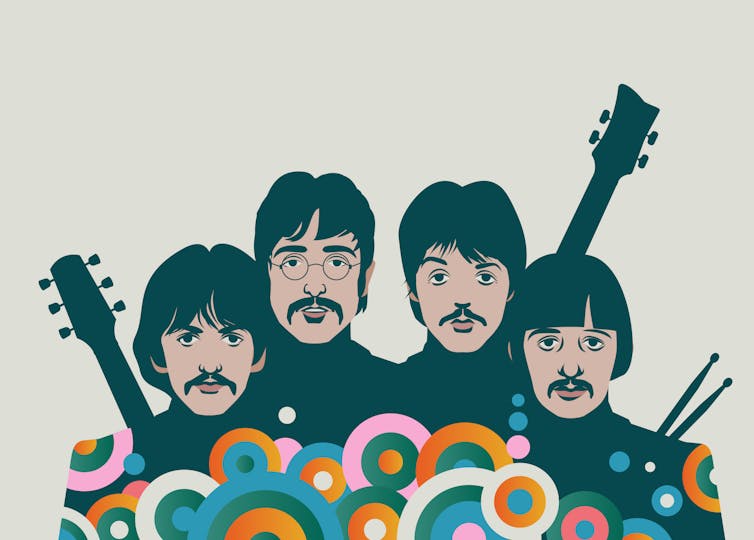
The 50th anniversary of Sergeant Pepper’s Lonely Hearts Club Band was much celebrated in 2017. But this Christmas also marks 50 years since the release of another Beatles production that received much less critical acclaim – the Magical Mystery Tour film.

Much of the music within it was produced during a particularly fecund period (even by the Beatles’ standards) and is, or course, peerless – from the music hall echoes of Your Mother Should Know through the plaintive, melodic Fool on the Hill to the boundary breaking I Am the Walrus.


Beatles Magical Mystery Tour fiftieth anniversary


Shutterstock/Anita Ponne


Unfortunately the film itself fell far short of that artistic bar. First broadcast on Boxing Day 1967, it is, to put it mildly, seriously flawed. Incoherent, sexist, technically shaky and verging on boring, history hasn’t been kind to its cinematic qualities.

Contemporary reviews and audience responses were also so generally scathing that Paul McCartney was moved to issue an apology of sorts to the television broadcast’s 20m viewers. He said in a hastily convened interview:

We don’t say it was a good film. It was our first attempt. If we goofed, then we goofed. It was a challenge and it didn’t come off. We’ll know better next time.


Matters weren’t helped by the Beatles’ psychedelic, colourful exploration being broadcast in black and white on BBC1. A repeat on BBC2 (then the only colour TV service) a few days later did little to redress the situation, if only because there were fewer than 200,000 colour sets in the UK at the time.

Pushing institutional boundaries


For all the defensiveness of McCartney’s response (“You could hardly call the Queen’s speech a gasser”) they do point towards some retrospectively mitigating aspects of the Magical Mystery Tour film.

The film’s distinctly British surrealism and cavalcade of barking sergeant majors, fat aunts, dolly birds, wacky racers and midgets clearly prefigured Monty Python’s explosion of absurdity into mainstream television.

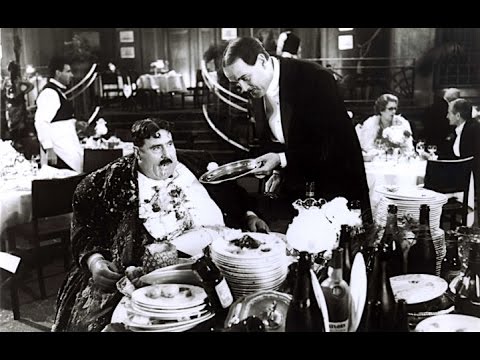
Indeed, George Harrison said later on that he saw Monty Python as a continuation of the spirit of the Beatles. He also funded some of their films, including The Meaning of Life – whose notorious Mr Creosote sketch has visual echoes of a scene in Magical Mystery Tour where John Lennon, dressed as a waiter, serves pasta to Ringo’s fictional Aunt Jessie by the spade full.

What the Pythons added to the mix were sharply honed scripts. Magical Mystery Tour, by contrast, was almost entirely ad-libbed from a one-page diagram. The Beatles’ skill as writers and arrangers was poured into their music instead.

Something else the Pythons had, and which the Beatles lacked, was the benefit of Oxbridge educations. Magical Mystery Tour’s sensibility was more rooted in working class entertainment and tropes than the Pythons’ Oxbridge-infused references.

The very concept of a coach journey – albeit one largely filmed at a decommissioned RAF base – was based on the “charabanc” trips (group bus excursions) of the band members’ childhoods.

The film evokes the past – both a British past in general and, more specifically, as filtered through the Beatles’ own histories. It certainly shows them pushing the boundaries of what a rock band of four Liverpudlians (whose post-school education essentially took place in the nightclubs of Hamburg) could attempt, both artistically and institutionally. Their commercial and creative clout allowed them to broadcast the film during a key annual peak slot for British television viewing.

Prime time


Magical Mystery Tour occupied a particular space in the history of mass entertainment – from the “end of the pier” shows, through the Donald McGill postcards that George Orwell defended against artistic snobbery, to the anarchic weirdness of the likes of Mr Blobby on Saturday night TV.

The Beatles infused that particular strand of entertainment with the forward looking experimentalism of their music, while retaining a characteristic, widely recognisable Britishness. It was this that paved the road for Python and others to follow.

That Magical Mystery Tour was their first real failure since breaking through into the mainstream was also partly a matter of practicalities. While still flowering creatively, they were logistically rudderless after the death earlier that year of their manager Brian Epstein.


Their lack of understanding of the demands of editing a film foreshadowed their later business-related shortcomings, notably the Apple boutique and record label. If the latter of these was revived to become the familiar Beatles brand of today, it was initially a costly failure that contributed to the band’s demise.

But while the film may have overreached, it still demonstrates a clear broadening of mainstream creative boundaries. Popular music fans were certainly receptive to their successful experiments. And even if the broader television public was less ready for a caustic, psychedelic vision of Britain in prime time during the Christmas holidays, Magical Mystery Tour still stands as a useful cultural document.

The ConversationThe Beatles being what they ultimately became, there’s much to be gleaned from their falls as well as their flights.

Adam Behr, Lecturer in Popular and Contemporary Music, Newcastle University

La version originale de cet article a été publiée sur The Conversation.

Sunday, December 24, 2017

Guest Post: 'A Charlie Brown Christmas' and the Triumph of Common Sense

by Annie Holmquist

December 9th marks the anniversary of the Christmas TV special which basically birthed all others: “A Charlie Brown Christmas.”

A Charlie Brown ChristmasMost Americans know the plot well. The despondent Charlie Brown who just can’t work up his Christmas cheer amidst crass commercialism. The confident and obnoxious Lucy, who finds the allegedly perfect solution to Charlie Brown’s gloom. The ill-fated Christmas pageant, which confirms Charlie Brown’s status as a loser. And finally, the rebirth of Christmas cheer that comes through Linus’ recitation of the original Christmas story.

But while the basic story is a charming tale with which many of us can empathize, I find the backstory of “A Charlie Brown Christmas” almost more so.

The Backstory 
For those unfamiliar with the tale, “A Charlie Brown Christmas” went from conception to classic in a manner of months, something that simply doesn’t happen in the world of television production.

But what few people know is that before the special aired on television, Peanuts creator Charles Schulz and his crew believed their Christmas special was following in the footsteps of Charlie Brown himself and was doomed to be a failure.

Just like in Charlie Brown’s Christmas story, those who had commissioned Schulz and his crew to do the show were quick to pile on and express their disappointment with the television product. Mark Evanier, an animator and historian, explains this disappointment in “A Christmas Miracle: The Making of a Charlie Brown Christmas”:

The networks were against it. It went against the conventional thinking at the time of what a children’s special – a Christmas special – had to be.”
Fred Silverman, a CBS executive at the time explains:
There was (sic) specific, negative comments about the music, you know, the piano music. Some of the voicing, which sounded kind of amateurish – and indeed it was amateurish because a lot of them were kid actors. But it was a commitment and the film was made.”
Producer Lee Mendelson continues the story:
They said, ‘Well, it’s on the TV Guide logs, we’ve got to put it on the air, but nice try, you know, we’ll put it on once and that will be it.’ So we figured it was over and it was done.”

A Timeless Classic
But as we now know, Schulz, his crew, and the executives from CBS were dead wrong. The program became an overnight hit, pulling in almost half of the TV ratings for the evening. The show went on to win both an Emmy and a Peabody award and has been broadcast every Christmas since that memorable one in 1965.


The reason I find the backstory behind “A Charlie Brown Christmas” so fascinating is because of how it highlights the great disconnect between the ordinary, average American and those in life who pull the strings.

Charles Schulz is the epitome of the average American. He had a simple, common sense, yet often forgotten message to tell in “A Charlie Brown Christmas.” He insisted on sticking with that message and that simplistic style, even when it looked like it wouldn’t get off the ground. In other words, he was a man who stuck to his principles and wouldn’t compromise them even when they might land him in hot water.

The bigwigs at CBS, however, thought they knew better, and if time hadn’t constrained them, they likely would have attempted to rewrite Schulz’s simple, common sense production for something flashy and more politically correct. They were, in a sense, the precursor of today's marketing elites, who all seem to know what is best for middle America to digest and swallow.

In the current culture of chaos, it’s easy to throw up our hands and give in to the demands of those who stand out and seemingly call the shots. But instead of giving in to political correctness, do we need to take a page from Charles Schulz’ book? In the end, will gentle persistence, common sense, and faithful adherence to solid principles be the pathway to success and fulfillment?


Annie Holmquist

Annie Holmquist is a research associate with Intellectual Takeout. In her role, she writes for the blog, conducts a variety of research for the organization's websites and social media pages, and assists with development projects. She particularly loves digging into the historical aspects of America's educational structure.

This article was originally published on FEE.org. Read the original article.


Wednesday, November 22, 2017

From the Archives: Witness to 1963 Kennedy assassination speaks at Virginia Film Festival

Witness to 1963 Kennedy assassination speaks at Virginia Film Festival
November 10, 2013 12:19 PM MST


Tina Towner Pender JFK assassination Virginia Film Festival
Tina Towner was the youngest person who photographed events at Dealey Plaza in Dallas, Texas, on November 22, 1963, as President John F. Kennedy's motorcade drove by. Seconds before the assassin's shots rang out, the 13-year-old's home movie camera ran out of film, but she captured the President and First Lady's car just as it turned the corner from Houston Street to Elm Street.

Now Tina Towner Pender, she spoke to the Charlottesville Libertarian Examiner at the Virginia Film Festival after a November 9 screening of a new documentary, The Kennedy Half-Century, co-produced by the Center for Politics at the University of Virginia. She had participated in a panel discussion along with UVA political scientist Larry Sabato and another witness to the Kennedy assassination, Wesley Buell Frazier, a co-worker of Lee Harvey Oswald at the Texas Book Depository.

The author of a 2012 book called Tina Towner: My Story as the Youngest Photographer at the Kennedy Assassination, Pender described what happened to the short piece of film she took that day in Dallas.

Was the film altered?

The raw footage, she explained during the panel discussion, was processed by local law enforcement authorities, who had put out a call for any movies or still photographs that may have been taken by onlookers but had not been developed yet. Her family did not receive the reel back for several weeks.

Asked whether they thought it might have been tampered with, Pender said, “Not at the time.”

They did notice something anomalous right away, however.

The assassination footage “was on the end of a reel of home movies so we knew we were going to have to watch the whole reel,” which included, she said, her “sister going off to college,” before they got to the newsworthy section.

“When we got there, it ran out and there was no assassination film,” she explained, “and for a few seconds we thought we didn't have it, that they didn't send it back to us.” It turned out that “it had been cut from the rest of the film and it was there” on the reel but “it was just not spliced on to the end.”

Mysterious splice

About a decade later, Pender and her father took the film to a lab to be examined at the request of some investigators.

“My dad didn't let it out of our hands, so I went with him” to Jack White's lab in Fort Worth, Texas, she said.

“There were about three or four people there looking at it while I was there and they turned to me and they said, 'Did you know that there's a splice in your film?'”

Startled by the question, Pender asked them what they meant.

A technician replied that “'there's a jump in the film and there's a splice,'” and showed it to her. Just at the point where the limousine is turning the corner, “you see a jump in the film.”

That was not a surprise to her in itself, because “we knew that was there but we just figured it was some sort of a blip in the processing” but it was actually “spliced together. You could see where it was spliced and it was not using materials my dad would have [used]. It was more professionally done and it was hard to see this splice when you looked at it.”

Pender conceded that she did not know “who did that and I don't know when it was done, either,” because the film had been in the possession of law enforcement in 1963, and Life magazine had borrowed it, along with 35mm slides her father had shot, for a feature in 1967.

Congressional inquiry

Later in the 1970s, Pender was questioned by investigators for the U.S. House Select Committee on Assassinations, which concluded that Kennedy's assassination was the result of a conspiracy and not the sole responsibility of Lee Harvey Oswald. She said her encounter with them seemed peremptory.

The meeting was “brief,” she explained.

“They called and said they wanted me to bring them the original film and the slides that my dad took,” but in the event the investigators came to her office, where she was working.

They questioned her “for about 15 or 20 minutes – maybe 30 -- but it didn't seem like that long. The questions were not very deep or probing. It almost was like they just wanted to get it done with and take the film and leave.”

Neither Pender nor any member of her family who witnessed the assassination was called to testify before the Warren Commission, which was established by President Lyndon B. Johnson to investigate the killing of John F. Kennedy.


Publisher's note: This article was originally published on Examiner.com on November 10, 2013. The Examiner.com publishing platform was discontinued July 1, 2016, and its web site went dark on or about July 10, 2016.  I am republishing this piece in an effort to preserve it and all my other contributions to Examiner.com since April 6, 2010. It is reposted here without most of the internal links that were in the original.


From the Archives: Lee Harvey Oswald colleague recalls aftermath of Kennedy assassination

Lee Harvey Oswald colleague recalls aftermath of Kennedy assassination
November 9, 2013 9:34 PM MST


Wesley Buell Frazier drove Lee Harvey Oswald to work at the Texas Book Depository on the morning of November 22, 1963. That was a day that changed his life, he said in an interview at the 2013 Virginia Film Festival on November 9. “That young boy who went to work that day, he has never come home.”

Frazier spoke to the Charlottesville Libertarian Examiner after a screening of a new documentary, The Kennedy Half-Century, co-produced by the Center for Politics at the University of Virginia. He had participated in a panel discussion along with UVA political scientist Larry Sabato and another witness to the Kennedy assassination, Tina Towner Pender.

Just 19 years old in November 1963, Frazier had to endure a brutal interrogation by the Dallas police, who accused him of being part of the assassination plot.

'Innocent until proven guilty'

The police interrogator, he said, “wanted me to admit to being part of the assassination and I told the guy, 'I'm not doing that.' I said, 'That's ridiculous.'”

JFK assassination Wesley Buell Frazier Lee Harvey Oswald
He added: “In this country, you're supposed to be innocent until proven guilty but a lot of times you're guilty until proven innocent and our forefathers didn't intend for our country to be like that.”

During the panel discussion, Frazier explained that he had often driven Oswald from suburban Dallas to the book depository. Oswald's Russian-born wife, Marina, lived near Frazier's sister, while Oswald rented a room in the city. Normally, they carpooled only on Friday evenings and Monday mornings, and Frazier had pointed out to Oswald how it was odd he would need a ride on Friday morning.

That Friday turned out to be “a day like I've never seen before. I hope I never see one [like it] again,” Frazier said.

“It's a day that changed my life. I've never been the same. That young boy who went to work that day, he has never come home. For many years I wouldn't talk to anybody about any of it because I was so scared about what they might do to my family. There's some evil people in this country and when it comes to power and money they will do anything.”

The police interrogator handed Frazier a pre-typed confession and told him to sign it.

“I started reading it,” he explained. “It said I knew about and was part of the assassination, and I said, 'That's totally false. I'm not going to sign that.'”

Police brutality

That response made the police officer angry, Frazier recalled.

“When I wouldn't sign he drew back his hand to hit me. Matter of fact, he was standing just like you're standing there, and I put my arm up like this” – he raised his hand above his head – “to block, to keep him from striking me.”

The officer “got so mad when I told him, 'I'm not signing that,' and I told him, 'There's [another] policeman outside this door but before they get in here, you and I are going to have a hell of a fight. I'm going to get some good licks on you.'”

Reflecting on that moment, Frazier said, “For one time in my life, I think I scared the hell out of a man because I turned the tables on him – because that's what he did” as a matter of routine.

That policeman, he said, “badgered and beat on people to make them sign confessions and he found a kid who wasn't scared of him. I think it scared the hell out of him.”

Even though Frazier was “a young 19” at the time, that interrogating officer “didn't know what I had been through before I got there,” which heightened the tension in the room.


Publisher's note: This article was originally published on Examiner.com on November 9, 2013. The Examiner.com publishing platform was discontinued July 1, 2016, and its web site went dark on or about July 10, 2016.  I am republishing this piece in an effort to preserve it and all my other contributions to Examiner.com since April 6, 2010. It is reposted here without most of the internal links that were in the original.

Friday, September 08, 2017

From the Archives - Present at the creation: YAF co-founder Carol Dawson remembers the 1960 Sharon Conference

Present at the creation: YAF co-founder Carol Dawson remembers the 1960 Sharon Conference
September 8, 2010 11:52 PM MST

A noteworthy anniversary will be commemorated this Saturday, September 11.

Most people, of course, associate that date with the attacks on the World Trade Center and Pentagon in 2001. On that day 50 years ago, however, a group of young Americans came together to lay the foundation for a conservative revolution that transformed U.S. politics for the next two generations.

Sharon Statement YAF Carol Dawson Young Americans for Freedom 1960s conservative movement
On September 11, 1960, the Sharon Statement was issued. The Sharon Statement concisely listed the values and goals of the then-nascent conservative movement. Historian John A. Andrew says in his book, The Other Side of the Sixties, that it was “a short but definitive exposition of conservative principles that became their ideological compass.”

The Sharon Statement says, for instance, that “liberty is indivisible,” that “political freedom cannot long exist without economic freedom,” and that the “purpose of government is to protect those freedoms.”

An immediate result of the Sharon Conference (so named for its location at William F. Buckley’s home, Great Elm, in Sharon, Connecticut) was the founding of Young Americans for Freedom (YAF).

Present at the Creation
Earlier this year – on Thomas Jefferson’s birthday, by coincidence -- the Charlottesville Libertarian Examiner had an opportunity to speak with Carol G. Dawson, one of the participants at the Sharon Conference and a founder of Young Americans for Freedom.

Dawson, who now lives in Lancaster County on Virginia’s Northern Neck, described the atmosphere at the meeting as electrifying.

“My feelings at the time,” she explained, “were of being overwhelmed because the intellectual caliber of all those people was just astounding. I learned a lot. Of course, some of the giants like Bill Buckley and Brent Bozell and others who were there became more real to me,” because of her subsequent interactions with them.

The meeting also abated feelings of isolation of that era’s young conservatives, she said.

“There’s a lot to be said for finding out you are not alone,” she said. “You’re not alone, there are other people who are like you, who feel the way you do, who are motivated” to take action to advance their shared values.

Early Days
In the early days of YAF, Dawson said, “a lot of time was spent in spirited debate about the by-laws of the organization, what kind of board of directors it would have, and how we would re-elect board of directors or replace them.”

There were challenges, too.

“The early days were a bit rough,” Dawson remembered. “There were a lot of people who were thrown off the board and that sort of thing.”

Despite bumps in the road, “it led to some really close friendships, as well. I would have to say that the people I knew through that organization today rank as my closest friends other than family,” she noted, smiling, “So we must have been doing something right.”

The Sharon Statement, Dawson said, remains relevant half a century later.

“I think it clarifies,” she explained. “It clarifies the issues that are still important and always will be important. To bring in the title of [M. Stanton Evans’] book, ‘The Theme Is Freedom;’ that’s still what it’s all about.”

The Legacy
Four years after Sharon, its momentum launched Barry Goldwater’s campaign for President.

In 1971, disaffected YAFers founded the Libertarian Party. Other YAFers set up and ran think tanks and advocacy groups.

By 1980, the movement begotten at Sharon triumphed in the election of Ronald Reagan.

Five decades on, echoes of the Sharon Statement can be heard in the chants of the Tea Party and seen on the placards carried at events like next Sunday’s 9/12 Taxpayers March on Washington.

As Dawson said, “the theme is freedom” and that’s what it’s all about.


Publisher's note: This article was originally published on Examiner.com on September 8, 2010. The Examiner.com publishing platform was discontinued July 1, 2016, and its web site went dark on or about July 10, 2016.  I am republishing this piece in an effort to preserve it and all my other contributions to Examiner.com since April 6, 2010. It is reposted here without most of the internal links that were in the original.

Friday, June 02, 2017

Guest Post: A brief history of Polari: the curious after-life of the dead language for gay men


Paul Baker, Lancaster University

In early February, the Church of England College expressed regret that in an evening liturgy in Cambridge, God was referred to as the Duchess. The service had been advertised as a Polari evening prayer in anticipation of LGBT History Month, and was described as a liturgical experiment. So what was Polari and how did it end up in an evening prayer? The Conversation

Polari is a secret language, which has now largely fallen out of use, but was historically spoken by gay men and female impersonators. My research has tracked how it grew out of the world of entertainment, stretching back from West End theatres, through to 19th-century music halls and beyond that to travelling entertainers and market-stall holders.

It developed from an earlier form of language called Parlyaree which had roots in Italian and rudimentary forms of language used for communication by sailors around the Mediterranean. Also associated with travellers, buskers, beggars and prostitutes, it found its way into Britain, especially London and port cities, and gradually became used by gay men and female impersonators, especially during the first half of the 20th century.


Polari Bible gay language Britain

The Polari bible.
Joe Richardson, Author provided


Polari itself had Parlyaree as a base, but once in Britain was supplemented with a wealth of slang terminology from different sources, including Cockney Rhyming Slang, backslang (pronouncing a word as if it was spelt backwards), French, Yiddish and American airforce slang.

In a period when homosexuality was illegal and heavily stigmatised, it was useful as a means of conducting conversations in public spaces, which would have alerted others to your sexuality. Many of the words allowed speakers to gossip about mutual friends or to critique the appearance of people who were in the immediate vicinity.

Vada the naff strides on the omee ajax” meant look at the awful trousers on the man nearby. Inserting a Polari word – such as bona (good) or palone (woman) – into a sentence could act as a coded way of identifying other people who might be gay. The language itself, full of camp, irony, innuendo and sarcasm, also helped its speakers to form a resilient worldview in the face of arrest, blackmail and physical violence.

Polari speakers “christened” themselves with camp names like Scotch Flo or Diamond Lil, affording themselves alternative identities that reclaimed the representations of them as effeminate in positive ways.

Surplus to requirements


In the 1990s, I based my doctoral thesis around the study of Polari, examining its varied history and complicated etymology, the ways that it resembled a language, its social functions and the reasons for its eventual decline. I interviewed speakers of the language and analysed texts, including scripts of the 1960s comedy radio series Round the Horne, which had a regular sketch voiced by Kenneth Williams and Hugh Paddick, who played Polari-speaking actors.

The version of Polari that was used in Round the Horne was necessarily simplified and toned down for the British public, and by the 1960s, there was a feeling that Polari had already overstayed its welcome. Round the Horne spoiled the secret, rendering the language less attractive to its speakers. Meanwhile the decriminalisation of homosexuality in 1967 was round the corner, making it less necessary for a secret lingo in any case.


Some younger gay men were more interested in concepts like gay pride, gay liberation and coming out and viewed Polari as a naff byproduct of a more repressive time. In the 1970s, in an early gay magazine called Lunch, activists branded Polari as ghettoising and it gradually became surplus to requirements. When I carried out a survey of 800 gay men in the year 2000, about half the respondents had never heard of it.

Renewed interest


While few gay men today actively use Polari, in recent years it has gained a kind of latent respectability as an historic language – similar to the way Latin is seen by the Catholic faith. From a political standpoint, Polari is now recognised as historically important, an example of the perseverance of a reviled group of people who risked arrest and attack just for being true to who they were.

gay talk homosexual language slang In 2012 a group of Manchester-based artists used Polari to highlight the lack of LGBT inclusivity in education. They created an exam in LGBT studies, getting volunteers to sit it under strict exam conditions. The language portion of the exam was about Polari.

Another group of activists called the Sisters of Perpetual Indulgence created a Polari Bible, running a Polari wordlist through a computer program on an English version of the Bible. The Bible was bound in leather and displayed in a glass case at the John Rylands Library in Manchester. This was not to mock religion but to highlight how religious practices are filtered through different cultures and societies, and that despite not always being treated well by mainstream religions, there should still be space for gay people to engage with religion.

In 2012, I participated in a group effort to carry out the longest ever Polari Bible reading which took place in a Manchester Art gallery. In a nice touch of high camp we had to wear white gloves while touching the Bible, to ensure the oils from our fingers didn’t ruin the paper. We took turns reading lines such as: “And the rib, which the Duchess Gloria had lelled from homie, made she a palone, and brought her unto the homie.” Translation: “And the rib which God had taken from man was made into a woman and brought to the man.”

The Polari Evensong at Cambridge, carried out by trainee priests, however, took place in a more official context and provoked a range of conflicting opinion. Some people think it is hilarious, some are concerned about Church of England rules being broken and disrespect for religious tradition, while others think that God should be prayed to in any language and that the Evensong was perfectly valid. As someone who has spent 20 years documenting the rise and fall of Polari, I find it fascinating that even now, it is finding new ways to cause controversy. Never has a dead language had such an interesting afterlife.

Paul Baker, Professor of Linguistics and English Language, Lancaster University

This article was originally published on The Conversation. Read the original article.

Monday, May 29, 2017

From the Archives: JFK was 'cautious, conservative' says UVA political scientist Larry Sabato

Publisher's note: Today would have been the 100th birthday of President John Fitzgerald Kennedy. 

This article is drawn from my Examiner.com archives. It was originally published on Examiner.com on October 15, 2013. The Examiner.com publishing platform was discontinued July 1, 2016, and its web site went dark on or about July 10, 2016.  I am republishing this piece in an effort to preserve it and all my other contributions to Examiner.com since April 6, 2010. It is reposted here without most of the internal links that were in the original.

JFK was 'cautious, conservative' says UVA political scientist Larry Sabato
October 15, 2013 1:37 AM MST

On the eve of a press conference announcing new scientific evidence related to John F. Kennedy's assassination, Larry Sabato of the University of Virginia moderated a panel discussion about November 22, 1963, featuring three witnesses to the event and two authors of books on the topic.

The UVA Center for Politics hosted “The Kennedy Half Century” in the Newcomb Hall Ballroom on October 14, and Sabato hinted that the revelation the next morning at the Newseum in Washington, D.C., will be related to the acoustic evidence of the gunshots in Dealey Plaza.

The panelists were Wesley Buell Frazier, a co-worker of Lee Harvey Oswald at the Texas Book Depository; Sid Davis, a journalist for Westinghouse Broadcasting at the time who rode in the presidential motorcade's press bus; James C. Bowles, then a communications supervisor for the Dallas Police Department and later sheriff of Dallas County; former Washington Post reporter Jefferson Morley, author of Our Man in Mexico: Winston Scott and the Hidden History of the CIA and publisher of the web site JFKFacts.org; and Henry Hurt, author of Reasonable Doubt: An Investigation into the Assassination of John F. Kennedy.

'Life after death'

The Kennedy Half Century Larry Sabato JFKAfter the two-hour discussion, Sabato spoke with the Charlottesville Libertarian Examiner about his new book, The Kennedy Half-Century: The Presidency, Assassination, and Lasting Legacy of John F. Kennedy, which is scheduled to be published on October 15.

The book, he said, “has been a five-year project,” which he undertook in anticipation of the 50th anniversary of Kennedy's murder.

Although people are quite interested in the assassination and its theories and counter-theories, Sabato emphasized that “two-thirds of the book is about President Kennedy's life, presidency, and then his legacy through nine successors.”

He defined “legacy” as “a kind of life after death. Kennedy's words and deeds were so powerful that his successors of both parties have used him to accomplish their own agendas, and some of them very cleverly.”

The best, he said, was Ronald Reagan, who “used Kennedy even better than Lyndon Johnson did. Johnson distorted the Kennedy legacy, certainly by the middle of his full term.”

Sabato said his aim in the book was “to focus more on President Kennedy's life than on his death” but he recognizes that “you can't understand the legacy until you understand the assassination because it created so much of the Kennedy myth.”

Lincoln's legacy

By way of illustration, he recounted an anecdote he discovered that “stunned” him when he came across it.

One day, Kennedy had invited a Lincoln scholar to the White House to give a lecture. He asked the historian, after the speech, whether Lincoln would be so highly regarded had he not been assassinated.

“The historian immediately answered, 'of course not' because he would have had to deal with the nitty-gritty of Reconstruction, he wouldn't have had the martyrdom conferred by assassination, and several other reasons,” Sabato explained, reporting that “Kennedy said, 'Exactly what I thought' and apparently made a comment to Jackie later on, 'well, if I'm going to die, this would be a good time.' That was shortly after the Cuban Missile Crisis.”

The same principle that affected Lincoln's legacy “applies to Kennedy,” said Sabato.

'So many women'

JFK Larry Sabato UVA Kennedy Rick Sincere
“Had he actually faced the challenges of the sixties, had he lived through two full terms, for one thing, his marital infidelity could have come out. There were so many women, it's amazing that it didn't come out during his short presidency. All kinds of things could have happened.”

By Sabato's estimation, Kennedy would not “be nearly as highly regarded,” in part because “presidencies tend to deteriorate in the last two or three years of an eight-year term.” Kennedy, he said, “never had to face that and he died at a peak moment of American power, economically and militarily.”

Kennedy also would not have achieved as much of the domestic agenda that was completed by Lyndon Johnson, he said.

Although Kennedy would have beaten Barry Goldwater in the 1964 election, Sabato surmised it would have been by a narrower margin than Johnson's eventual victory – “55-45 instead of 61-38.”

The difference, he pointed out, was that “Kennedy was much more cautious than Johnson by nature. He would have stopped at the Civil Rights Act. I don't think he really would have pushed for the Voting Rights Act or the Open Housing Act unless he were forced to” do so.

'Budget hawk'

As Sabato did research for his book, including interviews with people who worked in Kennedy's administration, what struck him was “just how cautious he was. He was fiscally cautious. The only reason he was worried about his across-the-board tax cut was because it would increase the deficit. He was a budget hawk in a lot of ways.”

On foreign policy, too, he was “a hawk.”

That was why Reagan cited Kennedy so often, Sabato said: “Because he could adapt that rhetoric to his fight against the Evil Empire.”

He recalled that JFK had criticized the Eisenhower administration for a “missile gap” between the United States and the Soviet Union that turned out to be non-existent, “which he later admitted after the election. He was the hawk” in comparison to 1960 rival Richard Nixon.

John F. Kennedy, Sabato concluded, “was a very different kind of Democrat. People have forgotten it. They've mixed him up with Bobby in the later years and then Teddy's career. Jack Kennedy was the moderate, or moderate-conservative, in the family.”

In the same interview, Larry Sabato commented on the current gubernatorial race in Virginia and candidates Ken Cuccinelli (R), Terry McAuliffe (D), and Libertarian Robert Sarvis.