Showing posts with label Boxing Day. Show all posts

Tuesday, December 26, 2017

Guest Post: 'Magical Mystery Tour' paved the way for Monty Python


Adam Behr, Newcastle University

The 50th anniversary of Sergeant Pepper’s Lonely Hearts Club Band was much celebrated in 2017. But this Christmas also marks 50 years since the release of another Beatles production that received much less critical acclaim – the Magical Mystery Tour film.

Much of the music within it was produced during a particularly fecund period (even by the Beatles’ standards) and is, or course, peerless – from the music hall echoes of Your Mother Should Know through the plaintive, melodic Fool on the Hill to the boundary breaking I Am the Walrus.



Beatles Magical Mystery Tour fiftieth anniversary


Shutterstock/Anita Ponne


Unfortunately the film itself fell far short of that artistic bar. First broadcast on Boxing Day 1967, it is, to put it mildly, seriously flawed. Incoherent, sexist, technically shaky and verging on boring, history hasn’t been kind to its cinematic qualities.

Contemporary reviews and audience responses were also so generally scathing that Paul McCartney was moved to issue an apology of sorts to the television broadcast’s 20m viewers. He said in a hastily convened interview:

We don’t say it was a good film. It was our first attempt. If we goofed, then we goofed. It was a challenge and it didn’t come off. We’ll know better next time.


Matters weren’t helped by the Beatles’ psychedelic, colourful exploration being broadcast in black and white on BBC1. A repeat on BBC2 (then the only colour TV service) a few days later did little to redress the situation, if only because there were fewer than 200,000 colour sets in the UK at the time.

Pushing institutional boundaries


For all the defensiveness of McCartney’s response (“You could hardly call the Queen’s speech a gasser”) they do point towards some retrospectively mitigating aspects of the Magical Mystery Tour film.

The film’s distinctly British surrealism and cavalcade of barking sergeant majors, fat aunts, dolly birds, wacky racers and midgets clearly prefigured Monty Python’s explosion of absurdity into mainstream television.

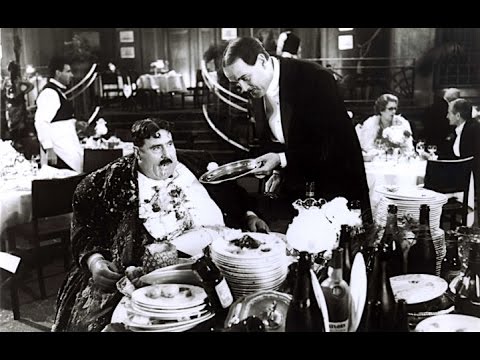
Indeed, George Harrison said later on that he saw Monty Python as a continuation of the spirit of the Beatles. He also funded some of their films, including The Meaning of Life – whose notorious Mr Creosote sketch has visual echoes of a scene in Magical Mystery Tour where John Lennon, dressed as a waiter, serves pasta to Ringo’s fictional Aunt Jessie by the spade full.

What the Pythons added to the mix were sharply honed scripts. Magical Mystery Tour, by contrast, was almost entirely ad-libbed from a one-page diagram. The Beatles’ skill as writers and arrangers was poured into their music instead.

Something else the Pythons had, and which the Beatles lacked, was the benefit of Oxbridge educations. Magical Mystery Tour’s sensibility was more rooted in working class entertainment and tropes than the Pythons’ Oxbridge-infused references.

The very concept of a coach journey – albeit one largely filmed at a decommissioned RAF base – was based on the “charabanc” trips (group bus excursions) of the band members’ childhoods.

The film evokes the past – both a British past in general and, more specifically, as filtered through the Beatles’ own histories. It certainly shows them pushing the boundaries of what a rock band of four Liverpudlians (whose post-school education essentially took place in the nightclubs of Hamburg) could attempt, both artistically and institutionally. Their commercial and creative clout allowed them to broadcast the film during a key annual peak slot for British television viewing.

Prime time


Magical Mystery Tour occupied a particular space in the history of mass entertainment – from the “end of the pier” shows, through the Donald McGill postcards that George Orwell defended against artistic snobbery, to the anarchic weirdness of the likes of Mr Blobby on Saturday night TV.

The Beatles infused that particular strand of entertainment with the forward looking experimentalism of their music, while retaining a characteristic, widely recognisable Britishness. It was this that paved the road for Python and others to follow.

That Magical Mystery Tour was their first real failure since breaking through into the mainstream was also partly a matter of practicalities. While still flowering creatively, they were logistically rudderless after the death earlier that year of their manager Brian Epstein.


Their lack of understanding of the demands of editing a film foreshadowed their later business-related shortcomings, notably the Apple boutique and record label. If the latter of these was revived to become the familiar Beatles brand of today, it was initially a costly failure that contributed to the band’s demise.

But while the film may have overreached, it still demonstrates a clear broadening of mainstream creative boundaries. Popular music fans were certainly receptive to their successful experiments. And even if the broader television public was less ready for a caustic, psychedelic vision of Britain in prime time during the Christmas holidays, Magical Mystery Tour still stands as a useful cultural document.

The ConversationThe Beatles being what they ultimately became, there’s much to be gleaned from their falls as well as their flights.

Adam Behr, Lecturer in Popular and Contemporary Music, Newcastle University

La version originale de cet article a été publiée sur The Conversation.

Monday, December 26, 2016

Guest Post: Boxing Day's journey from Pepys to shopping petitions and parliament


by Nelson Blackley, Nottingham Trent University

British members of Parliament have been debating whether shops should remain open on Boxing Day. Some 30 or 40 years years ago, shops stayed closed for longer during the holiday season – and on Boxing Day family time was the focus and leftover turkey the star of the show. But in recent years Boxing Day has fired the starting gun for the January sales, created (yet another) key moment in the British retail calendar and forced retail staff into work.

This growing commercialisation has created a backlash. In 2015, a petition on the government’s website to ban shops from opening on Boxing Day gathered a modest 27,525 signatures, but 2016 has seen the campaign gather greater momentum. Two similar petitions have been active this year. The first, also on the government’s official website, calls for all retailers to close on Boxing Day, claiming: “Some things are needed over the festive period, retail isn’t one of them.” It has received more than 140,000 signatures, easily meeting the required level of support to warrant the parliamentary debate. A similar petition on the website change.org claims has gathered more than 230,000 signatures.

So what is the historical background to Boxing Day and why are we so attached to it? Is it possible that this recent groundswell of support could begin to loosen the grip of consumerism during the Christmas break?

Pepys show


The Oxford English Dictionary claims the earliest use of the term “Boxing Day” is from 1830s England. It was “the first weekday after Christmas Day, observed as a holiday on which post-men, errand-boys, and servants of various kinds expect to receive a Christmas box”. This relates to a seasonal British custom for tradespeople to collect boxes of money or presents after Christmas as thanks for good service throughout the year.

This is actually linked to an even older English tradition, mentioned by Samuel Pepys’ in a diary entry from December 19, 1663, when servants of the wealthy, who would have to wait on their masters on Christmas Day, were allowed the next day to visit their families. Employers would give each servant a box to take home containing gifts, bonuses and sometimes leftover food.


Stony-faced. A statue of Samuel Pepys in London.
chrisdorney/Shutterstock


The 2016 parliamentary debate about the modern nature of Boxing Day did not involve a vote and so there will be no immediate change in the law. However it was a chance for MPs to demonstrate whether it is an issue with much parliamentary support. In response to the petitions, the government has said:

We do not believe it is for central government to tell businesses how to run their shops or how best to serve their customers. Therefore we are not proposing to ban shops from opening on Boxing Day.

Even if there is general support in Parliament, I don’t believe the UK government will amend the current trading laws and so prevent large stores from opening on Boxing Day any time soon – for several reasons.

Ker-ching


First, and most importantly, the retail sector is a critical part of the UK economy – and in fragile economic times it would be a brave government indeed that took any action that might damage it. Sales in the sector were £339 billion in 2015 (generating 5% of the UK’s GDP) and, with almost 3m working in retail, it was the UK’s largest private-sector employer.

There is also an important international dimension. The UK’s in-store sales on Boxing Day are boosted by an influx of foreign shoppers.

The second key factor reflects the radical changes seen in consumer habits as a result of online shopping, a point also acknowledged by the government in its response to previous Boxing Day petitions:

Consumers are now used to the freedom to buy what they need at any time that suits them. The government believes that all businesses should be allowed flexibility to meet their customers’ needs and offer consumers choice about when and how they want to shop. This will help drive competition, productivity and the local economy, as well as helping create jobs

Unsurprisingly, this is a view echoed by the British Retail Consortium (BRC) the trade association whose members represent 70% of the turnover of the UK retail sector.

Sacred time


That leads onto a third factor behind the government’s decision making. According to the Guardian, shoppers last year were more willing than ever to interrupt Christmas Day itself for some online bargain hunting.

Online sales in the UK on Dec 25, 2015 were the highest ever, up 21% on 2014 according to web services group PCA Predict – whose founder Jamie Turner highlighted the “convenience of being able to browse online throughout the entire Christmas period to find deals and discounts”.

However, there is one thing that seems to remain sacred. Experian and online retail trade association IMRG reported a dip in online between 1pm and 4pm on Christmas Day as families enjoyed Christmas lunch together (and perhaps even watched the Queen’s speech), then rising again in the evening as people sat down to relax and watch television.

At the heart of this debate lies the fear of missing out. For the government, for retailers and their shareholders, and for millions of bargain-hunting consumers. According to the BRC, the UK retail market is the “most competitive in the world” and in that context it becomes almost unimaginable that any large retailers would now make a voluntary decision to close on Boxing Day and so lose sales and market share to rivals.

The British boom in online shopping – the UK has the highest level of penetration in the world – has also brought with it the “click-and-collect” phenomenon. In other words, both parts of the UK retail industry work hand-in-hand – there will be millions of UK consumers who want to order products online over the Christmas holiday period and collect from a store on Boxing Day. More, you have to conclude, than the 140,000 petition signatories who long for a Christmas free from the ringing of the nation’s cash registers (or the sound of clicking on the pay now button).

The Conversation

Nelson Blackley, Research Associate - National Retail Research Knowledge Exchange Centre, Nottingham Business School, Nottingham Trent University

This article was originally published on The Conversation. Read the original article.

Friday, December 23, 2016

Why young children often prefer wrapping paper and boxes to actual presents

by Julie Brierley, University of Hull

We’ve all been there: you spend an unthinkable amount on a child’s toy – lulled by the promise that the interaction with the flashing lights and whooshing noises will excite, stimulate and educate our little people. Yet on the big day, we watch as our child’s interest in the toy quickly diminishes and the attraction of the discarded wrapping paper and packaging takes over.

We watch with confusion as our young children show us the real pleasures of Christmas – not their new shiny toy, but all that is destined for the recycling bin. And as they roll around on the floor in the wrapping paper and jump in and out of the boxes, we question our own sanity in spending ridiculous sums of money on a child who would have clearly preferred a cardboard box for Christmas.

But while our child’s preoccupation with screwed up wrapping paper and packaging may seem barmy to us adults, it is in fact just another way to play – and can help children to learn about themselves and the world around them.

The psychology of wrapping paper


At a very early age, children use play to drive their own learning. And when young children are allowed and actively encouraged to explore and follow their own interests, they develop understanding from their actions.

In recent years, neuroscientific studies have led to a greater appreciation of the importance of young children’s brain development. These studies have shown us that the first three years of a child’s life are a critical period for learning and development. This confirms a direct relationship between the quality of experiences young children gain and the growth and development of the brain.


‘Just look at this paper!’
Shutterstock


So, when children explore and experiment with objects such as boxes, paper and ribbons, they are using both their sensory and physical senses to extend their thinking.

“What is this and what can I do with it? Can I fit my hand inside? what else fits in?” – young children’s questioning minds are pivotal to their learning. And engagement in self-directed play helps to aid learning and supports the development of language as well as mathematical, scientific, creative, personal and social concepts.

The power of play


In today’s society, the power of play is frequently misunderstood and underestimated. Children these days have less time to “free play” given that so much of their playtime is structured or involves a parental onlooker.

But young children are physical beings, who gain sensory perceptions and feedback from the whole of their bodies – and these perceptions contribute to essential brain development. So seemingly meaningless actions such as twirling, jumping, rolling and messing around with objects can actually help children to learn about who they are and the world around them.

Through the sensory and physical exploration of the discarded boxes and Christmas wrapping paper, the foundations of learning and cognitive development are occurring. Children become sensitised and motivated to further their explorations, allowing more complex thoughts and understanding to develop.


Living the dream.
Shutterstock


So a young child who repeatedly fills and empties a box, climbs in and out, puts things in then tips them out, is not just making a mess. Instead they are exploring the “insideness” of the object – which helps them to understand concepts such as capacity, volume and space.

And with this in mind, rather than just filling the toy cupboard with a load of manufactured creations, it is important that young children are also able to make their own discoveries and to construct their own understanding, too.

So this Christmas, make sure your child has a chance to play with all the wrapping paper before it is neatly tidied up and disposed of. Because not only are you helping them to cultivate a desire to learn, you are also helping to develop their inquisitive resolve and creative expression.

You will also be allowing them the opportunity to strengthen the bits of their brain that are responsible for development – and this will help to ensure they have the foundations for future learning. And what could be a better gift than that?

The Conversation

Julie Brierley, Lecturer in Early Years & Education, University of Hull

This article was originally published on The Conversation. Read the original article.