Showing posts with label Christmas. Show all posts

Monday, December 10, 2018

Guest Post: How to survive annoying relatives this holiday season

Jamie Gruman, University of Guelph

Social allergies are a lot like seasonal allergies. They’re annoying, exhausting and hard to avoid. They’re also especially common around the holidays. That’s because the holidays put you at a high risk of exposure. Swap the dander and flourishing ragweed for your not-so-favourite acquaintances and intolerable relatives and there you have it — a full-blown case of social allergies.

Merry Christmas Polish Poland ornamentsSocial allergens are the revolting, repetitive habits of our friends and family members that rub us the wrong way and drive us crazy.

Maybe it’s the way your aunt constantly complains about frivolous things. Or perhaps it’s how your father-in-law smacks his lips and wipes his mouth with the back of his hand when he eats. Or could it be the way your cousin can’t have a conversation without droning on about himself?

All of us have allergies to people whose seemingly inconsequential behaviour repulses us. The emotional and physical symptoms these social allergens produce arise within minutes of exposure, making us want to immediately evacuate the toxic environment.

The holiday season social allergy


Like seasonal allergies, social allergies are sometimes inescapable. Triggers include the many obligatory get-togethers that come with the holidays. For many, the season, beginning with American Thanksgiving, is supposed to be a time to recharge our batteries: recover from the unreasonable deadlines, numerous pressures and other demands we face on a daily basis. Social allergies can interfere with that plan.

During the holiday season, we are faced with numerous social commitments and in some cases this means spending time with people who grate on our nerves and hinder us from refuelling. Rather than having a few days off to decompress, we spend our time away from work filled with dread, anxiety and exasperation because we have to endure people we are allergic to.

Although we can get out of some noxious social situations, there are others that are almost mandatory.

So, what are the social antihistamines that will help us cope?

Limit exposure


One effective way to prevent a social allergic reaction is to limit your exposure. In the same way a person allergic to cats should avoid snuggling up in bed with a pride of domestic felines, a person with social allergies should avoid staying in an environment full of social allergens.

By minimizing the amount of time you are in contact with the allergens, you attack the problem directly, fostering resilience and recovery by reducing your exposure to a hazardous situation.

This means leave early or come late. Have a strategy to restrict the amount of time you spend surrounded by your social allergens. While you are at the gathering, be strategic about the social situations you place yourself in. When finding a spot at the dinner table, don’t sit next to Cousin So-and-so or Aunt M and definitely don’t sit in full view of your lip-smacking father-in-law. Find a place setting that allows you to have a break from your social allergens.


Validate


We have the power to exert some control over many social allergens.

For example, when speaking with a self-centred toxic relative, she’s looking for a certain type of reaction from you. In many cases, the wanted reaction is simple: it’s support and validation.

While you may want to shut off the stream coming out of auntie’s mouth, this will not actually help calm your allergic reaction. But if you spend some time to first provide the validation she seeks, you could potentially satisfy her craving and extinguish the behaviour you find repellent.

Give feedback


If you can no longer tolerate seeing scraps of food on the back of your father-in-law’s hand, consider speaking to him about his eating habits. But remember that conversations not only convey information, they also have implications for relationships and identities.

Make it clear that you want to help him avoid embarrassing himself and that you’re speaking to him about this because you love him. And see if you can bring up the topic indirectly so that you don’t come across as intrusive. Giving feedback to people often fails to change their behaviour if we’re not sensitive about how it might be received.

Mindfulness


If giving feedback to your father-in-law doesn’t seem like the best idea, you can instead try practising mindfulness. Mindfulness is a non-judgmental state of present moment awareness.

When social allergens start bothering you, pay attention to your own internal irritation without evaluating it. Don’t cling to it and don’t push it away. Just follow it. Watching the ebbs and flows of your experience has a way of putting distance between you and your reactions through a process called reperceiving.

Mindfulness won’t necessarily prevent the allergen from bothering you, but it will help you control how much it annoys you and how quickly you recover from its effects.

Social allergies can burn you out and change a relaxing holiday into a stressful test of endurance. To get a boost during holiday time, you need to make sure that you spend your time with people who recharge and revitalize you.

Also, mitigate your averse reaction to people’s annoying habits. A few simple steps can transform your holiday into one that lets you enjoy a happy, healthy break, instead of having to contend with social allergies.

The author thanks Deirdre Healey’s assistance with this article.The Conversation

Jamie Gruman, Professor of Organizational Behaviour, University of Guelph

This article is republished from The Conversation under a Creative Commons license. Read the original article.


Wednesday, December 05, 2018

Guest Post: How Hanukkah came to America


Dianne Ashton, Rowan University

Hanukkah may be the best known Jewish holiday in the United States. But despite its popularity in the U.S., Hanukkah is ranked one of Judaism’s minor festivals, and nowhere else does it garner such attention. The holiday is mostly a domestic celebration, although special holiday prayers also expand synagogue worship.

So how did Hanukkah attain its special place in America?

Hanukkah’s back story


The word “Hanukkah” means dedication. It commemorates the rededicating of the ancient Temple in Jerusalem in 165 B.C. when Jews – led by a band of brothers called the Maccabees – tossed out statues of Hellenic gods that had been placed there by King Antiochus IV when he conquered Judea. Antiochus aimed to plant Hellenic culture throughout his kingdom, and that included worshipping its gods.

Legend has it that during the dedication, as people prepared to light the Temple’s large oil lamps to signify the presence of God, only a tiny bit of holy oil could be found. Yet, that little bit of oil remained alight for eight days until more could be prepared. Thus, each Hanukkah evening, for eight nights, Jews light a candle, adding an additional one as the holiday progresses throughout the festival.

Hanukkah’s American story


Dianne Ashton Hanukkah in America Chanukah historyToday, America is home to almost 7 million Jews. But Jews did not always find it easy to be Jewish in America. Until the late 19th century, America’s Jewish population was very small and grew to only as many as 250,000 in 1880. The basic goods of Jewish religious life – such as kosher meat and candles, Torah scrolls, and Jewish calendars – were often hard to find.

In those early days, major Jewish religious events took special planning and effort, and minor festivals like Hanukkah often slipped by unnoticed.

My own study of American Jewish history has recently focused on Hanukkah’s development.

It began with a simple holiday hymn written in 1840 by Penina Moise, a Jewish Sunday school teacher in Charleston, South Carolina. Her evangelical Christian neighbors worked hard to bring the local Jews into the Christian fold. They urged Jews to agree that only by becoming Christian could they attain God’s love and ultimately reach Heaven.

Moise, a famed poet, saw the holiday celebrating dedication to Judaism as an occasion to inspire Jewish dedication despite Christian challenges. Her congregation, Beth Elohim, publicized the hymn by including it in their hymnbook.

This English language hymn expressed a feeling common to many American Jews living as a tiny minority. “Great Arbiter of human fate whose glory ne'er decays,” Moise began the hymn, “To Thee alone we dedicate the song and soul of praise.”

It became a favorite among American Jews and could be heard in congregations around the country for another century.

Shortly after the Civil War, Cincinnati Rabbi Max Lilienthal learned about special Christmas events for children held in some local churches. To adapt them for children in his own congregation, he created a Hanukkah assembly where the holiday’s story was told, blessings and hymns were sung, candles were lighted and sweets were distributed to the children.

His friend, Rabbi Isaac M. Wise, created a similar event for his own congregation. Wise and Lilienthal edited national Jewish magazines where they publicized these innovative Hanukkah assemblies, encouraging other congregations to establish their own.

Lilienthal and Wise also aimed to reform Judaism, streamlining it and emphasizing the rabbi’s role as teacher. Because they felt their changes would help Judaism survive in the modern age, they called themselves “Modern Maccabees.” Through their efforts, special Hanukkah events for children became standard in American synagogues.

20th-century expansion


By 1900, industrial America produced the abundance of goods exchanged each Dec. 25. Christmas’ domestic celebrations and gifts to children provided a shared religious experience to American Christians otherwise separated by denominational divisions. As a home celebration, it sidestepped the theological and institutional loyalties voiced in churches.

For the 2.3 million Jewish immigrants who entered the U.S. between 1881 and 1924, providing their children with gifts in December proved they were becoming American and obtaining a better life.

But by giving those gifts at Hanukkah, instead of adopting Christmas, they also expressed their own ideals of American religious freedom, as well as their own dedication to Judaism.

After World War II, many Jews relocated from urban centers. Suburban Jewish children often comprised small minorities in public schools and found themselves coerced to participate in Christmas assemblies. Teachers, administrators and peers often pressured them to sing Christian hymns and assert statements of Christian faith.

From the 1950s through the 1980s, as Jewish parents argued for their children’s right to freedom from religious coercion, they also embellished Hanukkah. Suburban synagogues expanded their Hanukkah programming.

As I detail in my book, Jewish families embellished domestic Hanukkah celebrations with decorations, nightly gifts and holiday parties to enhance Hanukkah’s impact. In suburbia, Hanukkah’s theme of dedication to Judaism shone with special meaning. Rabbinical associations, national Jewish clubs and advertisers of Hanukkah goods carried the ideas for expanded Hanukkah festivities nationwide.

In the 21st century, Hanukkah accomplishes many tasks. Amid Christmas, it reminds Jews of Jewish dedication. Its domestic celebration enhances Jewish family life. In its similarity to Christmas domestic gift-giving, Hanukkah makes Judaism attractive to children and – according to my college students – relatable to Jews’ Christian neighbors. In many interfaith families, this shared festivity furthers domestic tranquility.

In America, this minor festival has attained major significance.The Conversation

Dianne Ashton, Professor of Religion, Rowan University

This article is republished from The Conversation under a Creative Commons license. Read the original article.

Thursday, December 28, 2017

Guest Post - John Whitehead on The Deep State’s Christmas Present to America: Surveillance That Never Ends

By John W. Whitehead
December 11, 2017

“He sees you when you’re sleeping
He knows when you’re awake
He knows when you’ve been bad or good
So be good for goodness sake!”
—“Santa Claus Is Coming to Town”

Just in time for Christmas, the Deep State wants to give America the gift that keeps on giving: never-ending mass surveillance.
I’m not referring to the kind of surveillance carried out by that all-knowing and all-seeing Jolly Old St. Nick and his informant the Elf on the Shelf (although, to be fair, they have helped to acclimate us to a world in which we’re always being watched and judged by higher authorities).
No, this particular bit of Yuletide gift-giving comes courtesy of the Deep State (a.k.a. the Surveillance State, Police State, Shadow Government and black-ops spy agencies).
John Whitehead Rick Sincere Rutherford Institute
John Whitehead
If this power-hungry cabal gets its way, the government’s power to spy on its citizens will soon be all-encompassing and permanent.
As it now stands, Section 702 of the Foreign Intelligence Surveillance Act—the legal basis for two of the National Security Agency’s largest mass surveillance programs, “PRISM” and “Upstream”—is set to expire at the end of 2017.
“PRISM” lets the NSA access emails, video chats, instant messages, and other content sent via Facebook, Google, Apple and others. “Upstream” lets the NSA worm its way into the internet backbone—the cables and switches owned by private corporations like AT&T that make the internet into a global network—and scan traffic for the communications of tens of thousands of individuals labeled “targets.”
Just as the USA Patriot Act was perverted from its original intent to fight terrorism abroad and was used instead to covertly crack down on the American people (allowing government agencies to secretly track Americans’ financial activities, monitor their communications, and carry out wide-ranging surveillance on them), Section 702 has been used as an end-run around the Constitution to allow the government to collect the actual content of Americans’ emails, phone calls, text messages and other electronic communication without a warrant.
Under Section 702, the government collects and analyzes over 250 million internet communications every year. There are estimates that at least half of these contain information about U.S. residents, many of whom have done nothing wrong. This information is then shared with law enforcement and “routinely used for purposes unrelated to national security.”
Mind you, this is about far more than the metadata collection that Edward Snowden warned us about, which was bad enough. Section 702 gives the government access to the very content of your conversations (phone calls, text messages, video chats), your photographs, your emails. As Rep. Thomas Massie, R-Ky., warned, “This is not just who you send it to, but what’s in it.”
Unfortunately, Big Brother doesn’t relinquish power easily.
The Police State doesn’t like restrictions.
And the Surveillance State certainly doesn’t look favorably on anything that might weaken its control. Even after Congress limited the NSA’s ability to collect bulk phone records, the agency continued to do so, vacuuming up more than 151 million records of Americans’ phone calls last year alone.
A government that doesn’t heed its constituents, doesn’t abide by the law, and kowtows to its police and military forces? That’s a dictatorship anywhere else.
Here in America, you can call it “technotyranny,” a term coined by investigative journalist James Bamford to refer to an age of technological tyranny made possible by government secrets, government lies, government spies and their corporate ties.
Beware of what you say, what you read, what you write, where you go, and with whom you communicate, because it will all be recorded, stored and used against you eventually, at a time and place of the government’s choosing. Privacy, as we have known it, is dead.
For all intents and purposes, we now have a fourth branch of government.
This fourth branch came into being without any electoral mandate or constitutional referendum, and yet it possesses superpowers, above and beyond those of any other government agency save the military. It is all-knowing, all-seeing and all-powerful. It operates beyond the reach of the president, Congress and the courts, and it marches in lockstep with the corporate elite who really call the shots in Washington, DC.
The government’s “technotyranny” surveillance apparatus has become so entrenched and entangled with its police state apparatus that it’s hard to know anymore where law enforcement ends and surveillance begins.
The short answer: they have become one and the same entity.
The police state has passed the baton to the surveillance state.
Having already transformed local police into extensions of the military, the Department of Homeland Security, the Justice Department and the FBI are preparing to turn the nation’s soldier cops into techno-warriors, complete with iris scanners, body scanners, thermal imaging Doppler radar devices, facial recognition programs, license plate readers, cell phone Stingray devices and so much more.
This is the new face of policing in America.
Enter big data policing which gives the nation’s 17,000 police agencies access to a growing “investigative” database that maps criminal associates and gangs, as well as their social and familial connections.
As Slate reports, “These social network systems, which target ‘chronic offenders,’ also include information about innocent associates, family members, and friends, creating extensive human maps of connections and patterns of contacts.” Those individuals then get assigned a threat score to determine their risk of being a perpetrator or victim of a future crime.
In Chicago, for example, “individuals with the highest scores on the Chicago Police Department ‘heat list’ get extra attention in the form of home visits or increased community surveillance.”
In Baltimore, police are using Cessna planes equipped with surveillance systems to film entire segments of the city, then combining that footage with police reports in order to “map the comings and goings of everyone—criminals and innocents alike.”
In this way, big data policing not only expands Big Brother’s reach down to the local level, but it also provides local police—most of whom know little about the Constitution and even less about the Fourth Amendment—with a new technological weapon to deploy against an unsuspecting public.
The end result is pre-crime, packaged in the guise of national security but no less sinister.
All of those individuals who claim to be unconcerned about government surveillance because they have nothing to hide, take note: pre-crime policing—given a futuristic treatment in Steven Spielberg’s Minority Report—aims to treat you like a criminal before you’ve ever even committed a crime.
This hasn’t fazed President Trump who, much like his predecessors, has thus far marched in lockstep with the dictates of the police state.
If approved, this would be yet another secret government agency carrying out secret surveillance and counterintelligence, funded by a secret black ops budget that by its very nature does away with transparency, bypasses accountability and completely eludes any form of constitutionality.
According to The Washington Post, there are more than a dozen “black budget” national intelligence agencies already receiving more than $52.6 billion in secret government funding. Among the top five black ops agencies currently are the CIA, the NSA, the National Reconnaissance Office, the National Geospatial-Intelligence Program, and the General Defense Intelligence Program.
A significant chunk of that black ops money has been flowing to Silicon Valley since before there was an internet, itself a creation of the military/security industrial complex.
Earlier this year, Amazon announced that it would be storing classified information for U.S. spy agencies in its digital cloud, part of a $600 million contract with the nation’s intelligence agencies.
Two decades earlier, America’s spy agencies tapped Silicon Valley to spearhead research into ways of tracking individuals and groups online. That research, as documented by Jeff Nesbit, the former director of legislative and public affairs at the National Science Foundation, culminated in the creation of a massive public-private surveillance state that hinged on a partnership between the NSA, the CIA and Google.
“The research arms of the CIA and NSA hoped that the best computer-science minds in academia could identify what they called ‘birds of a feather,’” writes Nesbit. He continues:
Their research aim was to track digital fingerprints inside the rapidly expanding global information network, which was then known as the World Wide Web… By working with emerging commercial-data companies, their intent was to track like-minded groups of people across the internet and identify them from the digital fingerprints they left behind, much like forensic scientists use fingerprint smudges to identify criminals. Just as “birds of a feather flock together,” they predicted that potential terrorists would communicate with each other in this new global, connected world—and they could find them by identifying patterns in this massive amount of new information. Once these groups were identified, they could then follow their digital trails everywhere.
The problem, of course, is that the government always sets its sights higher.
It wasn’t long before the government’s search for criminal “birds of a feather”—made much easier with the passage of the USA Patriot Act—lumped everyone together and treated all of the birds (i.e., the public) as criminals to be identified, tracked, monitored and subjected to warrantless, suspicionless surveillance.
Fast forward to the present moment when, on any given day, the average American is now monitored, surveilled, spied on and tracked in more than 20 different ways by both government and corporate eyes and ears.
Every second of every day, the American people are being spied on by the U.S. government’s vast network of digital Peeping Toms, electronic eavesdroppers and robotic snoops.
Whether you’re walking through a store, driving your car, checking email, or talking to friends and family on the phone, you can be sure that some government agency is listening in and tracking you. This doesn’t even begin to touch on the complicity of the corporate sector, which buys and sells us from cradle to grave, until we have no more data left to mine. These corporate trackers monitor your purchases, web browsing, Facebook posts and other activities taking place in the cyber sphere and share the data with the government.
Just about every branch of the government—from the Postal Service to the Treasury Department and every agency in between—now has its own surveillance sector, authorized to collect data and spy on the American people. Then there are the fusion and counterterrorism centers that gather all of the data from the smaller government spies—the police, public health officials, transportation, etc.—and make it accessible for all those in power.
These government snoops are constantly combing through and harvesting vast quantities of our communications, then storing it in massive databases for years. Once this information—collected illegally and without any probable cause—is ingested into NSA servers, other government agencies can often search through the databases to make criminal cases against Americans that have nothing to do with terrorism or anything national security-related. One Justice Department lawyer called the database the “FBI’s ‘Google.’”
In other words, the NSA, an unaccountable institution filled with unelected bureaucrats, operates a massive database that contains the intimate and personal communications of countless Americans and makes it available to other unelected bureaucrats.
Talk about a system rife for abuse.
Ask the government why it’s carrying out this warrantless surveillance on American citizens, and you’ll get the same Orwellian answer the government has been trotting out since 9/11 to justify its assaults on our civil liberties: to keep America safe.
Yet warrantless mass surveillance by the government and its corporate cohorts hasn’t made America any safer. And it certainly isn’t helping to preserve our freedoms. Frankly, America will never be safe as long as the U.S. government is allowed to shred the Constitution.
Now the government wants us to believe that we have nothing to fear from its mass spying program because they’re only looking to get the “bad” guys who are overseas.
Don’t believe it.
The government’s definition of a “bad” guy is extraordinarily broad, and it results in the warrantless surveillance of innocent, law-abiding Americans on a staggering scale. They are conducting this mass surveillance without a warrant, thus violating the core principles of the Fourth Amendment which protects the privacy of all Americans.
Warrantless mass surveillance of American citizens is wrong, un-American, and unconstitutional.
Clearly, the outlook for reforming the government’s unconstitutional surveillance programs does not look good.
As I make clear in my book Battlefield America: The War on the American People, whenever the rights of the American people are pitted against the interests of the military/corporate/security complex, “we the people” lose. Unless Congress develops a conscience—or suddenly remembers that they owe their allegiance to the citizenry and not the corporate state—we’re about to lose big.
It’s time to let Section 702 expire or reform the law to ensure that millions and millions of Americans are not being victimized by a government that no longer respects its constitutional limits.
Mark my words: if Congress votes to make the NSA’s vast spying powers permanent, it will be yet another brick in the wall imprisoning us within an electronic concentration camp from which there is no escape.
WC: 2229
ABOUT JOHN W. WHITEHEAD
Constitutional attorney and author John W. Whitehead is founder and president of The Rutherford Institute. His new book Battlefield America: The War on the American People (SelectBooks, 2015) is available online at www.amazon.com. Whitehead can be contacted at johnw@rutherford.org.


Reprinted by permission of The Rutherford Institute.


Tuesday, December 26, 2017

Guest Post: 'Magical Mystery Tour' paved the way for Monty Python


Adam Behr, Newcastle University

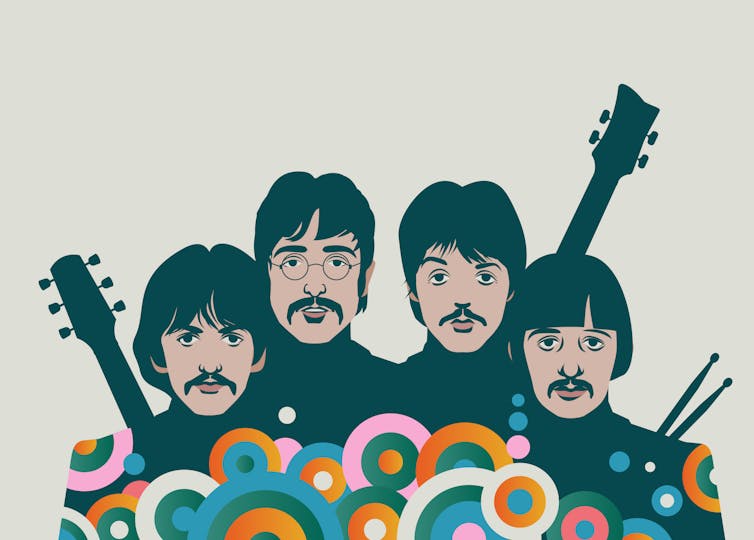
The 50th anniversary of Sergeant Pepper’s Lonely Hearts Club Band was much celebrated in 2017. But this Christmas also marks 50 years since the release of another Beatles production that received much less critical acclaim – the Magical Mystery Tour film.

Much of the music within it was produced during a particularly fecund period (even by the Beatles’ standards) and is, or course, peerless – from the music hall echoes of Your Mother Should Know through the plaintive, melodic Fool on the Hill to the boundary breaking I Am the Walrus.


Beatles Magical Mystery Tour fiftieth anniversary


Shutterstock/Anita Ponne


Unfortunately the film itself fell far short of that artistic bar. First broadcast on Boxing Day 1967, it is, to put it mildly, seriously flawed. Incoherent, sexist, technically shaky and verging on boring, history hasn’t been kind to its cinematic qualities.

Contemporary reviews and audience responses were also so generally scathing that Paul McCartney was moved to issue an apology of sorts to the television broadcast’s 20m viewers. He said in a hastily convened interview:

We don’t say it was a good film. It was our first attempt. If we goofed, then we goofed. It was a challenge and it didn’t come off. We’ll know better next time.


Matters weren’t helped by the Beatles’ psychedelic, colourful exploration being broadcast in black and white on BBC1. A repeat on BBC2 (then the only colour TV service) a few days later did little to redress the situation, if only because there were fewer than 200,000 colour sets in the UK at the time.

Pushing institutional boundaries


For all the defensiveness of McCartney’s response (“You could hardly call the Queen’s speech a gasser”) they do point towards some retrospectively mitigating aspects of the Magical Mystery Tour film.

The film’s distinctly British surrealism and cavalcade of barking sergeant majors, fat aunts, dolly birds, wacky racers and midgets clearly prefigured Monty Python’s explosion of absurdity into mainstream television.

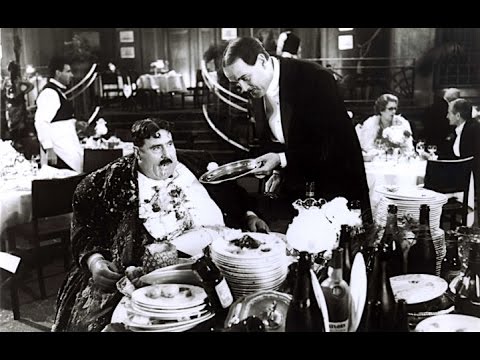
Indeed, George Harrison said later on that he saw Monty Python as a continuation of the spirit of the Beatles. He also funded some of their films, including The Meaning of Life – whose notorious Mr Creosote sketch has visual echoes of a scene in Magical Mystery Tour where John Lennon, dressed as a waiter, serves pasta to Ringo’s fictional Aunt Jessie by the spade full.

What the Pythons added to the mix were sharply honed scripts. Magical Mystery Tour, by contrast, was almost entirely ad-libbed from a one-page diagram. The Beatles’ skill as writers and arrangers was poured into their music instead.

Something else the Pythons had, and which the Beatles lacked, was the benefit of Oxbridge educations. Magical Mystery Tour’s sensibility was more rooted in working class entertainment and tropes than the Pythons’ Oxbridge-infused references.

The very concept of a coach journey – albeit one largely filmed at a decommissioned RAF base – was based on the “charabanc” trips (group bus excursions) of the band members’ childhoods.

The film evokes the past – both a British past in general and, more specifically, as filtered through the Beatles’ own histories. It certainly shows them pushing the boundaries of what a rock band of four Liverpudlians (whose post-school education essentially took place in the nightclubs of Hamburg) could attempt, both artistically and institutionally. Their commercial and creative clout allowed them to broadcast the film during a key annual peak slot for British television viewing.

Prime time


Magical Mystery Tour occupied a particular space in the history of mass entertainment – from the “end of the pier” shows, through the Donald McGill postcards that George Orwell defended against artistic snobbery, to the anarchic weirdness of the likes of Mr Blobby on Saturday night TV.

The Beatles infused that particular strand of entertainment with the forward looking experimentalism of their music, while retaining a characteristic, widely recognisable Britishness. It was this that paved the road for Python and others to follow.

That Magical Mystery Tour was their first real failure since breaking through into the mainstream was also partly a matter of practicalities. While still flowering creatively, they were logistically rudderless after the death earlier that year of their manager Brian Epstein.


Their lack of understanding of the demands of editing a film foreshadowed their later business-related shortcomings, notably the Apple boutique and record label. If the latter of these was revived to become the familiar Beatles brand of today, it was initially a costly failure that contributed to the band’s demise.

But while the film may have overreached, it still demonstrates a clear broadening of mainstream creative boundaries. Popular music fans were certainly receptive to their successful experiments. And even if the broader television public was less ready for a caustic, psychedelic vision of Britain in prime time during the Christmas holidays, Magical Mystery Tour still stands as a useful cultural document.

The ConversationThe Beatles being what they ultimately became, there’s much to be gleaned from their falls as well as their flights.
Adam Behr, Lecturer in Popular and Contemporary Music, Newcastle University

La version originale de cet article a été publiée sur The Conversation.

Monday, December 25, 2017

Guest Post: The science behind our love-hate relationship with holiday songs

Alexandra Lamont, Keele University

In the run-up to Christmas, we’re subjected to a daily barrage of festive music – on the radio and television, in shops, train stations, restaurants, pubs and bars. In the UK, old favourites by bands such as Slade and Weezer are doing their regular rounds along with newer contenders from Kelly Clarkson and Justin Bieber. And, of course, Britain’s two most popular Christmas songs by Mariah Carey and The Pogues are getting their annual airing.

So are you humming "Jingle Bells" or "All I Want for Christmas" while you wrap your presents? Catchy music, “sticky tunes” or earworms, as they have become known, are songs that get stuck in our heads – and while about two-thirds are pleasant or neutral, some can become quite annoying. Earworms are common. Nearly 90% of Finnish adults reported having one earworm a week.


Bing Crosby White Christmas Holiday Inn

The best-selling Christmas song of all-time: White Christmas.


Musically, earworms seem to come more often from songs which have fairly conventional melodic patterns together with something unusual – a key change, or unexpected leaps or repetitions. Just like the well-known negative effects of actually heard background music on concentration and task performance, it seems that earworms can even impair our concentration on other tasks – whether those are songs with lyrics which could interfere with memory or even purely instrumental sequences like the Star Wars theme.

Read more: Why some songs get stuck in our heads more than others

There’s a piece doing the rounds written by journalism professor Adam Ragusea, who claims to have identified an elusive “Christmas chord” (a diminished minor 7th flat 5) that might explain the popularity of Christmas songs and why they give us earworms, although not all commentators are entirely convinced. New York-based musician Adam Neely argues it’s more about context.


But research suggests that although there could be some common features, the specific songs that evoke earworms are different from person to person. This chimes with what we find when we look at how people listen to music in general. Even very similar types of listeners who live together choose different daily favourite pieces of music – and our music listening and preferences are highly individualised.

What’s different about Christmas music is we are all listening to a much smaller pool of musical options at this time of year. Because of the dominance of Christmas music in public settings such as shops and bars or on the radio, we all get a lot more exposure to the same songs than we do at other times of year. So we could argue that Christmas music helps bring us together – whether we love it or hate it.

Dreaming of a hit record


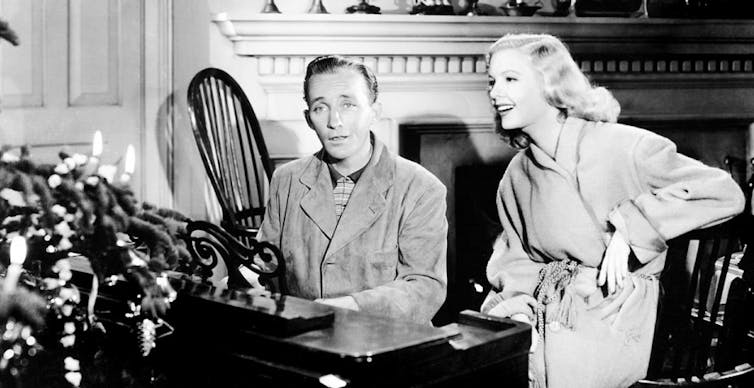
Among the cheesy sleigh bells-filled tunes, there are some great Christmas classics – and it’s interesting to note that "White Christmas" by Irving Berlin is not only consistently one of the most well-known Christmas songs but is the best-selling song of all time. It also has the characteristics of an earworm, with melodic shifts and slides around a simple rising and falling melodic shape, and it (like many other songs) contains that scrunchy “Christmas chord”. But how does a song like that maintain its popularity over the decades?

The pattern of liking for an individual song over time is held to fit an inverted U-shape curve. According to this, when we first hear a new piece of music we tend to not like it very much. But repetition breeds liking – and repetition both within a song and through repeated listening over days, weeks and months will usually increase our liking in a fairly rapid linear way.


There’s a limit to this repetition effect. Too much exposure sends liking down the other side of the curve, meaning that when we have heard something too much we eventually, and quickly, get quite fed up with it. In our research we find that people regulate their own exposure to their own music over very long periods of time, putting things to one side in favour of new music and constantly keeping their current music fresh.

Following this, coming back to music after a period of time away means it moves back up the liking curve and we can tolerate or enjoy it again. Most of us do this quite intuitively, filing songs away physically or figuratively for later, and we have labelled this kind of listening the “squirrel” approach.

The ConversationThat means a lot of Christmas music, whether we think it’s good or bad, will be more popular than it might deserve to be as it usually only gets aired a few months of the year. By the time we’re taking down the Christmas tree in January, we’ve all become thoroughly sick of Mariah and Weezer and so we put them away in the attic with the tree, to be dusted off and enjoyed again next year.

Alexandra Lamont, Senior Lecturer in Music Psychology, Keele University

La version originale de cet article a été publiée sur The Conversation.