Wednesday, December 27, 2017

From the Archives: Robert Tracinski celebrates the meaning of the 9th Amendment

Robert Tracinski celebrates the meaning of the 9th Amendment
January 1, 2011 6:14 PM MST

The New Year’s Eve edition of the Daily Progress published a letter to the editor from Edward Strickler of Albemarle County, who praised the Jefferson Area Libertarians for sponsoring a reading of the first ten amendments to the U.S. Constitution on Bill of Rights Day at the First Amendment Monument in downtown Charlottesville.

“It is great to have champions of liberty in our community,” wrote Strickler.

As it happens, the Charlottesville Libertarian Examiner interviewed one of the featured speakers at that event, Robert Tracinski, a member of the Jefferson Area Tea Party and publisher of The Intellectual Activist. (The other featured speaker was WCHV radio host Joe Thomas.)

Importance of 9th Amendment
Ninth Amendment Bill of Rights ConstitutionThe topic of Tracinski’s remarks was the importance of the Ninth Amendment to the Constitution, which reads:

“The enumeration in the Constitution, of certain rights, shall not be construed to deny or disparage others retained by the people.”

The Ninth Amendment, Tracinski explained, is not so much a legal statement as it is a “statement of political philosophy.”

The amendment, he said, states that “individual rights are the basis of this whole thing, that pre-existing individual rights retained by the people are the essence and everything the government does has to be limited by that.”

9th Amendment jurisprudence?
There is no “Ninth Amendment jurisprudence” among Supreme Court decisions, he noted, “because it’s so broad and abstract.”

Rather than being the basis of specific judicial decisions, Tracinski said, the importance of the Ninth Amendment lies “more [in] the idea that it’s a guide to constitutional interpretation, because it basically says, ‘when in doubt, err on the side of individual rights. Err on the side of individual freedom.’”

The Ninth Amendment, he continued, “invites the interpreter of the Constitution, including Supreme Court justices, to refer back to the Declaration of Independence and to the Lockean, pro-individual rights position in there, as the basis for and meaning of the Constitution and as the grounds for interpreting everything in the Constitution.”

Default position: individual liberty

Robert Tracinski Ninth Amendment Charlottesville Bill of Rights
In Tracinski’s view, the default position for the government is restriction, while the default position for individuals is freedom.

He cited a famous quotation from Thomas Jefferson “about how we should trust people to run their own lives.” When it comes to government, Jefferson said, “Let no more be heard of confidence in man but bind him down from mischief by the chains of the Constitution.”

This idea, Tracinski said, is that “for the individual out there in the world, you should be able to view the world as a field of unobstructed action, with only a few areas marked off saying you can’t go there.”

The exceptions are such things as armed robbery or assault, he explained, and “there are a few very evil deeds that we’re not going to let you do and we’re going to punish you if you do them. Other than that, the field’s wide open. You can do what you want.”

On the other hand, he said, “for the government, it should be the exact opposite: there should be a few little islands where we say, ‘OK, here, national defense, law enforcement, the courts, these things you’re allowed to do and you can operate in this area’ but [the government is] hemmed in around all sides and the rest of the world is off limits to [it] and [it] can’t go there.”

That, Tracinski said, should be “how we look at things in terms of the relationship of the government to the people. That’s what the Ninth Amendment basically tells us.”

In part two of this interview, Tracinski traces the origins of the Ninth Amendment.


Publisher's note: This article was originally published on Examiner.com on January 1, 2011. The Examiner.com publishing platform was discontinued July 1, 2016, and its web site went dark on or about July 10, 2016.  I am republishing this piece in an effort to preserve it and all my other contributions to Examiner.com since April 6, 2010. It is reposted here without most of the internal links that were in the original.


Tuesday, December 26, 2017

Guest Post: 'Magical Mystery Tour' paved the way for Monty Python


Adam Behr, Newcastle University

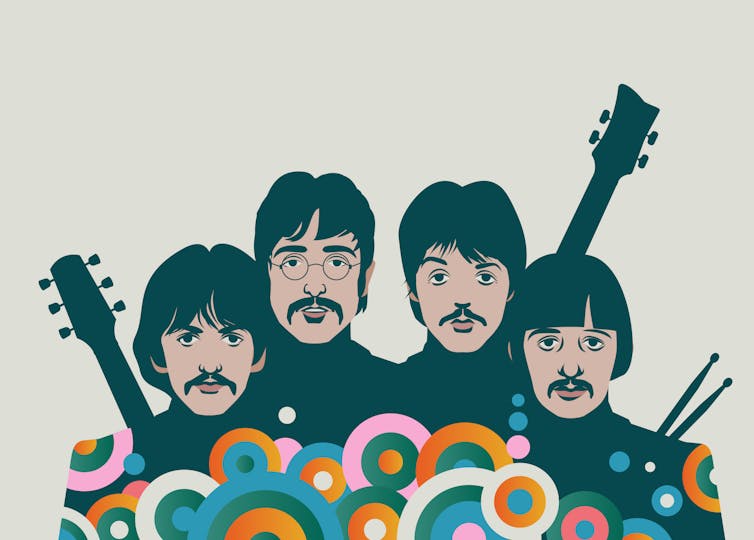
The 50th anniversary of Sergeant Pepper’s Lonely Hearts Club Band was much celebrated in 2017. But this Christmas also marks 50 years since the release of another Beatles production that received much less critical acclaim – the Magical Mystery Tour film.

Much of the music within it was produced during a particularly fecund period (even by the Beatles’ standards) and is, or course, peerless – from the music hall echoes of Your Mother Should Know through the plaintive, melodic Fool on the Hill to the boundary breaking I Am the Walrus.


Beatles Magical Mystery Tour fiftieth anniversary


Shutterstock/Anita Ponne


Unfortunately the film itself fell far short of that artistic bar. First broadcast on Boxing Day 1967, it is, to put it mildly, seriously flawed. Incoherent, sexist, technically shaky and verging on boring, history hasn’t been kind to its cinematic qualities.

Contemporary reviews and audience responses were also so generally scathing that Paul McCartney was moved to issue an apology of sorts to the television broadcast’s 20m viewers. He said in a hastily convened interview:

We don’t say it was a good film. It was our first attempt. If we goofed, then we goofed. It was a challenge and it didn’t come off. We’ll know better next time.


Matters weren’t helped by the Beatles’ psychedelic, colourful exploration being broadcast in black and white on BBC1. A repeat on BBC2 (then the only colour TV service) a few days later did little to redress the situation, if only because there were fewer than 200,000 colour sets in the UK at the time.

Pushing institutional boundaries


For all the defensiveness of McCartney’s response (“You could hardly call the Queen’s speech a gasser”) they do point towards some retrospectively mitigating aspects of the Magical Mystery Tour film.

The film’s distinctly British surrealism and cavalcade of barking sergeant majors, fat aunts, dolly birds, wacky racers and midgets clearly prefigured Monty Python’s explosion of absurdity into mainstream television.

Indeed, George Harrison said later on that he saw Monty Python as a continuation of the spirit of the Beatles. He also funded some of their films, including The Meaning of Life – whose notorious Mr Creosote sketch has visual echoes of a scene in Magical Mystery Tour where John Lennon, dressed as a waiter, serves pasta to Ringo’s fictional Aunt Jessie by the spade full.

What the Pythons added to the mix were sharply honed scripts. Magical Mystery Tour, by contrast, was almost entirely ad-libbed from a one-page diagram. The Beatles’ skill as writers and arrangers was poured into their music instead.

Something else the Pythons had, and which the Beatles lacked, was the benefit of Oxbridge educations. Magical Mystery Tour’s sensibility was more rooted in working class entertainment and tropes than the Pythons’ Oxbridge-infused references.

The very concept of a coach journey – albeit one largely filmed at a decommissioned RAF base – was based on the “charabanc” trips (group bus excursions) of the band members’ childhoods.

The film evokes the past – both a British past in general and, more specifically, as filtered through the Beatles’ own histories. It certainly shows them pushing the boundaries of what a rock band of four Liverpudlians (whose post-school education essentially took place in the nightclubs of Hamburg) could attempt, both artistically and institutionally. Their commercial and creative clout allowed them to broadcast the film during a key annual peak slot for British television viewing.

Prime time


Magical Mystery Tour occupied a particular space in the history of mass entertainment – from the “end of the pier” shows, through the Donald McGill postcards that George Orwell defended against artistic snobbery, to the anarchic weirdness of the likes of Mr Blobby on Saturday night TV.

The Beatles infused that particular strand of entertainment with the forward looking experimentalism of their music, while retaining a characteristic, widely recognisable Britishness. It was this that paved the road for Python and others to follow.

That Magical Mystery Tour was their first real failure since breaking through into the mainstream was also partly a matter of practicalities. While still flowering creatively, they were logistically rudderless after the death earlier that year of their manager Brian Epstein.


Their lack of understanding of the demands of editing a film foreshadowed their later business-related shortcomings, notably the Apple boutique and record label. If the latter of these was revived to become the familiar Beatles brand of today, it was initially a costly failure that contributed to the band’s demise.

But while the film may have overreached, it still demonstrates a clear broadening of mainstream creative boundaries. Popular music fans were certainly receptive to their successful experiments. And even if the broader television public was less ready for a caustic, psychedelic vision of Britain in prime time during the Christmas holidays, Magical Mystery Tour still stands as a useful cultural document.

The ConversationThe Beatles being what they ultimately became, there’s much to be gleaned from their falls as well as their flights.
Adam Behr, Lecturer in Popular and Contemporary Music, Newcastle University

La version originale de cet article a été publiée sur The Conversation.

Monday, December 25, 2017

Guest Post: The science behind our love-hate relationship with holiday songs

Alexandra Lamont, Keele University

In the run-up to Christmas, we’re subjected to a daily barrage of festive music – on the radio and television, in shops, train stations, restaurants, pubs and bars. In the UK, old favourites by bands such as Slade and Weezer are doing their regular rounds along with newer contenders from Kelly Clarkson and Justin Bieber. And, of course, Britain’s two most popular Christmas songs by Mariah Carey and The Pogues are getting their annual airing.

So are you humming "Jingle Bells" or "All I Want for Christmas" while you wrap your presents? Catchy music, “sticky tunes” or earworms, as they have become known, are songs that get stuck in our heads – and while about two-thirds are pleasant or neutral, some can become quite annoying. Earworms are common. Nearly 90% of Finnish adults reported having one earworm a week.


Bing Crosby White Christmas Holiday Inn

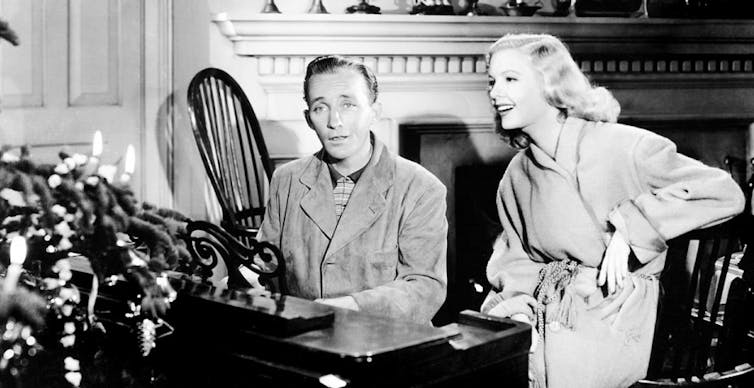
The best-selling Christmas song of all-time: White Christmas.


Musically, earworms seem to come more often from songs which have fairly conventional melodic patterns together with something unusual – a key change, or unexpected leaps or repetitions. Just like the well-known negative effects of actually heard background music on concentration and task performance, it seems that earworms can even impair our concentration on other tasks – whether those are songs with lyrics which could interfere with memory or even purely instrumental sequences like the Star Wars theme.

Read more: Why some songs get stuck in our heads more than others

There’s a piece doing the rounds written by journalism professor Adam Ragusea, who claims to have identified an elusive “Christmas chord” (a diminished minor 7th flat 5) that might explain the popularity of Christmas songs and why they give us earworms, although not all commentators are entirely convinced. New York-based musician Adam Neely argues it’s more about context.


But research suggests that although there could be some common features, the specific songs that evoke earworms are different from person to person. This chimes with what we find when we look at how people listen to music in general. Even very similar types of listeners who live together choose different daily favourite pieces of music – and our music listening and preferences are highly individualised.

What’s different about Christmas music is we are all listening to a much smaller pool of musical options at this time of year. Because of the dominance of Christmas music in public settings such as shops and bars or on the radio, we all get a lot more exposure to the same songs than we do at other times of year. So we could argue that Christmas music helps bring us together – whether we love it or hate it.

Dreaming of a hit record


Among the cheesy sleigh bells-filled tunes, there are some great Christmas classics – and it’s interesting to note that "White Christmas" by Irving Berlin is not only consistently one of the most well-known Christmas songs but is the best-selling song of all time. It also has the characteristics of an earworm, with melodic shifts and slides around a simple rising and falling melodic shape, and it (like many other songs) contains that scrunchy “Christmas chord”. But how does a song like that maintain its popularity over the decades?

The pattern of liking for an individual song over time is held to fit an inverted U-shape curve. According to this, when we first hear a new piece of music we tend to not like it very much. But repetition breeds liking – and repetition both within a song and through repeated listening over days, weeks and months will usually increase our liking in a fairly rapid linear way.


There’s a limit to this repetition effect. Too much exposure sends liking down the other side of the curve, meaning that when we have heard something too much we eventually, and quickly, get quite fed up with it. In our research we find that people regulate their own exposure to their own music over very long periods of time, putting things to one side in favour of new music and constantly keeping their current music fresh.

Following this, coming back to music after a period of time away means it moves back up the liking curve and we can tolerate or enjoy it again. Most of us do this quite intuitively, filing songs away physically or figuratively for later, and we have labelled this kind of listening the “squirrel” approach.

The ConversationThat means a lot of Christmas music, whether we think it’s good or bad, will be more popular than it might deserve to be as it usually only gets aired a few months of the year. By the time we’re taking down the Christmas tree in January, we’ve all become thoroughly sick of Mariah and Weezer and so we put them away in the attic with the tree, to be dusted off and enjoyed again next year.

Alexandra Lamont, Senior Lecturer in Music Psychology, Keele University

La version originale de cet article a été publiée sur The Conversation.

Sunday, December 24, 2017

Guest Post: 'A Charlie Brown Christmas' and the Triumph of Common Sense

by Annie Holmquist

December 9th marks the anniversary of the Christmas TV special which basically birthed all others: “A Charlie Brown Christmas.”

A Charlie Brown ChristmasMost Americans know the plot well. The despondent Charlie Brown who just can’t work up his Christmas cheer amidst crass commercialism. The confident and obnoxious Lucy, who finds the allegedly perfect solution to Charlie Brown’s gloom. The ill-fated Christmas pageant, which confirms Charlie Brown’s status as a loser. And finally, the rebirth of Christmas cheer that comes through Linus’ recitation of the original Christmas story.

But while the basic story is a charming tale with which many of us can empathize, I find the backstory of “A Charlie Brown Christmas” almost more so.

The Backstory 
For those unfamiliar with the tale, “A Charlie Brown Christmas” went from conception to classic in a manner of months, something that simply doesn’t happen in the world of television production.

But what few people know is that before the special aired on television, Peanuts creator Charles Schulz and his crew believed their Christmas special was following in the footsteps of Charlie Brown himself and was doomed to be a failure.

Just like in Charlie Brown’s Christmas story, those who had commissioned Schulz and his crew to do the show were quick to pile on and express their disappointment with the television product. Mark Evanier, an animator and historian, explains this disappointment in “A Christmas Miracle: The Making of a Charlie Brown Christmas”:

The networks were against it. It went against the conventional thinking at the time of what a children’s special – a Christmas special – had to be.”
Fred Silverman, a CBS executive at the time explains:
There was (sic) specific, negative comments about the music, you know, the piano music. Some of the voicing, which sounded kind of amateurish – and indeed it was amateurish because a lot of them were kid actors. But it was a commitment and the film was made.”
Producer Lee Mendelson continues the story:
They said, ‘Well, it’s on the TV Guide logs, we’ve got to put it on the air, but nice try, you know, we’ll put it on once and that will be it.’ So we figured it was over and it was done.”

A Timeless Classic
But as we now know, Schulz, his crew, and the executives from CBS were dead wrong. The program became an overnight hit, pulling in almost half of the TV ratings for the evening. The show went on to win both an Emmy and a Peabody award and has been broadcast every Christmas since that memorable one in 1965.


The reason I find the backstory behind “A Charlie Brown Christmas” so fascinating is because of how it highlights the great disconnect between the ordinary, average American and those in life who pull the strings.

Charles Schulz is the epitome of the average American. He had a simple, common sense, yet often forgotten message to tell in “A Charlie Brown Christmas.” He insisted on sticking with that message and that simplistic style, even when it looked like it wouldn’t get off the ground. In other words, he was a man who stuck to his principles and wouldn’t compromise them even when they might land him in hot water.

The bigwigs at CBS, however, thought they knew better, and if time hadn’t constrained them, they likely would have attempted to rewrite Schulz’s simple, common sense production for something flashy and more politically correct. They were, in a sense, the precursor of today's marketing elites, who all seem to know what is best for middle America to digest and swallow.

In the current culture of chaos, it’s easy to throw up our hands and give in to the demands of those who stand out and seemingly call the shots. But instead of giving in to political correctness, do we need to take a page from Charles Schulz’ book? In the end, will gentle persistence, common sense, and faithful adherence to solid principles be the pathway to success and fulfillment?


Annie Holmquist

Annie Holmquist is a research associate with Intellectual Takeout. In her role, she writes for the blog, conducts a variety of research for the organization's websites and social media pages, and assists with development projects. She particularly loves digging into the historical aspects of America's educational structure.

This article was originally published on FEE.org. Read the original article.


Guest Post: Miraculous births and divine parents in the time of Jesus


by Meredith J C Warren, University of Sheffield

Many people are familiar with the stories in the New Testament gospels of Luke and Matthew about Jesus’ conception and birth. But what is less well known is how common such stories are when the lives of great men are told. From the initial announcement of an impending conception (to Mary in Luke, to Joseph in Matthew) to the signs and portents signalling the birth of the miraculous child, ancient Greek and Roman writings share a lot with the gospel accounts.

The Annunciation by Fra Angelico (1430-1432)
The gospels claim that Jesus’ birth was foretold in advance. Matthew quotes from the prophet Isaiah to establish Jesus’ birth as a divine promise that would usher in a time of peace and justice.

Virgil, writing in the early first century AD, wrote about a promised child, the offspring of the gods, who would bring a golden age of peace and prosperity to the Roman Empire – in other words, the emperor. Augustus Caesar’s birth was foretold by portents, according to the Roman historian Suetonius. Unusual astronomical occurrences were understood as divine omens in Roman culture, so it is no wonder that Jesus’s birth – like Augustus’s – was depicted as important using a miraculous star.

Alexander the Great’s birth also had meteorological omens surrounding it. Plutarch tells us that both Philip and Olympias, Alexander’s parents, were sent dreams from the gods announcing Alexander’s birth. Olympias dreamed that her womb was struck by lightning, while Philip dreamed that he put a seal on his wife’s womb in the image of a lion. Most significant, though, is the report that Philip spied a divine serpent sleeping next to his wife, which he took as a sign that he should avoid sleeping with her himself, since it was clear that she was to conceive from a divine rather than human source.

Massacre of the Infants


Just as Matthew records Herod’s attempts to stop the prophesied child by killing all newborn babies, Suetonius tells a similar account of Roman leaders attempting to prevent Augustus’s rise to power by ordering that no male child be reared. In Matthew, Jesus and his family escape the “Massacre of the Infants” by fleeing to Egypt – whereas in Suetonius (like in the Moses story) fathers- and mothers-to-be thwart the murderous plans, in the Roman case, by preventing the decree from being officially registered with the treasury.

Son of a god


Although both Matthew and Luke trace Jesus’s lineage through his non-biological father Joseph, Jesus is depicted as God’s own offspring.

Augustus Caesar was also adopted by his father, Julius Caesar, and likewise considered himself the descendent of a god – Venus Genetrix. Augustus traced his lineage to Venus through his ancestor Romulus, the legendary founder of Rome. Romulus, and his twin brother Remus, were conceived by the virgin priestess after the god Mars impregnated her. This priestess, as Virgil reports, was herself descended from Venus through her ancestor Aeneas, Venus’s beloved son.

Alexander the Great’s divine parentage was reinforced he grew up. Just as the adult Jesus was publicly claimed by God as his son in all four gospel accounts, Alexander’s father, Zeus Ammon, confirmed his son’s divine identity. Plutarch tells us that when Alexander approached an Egyptian oracle to ask whether he had avenged his father’s murder, the priest made him rephrase his request, since his father was not a mortal man, and addressed Alexander in oracular speech as “O son of Zeus”.

Jesus the hero


One of the most common places to find stories of miraculous births is in the life of heroes, often born of a union between a god and a human being. Hercules, perhaps the most famous of the Greek heroes, is the son of Zeus and the mortal woman Alcmene, for example. Zeus disguised himself as Alcmene’s husband in order to trick her into bed with him. The divine parentage that Hercules enjoyed enabled him to do many wondrous feats.

Likewise, Asclepius, son of Apollo, rescued from the womb of Coronis, was gifted with miraculous healing abilities and was later considered divine in his own right.

Since Matthew and Luke don’t agree with each other about what happened when Jesus was born, it’s especially interesting that they both relate something miraculous in their narratives. The idea of Jesus’s own miraculous birth may have supported the Gospel’s claims about Jesus’ miracle working ability, including healings and other wondrous feats.

The Conversation

Meredith J C Warren, Lecturer in Biblical and Religious Studies, University of Sheffield

This article was originally published on The Conversation. Read the original article.

Saturday, December 23, 2017

Guest Post: Could lies about Santa be good for your child?

Kristen Dunfield, Concordia University

Christmas is a magical time of year, especially for children. Unfortunately, between elaborate Elf on the Shelf staging and fending off questions about Santa, parents are often left wondering how much of the magic depends on them.

Specifically, many parents worry about whether they should encourage their children’s belief in the physical reality of Santa, about the potential impact of lying to them and what to do when their children realize they’ve been duped.

Rest assured, parents, it’s not all up to you. In fact, the best approach involves supporting your kids while they figure it out on their own. They will, and it won’t be as bad as you expect.

As a developmental scientist, I spend most of my time researching children’s trust. I’m interested in how trust develops and what happens when it’s broken. During the holiday season, I spend a lot of time thinking about Santa.


Santa Claus and child on lap

Developmental psychology suggests that fantastical beliefs in children are associated with positive developmental outcomes. And parents need not worry, children will bust the Santa myth themselves, when the time is right.
(Shutterstock)


As a proud auntie of three children under the age of four, my Santa musings have taken on a new significance. But, unlike many parents, I see the development of a belief in the physical reality of Santa, and the eventual myth-busting, as impressive achievements to be celebrated, not feared!

Research in the field of developmental psychology suggests that such fantastical beliefs are not actually harmful, but are associated with a number of positive developmental outcomes — from exercising the “counterfactual reasoning skills” needed for human innovation to boosting emotional development.

When kids question the magic


The vast majority of children will at some point believe in Santa. While many children learn these beliefs at home, the cultural support for Santa is so strong that children in households that don’t actively endorse the myth still sometimes believe.

Yet, despite Santa’s impressive marketing strategy, most children will abandon their belief by the age of eight. Though many parents fear this transition, it’s an inevitable part of growing up.


Santa is a mix of mundane and magical qualities. He is a jolly man dressed in red with a snowy beard. He also flies with the help of reindeer, visits all the world’s children in a single night and knows if you’ve been naughty or nice.

With age, a child’s thinking develops to the point where they start to notice Santa does magical things that physical objects can’t. This newfound knowledge is evident in the types of questions children are asking.

Younger children are often interested in general details about Santa, like: “Where does Santa live?” Older children are more likely to hone in on Santa’s extraordinary abilities: “How does Santa get around the whole world in a single night?”

Should you bust the myth?


Recognizing these challenging questions for what they are — cognitive development in action — may free some parents from the burden of belief.

If your goal is to extend your child’s belief in the physical reality of Santa, you can respond to the questions with plausible explanations or evidence. This is where NORAD, the online tracker that shows Santa’s progress around the globe on Christmas Eve, can come in handy.


If instead you want to let your child take the lead, you can simply direct the question back to them, allowing your child to come up with explanations for themselves: “I don’t know, how do you think the sleigh flies?”

Finally, if you think it’s time to usher your child into the common adult understanding of Santa as a beloved fantasy figure, you can provide different, disconfirming evidence and explanations.

My Santa myth was busted shortly after the discovery of Santa’s gift tags in my mother’s robe pocket. Regardless of which strategy you choose, it is inevitable that eventually the evidence against Santa will become overwhelming and the belief will become unsustainable.

Lies with good intentions


If you choose to extend your child’s belief in Santa, and your child realizes you have deceived them, how will they respond?


boy in Santa hat

If Santa’s elves make handmade toys, how does he deliver electronics? And what does this do to the magic of Christmas for children from poorer families?
(Shutterstock)


As it turns out, probably pretty well. In a study examining children’s reaction to discovering the truth about Santa, parents generally took the transition much harder than their children, who actually felt quite positive about the discovery.

And why wouldn’t they? Santa is one of countless things children learn through the testimony of others. Because we rely on others for so much of what we know, humans are surprisingly well-equipped for the task. They evaluate both the source and content of the information they have received in light of their existing knowledge and their memory of past interactions with the source.

This means that, when compared to all of the reliable information that parents share with their children over their lives, it is highly unlikely a single lie will cause irreparable damage.

Children are also discovering the truth about Santa at around the same time they are starting to understand that some lies, like Santa lies, are told with good intentions.

Why Santa is for small gifts


Believing in impossible beings such as Santa is a special kind of magic available only to children.

Research suggests that fantastical beliefs are associated with a number of positive developmental outcomes. So, if your child is still a believer, feel free to protect that belief.

As your child ages, especially if there are younger siblings in the house, there are creative ways to keep the Santa experience positive, even after their belief in the physical reality of Santa has been abandoned.

Finally, always remember, as children are figuring out how the world really works, that they are going to look to the people and things around them for evidence.

The ConversationIt might be a good idea to give modest gifts from Santa and save the big ones for parents, because no matter what your family income, every child deserves to feel loved by Santa on Christmas morning.

Kristen Dunfield, Assistant Professor of Psychology, Concordia University

This article was originally published on The Conversation. Read the original article.

Guest Post: Your child probably knows the truth about Santa


by Kate Ellis-Davies, Nottingham Trent University

Most parents lie to their children. It’s usually done to get the children to behave the way the parents want. One study found that well over 80% of American parents and more than 90% of Chinese parents admitting to this kind of “instrumental” lying. Lying about the existence of Father Christmas often falls into this category, used as a tool to teach pro-social behaviour (helping and sharing) through the promise of presents if the children are good.

Santa Claus Rick Sincere 1960s
Of course, there can be other reasons for carrying on the Santa myth that are more to do with children’s immediate happiness. These could include extending the naivety of childhood and raising the excitement of the holiday season. But given what we know about children’s ability to figure out the truth, it seems likely that slightly older kids may well be playing along with their parents’ fantasy in order to reap the benefits of the promised rewards.

When studies have questioned whether lying to children about Father Christmas does them any harm, the theory seems to be that the dishonesty undermines parents’ image as trustworthy and reliable sources of information. But there’s no real evidence of any lasting damage.

Research with children who no longer believe has shown that they tend to stop believing in Santa around seven years of age. When interviewed about their feelings about being lied to – and how they felt about Santa now – the children generally tended to report positive happy emotions around the topic. Parents, on the other hand, were left saddened by their child’s loss of Santa belief.

Children tend to come to the end of their belief of Santa either through their own tenacious questioning of the logic and practicality of the myth, or by older, more seasoned siblings and peers bursting the bubble. This is particularly the case for today’s tech-savvy kids, who have the internet to answer every question and give them extra space for conversations away from the protective guidance of adults keen to keep the myth alive.

Yet while children often come to the realisation that Santa is not what they had been lead to believe on their own, they also tend to act along with the fiasco and continue to play along with 58% of children in one study playing the role of Santa-believer. This goes counter to the under-sevens’ tendency to correct the mistakes adults make, in speech for example, and to trust more reliable adults.

So what’s in it for the kids in maintaining the lie? Well the commonly written letter to Santa may give us some clues. Rather than reading this note assuming that this child believes in Santa, if we cynically consider that he or she no longer believed in Santa but is playing along – then the child is playing along like a pro.

We can see children’s willingness to play along with pretence and fantasy well beyond the seasonal myths into a more general eagerness to suspend reality for the enjoyment of play, something long associated with their development. The act of playing along may also support children as they test out out their knowledge and theories of the real world.

Logical to pretend


Santa Claus truthWithin the letter to Santa, children often recognise the premise that they should have been good to warrant the requested presents, demonstrating they have followed the behavioural compliance set out by their parents. They put in a good mix of optimistic present requests, but with a placating note for those that might be overreaching and some humbler suggestions with a higher likelihood of approval. Plus there may be a nod to their doting grandparents for the affection it can be assumed they appreciate.

Really, the traditional letter represents a child’s well-constructed communication to people they know are lying in the hope they will reward the pro-social behaviour and willingness to play along. So, while researchers have reported that younger Santa cynics may have well-developed abilities in logic and reasoning, this doesn’t necessarily mean they won’t play along with the myth for a little longer. Doing so may be enjoyable in itself, have some present-shaped benefits, and be a positive family experience.

There is also little evidence that childhood myths challenge otherwise trusted and secure parent-child relationships. Instead, when children realise that their parents were engaged in a protracted deception, the children appear to be less saddened than their parents.

The Conversation

Kate Ellis-Davies, Senior Lecturer, Division of Psychology, Nottingham Trent University

This article was originally published on The Conversation. Read the original article.

Friday, December 22, 2017

Guest Post: Uncovering the language of the first Christmas


by Tony Thorne, King's College London

As Christmas draws near, the now typical jokes pile up on social media. Jesus is commended for having a “stable upbringing”. The three wise men fret: “We’re running low on Frankincense. Don’t worry, though, there’s myrrh where that came from.”

Christmas Nativity scene manger Catholic
But all this facetious word play prompts me to think a little more seriously about the language used in traditional accounts of the nativity, and the language – or languages – that might have been used by the participants themselves.

Let’s begin at the beginning. The christian Christmas drama begins with a baby in a cot, or rather a “manger” – a feeding trough. In biblical times, this was probably an alcove or a ledge projecting from the wall of a stable on which hay was placed as animal feed. In a private house, it may also have been a rectangular stone container or simply a depression in the lower part of the family living space where animals spent the night. The English word comes from the French manger, to eat, via the Old French maingeure, and in turn from the Latin manducare, to chew.

The Biblical reference to an improvised crib uses the Greek φατνη (phatnē), regularly translated as a stall, though some commentators insist that it denotes a feeding box and not a larger enclosure. It has been rendered in Hebrew as אֵבוּס, ebus, which can mean a trough or a booth, and as אֻרָוֹת (urvah), a stall. Mary (Maryam) and Joseph (Yosep) might have described it in their own language, Aramaic, as ܐܽܘܪܺܝܳܐ (awriyah).


The Words of God


But enough of the props, what of the location and the script?

Well, the Greek word commonly translated as “inn”, κατάλυμα (kataluma) can mean a caravanserai or inn, a house or a guest room, but can also be translated as the vaguer “lodging place”. This leads interpreters to disagree on whether the nativity took place in a public guesthouse or a family home made available to the travellers in line with Palestinian traditions of hospitality.

Aramaic English dictionary Christmas languageAramaic was the language spoken by the common people in נָצְרַת (Naṣrat) and בֵּית לֶחֶם‎ (Bet Lehem) – we know them as Nazareth and Bethlehem, of course. However, Hebrew was the official and liturgical language of Palestine, and Greek was used by scholars, administrators and diplomats across the eastern Mediterranean and Near East. Latin, the language of the Roman colonisers, would not have been spoken by many poorer people in the territories in question in the first century AD.

The Hebrew historian Josephus described Hebrew words as belonging to “the Hebrew tongue” but referred to Aramaic words as belonging to “our tongue” or “our language” or “the language of our country”.

Aramaic survived to become the common language of Jews both in the Holy Land and elsewhere in the Middle East by around 200AD and remained so until the Islamic conquests in the seventh century introduced Arabic. Its descendant dialects, formerly known as Syriac, are still spoken today by the Assyrian people of northern Iraq, northeast Syria, southeast Turkey and northwest Iran. I’m not the first to try to connect imaginatively with the authentic voices of the Christmas story, as a 2009 recording of a carol sung in Aramaic testifies.


Interpretations


The wise men from the East, whatever their native tongues, would have communicated with King Herod via his officials in Greek – Herod would also have been familiar with Latin, Hebrew and possibly an Arabic dialect from his youth. Unless they knew some Aramaic, they would have done the same, with or without the help of interpreters, when they paid their respects to the Holy Family.

The shepherds – ποιμὴν (poimén) – who feature in one of the two versions of the nativity would have had few difficulties expressing their veneration of the Christ-child, being Aramaic speakers, though not with the Galilean accent shared by the newborn’s “imma”, mother Mary and “abba”, father Joseph.

Greek English lexicon Christmas languageWe don’t know what social status Mary and Joseph enjoyed, but unless it was fairly elevated they would not have been fluent in Greek or Latin and their knowledge of Hebrew would likely have been limited to some devotional terms. Although Aramaic shared some elements with Hebrew, the two were at least as different as modern English and German.

So, frustratingly, even those few key words of Greek, Aramaic or Hebrew that are present in the original Bible account are open to multiple interpretations. If we go on to consider the familiar words that became attached to the story more recently – “inkeeper”, “stable”, “cattle-shed”, “kings”, even the “little town” and the imperial “decree” that summoned the family – we find no ultimate justification for them at all.

They only serve to conjure up an enduring legend of outsiders grappling with adversity, to dramatise an interplay of the royal, humble and supernatural in surroundings that are at once impoverished and magical.

Biblical scholars will continue to dispute the nuances of translation and the “facts” that underlie them. As for me, from a brief encounter with the sublime, I’m drawn back to the ridiculous as the wits of Twitter banter on: “If you’re telling a nativity joke it’s all in the delivery”; “Already getting complaints about my front lawn nativity tableau. Apparently it’s not customary to depict the actual birth.”

The Conversation

Tony Thorne, Director of Slang and New Language Archive, Faculty of Arts and Humanities, King's College London

This article was originally published on The Conversation. Read the original article.

Tuesday, December 19, 2017

From the Archives: 'The state should punish violence - and nothing else' (1991)

To my surprise, a sentence in this letter to the editor was quoted in a book by Peter McWilliams, Ain't Nobody's Business If You Do: The Absurdity of Consensual Crimes in a Free Society. It took me quite some time to identify and locate the source of the quotation ("There is no right not to be offended by words, actions or symbols."), which appeared on the editorial page of The Washington Times on August 22, 1991. This may be the only time I have discussed masturbation (onanism, self-pleasure) and adult cinemas (a 20th century institution, now largely forgotten) in a mainstream publication.

The state should punish violence - and nothing else
22 August 1991 - The Washington Times

Pee-wee Herman Paul ReubensIn your sympathetic Aug. 13 editorial about Paul Reubens, "The secret sin of Pee-wee Herman," you assert that so-called "victimless" crimes such as prostitution, pornography and drug use depend for their "victimless" status upon a narrow view of what it means to "hurt."

Your argument that the law exists to preserve and protect public order may be largely correct, but it begs the question as to whether public order is protected by laying traps for adults who expose their sexual organs in a darkened movie theater.

In a free society, standards of public morality can be measured only by whether physical coercion - violence against persons or property - occurs. There is no right not to be offended by words, actions or symbols. Otherwise, if a majority or vociferous minority found crucifixes offensive, the state would be closing down Catholic churches as a threat to public morality.

Similarly, if a majority felt the Korean ownership of convenience stores violated neighborhood standards of ethnic purity, the government could be enlisted to deny business licenses to recent immigrants. The only legitimate purpose of government is to protect individuals from coercive violence, not to initiate such coercion itself.

Pee-wee Herman's alleged "crime" took place on private property (the South Trail Cinema) after paying an entry fee for the express purpose of obtaining some measure of sexual gratification by watching erotic films. Under those circumstances, any person on the premises fully understands the nature of the business and what might be encountered there.

Paul Reubens mug shot Florida Pee-wee HermanNeither the owners of the theater nor its patrons are likely to be offended by masturbation in a darkened auditorium. Patrons of an erotic cinema could hardly be offended by the sight of life-size genitalia when larger-than-life examples loomed before them on the screen.

There was no public disorder, no incitement to riot, no complaint from passers-by. Pee-wee Herman was arrested for doing in a private cinema what he certainly would be free to do without fear of reprisal in his (or the theater owner's) private home.

Unless, of course, masturbation is itself illegal in Florida. Come to think of it, that is not so hard to imagine at all. In any case, all such laws are clear violations of personal autonomy, their enforcement is an affront to human dignity and they should be repealed without delay.

RICHARD E. SINCERE JR.
Chairman
Libertarian Party of Virginia
Arlington